
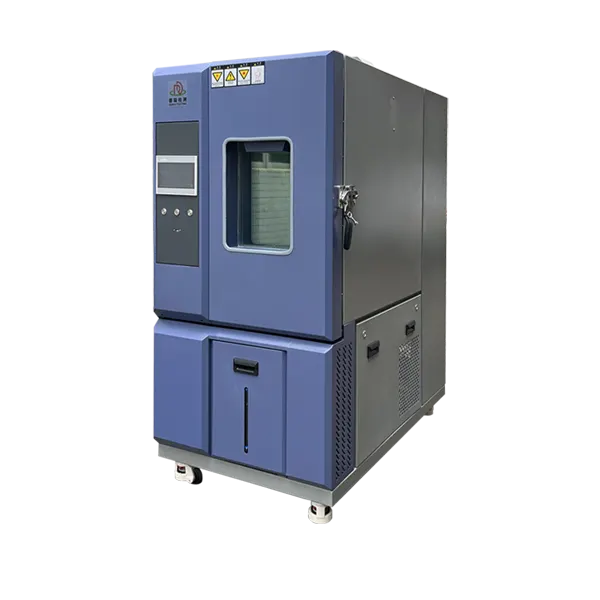
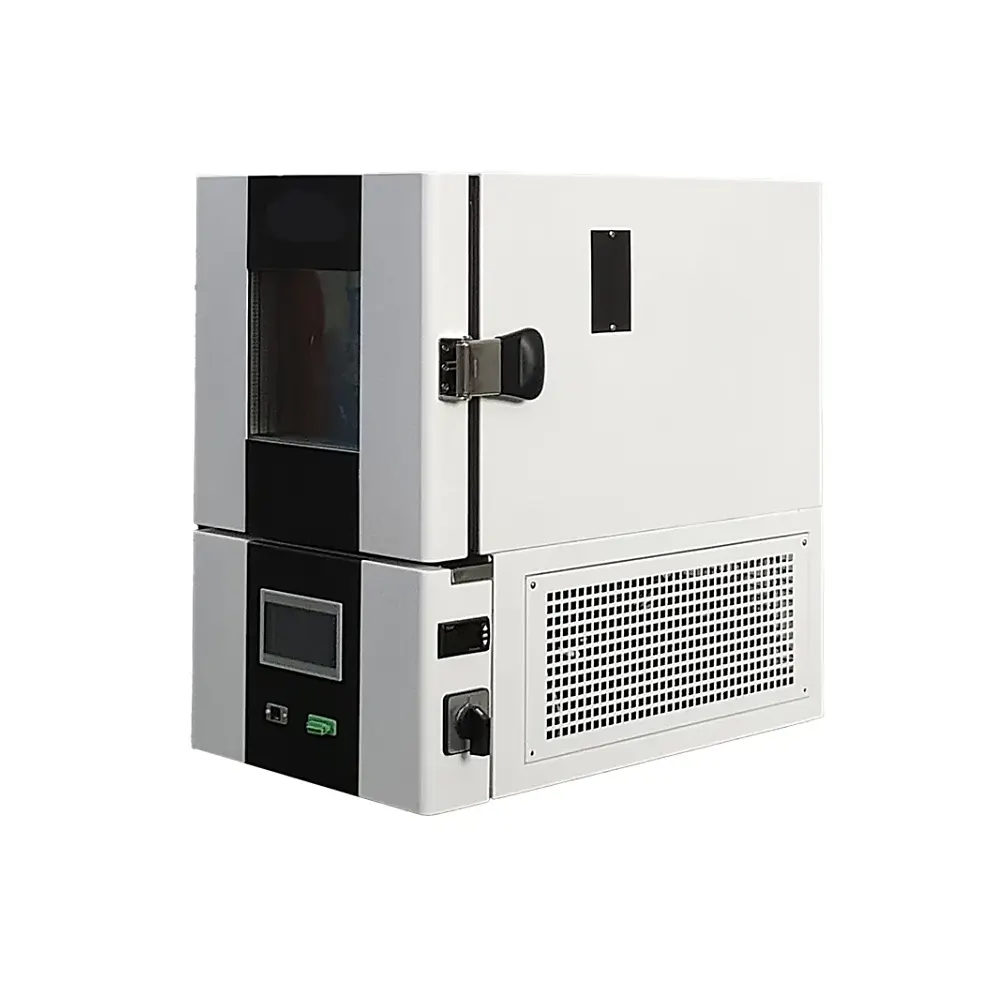
EV Battery Cell Fire Tester for Controlled Flame Exposure
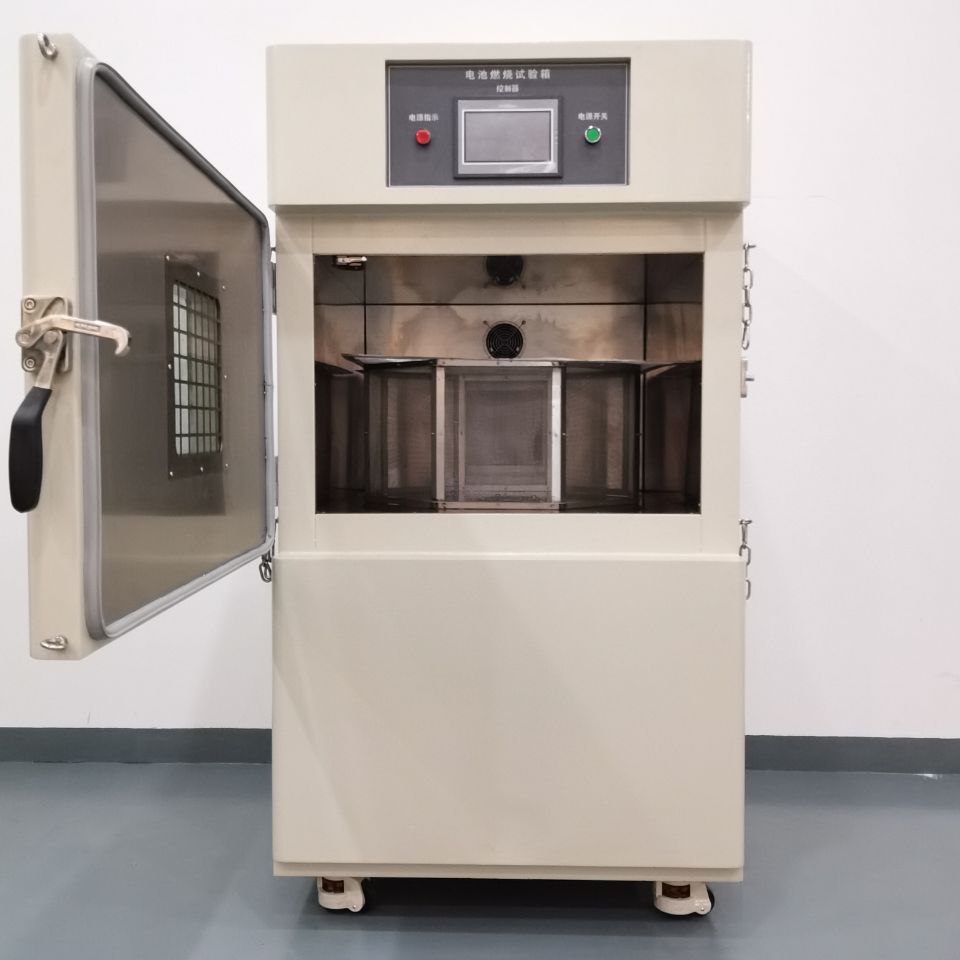
Expose a secured cell or small battery specimen to a defined gas flame and document how its casing, vent, nearby materials and fragments respond. DR-D211 is an open-front-and-rear fire-test apparatus, intended for a dedicated laboratory installation—not a sealed chamber or a full-pack fire-resistance bench.
Use the Tester for the Right Question
Cell design screening
Compare casing, vent and shield behavior under a repeatable external-flame setup. Record specimen identity and condition for every run.
Small-assembly observation
Study ignition, burning and fragment behavior of a secured article that fits the published size and mass limits, subject to a facility hazard review.
Instrumented R&D
Add temperature, voltage, video or gas measurements only when the selected instrumentation and sampling plan are included in the approved configuration.
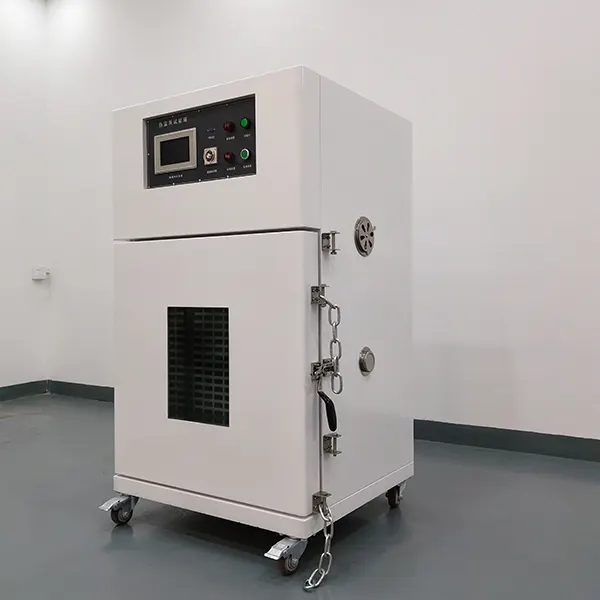
Published DR-D211 Configuration
These are the current page's published values. Terms such as “temperature accuracy” need a defined sensor position, operating condition and calibration method before they can become contractual acceptance criteria.
| Item | Published value | Confirm before ordering |
|---|---|---|
| Model and specimen scope | DR-D211; EV steel-shell battery stated | Other cell formats, enclosure types and acceptable stored-energy limit. |
| Maximum article | 400 × 400 × 200 mm; ≤20 kg | Fixture space, clearance to burner and safe support load. |
| Flame height | 100–150 mm | Measurement method, fuel, pressure, burner geometry and distance to specimen. |
| Burning time | 1–60,000 s setting | Timer start/stop points, flame-out handling and event log. |
| Temperature bands | A: 300–600°C; B: 600–900°C; C: 900–1200°C; stated ±20°C | Whether these describe burner settings, sensor ranges or measured specimen exposure; sensor and calibration location. |
| Ignition and air | Automatic high-voltage pulse ignition stated; automatic air supply and airflow control | Fuel type, supply pressure, ignition confirmation, flame supervision and shutoff logic. |
| Structure | Open front and rear; high-temperature-resistant insulation stated | Dedicated room, extraction hood, exclusion zone and combustible clearances. |
| Alarm and protection | Three-color status lamp, abnormal-operation alarm and limit protection stated | Actual sensors, interlocks, emergency fuel isolation and alarm outputs. |
| Equipment dimensions | Main unit 900 × 1140 × 1200 mm; console 600 × 400 × 1200 mm | Final W × D × H drawing, service/access clearance and room layout. |
| Electrical supply | AC220 V | Frequency, power/current, breaker, grounding and destination voltage. |
Define a Repeatable Flame-Exposure Protocol
Identify the specimen
Record cell or assembly format, dimensions, mass, chemistry, capacity, state of charge and prior conditioning.
Choose the governing method
State the exact standard edition or internal procedure, specimen level and result criteria.
Specify the burner
Approve fuel, burner geometry, gas pressure, flame height, distance, airflow and pre-test verification.
Specify exposure timing
Define ignition, stabilization, start, dwell, termination and post-flame observation points.
Specify measurements
Select thermocouple locations, voltage channels, video, gas and other measurements with timestamps.
Agree on safety response
Review remote operation, fuel shutoff, extraction, emergency response, cooldown and specimen quarantine.
Standards: Method Match, Not a Blanket Claim
| Reference | What the buyer may need | DR-D211 boundary |
|---|---|---|
| UL 9540A | Thermal-runaway fire-propagation evaluation at defined specimen levels. | The gas-flame apparatus is not a complete UL 9540A test system. A qualified laboratory must determine whether a specific R&D activity fits. |
| UNECE Regulation No. 100 | External-fire resistance procedure for a REESS/vehicle or representative subsystem. | Its fuel-pan exposure, size and mounting are not automatically reproduced by this small gas-burner device. |
| Customer/OEM method | Specified external-flame exposure of a cell or small article. | Potential fit only after matching fixture, burner, measurements, hazard controls and acceptance criteria. |
Do not list ASTM E3189 as a battery fire-test method; it addresses preparation of fire-debris samples for ignitable-liquid residue analysis.
Open Construction Makes the Test Room Part of the System
Because the published design is open at the front and rear, the equipment cannot be described as a sealed fire-containment chamber. Flame, smoke, hot gases, ejecta and electrolyte products may enter the surrounding space. Installation requires approval by the laboratory's fire and EHS specialists.
Gas and ignition
Specify fuel type, pressure regulation, leak detection, flame supervision and an accessible emergency shutoff.
Ventilation and separation
Engineer combustion exhaust and makeup air, restrict access during operation, and keep the console and personnel outside the hazard zone.
Post-event control
Define fire response, cooling, monitoring for re-ignition, quarantine and disposal for the actual cell chemistry and energy.
Recommended Factory and Site Acceptance Checks
| Check | Evidence to agree before shipment |
|---|---|
| Burner setup | Fuel/pressure specification, measured flame height, fixture position and repeatability. |
| Temperature claim | Sensor type, location, calibration and meaning of the A/B/C bands and ±20°C figure. |
| Timing and ignition | Witnessed ignition sequence, timer behavior, flame-loss response and safe shutdown. |
| Specimen fixture | Approved drawing for the 400 × 400 × 200 mm / ≤20 kg limit and required exposure surface. |
| Safety interfaces | Emergency fuel isolation, alarm contacts, ventilation interlock and remote operation as contracted. |
| Documentation | Operating manual, gas/electrical drawings, calibration scope and FAT report. |
Frequently Asked Questions
What does the DR-D211 actually test?
It exposes a secured cell or small battery article to a controlled gas flame for a defined period so visible behavior and any specified instrument channels can be recorded.
Is this a sealed explosion-proof chamber?
No. The published design is open at the front and rear. The dedicated fire-test room, remote operation and engineered ventilation are part of the safety design.
Does DR-D211 alone meet UL 9540A?
No. UL 9540A addresses a broader thermal-runaway propagation test program. A qualified lab must assess any proposed use of this device within a specific research setup.
Can it perform UNECE R100 pack-level fire exposure?
Not from the published size and gas-burner arrangement. The R100 procedure has different specimen and fuel-pan requirements.
What do the 300–1200°C temperature bands mean?
The source does not define the measurement point clearly. Ask DERUI whether these are burner settings, sensor ranges or actual specimen exposure, and request calibration evidence.
Are gas analysis, fire suppression and automatic reports included?
They are not confirmed in the published technical table. Include each required sensor, control and output in the technical agreement.
Which specimens fit?
The published envelope is 400 × 400 × 200 mm and no more than 20 kg. Actual usable space and allowed stored energy also depend on the fixture and room safety review.
What should accompany an RFQ?
Send specimen data, chemistry, energy and state of charge, exact method, burner/fuel exposure, instrumentation, room layout, extraction, emergency strategy and acceptance criteria.
Review the Flame Test and Facility Together
Send the specimen drawing, stored energy, exposure method and room safety concept. DERUI can confirm whether DR-D211 fits your R&D task and document the required options and FAT checks.
Send with your inquiry
- Specimen size, mass, chemistry and SOC
- Method, fuel and exposure profile
- Measurement and reporting needs
- Exhaust, gas and fire-safety plan