


Controlled Dust Ingress Testing for Enclosures and Components
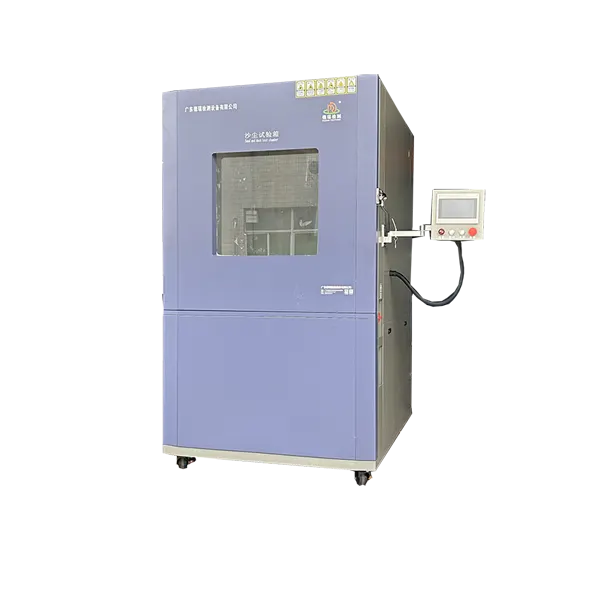
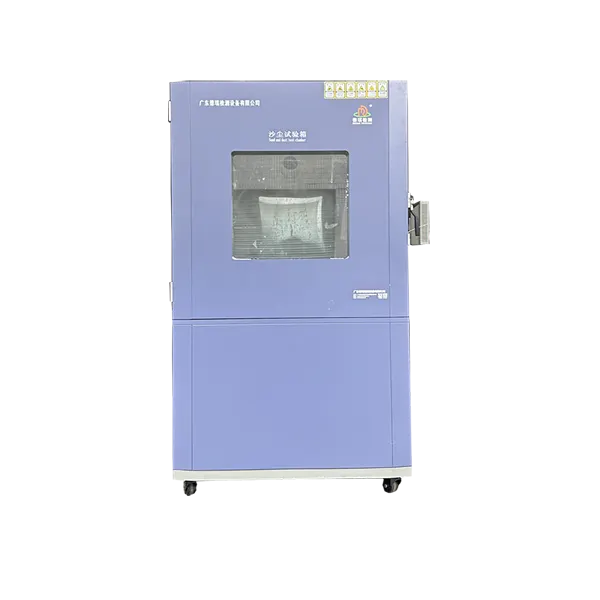
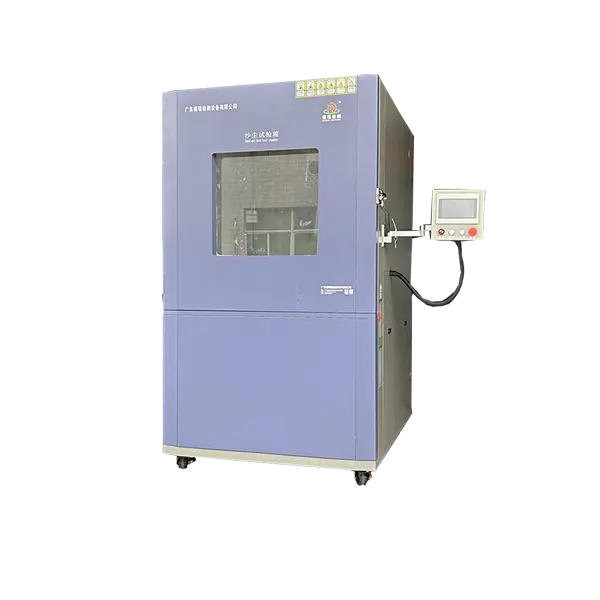
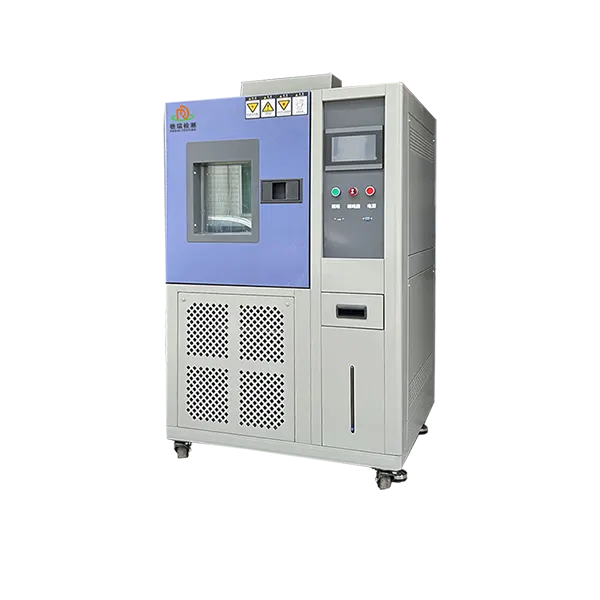
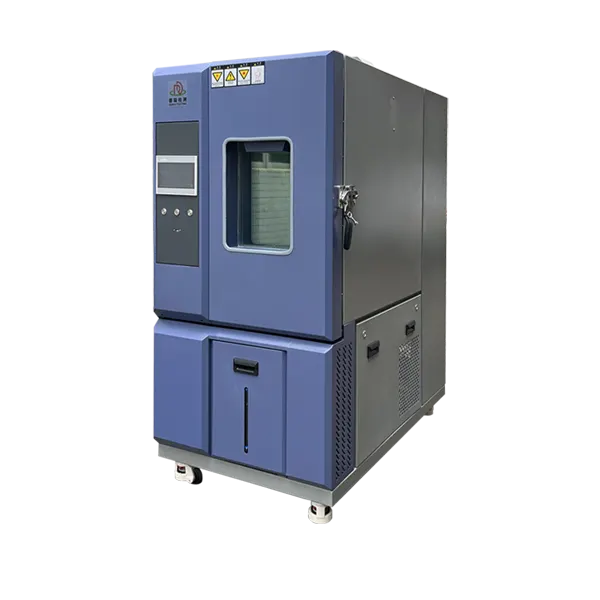
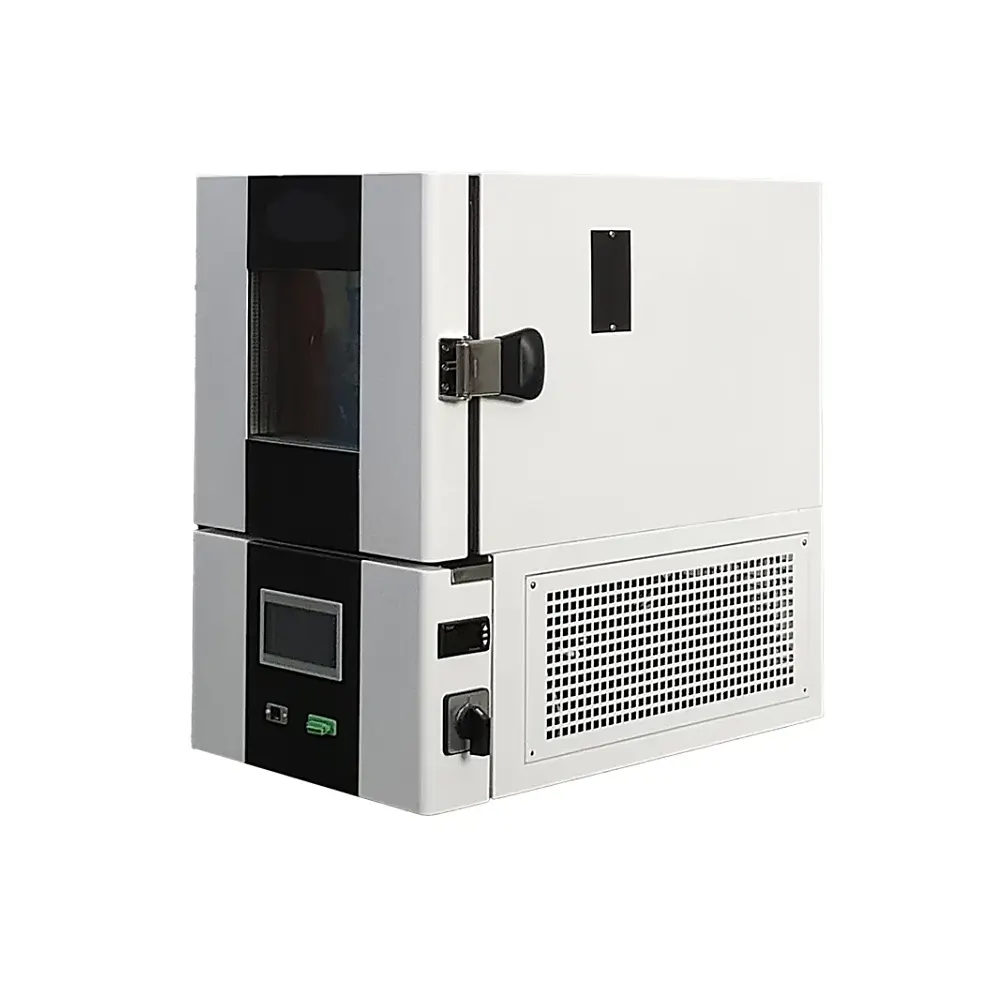
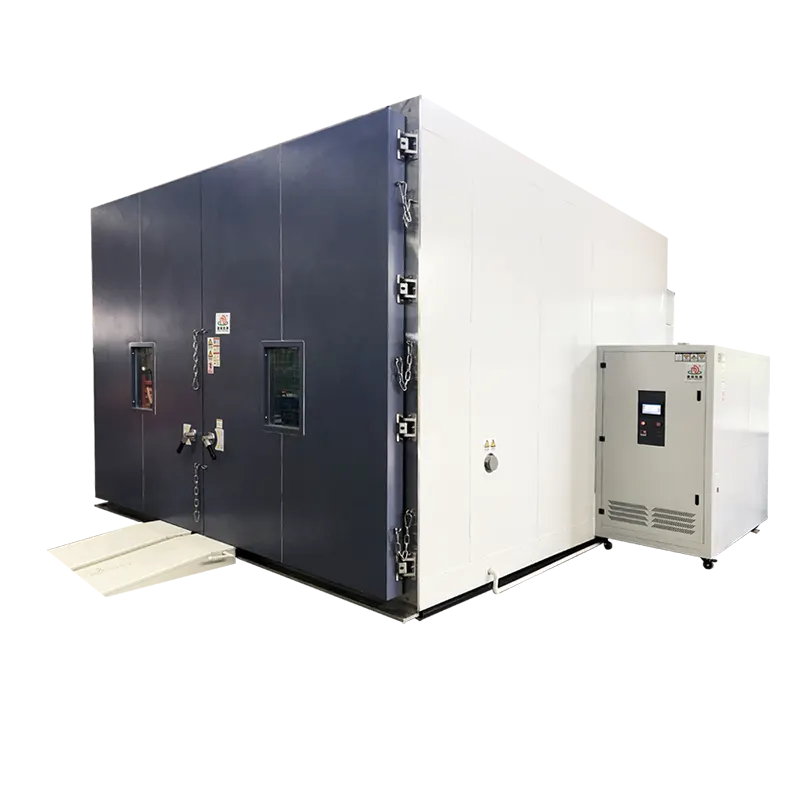
The DERUI dust ingress test chamber circulates the specified test dust around an enclosure under controlled conditions for IP5X and IP6X evaluation. Chamber size, dust system, specimen connections and pressure-reduction equipment are configured from the governing standard and the enclosure category—not from a generic test recipe.
Use the system to evaluate housings, electrical assemblies, automotive components, outdoor equipment and industrial controls before certification or design release. DERUI reviews the test method, specimen dimensions and operating state before confirming the equipment configuration.
What IP5X and IP6X Results Mean
IP5X: dust-protected
Limited dust entry may occur, but it must not be present in a quantity or location that interferes with satisfactory operation or impairs safety. The inspection and functional acceptance criteria should be defined before testing.
IP6X: dust-tight
No dust ingress is permitted under the specified test conditions. Sample preparation, enclosure category, cable entries, operating state and pressure conditions must match the applicable procedure.
Key Chamber Functions
Dust suspension and recirculation
The circulation system keeps the specified powder distributed through the working space. The dust medium, loading and operating sequence must follow the selected method.
Specimen pressure connection
A controllable pressure-reduction circuit can be provided when the enclosure category and test method require air to be drawn through possible leakage paths. The required flow and depression are confirmed from the test plan.
Programmable control
The touchscreen controller manages circulation, vibration or dust recovery, timing, alarms and optional pressure-control functions for repeatable operation.
Test access and observation
Sealed feedthroughs, specimen ports, shelves and an illuminated observation window can be configured around cable routing, hose connections and safe loading.
Dust recovery and cleaning
A closed circulation path and accessible collection areas simplify powder recovery and routine cleaning. Cleaning procedures should prevent cross-contamination between different test media.
Destination-specific utilities
Voltage, frequency, plug or hard-wiring arrangement, controller language, data functions and remote monitoring can be reviewed for the destination laboratory.
Configuration Items Confirmed Before Quotation
| Item | What DERUI needs to confirm | Why it matters |
|---|---|---|
| Applicable method | IEC 60529, ISO 20653, a product specification or another named procedure | Determines dust, enclosure category, exposure and acceptance conditions |
| Specimen | Dimensions, mass, quantity, mounting orientation and access clearance | Determines working space, shelf capacity, door and handling arrangement |
| Operating state | Powered or unpowered, heat dissipation and required external connections | Determines feedthroughs, monitoring and safe operation |
| Pressure condition | Enclosure category, internal free volume, flow limit and target depression | Determines whether pressure reduction is required and how it is controlled |
| Test dust | Dust specification, sieve requirement, loading and reuse policy | Prevents an incorrect medium from invalidating the result |
| Documentation | Data export, calibration, factory test and report requirements | Supports laboratory traceability and customer approval |
Final working volume, construction details, control range and accessories are stated in the approved technical quotation. No universal model or parameter range should be inferred from this page.
IEC 60529, ISO 20653 and MIL-STD-810 Are Not Interchangeable
| Reference | Application | Equipment decision |
|---|---|---|
| IEC 60529 | Degrees of protection provided by enclosures, including IP5X and IP6X | Configure the dust chamber and any pressure-reduction circuit to the enclosure category and selected first-digit test |
| ISO 20653:2023 | IP protection of electrical equipment in road vehicles | Use the automotive procedure and designation actually required by the drawing or customer specification |
| MIL-STD-810 Method 510 | Tailored blowing dust and blowing sand environments for materiel | Requires method-specific particle feed, airflow and environmental control; do not assume a basic talcum IP chamber is suitable |
For the test-method background, read the IEC 60529 IP5X/IP6X dust testing guide. This product page focuses on equipment configuration and purchasing decisions.
Recommended Test Workflow
- Freeze the requirementRecord the standard edition, IP designation, enclosure category, specimen state and acceptance criteria.
- Prepare the specimenInstall covers, seals, cable glands and connectors as required; document any preconditioning and functional baseline.
- Verify the chamberConfirm the correct dust, powder condition, circulation path, timer, specimen connections and safety interlocks.
- Run the approved profileApply circulation and pressure conditions exactly as defined by the governing procedure; record interruptions or deviations.
- Recover safelyAllow dust to settle as instructed, use appropriate personal protection and avoid cleaning that could move external dust into the enclosure.
- Inspect and reportOpen and inspect the specimen using the agreed method, perform functional checks and document whether the acceptance criteria were met.
Typical Test Applications
Automotive components
Lighting, sensors, connectors, charging hardware, controllers and other electrical equipment assessed to the applicable vehicle requirement.
Outdoor electronics
Telecom housings, cameras, access-control devices, power electronics and field enclosures exposed to airborne dust.
Industrial equipment
Control boxes, instruments, switches, operator interfaces and electrical housings used in dusty production environments.
Consumer and lighting products
Luminaires, appliances and electronic enclosures requiring evidence for a specified first-digit IP protection level.
Installation, Operation and Maintenance
Laboratory preparation
- Confirm floor loading, doorway and service clearance.
- Provide the specified electrical supply and protective earthing.
- Plan safe dust storage, loading, recovery and disposal.
- Provide compressed air or exhaust services only if required by the ordered configuration.
Repeatability controls
- Keep dust dry and within the method’s suitability requirements.
- Inspect seals, hoses, filters and pressure connections.
- Clean the working space without contaminating sensors or moving parts.
- Maintain calibration, service and test-medium records.
DERUI provides a one-year whole-machine warranty, lifetime technical consultation, remote video guidance and operator training. Overseas installation can be arranged as a separately quoted service, and spare-parts support is available for up to ten years.
Dust Ingress Test Chamber FAQs
Can one chamber perform both IP5X and IP6X tests?
A properly configured chamber can provide the dust-circulation environment for both ratings. However, the specimen category and pressure-reduction requirements must be confirmed for each test. The same operating recipe should not automatically be used for every enclosure.
Does every IP6X test require the same vacuum setting?
No. The applicable method, enclosure category, internal free volume, extraction rate and permitted pressure differential determine the setup. Send the exact test requirement so the pressure circuit can be sized and controlled correctly.
Is the dust quantity the same as airborne dust concentration?
No. A specified mass of powder per chamber volume is a test-medium loading instruction; it should not automatically be described as a continuously measured airborne concentration. Use the terminology and procedure in the governing standard.
Can this equipment also perform MIL-STD-810 blowing sand testing?
Not unless it is specifically engineered and validated for the required Method 510 procedure. Blowing sand and blowing dust require method-specific particle distribution, feed rate, airflow and environmental controls that differ from a basic IP talcum-dust chamber.
How should chamber size be selected?
Provide the specimen dimensions, quantity, orientation, cable connections, door access and required clearance. DERUI will review circulation and handling needs rather than applying an unsupported universal percentage rule.
What should be included in an RFQ?
Send the standard and edition, IP rating, specimen dimensions and mass, enclosure category, internal free volume, powered state, pressure requirement, dust specification, test duration, utilities, destination country and reporting needs.
Request a Dust Chamber Configuration
Send your standard, enclosure details, IP target, specimen size and pressure requirement. DERUI will review the test profile and recommend the working volume, dust system, specimen connections, controls and laboratory utilities.
- Standard and customized chamber sizes
- Destination voltage and controller-language options
- Remote technical guidance and operator training
- Factory testing and documentation before shipment