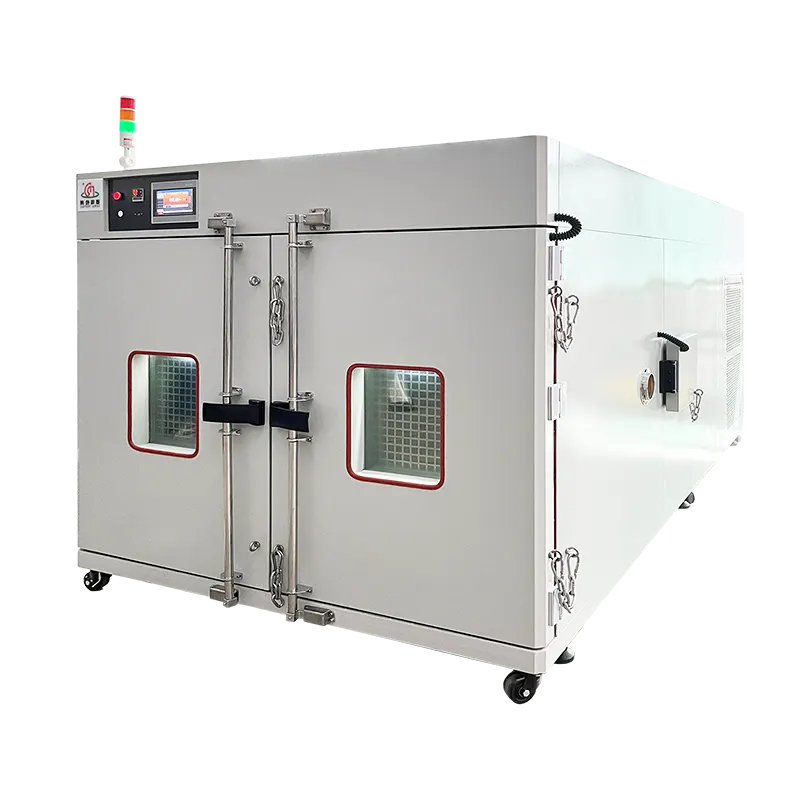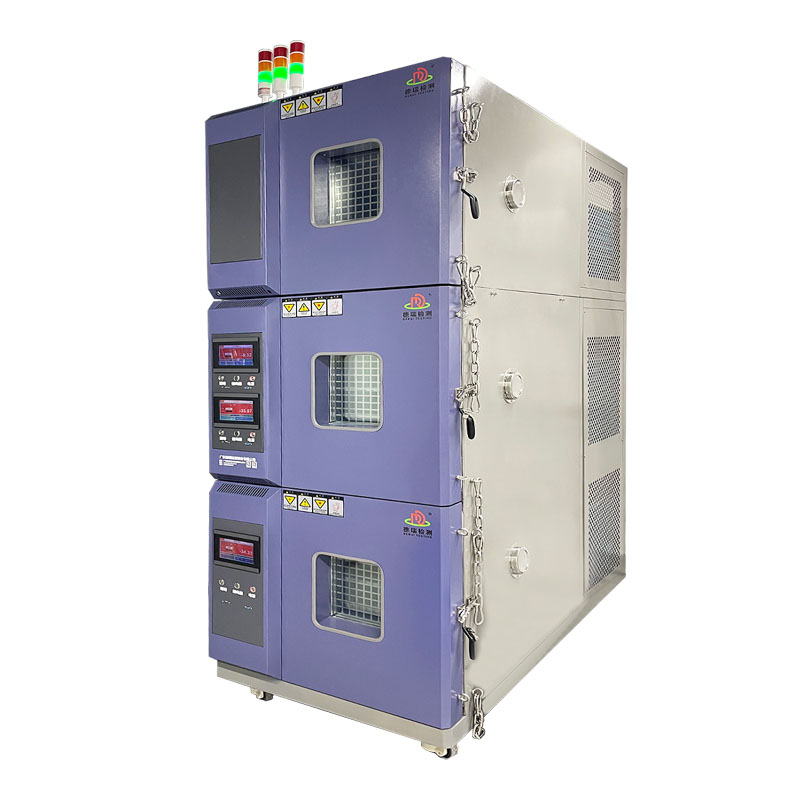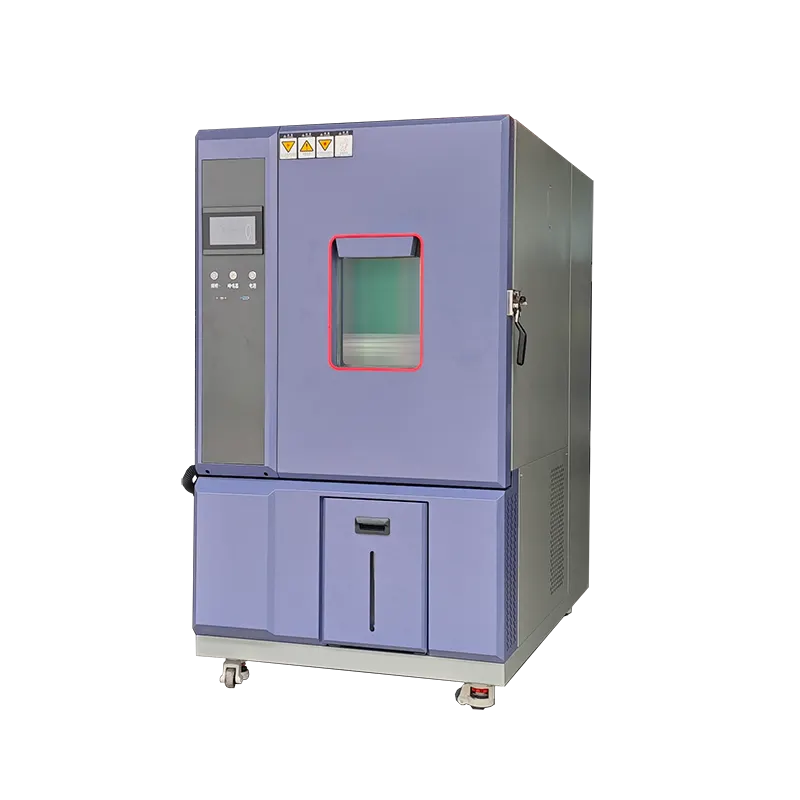







Desktop Constant Temperature and Humidity Test Chamber
Use a compact DERUI climate chamber for small specimens, component development and laboratory environmental conditioning. The published DR-H201/22/40 baseline combines programmable temperature and humidity control in a 22 L workspace. Final range, capacity and utilities follow the approved technical proposal.
Where a Desktop Climate Chamber Fits
The compact chamber supports component-level environmental conditioning where laboratory space is limited and specimen size allows airflow to remain clear. It is selected from the required exposure, not merely from a volume label.
Electronic assemblies
Condition PCBs, connectors, control modules, sensors and compact assemblies under defined temperature-humidity programmes.
Materials and research
Run controlled damp-heat exposure, comparative ageing and conditioning studies with documented specimen placement.
Small product development
Evaluate packaged components and small devices before moving to a larger floor-standing chamber for batch or fixture-heavy testing.
Published DR-H201/22/40 Configuration
| Item | Published value | Procurement note |
|---|---|---|
| Workspace | 22 L; 300 × 300 × 250 mm | Confirm usable volume after racks, fixtures and cable routing. |
| Temperature range | -40°C to +150°C | Confirm the selected configuration, test condition and mapping method. |
| Temperature performance | Fluctuation ±0.3°C; uniformity 2.5°C | Confirm stabilization condition, sensor points and whether the item is powered. |
| Temperature change | Heating 3.0°C/min; cooling 1.0°C/min | Confirm definition, ambient condition and loaded performance. |
| Humidity performance | 30% to 95% RH; fluctuation ±3.0% RH | Confirm the valid combined temperature-RH operating envelope. |
| Controls and records | 7-inch touch panel, programme and curve display, USB export | State record interval, file format and report requirements. |
| Port and observation | Φ50 mm test hole; heated double-layer observation window | Confirm port quantity, cable sealing and fixture layout. |
How the Climatic Control System Supports a Test
Control air temperature
Heating and refrigeration establish the programmed chamber-air temperature and transition rate.
Regulate moisture
Humidification and dehumidification maintain relative humidity within the selected operating envelope.
Distribute and record
Air circulation and controller records support a documented exposure across the usable workspace.
Published Chamber and Control Features
Chamber construction
The current page lists a SUS304 stainless-steel inner chamber, cold-rolled painted outer enclosure, glass-fibre insulation and silicone door seal.
Racks and access
The listed configuration includes two adjustable stainless sample racks and a Φ50 mm test port with thermal insulation accessories and sealing plug.
Controller functions
The published 7-inch touch controller supports temperature-humidity programming, curve display, alarm indication and USB data export.
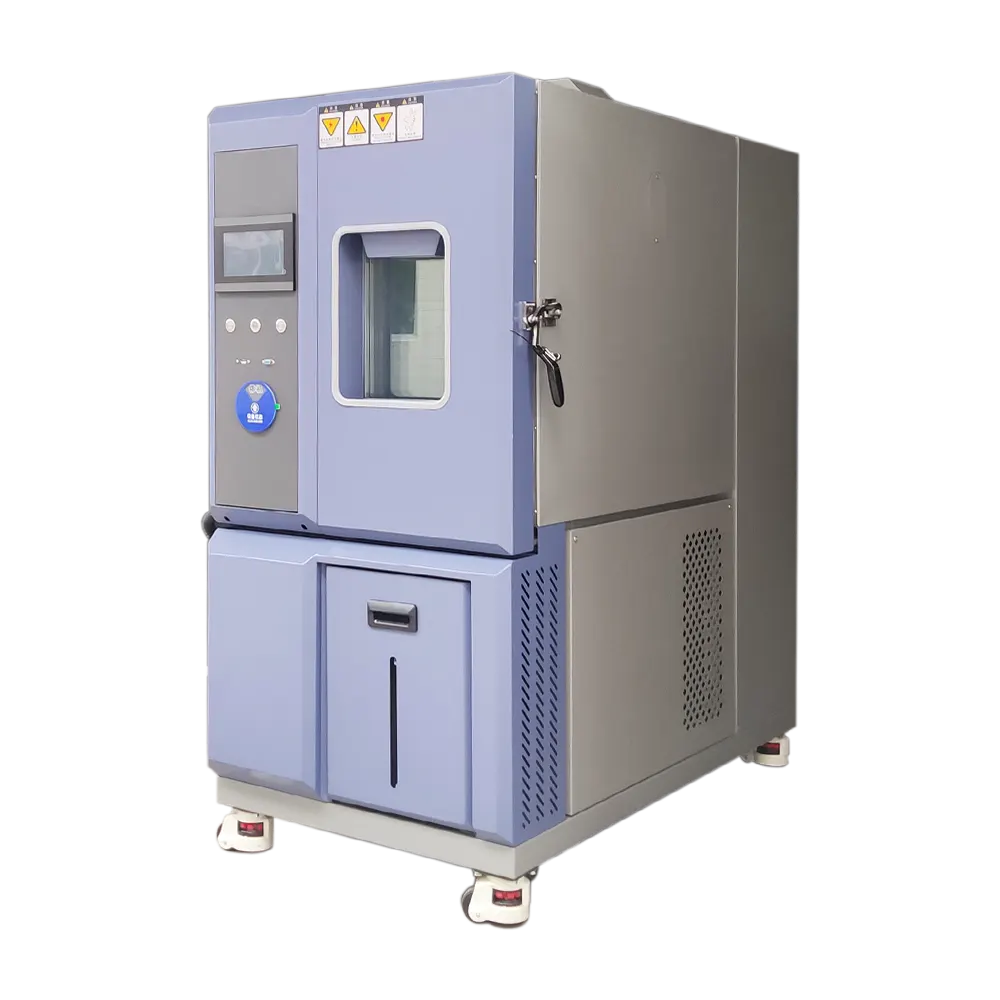
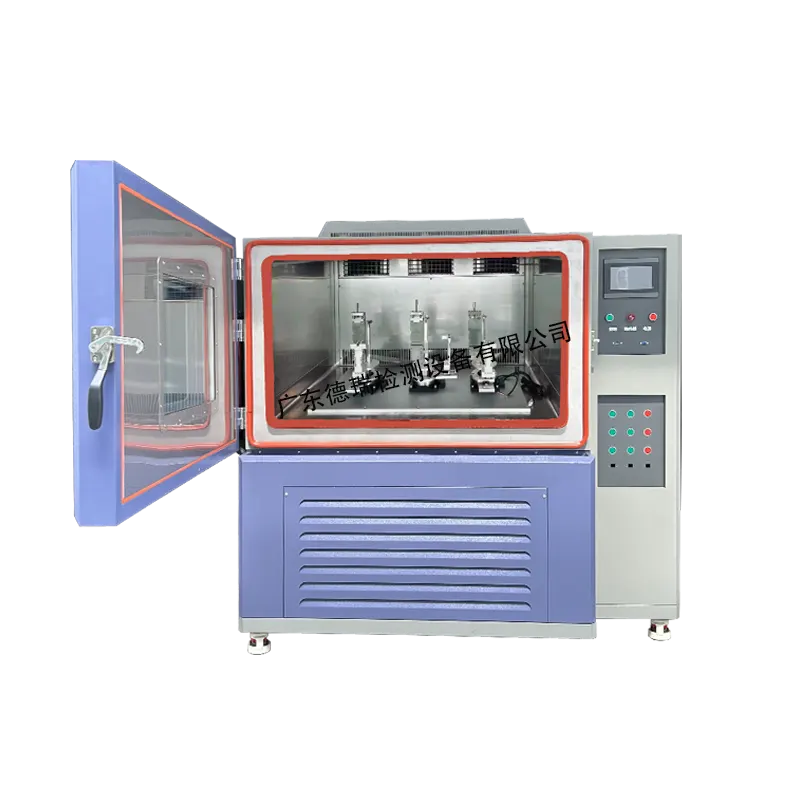
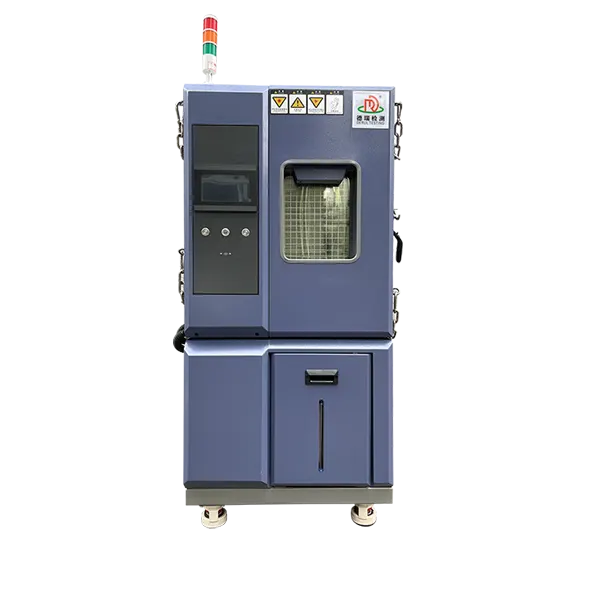
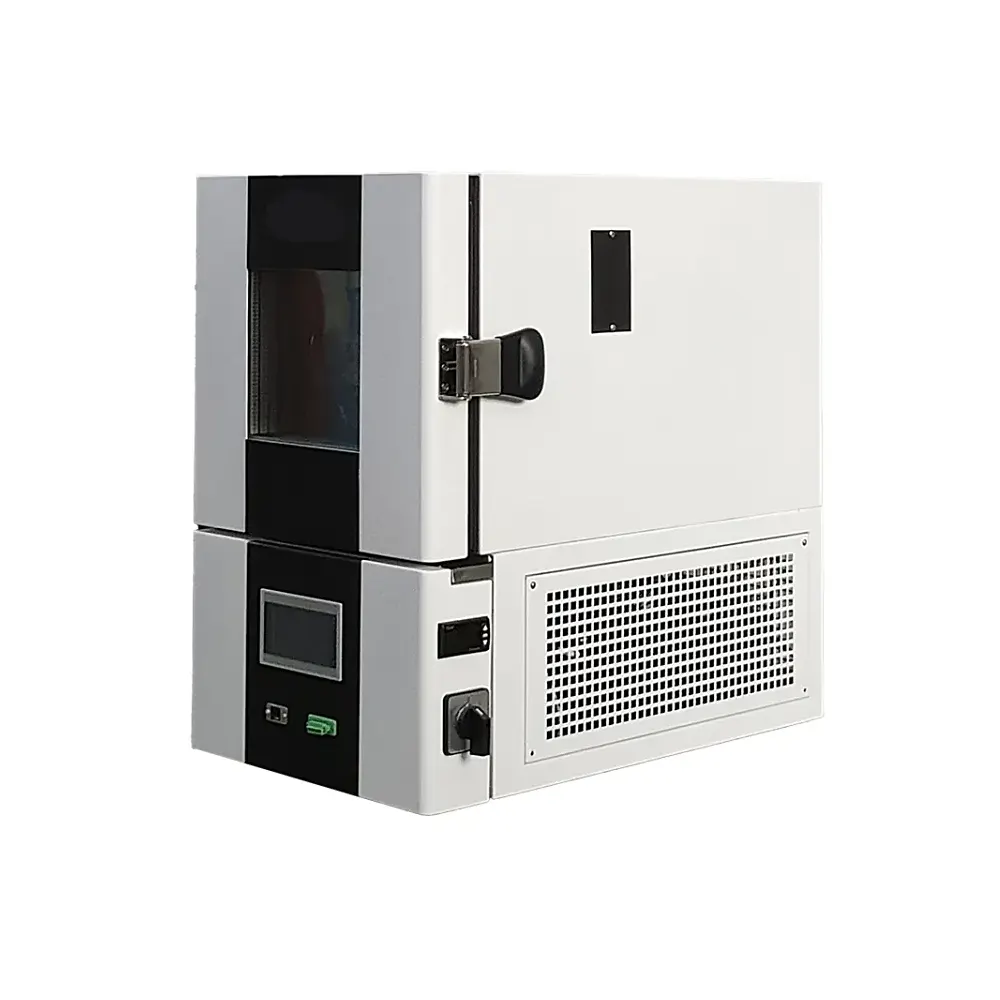
DERUI Desktop Chamber Reference Image

Current DERUI product image. Final controller, ports, shelving and utilities follow the approved configuration.
Loading and Operating Discipline
Maintain airflow clearance
Keep specimen supports and fixtures clear of air supply and return paths; nominal volume is not usable loaded space.
Seal cable entries
Close unused cable-port area to limit ambient air and moisture leakage that can disturb the exposure.
Confirm water requirements
Follow the approved manual for water quality, feed arrangement, drainage and humidifier maintenance.
Define dwell start
State whether exposure begins at controller setpoint or after specimen sensors reach stabilization.
Record the loaded state
Document mass, location, fixture, powered operation and interfaces for repeatable later cycles.
Verify the procedure
Confirm standard edition, profile, monitoring and acceptance criteria before treating a cycle as compliance evidence.
Map the Chamber to the Test Procedure
The test standard and product specification define the programme. The chamber must cover every required setpoint, transition, dwell and tolerance in its selected configuration.
| Reference | Typical use | Confirm before testing |
|---|---|---|
| IEC 60068-2-30 | Cyclic damp heat | Edition, cycle, transitions, condensation and recovery. |
| IEC 60068-2-78 | Steady-state damp heat | Temperature, RH, duration, stabilization and evaluation. |
| MIL-STD-810H Method 507.6 | Tailored humidity exposure | Procedure, climatic cycle, specimen operation and acceptance criteria. |
| JESD22-A101 / A100 | Electronic-device moisture testing | Applicable method, bias interfaces, safety and monitoring. |
RFQ and FAT Checklist
| Topic | Information to provide or verify |
|---|---|
| Specimen | Dimensions, mass, quantity, fixtures, material and powered heat. |
| Profile | Temperature-RH points, transitions, dwell, cycles and tolerances. |
| Interfaces | Ports, power, signals, thermocouples, network and data records. |
| Utilities | Voltage, frequency, current, water quality, drainage and ambient limits. |
| FAT | Sensor map, stabilization, deviation, uniformity, alarms and report format. |
| Documents | Approved drawing, bill of materials, manuals, electrical diagram and agreed calibration scope. |
Frequently Asked Questions
What is the published baseline workspace?
The current parameter table lists DR-H201/22/40 with a 22 L workspace measuring 300 × 300 × 250 mm. Confirm other capacities on their approved drawings.
What temperature and humidity ranges are published?
The 22 L parameter table lists -40°C to +150°C and 30% to 95% RH. The final configuration and usable envelope must be confirmed in the quotation.
Can the chamber record a test profile?
The published 7-inch touch controller supports programme input, curve display and USB export. Confirm record interval, file format and evidence requirements before procurement.
Can I test powered electronics inside?
State heat dissipation, duty cycle, cables and safety requirements in advance. The permitted loaded performance must be agreed for the actual configuration.
Which standards can it support?
The page references GB 5170 and older IEC 60068 equivalents. Specify the exact current standard edition and programme; equipment capability alone does not claim compliance.
What should I send for a quotation?
Send specimen dimensions, mass, quantity, live heat load, profile, cable needs, site utilities, data requirements and target method.
Configure a Compact Climate Chamber from the Real Test
Send the specimen drawing, temperature-humidity programme, powered load, test standard and data requirements. DERUI can confirm workspace, environmental range, controller records and installation details in the technical proposal.