Floor 1, No. 3, Shugang Avenue, Hongmei Town, Dongguan City, Guangdong Province, China

20 years environmental test chamber manufacturer3000+ customer deliverables worldwide           Email: shirley@deruitest.com
Global Consultation Hotline:+86 15580327593

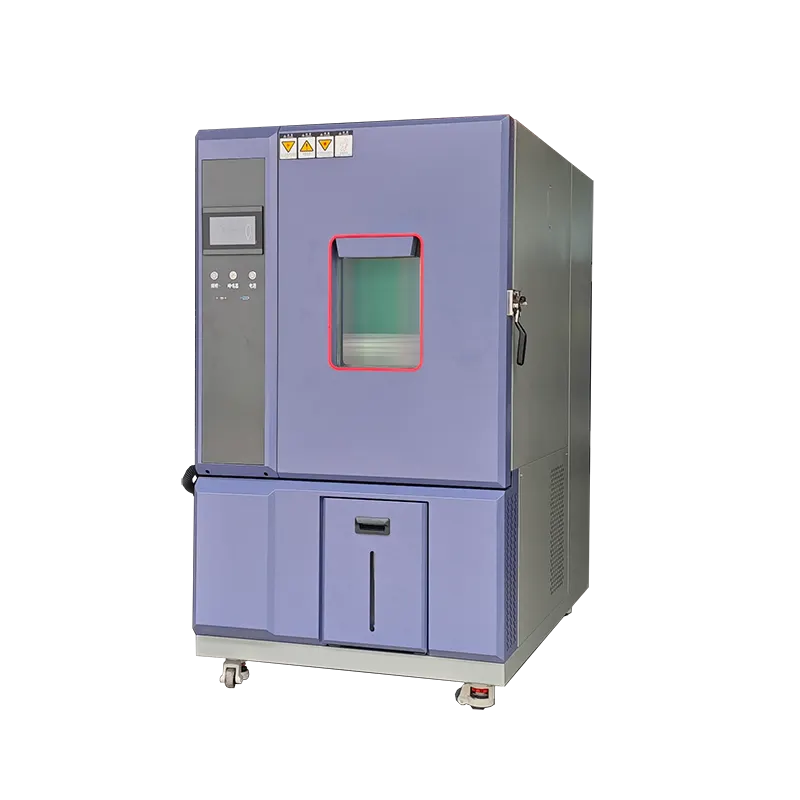
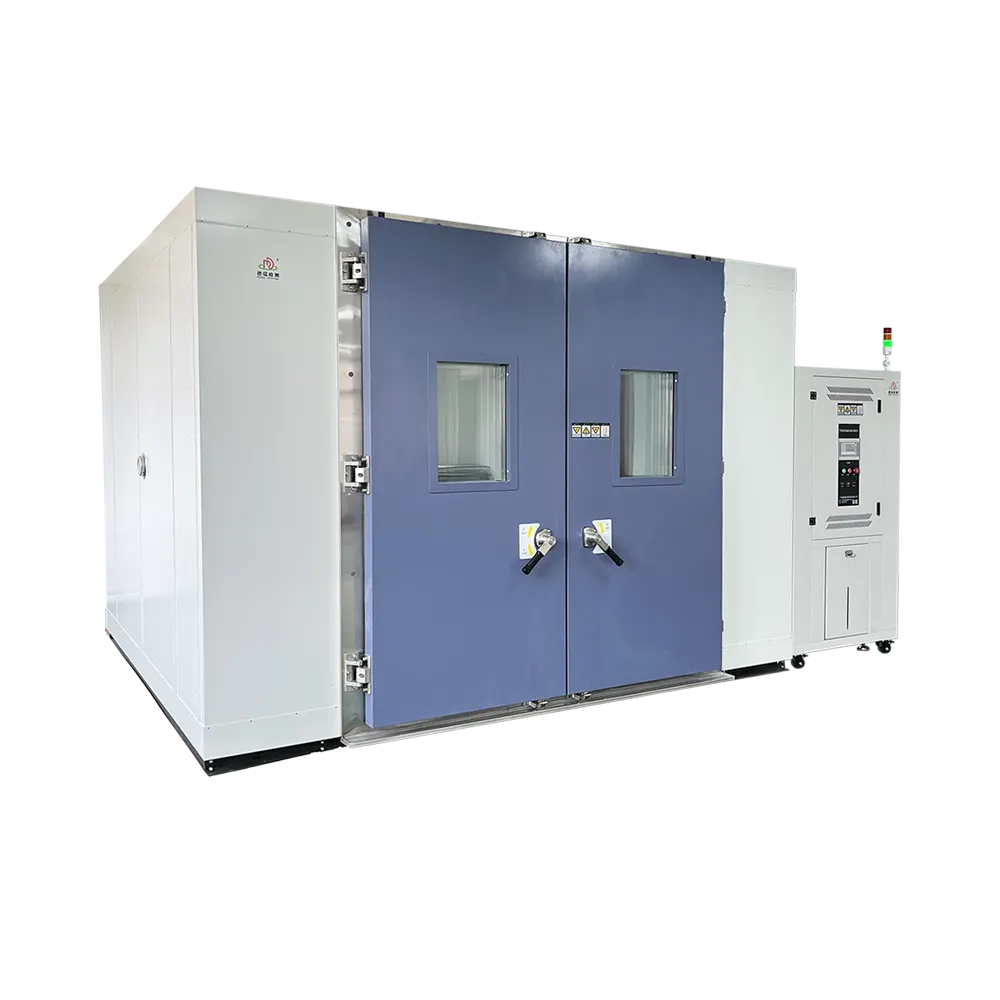
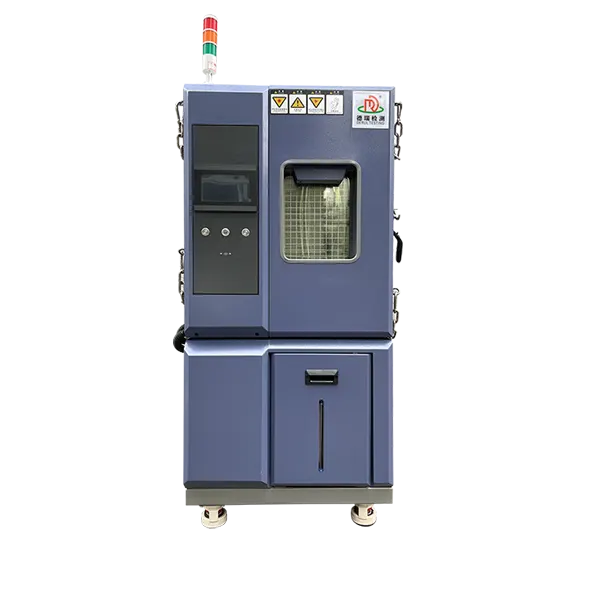
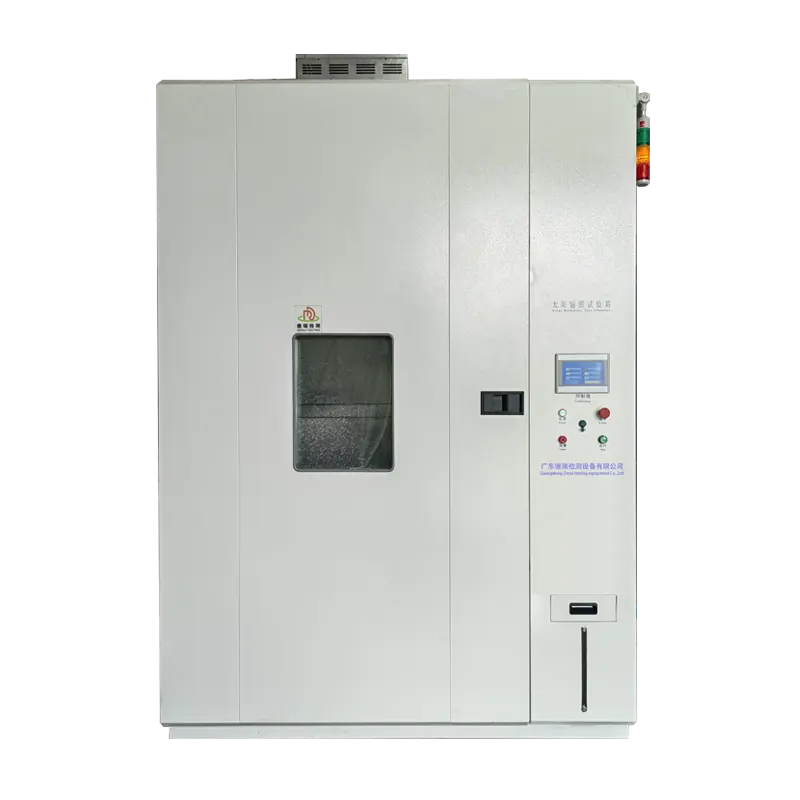
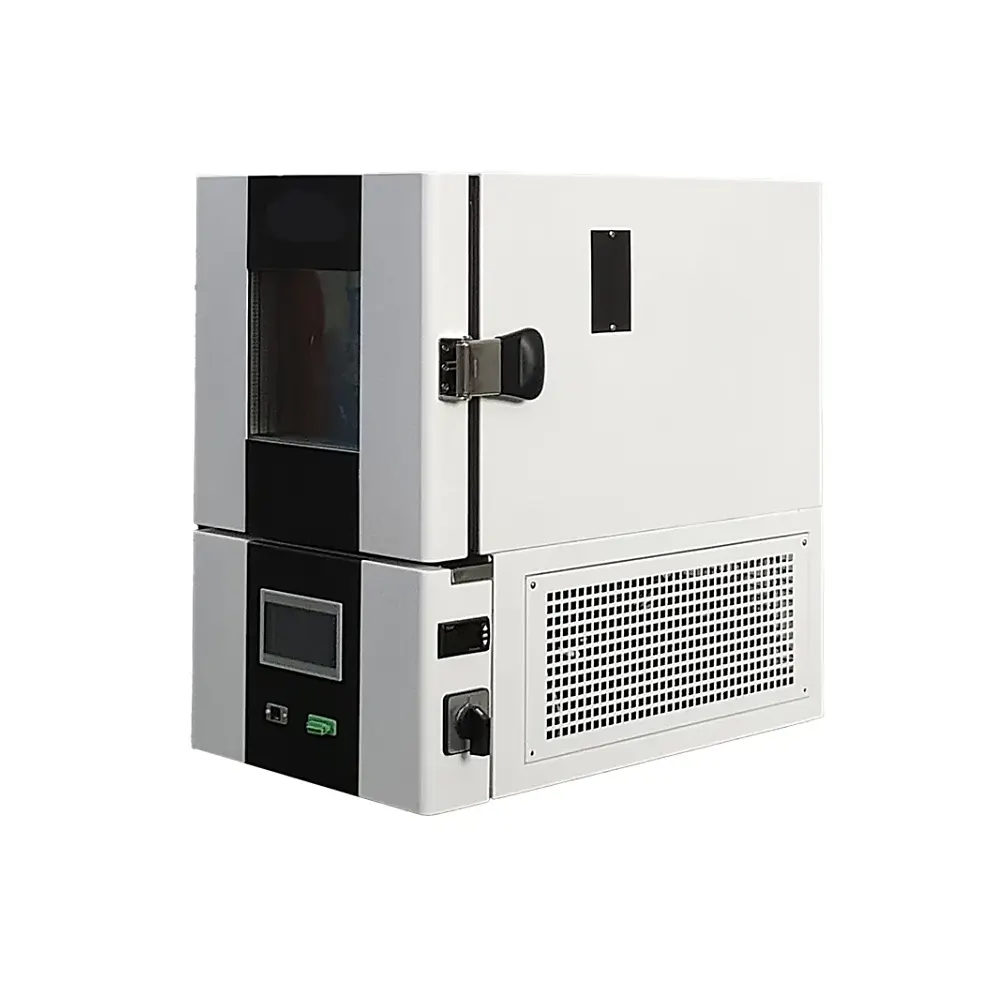
8³ Walk In Temperature Humidity Test Chamber

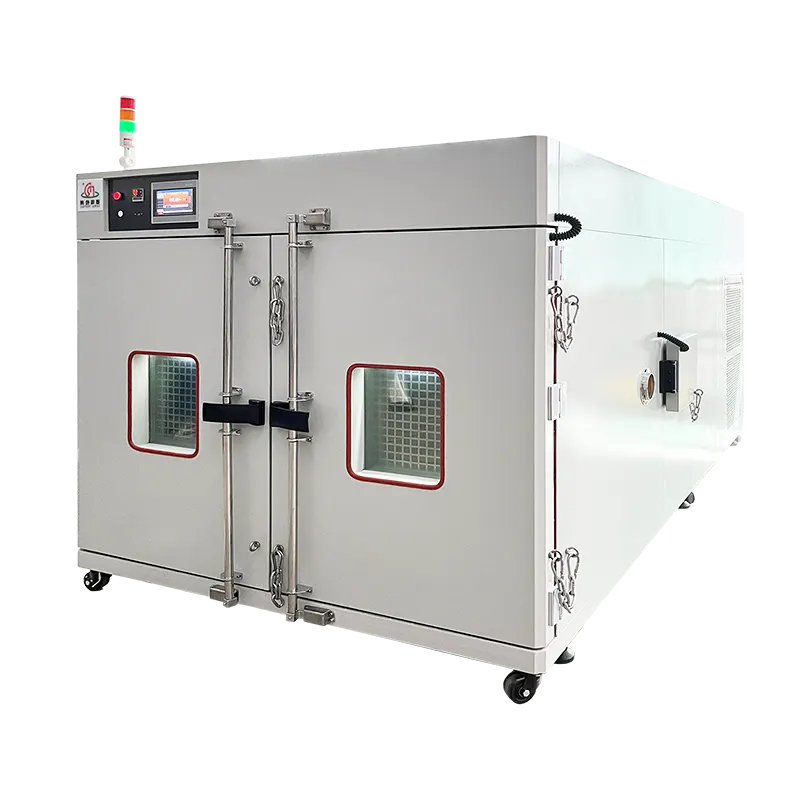
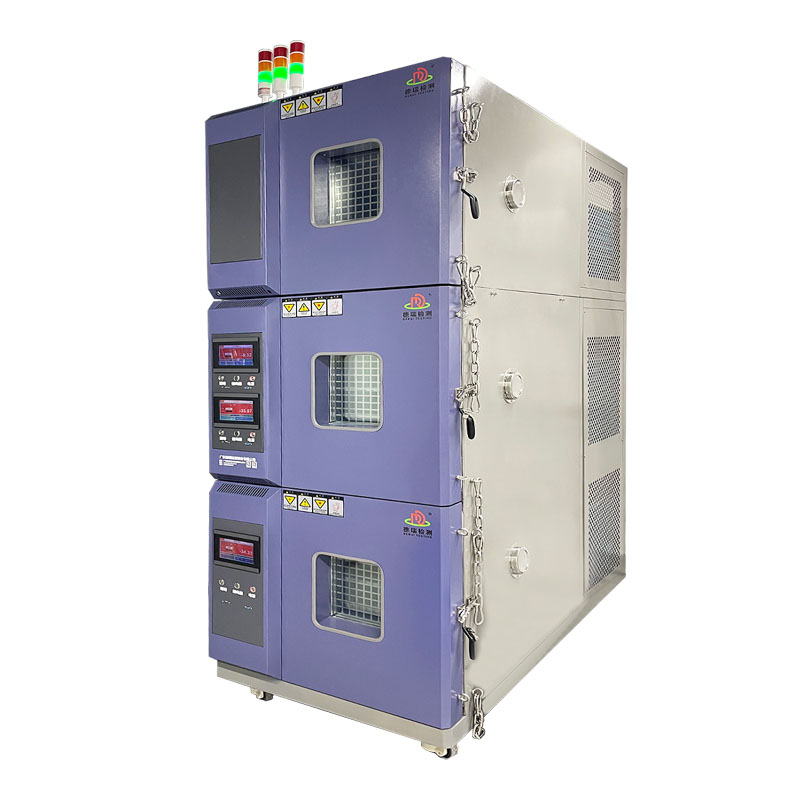
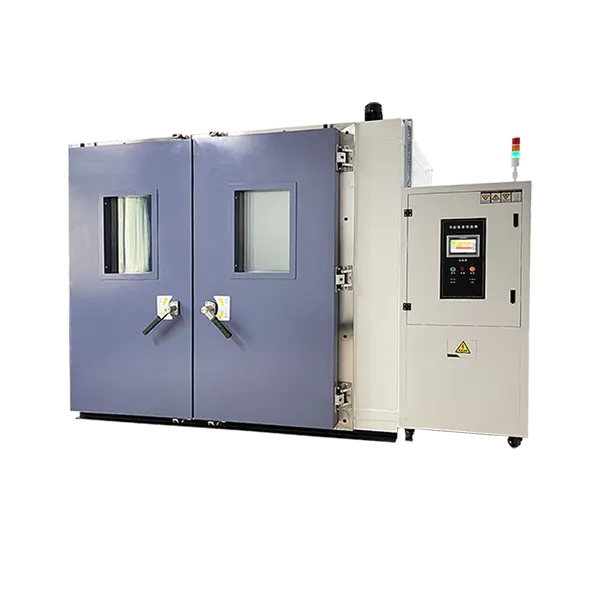
The DERUI 8 m³ walk-in temperature humidity test chamber provides a configurable climate-controlled room for large assemblies, equipment racks and batch testing. Airflow, refrigeration, humidification, doors and ports are matched to the actual load.

Nominal Volume: 8 m³
Control: Temperature and relative humidity
Airflow: Forced recirculation with PID-controlled heating
Access: Two Ø100 mm ports; door/window options
Applications: Large assemblies, racks and batch loads
Safe and reliable
well-made
Quality assurance
customization
MessageWhatsApp
Hotline number 15580327593
  • Product Details
  • Technical parameters
  • FAQ
  • Contact us

8 m³ Controlled Climate Test Room

Walk-In Temperature and Humidity Testing for Large Assemblies and Batch Loads

The DERUI 8 m³ walk-in temperature humidity test chamber provides a configurable conditioned room for full-size assemblies, equipment racks and multiple products. Airflow, refrigeration, heating and humidification are engineered around the actual load and test profile rather than volume alone.

8 m³ Nominal VolumeExact internal dimensions to be confirmed
Temperature + RHControlled climatic exposure
Modular ConfigurationDoor, ports and layout selected by project
Remote InterfacesRS-485 and optional Ethernet
Application Fit

What Fits an 8 m³ Walk-In Climate Chamber?

Nominal volume is not the same as usable test space. Air supply and return, wall clearance, floor loading, door swing, cable routing and service access reduce the usable envelope.

Automotive and Electronics

Condition control cabinets, vehicle electronics, charging equipment, instrument assemblies and component batches.

Energy and Industrial Systems

Test power electronics, energy-storage subsystems, enclosures and industrial products when the approved safety configuration supports them.

Materials and Packaged Products

Run temperature-humidity conditioning, storage and durability profiles on large parts or multiple packaged specimens.

Capacity check: provide the specimen drawing, quantity, mass, heat dissipation, rack dimensions and clearance. DERUI should confirm usable workspace and airflow before quotation.
Climate Control

How the Chamber Maintains Temperature and Humidity

Forced-Air Recirculation

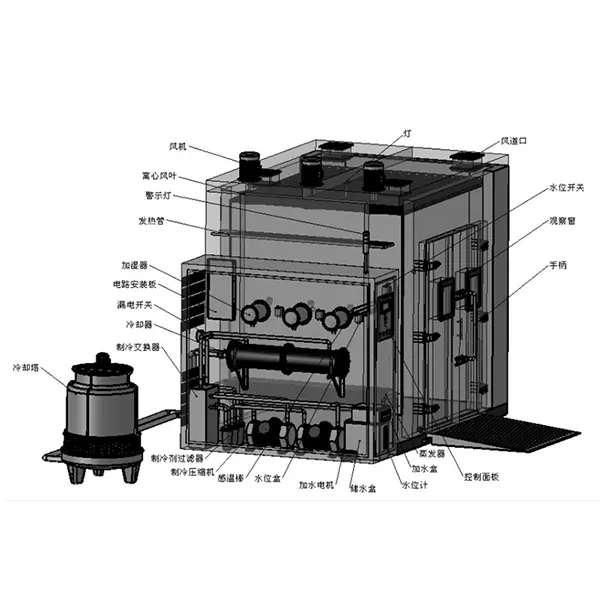
An externally driven extended-shaft centrifugal fan circulates conditioned air. Supply and return geometry should limit dead zones and avoid direct airflow that biases specimen temperature.

Balanced PID Control

The controller regulates heating, cooling and humidification against measured conditions. Nickel-chromium heaters use PID/SSR control.

Refrigeration Circuit

Scroll-compressor refrigeration, finned evaporation, oil management and plate heat exchange are described. Final compressor stages and refrigerants depend on the selected low-temperature range.

Humidity Generation

The source includes a humidifier, dry-heating protection, wet-bulb sensor and water tank. Confirm whether the final model uses wet-bulb control or an electronic RH sensor.

Humidity capability is temperature-dependent. A headline RH range is incomplete without a temperature-humidity operating chart and dew-point limits.
Source Features

Standard and Optional Configuration

Nominal volume 8 m³; exact W × D × H dimensions were not supplied
Air circulation Forced recirculation with extended-shaft centrifugal fan
Heating Nickel-chromium heater with PID + SSR control
Cooling Mechanical refrigeration with finned evaporator; air-cooled condenser stated
Humidity components Humidifier, dry-heating protection, wet-bulb sensor and water tank stated
Access ports Two Ø100 mm side-wall ports
Doors/windows Selectable double doors and two electrically heated double-glazed windows stated
Communication RS-485; optional RJ-45 with software; USB/RS-232 wording requires confirmation
Protection Fault alarm, diagnostic prompt, power-loss and temperature-limit protection
No verified temperature range, RH range, ramp rate, uniformity, floor load, electrical rating or model number was supplied. Do not copy these values from another 8 m³ chamber.
Performance Verification

Empty-Chamber Data Is Not Loaded Performance

IEC 60068-3-6 provides guidance for confirming temperature/humidity chamber performance without specimens. A customer load changes airflow, heat capacity, moisture and recovery, so define both factory acceptance and any loaded site-acceptance profile.

1

Map the Workspace

Confirm temperature and RH at defined locations with calibrated sensors after stabilization.

2

Test the Worst Load

Use representative mass, racks, heat and airflow obstruction to verify recovery and gradients.

3

Document Conditions

Record ambient, cooling mode, water quality, door openings, sensor and stabilization rule.

Safety Scope

Standard Chamber Sample Restrictions

  • Flammable, explosive or volatile substances
  • Corrosive samples without compatible construction
  • Biological, radioactive or highly toxic materials
  • Strong electromagnetic emission sources
  • Samples that may release toxic, combustible or corrosive products

Walk-In Does Not Mean Occupied Testing

Personnel should not remain inside while a standard test is running. Door release, emergency stop, alarm, lighting and facility procedures must be reviewed. Battery, energized or hazardous testing requires a risk assessment and engineered options.

Site Planning

Information Required Before Manufacturing

Room and Access

Installation-room dimensions, transport route, doorway, ceiling, floor load, clearances and integral versus site assembly.

Utilities

Voltage, current, heat rejection, cooling method, humidification-water quality, drain and ambient limits.

Specimen and Profile

Dimensions, mass, heat/moisture load, rack, temperature/RH profile, ramp, dwell and cable connections.

Acceptance

Sensor layout, empty/loaded test, tolerances, stabilization, calibration and report responsibilities.

For other capacities, visit the walk-in chamber category. Keep this page focused on the 8 m³ temperature-humidity product.

Refrigerant Clarification

Confirm the Final Refrigeration Architecture

The source first lists R404A and later R404A/R23. This may represent single-stage and cascade options, but it is not one confirmed specification. Zero ozone-depletion potential does not by itself make a refrigerant low-impact; review local rules, service availability and global-warming potential.

Confirm compressor brand, stages, refrigerant(s), charge, condenser type and any alternative refrigerant before publication.
Frequently Asked Questions

8 m³ Walk-In Temperature Humidity Chamber FAQs

What does 8 m³ mean?

It is nominal internal volume. Exact dimensions vary, and usable volume is smaller after airflow, rack and access clearances.

What temperature and RH range does it provide?

The source does not include approved ranges. DERUI should issue the temperature range, RH range and operating chart for the selected configuration.

Can an operator stay inside during a test?

No. Enter only for loading or service under safe conditions; personnel should not remain inside during operation.

Can it test energized equipment?

Only after heat load, electrical interfaces, airflow, failure modes and safety controls are reviewed.

How is humidity performance verified?

Use calibrated sensors at defined locations after stabilization under stated ambient and loading conditions.

Is it delivered as one piece?

It may be integral or panel-assembled. Confirm shipping route, container, doorway and room access.

What water quality is required?

Request the maximum conductivity, pressure, consumption, tank and drain requirements for the selected humidity system.

What is needed for quotation?

Send specimen/load data, temperature-RH profile, room/utilities, ports, doors, monitoring, safety and acceptance criteria.

Configure the 8 m³ Chamber Around the Actual Load

Send DERUI your specimen dimensions, quantity, heat and moisture load, temperature-humidity profile, room access and acceptance criteria.

Request an 8 m³ Chamber Review

FacebookLinkedInXRedditWhatsApp

Studio Standard cubage:

4 ,6,【8】,12,16,18,27,36,45,60、100.....(cubic metre)

Upper Temperature:

80℃、100℃、120℃、150℃、200℃

Lower Temperature:

-0℃、-20℃、-40℃、-50℃、-60℃、-70℃

Temperature Deviation:

≤±1℃

Temperature fluctuations:

≤±0.5℃

Humidity Range: 

30-98%R.H、25-95%R.H、20-98%R.H、10-98%R.H

Humidity error: 

+2/-3%R.H

Heating Time:

average 1~3℃/min

Cooling Time:

average 1℃/min

Cooling Way:

(water-cooling)

Controller: 

Chinese LCD screen temperature controller, PID control algorithm

Formula Capacity:

(120group,1200sections)

Security protection measures:

Temperature control, compressor supervoltage, compressor overload , heater short circuit

Power:

(Three-phase four-wire)

Material:

SUS#304

Function:

Program control temperature and humidity.

1. What is the working principle of the walk-in temperature and humidity test chamber?
Answer: By regulating the temperature through the refrigeration system and controlling the humidity in combination with the humidification/dehumidification device, a stable environmental space is formed, which is used to simulate the weather resistance test of the product under different temperature and humidity conditions.

2. Compared with small test chambers, what are the advantages of walk-in test chambers?
Answer: It is larger in size and can accommodate the testing of complete machines or large-scale equipment. Support remote monitoring; Independent temperature control in multiple regions Meet the demand for simultaneous testing by multiple people.

3. What are the usual control ranges for temperature and humidity?
Answer: The temperature range is generally -70℃ to +150℃, and the humidity range is 20% to 98%RH (some models can be expanded). Specific parameters need to be adjusted according to the brand and configuration.

4. How to choose the appropriate box volume?
Answer: It is determined based on the maximum external dimensions, quantity and operation space requirements of the object under test. It is generally recommended to leave 10% to 30% of the spare space to ensure uniform airflow.

5. Will the noise be very loud during operation?
Answer: The noise mainly comes from the compressor and the fan. The standard noise level is usually ≤65dB (A), and for high-end models, it can be reduced to ≤50dB. It is recommended to add sound insulation measures when installing near the test area.

6. How can the uniformity of temperature and humidity be ensured during long-term testing?
Answer: Give priority to choosing models with deflector plates and circulating fans; Regularly check the wear of the fan blades and whether the filter is clogged. Optimize the internal layout to avoid blocking the airflow.

7. How to quickly cool down or heat up in an emergency?
Answer: Test chambers equipped with emergency stop protection function support rapid mode switching within a safe range, but it is necessary to avoid severe fluctuations that may damage the equipment. The specific limits should be referred to the equipment manual.

8. How to operate the data recording and monitoring functions?
Modern instruments are usually equipped with touch screens or PLC control systems, supporting curve drawing, alarm threshold setting, and USB/ wireless data export. Some models are compatible with remote cloud management.

9. How should one handle self-rescue when the equipment malfunctions?
Answer: Immediately cut off the power supply, check the fuse and sensor. If there is any leakage or unpleasant smell, cut off the water source and report for repair. Non-professionals must not disassemble the internal components by themselves.

10. How to extend the service life of the equipment?
Answer: Regularly clean the condenser, drainage holes and sensors; Replace the aged sealing strips in time; Avoid frequent start-ups and shutdowns of the unit; Carry out annual maintenance and upkeep as recommended by the manufacturer.

11. Can it be used directly exposed to flammable and explosive environments?
Answer: Some explosion-proof test chambers support special working conditions, but it is necessary to purchase models that meet explosion-proof certifications (such as ATEX, IECEx). Ordinary models are strictly prohibited from being used in areas with potential safety hazards.

12. Will the energy consumption and electricity charges be very high?
Answer: High energy consumption is mainly concentrated in the start-up stage and during extreme temperature difference switching. It is recommended to pair it with an intelligent energy-saving system to optimize the testing process and reduce unnecessary operating time.

13. What are the requirements for the surface material inside the test chamber?
Answer: The inner wall is coated with a corrosion-resistant and anti-adsorption layer (such as 304 stainless steel or powder coating treatment) to avoid affecting the sample properties and to facilitate cleaning and maintenance.

14. Is a dedicated site required for installation?
Answer: A well-ventilated and flat area should be reserved, with no obstacles around to interfere with heat dissipation. At the same time, ensure that there is sufficient power and water supply (the humidity function needs to be connected to a water pipe or humidifier).

15. How to verify the calibration accuracy of the equipment?
Answer: Contact the manufacturer for third-party calibration services every six months. During daily use, conduct cross-comparisons with high-precision thermometers and hygrometers to ensure that the deviation is within the allowable range.

telephonetelephone

hotline:
155 8032 7593

WhapsAppWhapsApp
WhapsApp
LinkedinLinkedin

Derui LinkedIn Profile

messagemessage

Contact us to provide you with exclusive service!