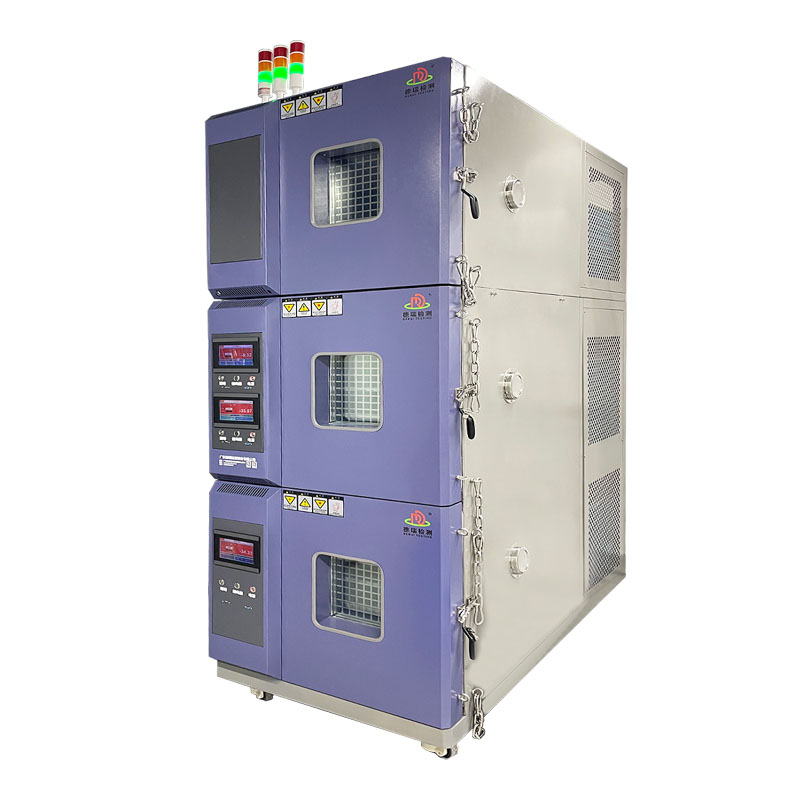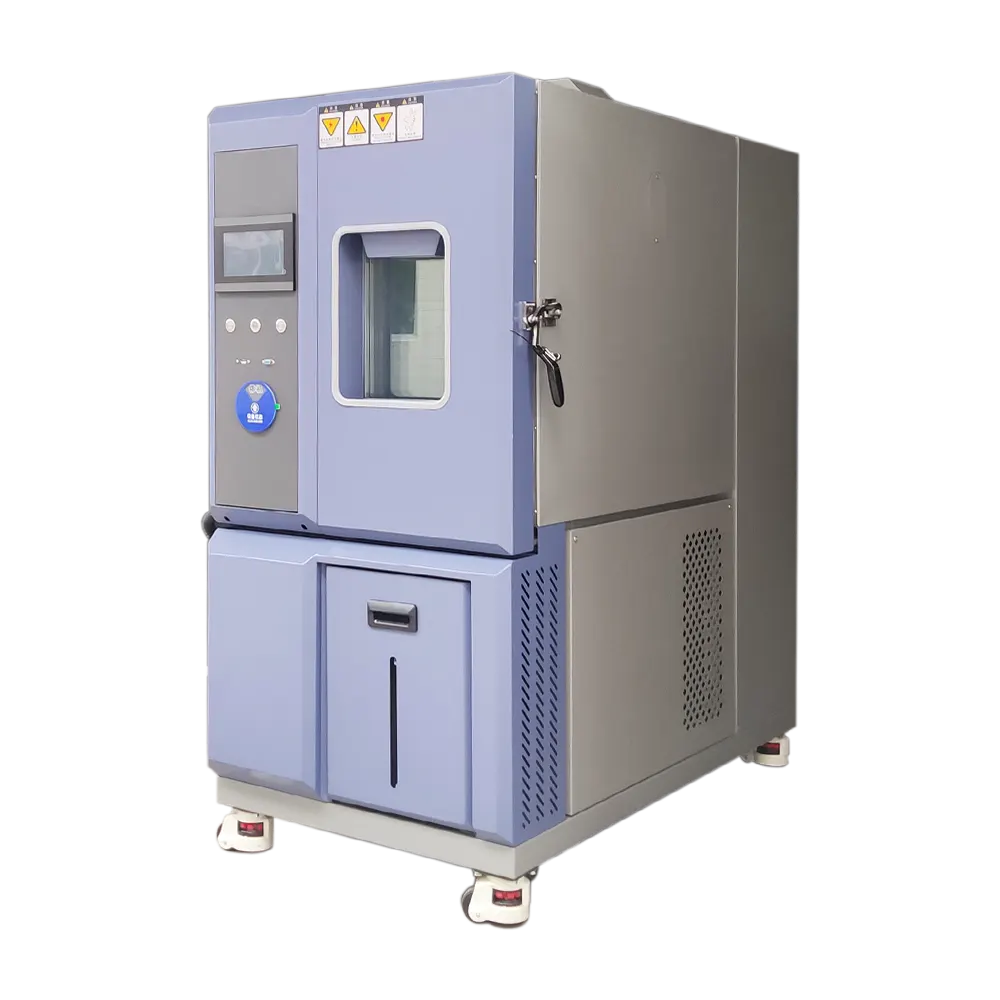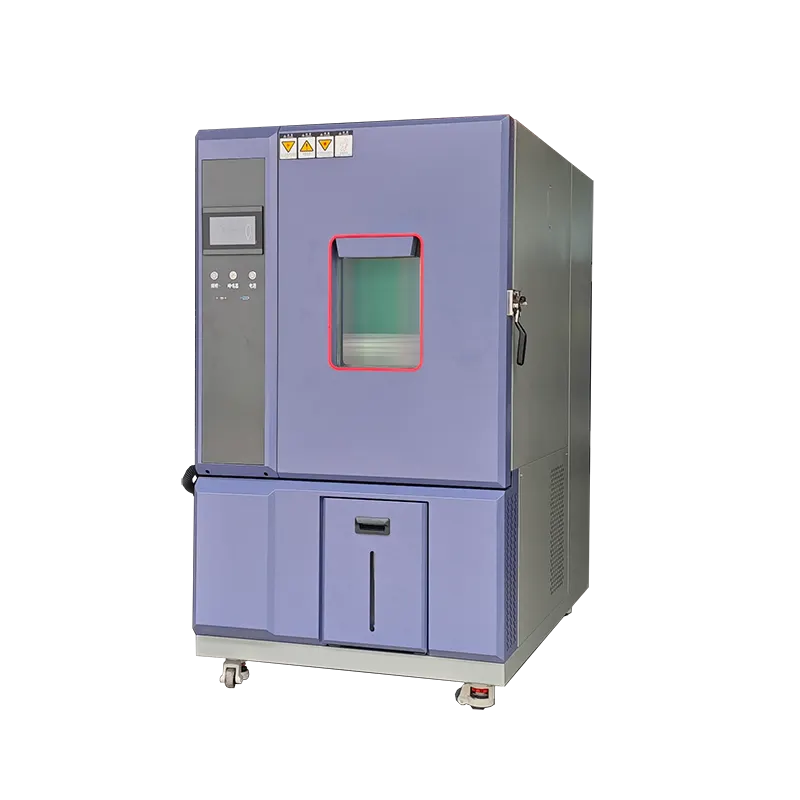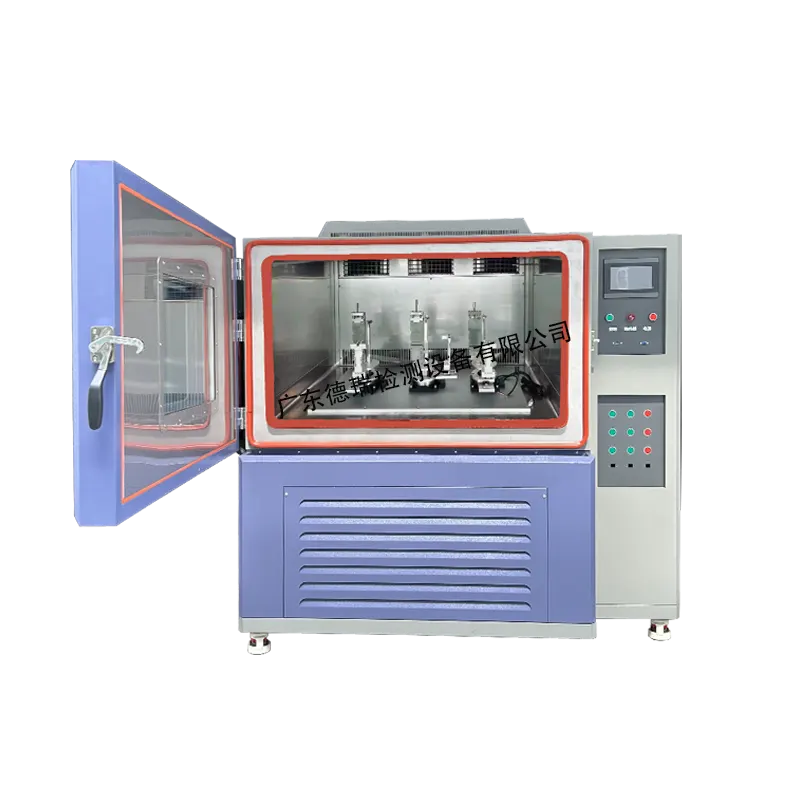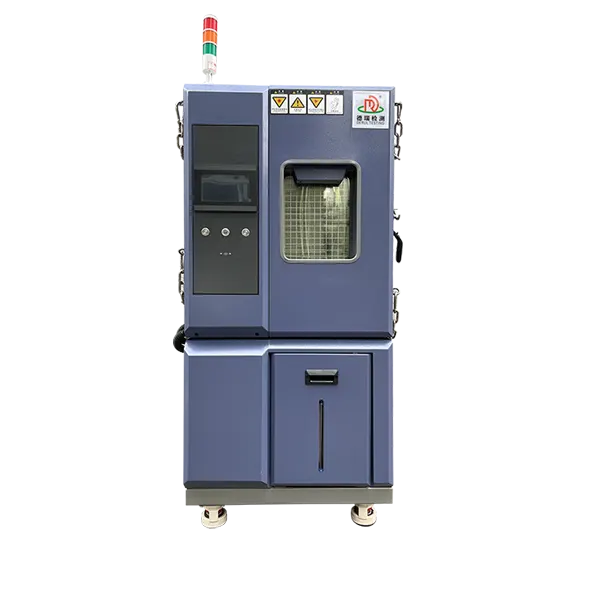


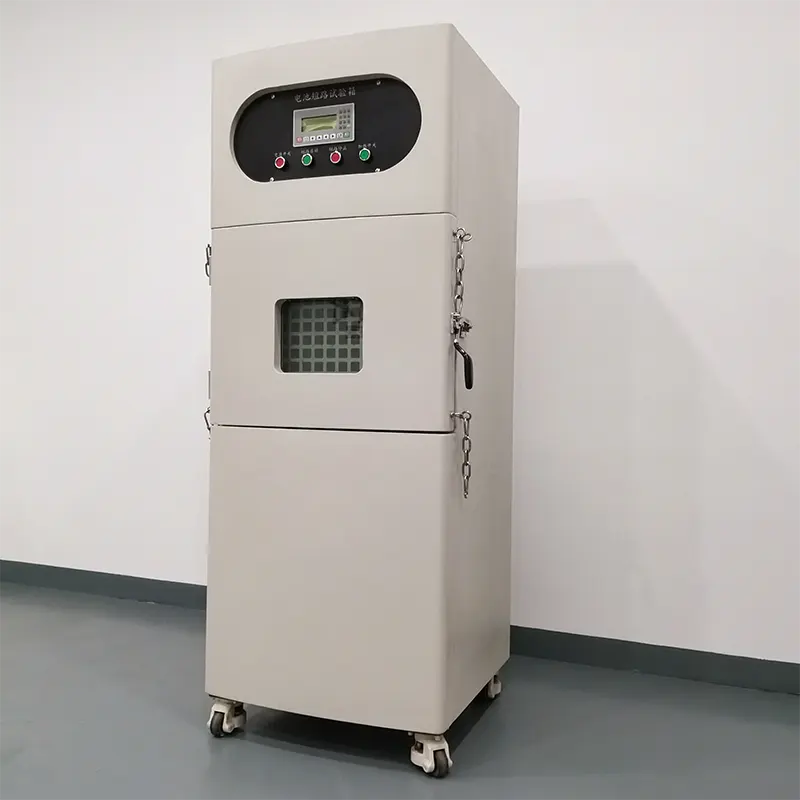
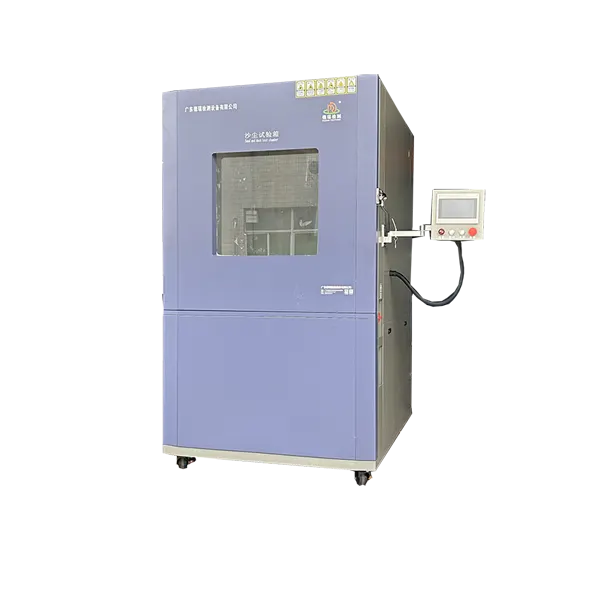

DR-H201-F3000 Large Temperature and Humidity Chamber
Configure a 3,000 L controlled environment for battery modules, packs, energy-storage components and other large test loads. Temperature, humidity, specimen power, access ports and the safety response are engineered around the approved test plan and installation site.
Designed Around Large Loads, Not an Empty Chamber
Battery modules and packs
Provide specimen envelope, mass, state of charge, maximum electrical energy and powered heat so airflow and refrigeration capacity can be sized correctly.
Multiple specimens or fixtures
Define rack layout, clearances, cable routing and loading method. A nominal 3,000 L volume does not equal 3,000 L of usable specimen space.
Integrated test systems
Specify cycler connections, voltage and temperature channels, gas sampling, video, exhaust and data interfaces before the chamber layout is released.
Published DR-H201-F3000 Configuration
| Item | Published value | Project confirmation |
|---|---|---|
| Model / nominal volume | DR-H201-F3000 / 3,000 L | Confirm usable internal dimensions and door opening on the approved drawing. |
| Temperature range | -70°C to +150°C | Confirm required option, load, setpoint span and stabilization criteria. |
| Temperature uniformity | ±2°C | Confirm whether this means deviation or uniformity, sensor map and loaded/no-load condition. |
| Humidity range | 10% to 98% RH | Request the combined temperature-humidity operating envelope; full RH range is not available at every temperature. |
| Heating / cooling rate | Published as up to 5°C/min / 3°C/min | Define average or linear rate, start/end points, specimen load and cooling-water condition. |
| Power supply | 220 V or 380 V, 50/60 Hz; customized | Freeze voltage, phase, frequency, connected load and protective device. |
| Internal / external material | Stainless-steel interior / reinforced coated-steel exterior | Confirm grade, thickness, floor loading and corrosion requirements. |
| External dimensions | Customized for installation | Confirm transport route, doorway, service clearance and maintenance access. |
Freeze the Non-Standard Design Inputs First
Define the climate duty
List temperature and RH setpoints, transitions, dwell times, cycles, tolerances and recovery requirements.
Define the real load
Provide dimensions, mass, quantity, fixtures, packaging, powered heat, cable loss and expected failure modes.
Define the facility interface
Confirm electrical supply, cooling water, drain, exhaust route, fire-system interface, room ambient and installation access.
Safety Functions Must Follow the Hazard Analysis
| Function | Information required before selection | Acceptance evidence |
|---|---|---|
| Pressure relief | Credible pressure event, relief direction, safe discharge area and facility clearance | Approved calculation/drawing and functional inspection |
| Gas, smoke or flame detection | Target hazard, sensor type/range, alarm thresholds and calibration | Calibration record and cause-and-effect test |
| Forced exhaust | Required airflow, duct material, discharge point, make-up air and purge time | Measured airflow and interlock demonstration |
| Fire suppression | Agent, design concentration, activation logic, drainage and local-code approval | Approved system documents and functional test |
| Electrical isolation | Specimen power, chamber shutdown sequence, emergency stop and fail-safe state | Interlock matrix and witnessed shutdown test |
| Reinforced enclosure | Defined event, structural design basis, door/window/port construction | Drawing review and agreed project-specific verification |
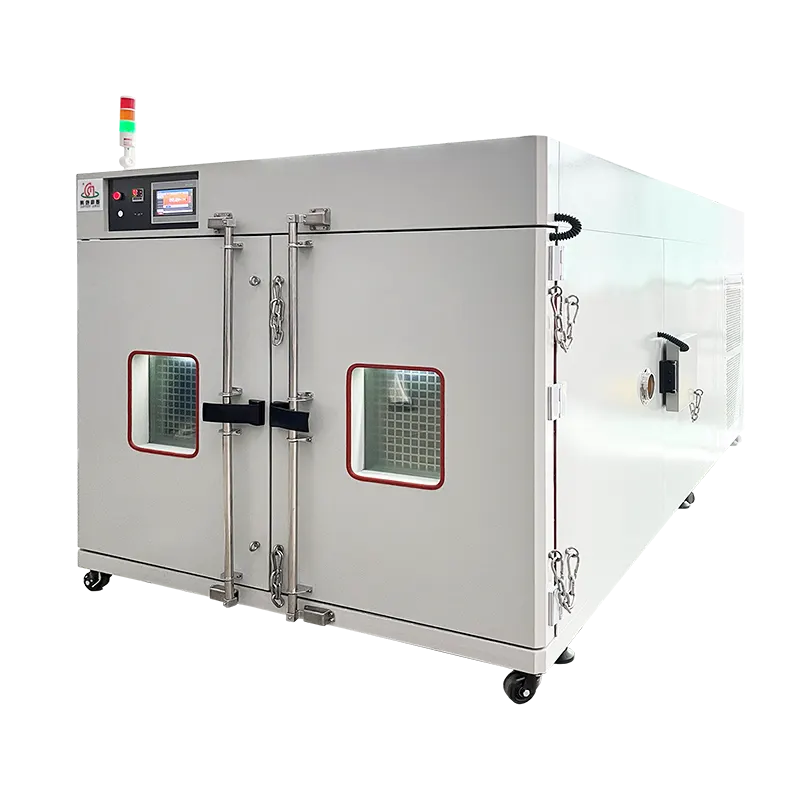
DR-H201-F3000 Reference Image
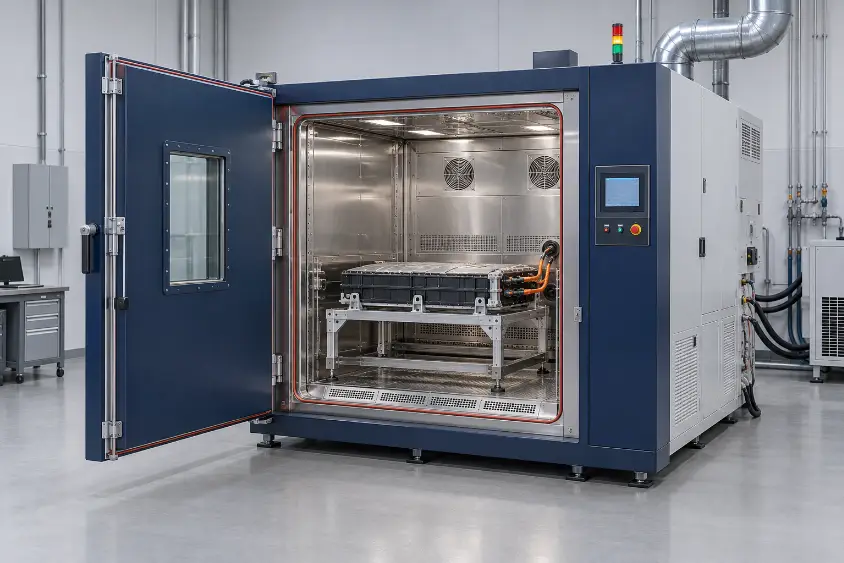
Reference image from the current product page. Final internal layout, access ports, external services and safety package follow the approved project drawing.
Standards and Certification Need Separate Decisions
| Reference | How it may relate | What must be verified |
|---|---|---|
| IEC 60068-2-1 / IEC 60068-2-2 | Cold and dry-heat environmental tests | Applicable procedure, severity, load and chamber performance. |
| IEC 60068-2-78 | Cab: steady-state damp heat | Temperature-RH point, duration, specimen state and acceptance criteria. |
| UN 38.3 | Lithium battery transport-test programme | Only the applicable procedure should be mapped; the chamber does not perform every T.1–T.8 test. |
| UL 1642 / UL 2580 or customer specification | Method-specific cell or EV battery safety evaluation | Exact edition, clause, fixtures, monitoring and separate abuse equipment. |
| ATEX / IECEx / IEC 60079 | Equipment for potentially explosive atmospheres | Do not claim certification without the exact certificate, model/configuration scope, equipment marking and issuing body. |
Recommended FAT for a Custom 3,000 L Chamber
Climate performance
Verify agreed temperature/RH points, empty and representative-load mapping, ramp definition, recovery and door-opening behaviour.
Control and records
Check programme execution, alarms, access permissions, sensor records, export format, communication and power-failure recovery.
Safety cause and effect
Simulate every detector and fault input to verify alarms, isolation, exhaust, suppression command and safe-state sequence.
Information Required for an Accurate Quotation
| Topic | Send DERUI |
|---|---|
| Specimen | Dimensions, mass, quantity, chemistry, capacity, SOC, electrical energy and packaging. |
| Test profile | Temperature/RH programme, rates, dwell, cycles, tolerance and specimen operating mode. |
| Powered load | Maximum watts, charge/discharge current, duty cycle and cable/feedthrough requirements. |
| Failure scenario | Credible gas, smoke, flame, pressure, electrolyte, fragment and heat-release conditions. |
| Facility | Power, cooling water, drainage, exhaust route, fire system, ambient and installation access. |
| Acceptance | Mapping points, loaded performance, alarms, interlocks, data format and documentation. |
Frequently Asked Questions
Is DR-H201-F3000 a standard catalogue chamber?
No. It is a non-standard 3,000 L project. Dimensions, refrigeration, humidification, ports, utilities and safety controls must be confirmed against the test load and site.
Is 10% to 98% RH available throughout -70°C to +150°C?
No such full-envelope capability is established. Request the combined temperature-RH chart and define the required operating points.
Is the published ramp rate guaranteed with a battery pack installed?
Not without a defined load. Rate type, span, payload mass, powered heat and facility conditions must be written into the technical agreement.
Does “explosion-proof” guarantee containment of thermal runaway?
No. A specific hazard scenario, engineered protection package, acceptance protocol and supporting evidence are required.
Is this model confirmed ATEX or IECEx certified?
The current page makes that claim but provides no certificate number or scope. Treat certification as unverified until DERUI supplies the certificate covering the quoted model and configuration.
What should be approved before production?
Approve the chamber drawing, usable workspace, climate duty, load, interfaces, utilities, safety matrix, FAT criteria, documentation and delivery scope.
Start with the Load, Hazard and Site—Then Freeze the Chamber
Send the 3,000 L project profile, specimen data, powered heat, failure scenarios and facility utilities. DERUI can return a configuration matrix and measurable FAT scope for technical review.