Floor 1, No. 3, Shugang Avenue, Hongmei Town, Dongguan City, Guangdong Province, China

20 years environmental test chamber manufacturer3000+ customer deliverables worldwide           Email: shirley@deruitest.com
Global Consultation Hotline:+86 15580327593

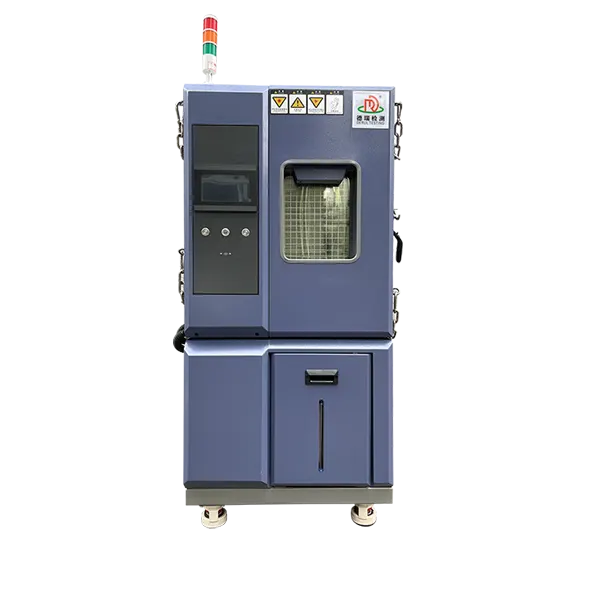
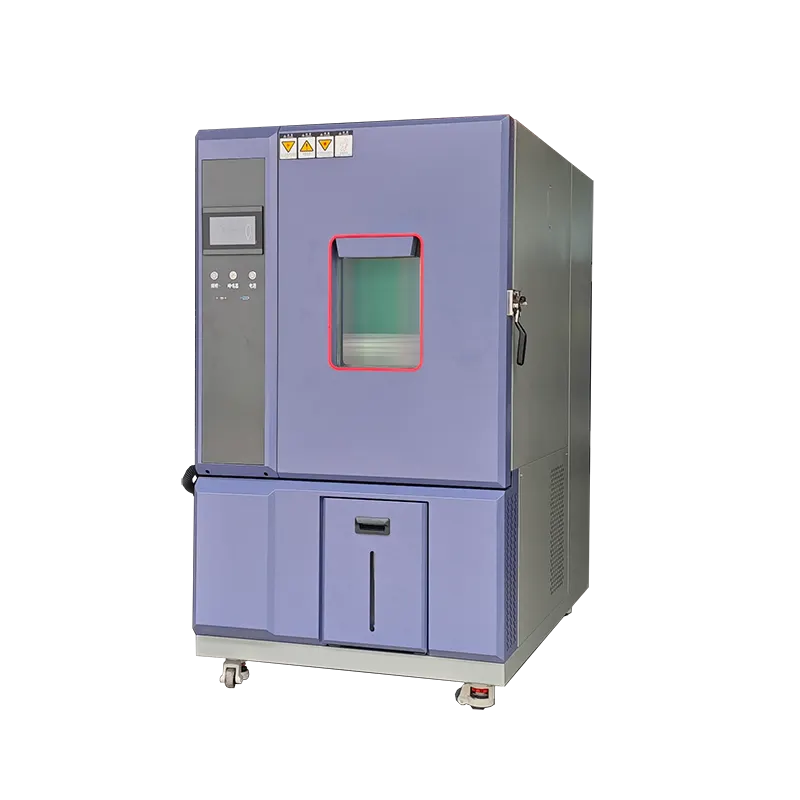
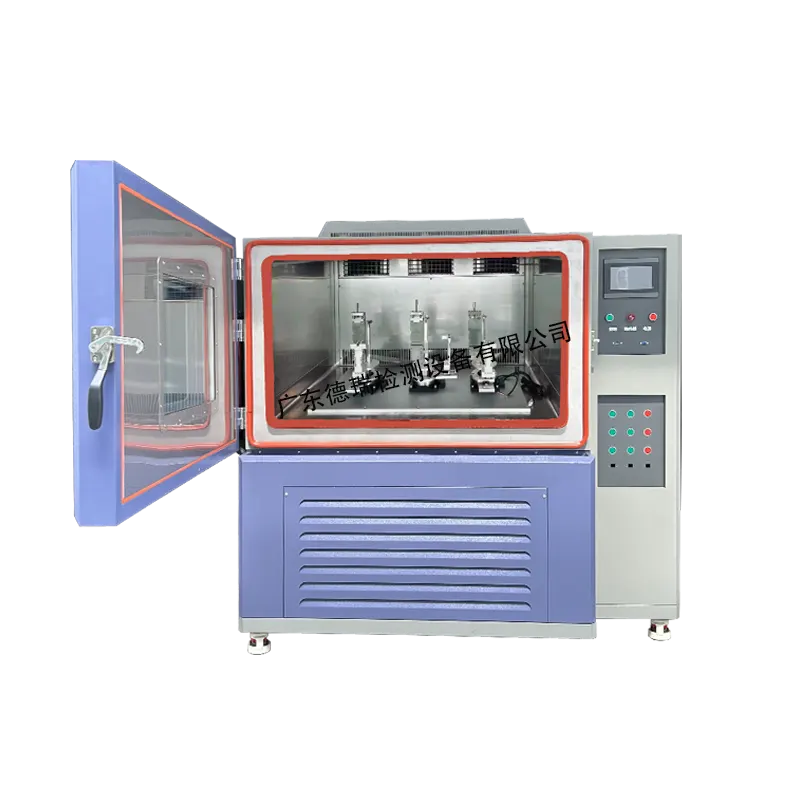
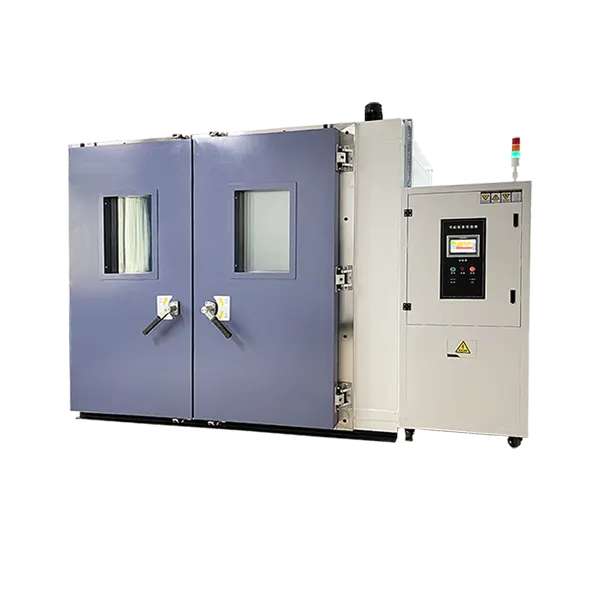
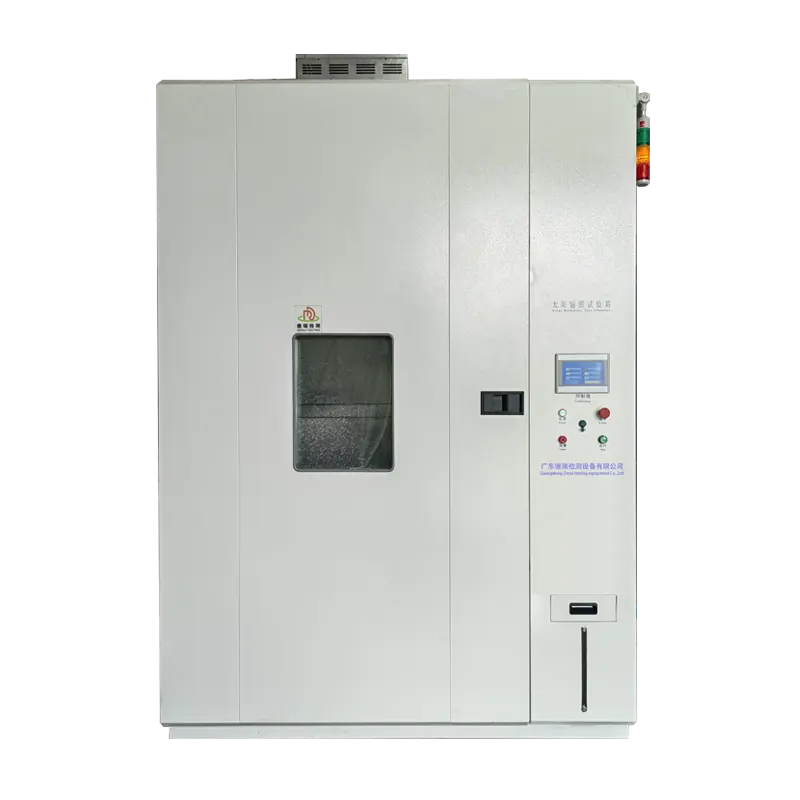
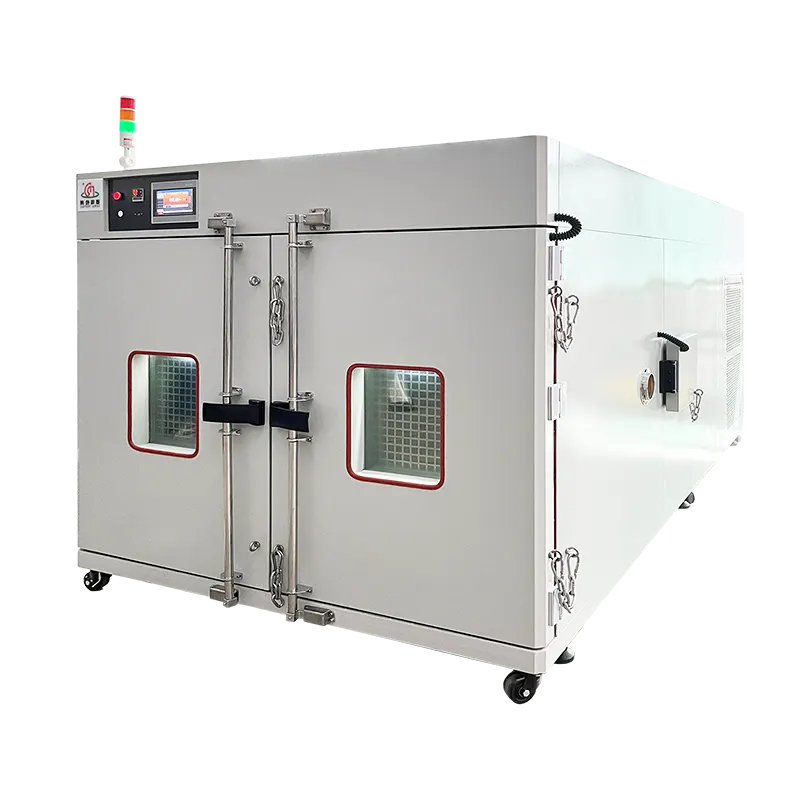
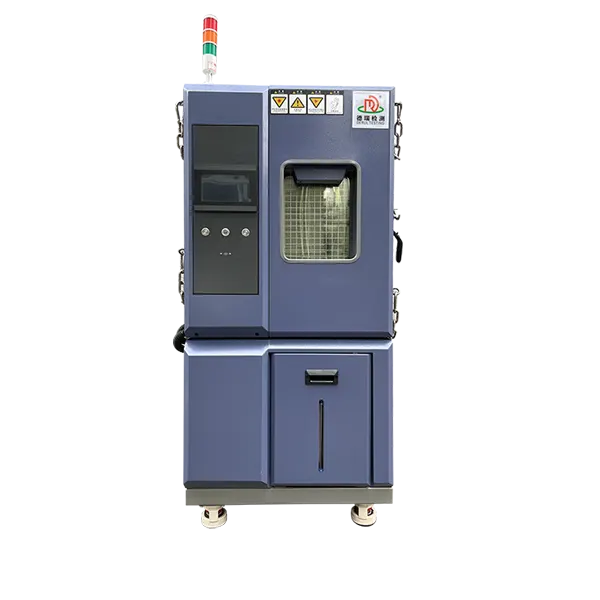
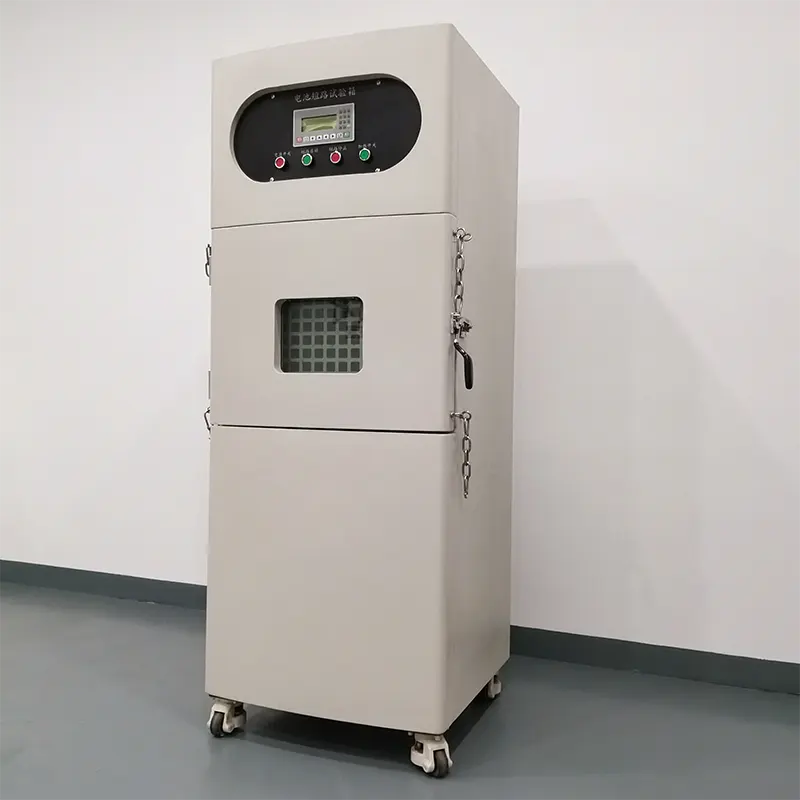
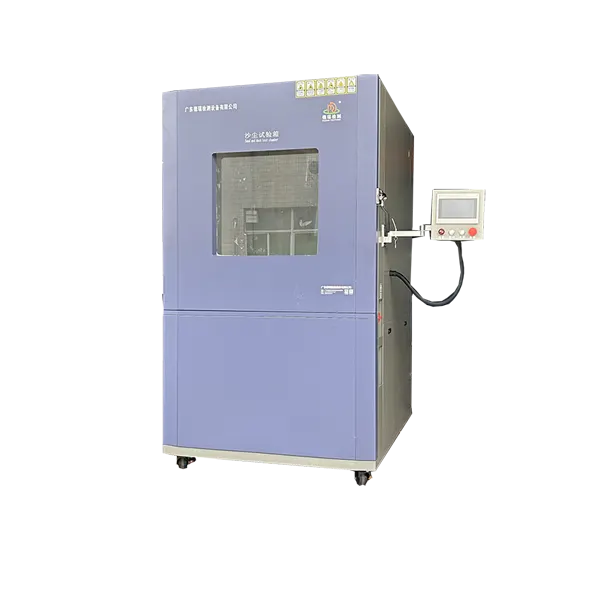
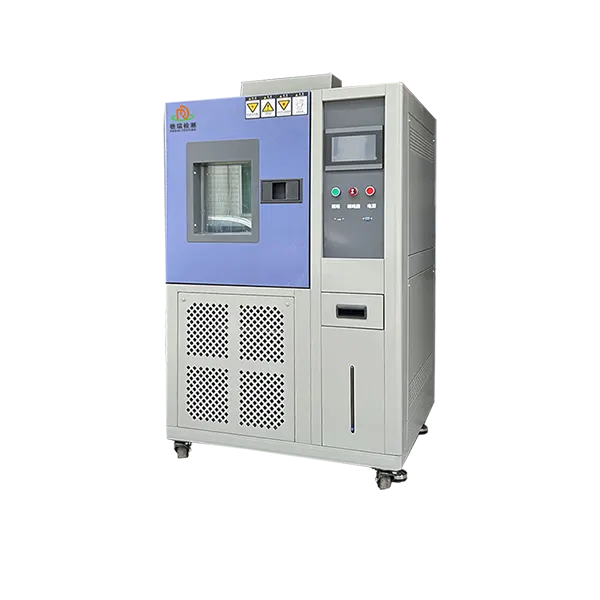
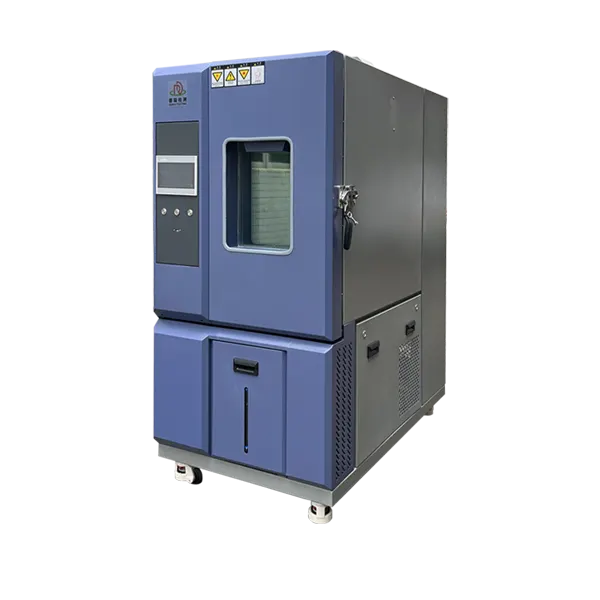
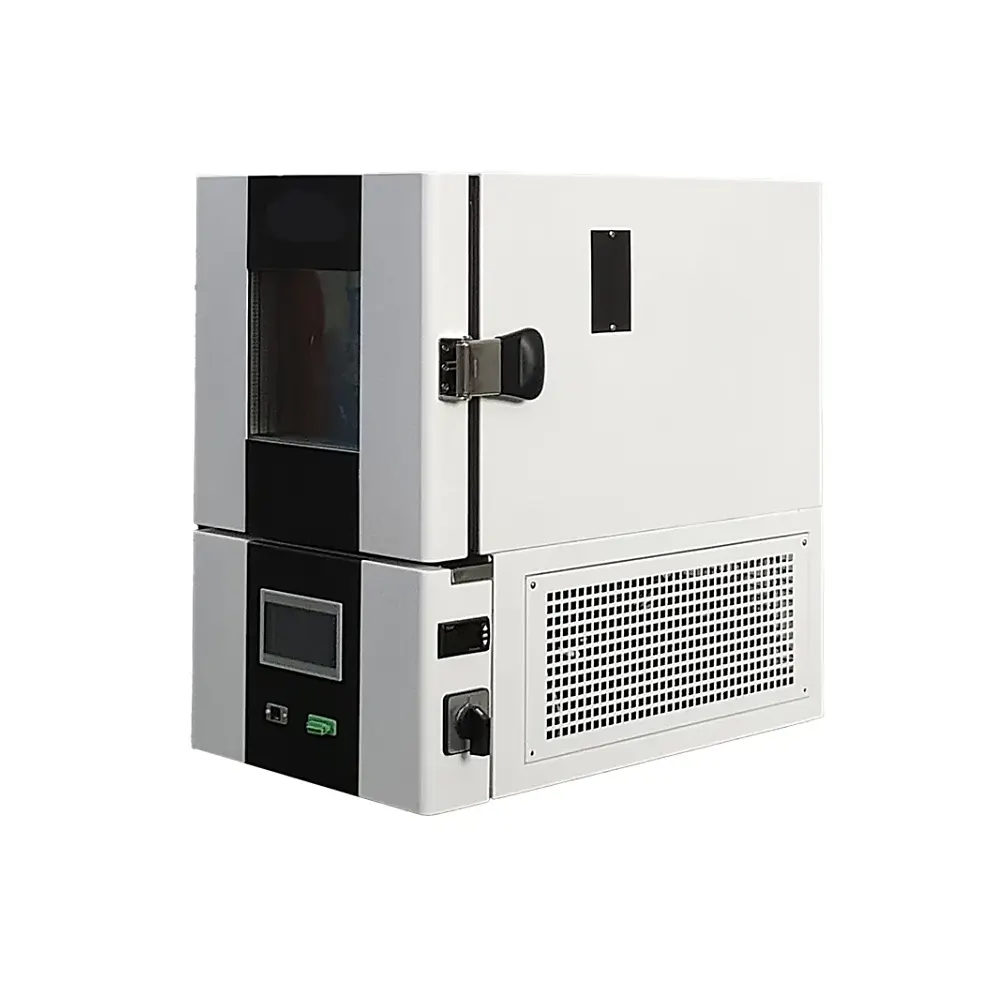
High Temperature Test Chamber

Robust Temperature Control

Achieve accurate temperature settings with our robust control systems that maintain stability across a wide range of temperatures.

Advanced PID control
Rapid temperature changes
High precision thermocouples

Safe and reliable
well-made
Quality assurance
customization
MessageWhatsApp
Hotline number 15580327593
  • Product Details
  • Technical parameters
  • FAQ
  • Contact us
● Product Spec Sheet

High Temperature Test Chamber for Accelerated Heat Aging and Thermal Stress Testing

A procurement-grade reference for high-temperature testing — covering IEC 60068-2-2, MIL-STD-810 Method 501, ASTM D3041, and ISO 16750-4 thermal profiles for automotive, electronics, aerospace, and materials applications.

Chamber at a Glance

Standard
IEC 60068-2-2
Test Type
High-temp aging
Volume
100–3000L
Temp Range
RT +10 to +300°C
Temp Uniformity
±2°C
Compliance
ISO 16750-4
1

Why High-Temperature Testing Is Critical for Product Reliability

Failure modes, standards drivers, and the cost of skipping heat aging

Heat is the silent killer of electronic and mechanical products. High operating temperature accelerates almost every degradation mechanism: solder joint creep, electrolytic capacitor drying, polymer embrittlement, lubricant thinning, and semiconductor electromigration. Most accelerated life models — Arrhenius, Eyring, Coffin-Manson — use elevated temperature as the primary stress to compress years of field aging into days or weeks of lab time.

A high temperature test chamber delivers the controlled thermal environment required by these methods. The chamber maintains a uniform elevated temperature (typically +50°C to +300°C) for an extended dwell (hours to thousands of hours), with tight uniformity and stability so that test results are repeatable across laboratories and over time.

Heat-only testing is the entry point for any product reliability program. It validates component derating, solder joint integrity, material thermal aging, and long-term drift. Combined with humidity (see temperature & humidity testing), vibration, or thermal shock, it forms the basis of every major reliability standard: IEC 60068-2-2, MIL-STD-810 Method 501, and ISO 16750-4.

Field data: For every 10°C increase above the rated operating temperature, the failure rate of electronic components approximately doubles (Arrhenius approximation). A product that survives 2 years at 85°C may fail in months at 95°C.
2

Derui High Temperature Test Chamber: Key Specifications

Complete spec sheet for the standard heat-aging range

Model Range

Specification
Standard vs Extended Range
Working Volume
100 L – 3000 L
Temperature Range
RT +10°C to +300°C
Temperature Uniformity
±2°C (at setpoint)
Temperature Stability
±0.5°C
Heat-up Time
RT to +200°C ≤ 30 min
Interior Material
SUS 304 Stainless Steel
Insulation
100 mm PU foam + rock wool

Control & Data Acquisition

Controller
PLC + 7" Touchscreen HMI
Temp Sensor
PT100 Class A, multi-zone
Data Logger
32-channel, 1 Hz sample
Test Programs
99 user programs, 100 steps each
Communication
Ethernet / RS-485 / USB
Remote Access
Web-based SCADA option
Safety Interlocks
Door, over-temp, smoke
Power Supply
220V / 380V options
3

High-Temperature Test Process: Heat-Soak & Heat-Aging

From test plan to final report — the four-phase workflow

Phase 1 — Test Plan Definition

Define the test temperature, dwell time, and number of cycles. The Arrhenius model is the most common extrapolation: if the field temperature is 55°C and the activation energy of the dominant failure mode is 0.7 eV, then 1000 hours at 85°C is roughly equivalent to 5 years of field life. A typical heat-aging test is 168, 500, 1000, or 2000 hours at a single setpoint. For accelerated stress beyond steady-state, ramp-and-soak profiles simulate thermal cycling without active cooling.

Phase 2 — Specimen Loading

Mount the specimens on perforated stainless steel trays. Maintain 30% spacing between specimens for air circulation. Place at least one calibrated monitoring thermocouple on a representative specimen. If the test is destructive, prepare baseline samples and remove at intervals (168 h, 500 h, 1000 h) for measurement.

Phase 3 — Test Execution

The chamber ramps from ambient to the setpoint at a controlled rate (typically 2–5°C/min to avoid thermal shock to the specimens). Hold at setpoint with continuous data logging. Monitor for any out-of-spec drift; the chamber aborts automatically if uniformity exceeds ±3°C or stability exceeds ±1°C.

Phase 4 — Post-Test Inspection & Report

After the dwell, the chamber ramps down at a controlled rate. Specimens are removed, conditioned to ambient for 1–2 hours, and inspected: visual (cracks, discoloration, deformation), electrical (resistance, capacitance, leakage), and functional (operate per spec). The report includes temperature strip chart, cumulative hours, and any observed defects with photos.

Best practice: Always include at least one non-stressed reference specimen in the chamber. If the reference shows unexpected drift, the test data may be invalid due to a chamber issue rather than specimen aging.
4

Standards Compliance: Heat, Thermal Aging, and Operating Life

The five standards that drive most heat-only qualification programs

Primary Standards

Standard
Scope & Application
IEC 60068-2-2
Dry heat, steady-state (Test B)
MIL-STD-810 Method 501
High temperature, military
ISO 16750-4
Automotive climatic loads
ASTM D3041
Heat aging of plastics
JEDEC JESD22-A103
IC high-temperature storage
JESD22-A108
IC temperature, bias, operating life

Related Standards

Standard
Scope
IEC 60068-2-1
Cold, steady-state (Test A)
IEC 60068-2-14
Thermal shock / change
GB/T 2423.2
China equivalent of IEC 60068-2-2
Authoritative reference: For military applications, see MIL-STD-810H at the U.S. Defense Logistics Agency. For commercial electronics, the IEC 60068 series is the authoritative source.
5

How to Select a High-Temperature Test Chamber

Five parameters that determine the right heat chamber for your application

Selection Parameters

  1. Maximum temperature — Most electronics programs need +150 to +200°C. Plastics and composites often need +250 to +300°C. Solder testing may need +400°C peak (specialized chamber). Match the upper limit to your highest test temperature plus 10% headroom.
  2. Working volume — Allow 30% headroom above the actual specimen footprint. Small chambers (100–300 L) suit components and small PCBA; mid-size (500–1000 L) suits sub-assemblies; large (1500–3000 L) suits full enclosures and racks of equipment.
  3. Temperature uniformity and stability — ±2°C uniformity is the industry baseline; ±1°C is the standard for precision work. Stability of ±0.5°C is the typical spec for IC reliability testing. If you are running JEDEC tests, ±1°C / ±0.3°C is required.
  4. Heat-up time — Faster ramp rates (≥5°C/min average) reduce test cycle time but require more powerful heaters and may induce thermal shock to specimens. Confirm the ramp rate matches your test plan.
  5. Air circulation — Forced convection is mandatory for tight uniformity. Look for ≥2 m/s air velocity across the specimens. Some chambers have adjustable air vanes for unusual loading configurations.

Common Sizing Mistakes

  • Undersizing the door opening — large specimens must fit through the door
  • Overlooking cable ports — power and signal cables need hermetic feedthroughs
  • Ignoring exhaust ventilation — heat-only tests do not need exhaust, but combined tests with humidity or chemicals do
  • Choosing a chamber without adjustable air vanes — uneven loading can create hot/cold spots
Procurement tip: Always ask for a 9-point temperature survey report at your setpoint temperature. A reliable supplier will have this data on file for their standard configurations.
6

Construction, Safety, and Operational Considerations

What separates a reliable heat chamber from a maintenance headache

Mechanical Construction

The chamber inner liner is 304 or 316 stainless steel (better corrosion resistance for high-humidity or salt-mist applications). The outer shell is cold-rolled steel with powder coating. Insulation is high-density polyurethane foam (100–150 mm) with rock-wool thermal breaks at high-temperature points. The door is silicone-gasketed with a positive-pressure latch. Observation window is multi-pane heated glass to prevent surface condensation and to survive the thermal gradient.

Heating System

Fin-type stainless steel heaters (typically 6–12 kW total for mid-size chambers) are mounted in the air plenum. Forced convection is provided by a centrifugal blower driven by a variable-speed motor. The PID controller modulates the heater output in 1-second cycles for tight stability. For high-temperature applications above +250°C, ceramic-fiber insulated heaters may be used.

Airflow Design

Air enters the plenum, is heated, and is forced across the specimens horizontally or vertically. Adjustable vanes direct the airflow to compensate for unusual loading. Specimen shelves are perforated to allow vertical airflow; solid shelves create hot spots and should be avoided.

Control & Safety

The PID controller accepts a PT100 sensor in the chamber and optionally a second PT100 on the specimen for product-temperature control (relevant for accelerated aging of large thermal masses). Safety: door interlock, independent over-temperature cutoff (set 10–20°C above the operating limit), smoke detector, audible alarm, and remote alarm contacts. The over-temperature cutoff is hardware-based, not software-based, to prevent runaway on controller failure.

Maintenance

Annual calibration of the temperature sensor against a calibrated reference (typically a secondary standard PT100 with a calibration certificate traceable to NIST or equivalent). Quarterly visual inspection of heaters, gaskets, and the door latch. The blower motor bearings are typically sealed-for-life, but should be listened to for unusual noise every 6 months. Filter the chamber air if the room has high dust; dust accumulation on heaters reduces heat transfer and can cause premature heater failure.

Operational tip: For 1000+ hour tests, use a UPS on the chamber controller. A power interruption that aborts the test at 800 hours wastes 33 days of testing. A 30-minute UPS is sufficient to ride out most grid events.
7

Frequently Asked Questions

Common questions about high-temperature test chambers

1. What's the difference between a heat-only chamber and a temperature & humidity chamber?

A heat-only chamber has no humidity subsystem. It is simpler, less expensive, and reaches higher temperatures (up to +300°C or more). A temperature & humidity chamber includes a steam humidifier and refrigeration for dehumidification, and is typically limited to −70 to +150°C. If you only need heat, a heat-only chamber is more cost-effective.

2. How long can a continuous high-temp test run?

Theoretically indefinitely, but in practice the chamber needs maintenance every 6–12 months. Long tests (2000+ hours) are common for semiconductor and automotive qualification. For ultra-long tests, schedule mid-test inspections at 1000 and 2000 hours to remove samples for analysis.

3. Can I use a heat chamber for thermal shock testing?

No, not directly. A heat chamber ramps slowly (≤5°C/min) and cannot move specimens between hot and cold zones quickly. Thermal shock testing requires a two-zone (or three-zone) chamber that transfers specimens in <10 seconds. See thermal shock testing guide for details.

4. What is the difference between IEC 60068-2-2 Test Ba, Bb, and Bd?

Test Ba is non-heat-dissipating specimens (small components). Test Bb is heat-dissipating specimens with the test air temperature as the stressed parameter. Test Bd is heat-dissipating specimens with the specimen surface temperature as the stressed parameter. The chamber configuration is the same; the test profile and acceptance criteria differ.

5. How do I calculate the acceleration factor for heat aging?

Use the Arrhenius equation: AF = exp[(Ea/k) × (1/Tuse − 1/Ttest)] where Ea is the activation energy (eV), k is Boltzmann's constant (8.617 × 10⁻⁵ eV/K), Tuse is the use temperature (K), and Ttest is the test temperature (K). For Ea = 0.7 eV, use = 55°C (328 K), test = 85°C (358 K), the acceleration factor is ~10×. Always confirm Ea for the dominant failure mode of your product.

6. What's the typical lead time for a heat chamber?

Standard configurations ship in 4–8 weeks. Customized systems (large volume, high temperature, special gas, cleanroom compatibility) take 12–16 weeks. Installation and commissioning is typically 1–2 weeks including operator training.

7. Can the chamber be used for IEC 60068-2-1 cold testing too?

No — a heat-only chamber has no refrigeration. If you need both heat and cold, choose a temperature & humidity chamber (temperature-only mode without humidity) or a dedicated temperature chamber with refrigeration. See temperature & humidity testing guide.

Need a High-Temperature Test Chamber Quote?

Send us your test temperature, dwell time, and specimen size. We'll send back a sized recommendation and a fixed-price quote within 24 hours.

FacebookLinkedInXRedditWhatsApp

1、What is a high temperature test chamber?
A high temperature test chamber is a controlled environment designed for testingmaterials and products at elevated temperatures.

2、How do high temperature test chambers work?
They use advanced heating elements and temperature control systems to accuratelyreach and maintain high temperatures.

3、What are the common uses of high temperature test chambers?
They are commonly used in industries like automotive, electronics, and materialdevelopment for durability testing.

4、What temperature ranges can your chambers achieve?
Our high temperature test chambers can achieve temperatures ranging from ambient toover 200 degrees Celsius.

5、Are your chambers energy efficient?
Yes, our high temperature test chambers are designed to minimize energy consumptionwhile providing excellent performance.

6、Can the test chambers accommodate large objects?
Yes, our chambers are designed with a spacious interior, making them suitable for largetesting objects.

7、What safety features do your chambers have?
Safety features include over-temperature protection, emergency stops, and alarms toensure safe operations.

8、Is the chamber easy to operate?
Absolutely, our chambers come with a user-friendly interface that simplifies the testingprocess.

9、How do l maintain the high temperature test chamber?
Regular maintenance, including calibration and inspections, is recommended to keep thechamber in optimal condition.

telephonetelephone

hotline:
155 8032 7593

WhapsAppWhapsApp
WhapsApp
LinkedinLinkedin

Derui LinkedIn Profile

messagemessage

Contact us to provide you with exclusive service!

Frequently Asked Questions

What is an environmental test chamber?

An environmental test chamber simulates controlled environmental conditions to evaluate product performance.

Do you offer custom solutions?

Yes, we provide fully customized test chambers.

What certifications do your chambers have?

Our chambers are ISO 9001 and CE certified.