







DR-H202-S · PHOTOVOLTAIC MODULE CLIMATE TESTING
Test Full-Size PV Modules as They Are Loaded, Wired and Monitored
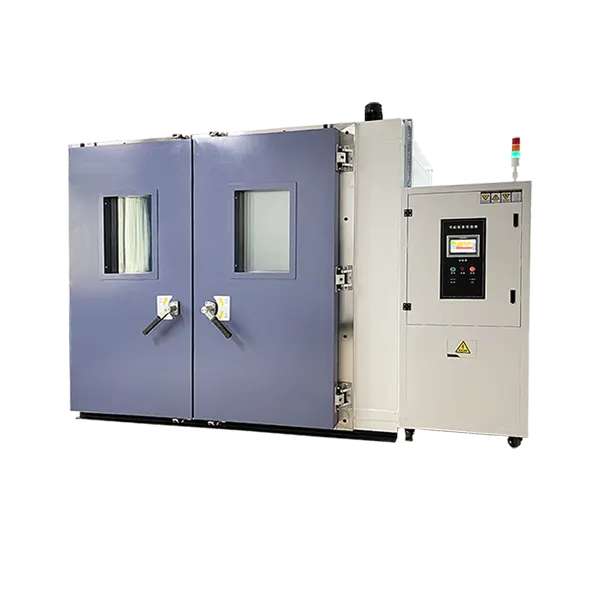
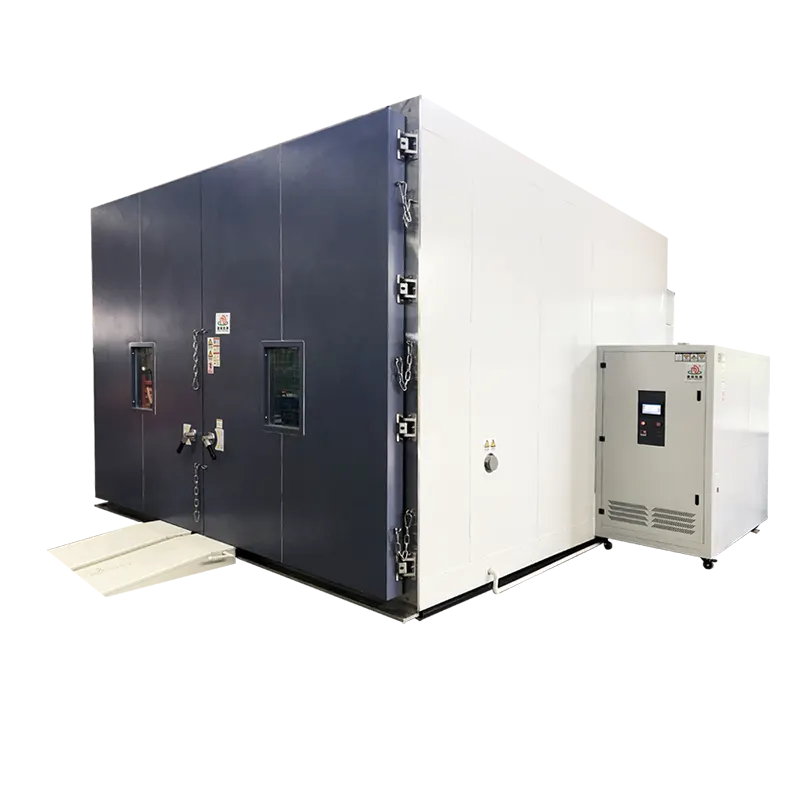
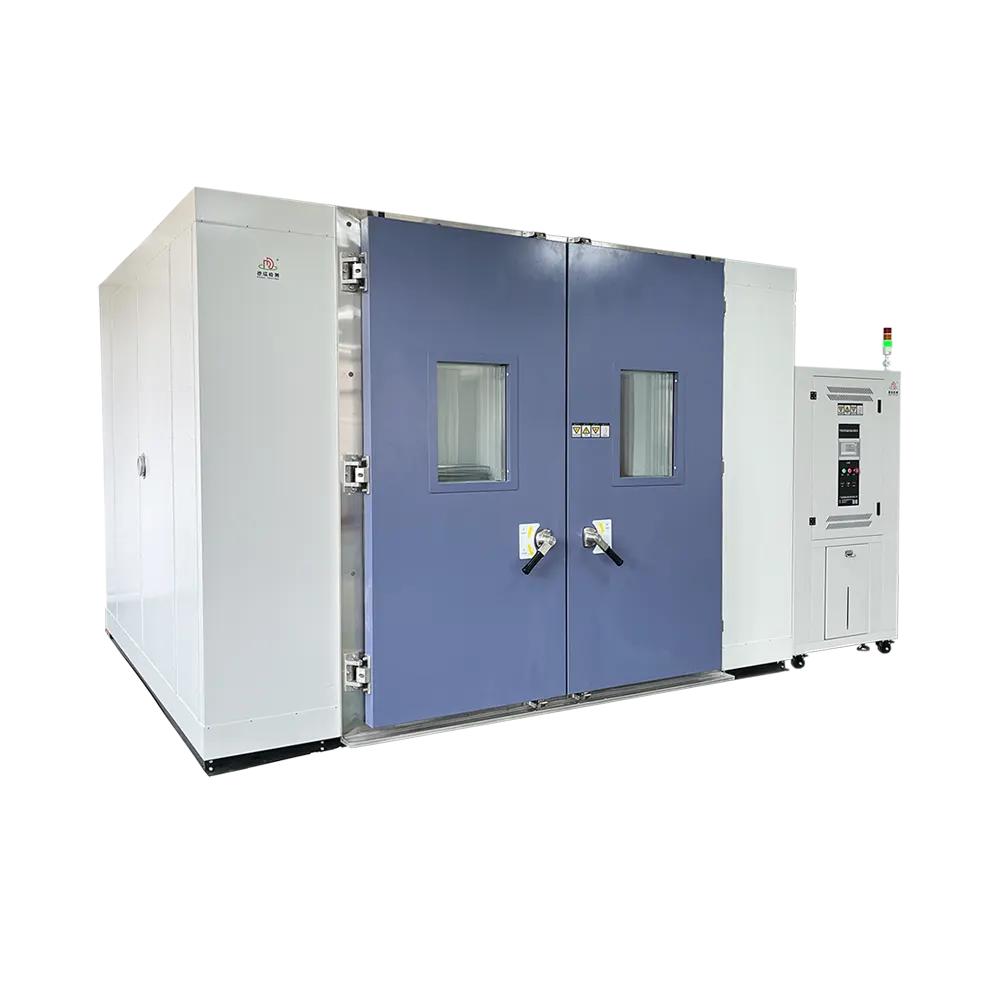
The DERUI DR-H202-S walk-in solar panel test chamber provides a large temperature and humidity enclosure for photovoltaic modules and assemblies. It is planned around full-size module dimensions, rack spacing, cable access, climate sequences and the data your laboratory needs to evaluate the result.
PV module loading
Plan the complete panel, rack and handling envelope.
Temperature and humidity
Programme thermal cycling, damp heat or humidity-freeze conditions as required.
Evidence for qualification
Define module sensors, electrical measurement and chamber records.
Match the Climate Programme to the PV Test
PV reliability programmes can combine different environmental stresses, but each test has its own specimen condition and evaluation. Start from the adopted standard edition and module construction rather than a generic controller recipe.
| PV test need | Chamber function to review | Evidence outside the chamber |
|---|---|---|
| Thermal cycling | Required hot/cold setpoints, transitions, dwell and loaded recovery | Module temperature, electrical continuity or other procedure-specific monitoring |
| Damp heat | Sustained high-temperature and high-humidity operation under module load | Water quality, specimen condition and post-exposure electrical evaluation |
| Humidity-freeze | Defined humid exposure followed by a freezing sequence | Condensation control, module thermocouples and interruption handling |
| UV preconditioning or solar simulation | Separate light-source requirement | Spectrum, irradiance and optical measurement equipment |
The IEC 61215-2 test-procedure series covers PV module design qualification. IEC 61730-2 addresses PV module safety qualification. The approved programme and report establish the product result; the room alone does not certify a module.
Design the Room Around the Modules, Racks and Door
A walk-in enclosure is selected from the entire loading arrangement, not its nominal air volume. Measure a module in the exact orientation used during exposure. Add the rack depth, tilt, lifting route, sensors, cables and a clear path for loading and removal.
| Layout input | Decision for the chamber drawing |
|---|---|
| Module format | Length, width, thickness, frame and connector positions |
| Rack layout | Number of tiers, support contact points, spacing and access to each face |
| Loaded mass | Total module and fixture weight, floor load and lifting method |
| Air distribution | Supply and return paths with no racks blocking the measurement zone |
| Door and handling | Open-door clearance, trolley path, sill, floor and service space |
The listing gives a 1500 × 1500 × 3000 mm internal enclosure. A dimensioned loading drawing is still needed to establish how many modules can be tested at once and where the sensors and racks will sit.
Specify Performance with the Actual PV Load
A ramp rate measured in an empty room does not describe the transition of heavy glass modules on racks. The final programme should state whether its rate applies to chamber air or a representative module sensor, plus the interval over which it is measured.
Thermal mass
Glass, frame, mounting metal and wiring all affect recovery.
Powered heat
Active modules or other electronics add heat that must be included in sizing.
Humidity limits
Humidity performance depends on temperature, water supply, load and condensation.
Measurement zone
Agree sensor locations and loaded uniformity checks before acceptance.
Plan Electrical, Measurement and Utility Connections
For a useful PV qualification setup, the room needs practical interfaces between the modules and the external test instruments. Define these connections alongside the rack and climate design.
| Interface | Specify in the project |
|---|---|
| Module wiring | Connector type, conductor count, routing, strain relief and test voltage |
| Temperature sensors | Quantity, attachment method, module positions and logging rate |
| Electrical monitoring | Continuity, insulation, current or IV measurement required by the test programme |
| Water and drainage | Water quality, supply arrangement and condensate handling |
| Cooling and power | Water-cooled condenser connections and destination electrical supply |
| Safety and access | Door release, alarm response, operator access and site emergency interface |
The published product listing includes a 50 mm wiring port and RS232 interface. Their suitability depends on the requested cable bundle and data system; the port plan should be drawn before ordering.
DR-H202-S Published Technical Configuration
The DR-H202-S is a walk-in climate room for full-size photovoltaic modules and related assemblies. The following published cabinet values describe the current product listing; the approved equipment configuration determines loaded performance, module quantity, rack capacity and factory acceptance.
| Parameter | Published DR-H202-S configuration |
|---|---|
| Model | DR-H202-S |
| Published internal dimensions (W × D × H) | 1500 × 1500 × 3000 mm |
| Published external dimensions (W × D × H) | 2850 × 1700 × 3200 mm |
| Published temperature range | −50°C to +100°C |
| Published humidity range | 40% to 98% RH; applicable temperature and load conditions follow the approved test programme |
| Chamber construction | SUS304 stainless-steel interior; painted cold-rolled-steel exterior |
| Control and communication | Programmable temperature/humidity controller; RS232 listed in the current configuration |
| Cable access | 50 mm wiring port listed |
| Condenser | Water cooled |
| Published electrical supply | Three-phase AC 380 V ±10%, 50 Hz; site and final equipment drawing govern installation |
The published speed figures are not used as a loaded PV test guarantee. Define the temperature measurement points, module mass, fixtures, electrical load, supply conditions and transition interval in the technical agreement.
Choose the Right DERUI Equipment Route
| Test objective | Relevant page | Boundary |
|---|---|---|
| Full-size PV module climate testing | DR-H202-S on this page | Rack, handling, powered connection and PV measurement plan drive the project |
| General large-product temperature/humidity testing | 48 m³ Walk-In Environmental Chamber | A broader large-product room configured to its own project |
| Walk-in temperature testing without a humidity programme | Walk-In Temperature Chamber | Temperature-focused equipment selection |
| Solar radiation effects or light-exposure research | Solar Simulation Chamber | Optical source and irradiance require their own specification |
Browse the walk-in chamber range to compare room configurations. DR-H202-S remains the PV module climate application on this page.
What to Include in the Technical Inquiry
Send enough information to turn a chamber price into a test-ready proposal. A drawing and a test plan usually matter more than a desired room volume by itself.
Module and load
Panel drawing, quantity, mass, rack concept and handling method.
Climate procedure
Standard edition, exact test, setpoints, transitions, dwell and tolerances.
Instrumentation
Module temperatures, electrical checks, cable ports and report format.
Facility
Available floor area, water cooling, electrical supply, drainage and door access.
Ask the quotation to identify the included rack, feedthroughs, sensing and recording functions, site connections and proposed acceptance test.
Walk-In Solar Panel Test Chamber FAQs
Can the DR-H202-S run IEC 61215 thermal cycling?
The chamber can be configured for a defined PV temperature profile. Submit the applicable IEC 61215 edition, programme, module load and monitoring plan so the required temperature range, transitions and records can be assessed for the ordered system.
Can it run damp heat and humidity-freeze tests?
The listed system includes temperature and humidity control. The complete high-humidity and freezing sequence must be checked against its achievable loaded operating envelope, water supply, condensation behaviour and approved method.
How many solar panels fit inside?
A quantity cannot be inferred from room volume alone. Module dimensions, rack layout, spacing, door opening, floor load and airflow clearance determine usable capacity.
Does this room simulate sunlight or measure module efficiency?
The published configuration describes temperature and humidity control. A solar simulator, irradiance field, IV measurement system or UV preconditioning function needs separately specified equipment.
Can modules be powered during the test?
Powered operation requires an agreed electrical and heat-load design, suitable feedthroughs, protection and data channels. Declare the maximum operating power and wiring arrangement before quotation.
What data should be requested for factory acceptance?
Agree chamber and specimen sensor positions, temperature/humidity records, loaded mapping where required, alarm and interruption logs, and the proposed test demonstration.
How does this differ from a general walk-in environmental chamber?
This page is dedicated to full-size PV module handling, rack layout, moisture and temperature programmes, and electrical measurement connections. General walk-in chambers cover a broader range of specimens.
What information should I send with an RFQ?
Send the module drawing, dimensions, mass, quantity, rack concept, test standard and edition, temperature/humidity sequence, powered heat load, measurement channels and site utilities.
ENGINEER THE ROOM AROUND YOUR MODULES
Share the PV Test Plan and Loading Drawing
Provide module dimensions, rack quantity, climate sequence, electrical measurement requirements and site utilities. DERUI can review the DR-H202-S configuration against your programme.