




Calle Shugang 1, No. 3, Town de Hongmei, Ciudad de Dongguan, Provincia de Guangdong, China

Fabricante de cámaras de prueba ambiental con 20 años de experienciaMás de 3000 entregas a clientes en todo el mundo           Correo electrónico: shirley@deruitest.com
WhatsApp Consultation:+86 135 2795 8363

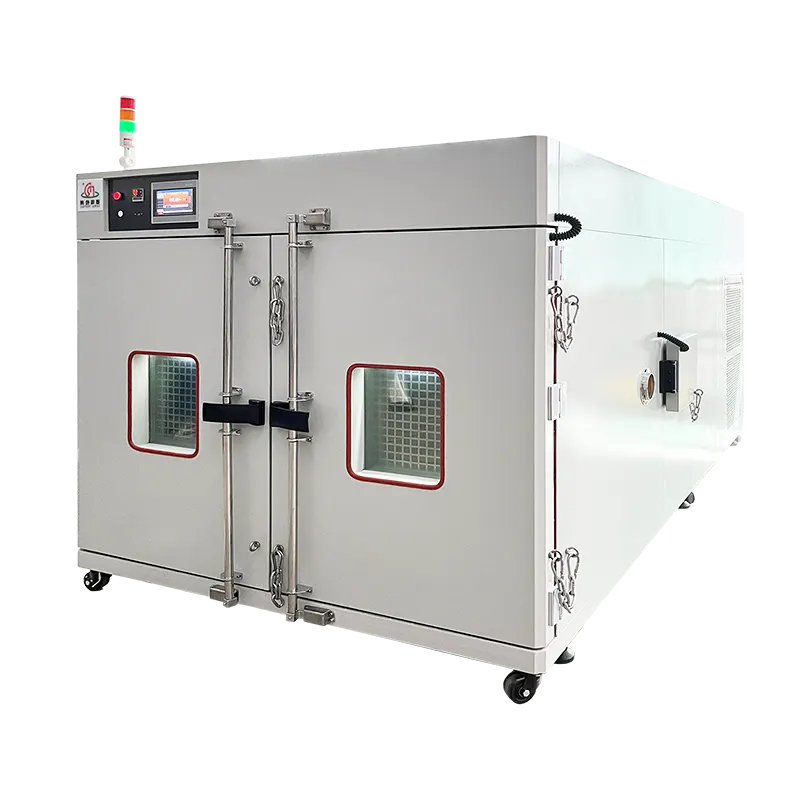
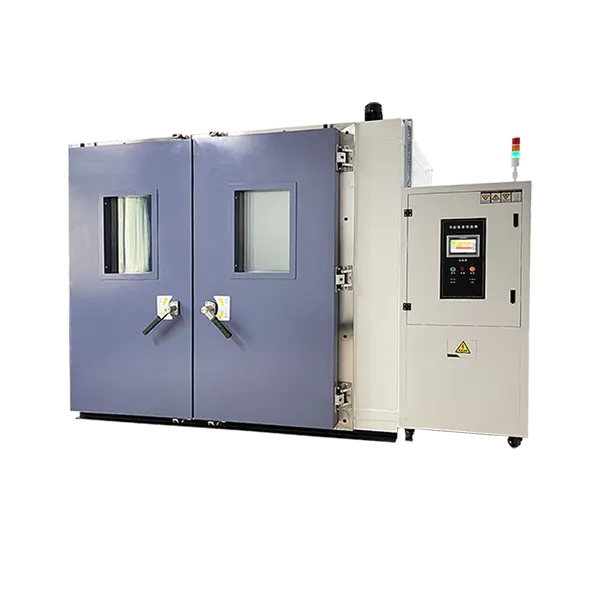
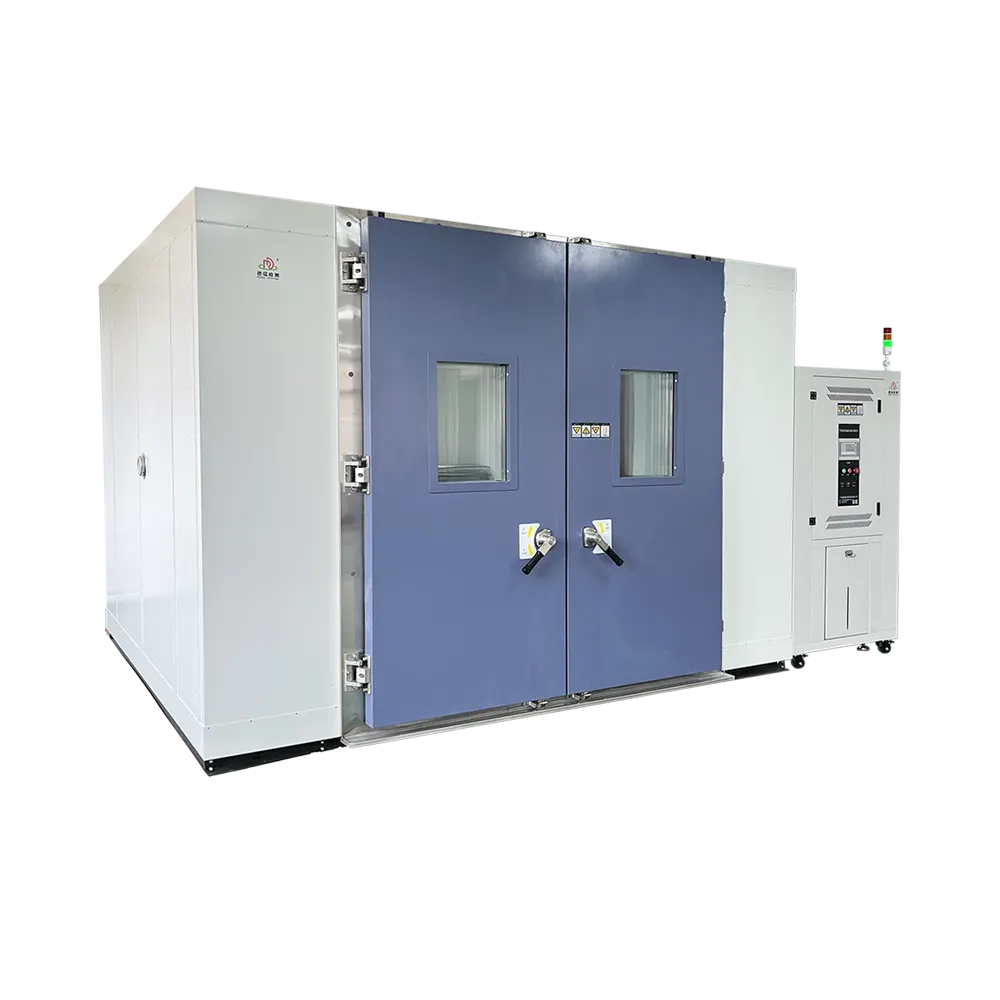
Walk-In Temperature and Humidity Test Chamber Modular Environmental Drive-In Room

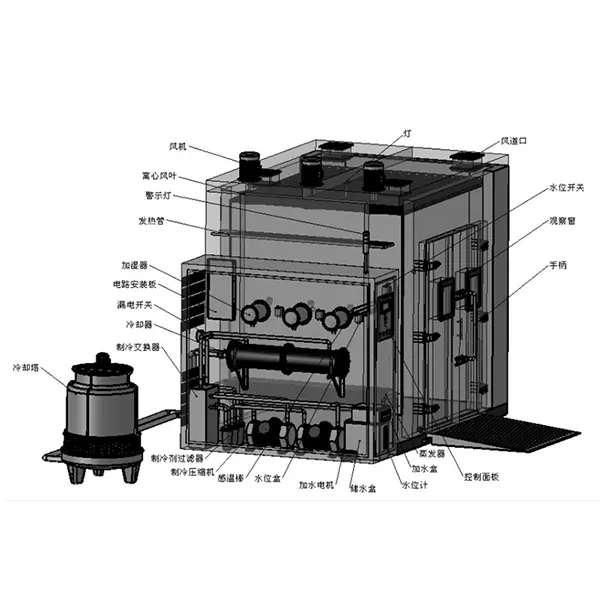
La DERUI 8 m³ walk-in temperature and humidity test chamber provides a configurable climate-controlled room for large assemblies, equipment racks and batch testing. Airflow, refrigeration, humidification, access and utilities are matched to the actual load and test profile.

Nominal Volume 8 m³; exact internal dimensions to be confirmed
Control Temperature and relative humidity
Airflow Forced recirculation with PID-controlled heating
Access Two Ø100 mm ports; door and window options
Aplicaciones Large assemblies, racks and batch loads
Before Quotation Confirm workspace, load, profile, utilities, safety and acceptance method
Segura y confiable
bien hecha
Garantía de calidad
personalización
MensajeWhatsApp
Número de línea directa 15580327593
  • Detalles del producto
  • Parámetros técnicos
  • Preguntas frecuentes
  • Contáctanos
8 m³ Controlled Climate Test Room

Walk-In Temperature and Humidity Test Chamber

The DERUI 8 m³ walk-in chamber provides a configurable conditioned room for large assemblies, equipment racks and batch loads that cannot fit a reach-in cabinet. Airflow, refrigeration, heating and humidification are engineered around the real load and profile.

Engineering basis: 8 m³ is nominal volume. Exact internal dimensions, usable workspace, temperature-RH envelope, powered heat and site utilities must be fixed in the approved drawing and technical agreement.
cURL Too many subrequests by single Worker invocation. To configure this limit, refer to https://developers.cloudflare.com/workers/wrangler/configuration/#limits8 m³
Environmental controlTemperature + relative humidity
Published accessTwo Ø100 mm side ports
cURL Too many subrequests by single Worker invocation. To configure this limit, refer to https://developers.cloudflare.com/workers/wrangler/configuration/#limitsRS-485; RJ-45 option to confirm

Where the 8 m³ Walk-In Chamber Fits

Large assemblies

Condition cabinets, racks, vehicle subassemblies and equipment that exceed a standard reach-in workspace.

Pruebas por lotes

Expose multiple products together when fixture layout and airflow clearance are defined for the complete batch.

Powered systems

Test energized equipment only after heat output, cables, failure modes and required safety controls are reviewed.

Published Standard and Optional Configuration

Artículo Published information cURL Too many subrequests by single Worker invocation. To configure this limit, refer to https://developers.cloudflare.com/workers/wrangler/configuration/#limits
cURL Too many subrequests by single Worker invocation. To configure this limit, refer to https://developers.cloudflare.com/workers/wrangler/configuration/#limits 8 m³ Exact W × D × H and usable loaded workspace.
cURL Too many subrequests by single Worker invocation. To configure this limit, refer to https://developers.cloudflare.com/workers/wrangler/configuration/#limits cURL Too many subrequests by single Worker invocation. To configure this limit, refer to https://developers.cloudflare.com/workers/wrangler/configuration/#limits Supply/return layout and loaded airflow mapping.
cURL Too many subrequests by single Worker invocation. To configure this limit, refer to https://developers.cloudflare.com/workers/wrangler/configuration/#limits cURL Too many subrequests by single Worker invocation. To configure this limit, refer to https://developers.cloudflare.com/workers/wrangler/configuration/#limits Heating capacity, ramp definition and powered load.
cURL Too many subrequests by single Worker invocation. To configure this limit, refer to https://developers.cloudflare.com/workers/wrangler/configuration/#limits cURL Too many subrequests by single Worker invocation. To configure this limit, refer to https://developers.cloudflare.com/workers/wrangler/configuration/#limits Final stages, refrigerant, condenser and heat rejection.
Humedad Humidifier, dry-heat protection, wet-bulb sensor and water tank stated RH operating chart, water quality, consumption and drain.
Access Two Ø100 mm ports; selectable double doors/windows Door size, sill/ramp, port position and quantity.
cURL Too many subrequests by single Worker invocation. To configure this limit, refer to https://developers.cloudflare.com/workers/wrangler/configuration/#limits RS-485; optional RJ-45 with software Protocol, data fields, software, USB/RS-232 scope.
cURL Too many subrequests by single Worker invocation. To configure this limit, refer to https://developers.cloudflare.com/workers/wrangler/configuration/#limits cURL Too many subrequests by single Worker invocation. To configure this limit, refer to https://developers.cloudflare.com/workers/wrangler/configuration/#limits Emergency stop, interior release, alarm outputs and site response.

cURL Too many subrequests by single Worker invocation. To configure this limit, refer to https://developers.cloudflare.com/workers/wrangler/configuration/#limits

Map the workspace

Measure temperature and RH at agreed locations after stabilization with calibrated sensors.

Test the worst load

Use representative mass, racks, powered heat and airflow obstruction to verify recovery and gradients.

Document conditions

Record ambient, cooling mode, water, door openings, sensors and stabilization rule.

Acceptance: distinguish factory empty-room mapping from any loaded site-acceptance test. Put both methods and responsibilities in the order.

Site Planning Before Manufacturing

Room and transport route

Provide installation-room size, doorway, corridor, ceiling, lifting route and service clearances.

Floor and access

Confirm distributed and point loads, sill, ramp, carts and whether the room is integral or panel-assembled.

Electrical and heat rejection

Define voltage, phase, current, condenser arrangement, ventilation and ambient limits.

Water and drainage

Confirm conductivity, pressure, consumption, tank/feed arrangement and drainage route.

Specimen load

Give dimensions, mass, quantity, rack, powered watts, moisture load and cable interfaces.

Monitoring and safety

Define records, remote signals, door release, emergency stop, alarms and facility procedures.

Standard Chamber Safety Boundary

A walk-in room is not an occupied test space. Personnel should enter only for loading or service under safe conditions and should not remain inside during operation.

Test situation Required decision
Standard inert products Confirm load, airflow, access, utilities and acceptance method.
Energized equipment Review heat, electrical interfaces, fault modes, monitoring and interlocks.
Lithium batteries or hazardous samples Complete a risk assessment and engineer detection, ventilation, relief, suppression and emergency response as project-specific options.
Flammable, explosive, corrosive or toxic release Do not assume a standard chamber is suitable; require a dedicated hazard review and compatible construction.

Walk-In Room vs. Reach-In Chamber

Reach-in cabinet

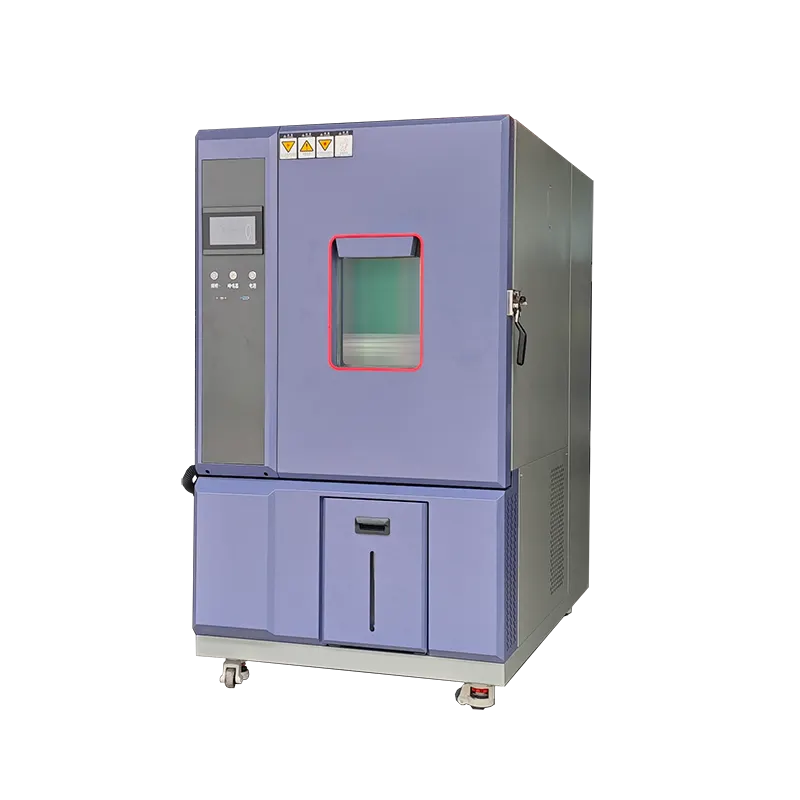
Best for individual components and smaller fixtures when a standard cabinet provides adequate clearance.

8 m³ walk-in room

Appropriate for large assemblies, racks and batches requiring human loading access before the run.

Fast-rate or shock system

Choose separate equipment when the method demands high °C/min ramps or abrupt zone transfer.

RFQ and SAT Checklist

Topic Information to provide or verify
cURL Too many subrequests by single Worker invocation. To configure this limit, refer to https://developers.cloudflare.com/workers/wrangler/configuration/#limits Required clear W × D × H, racks, door, sill, ramp and ports.
Profile Temperature-RH setpoints, ramps, dwells, cycles and tolerances.
Cargar Dimensions, mass, quantity, heat/moisture output and airflow blockage.
Site Transport route, floor, power, heat rejection, water, drain and ambient.
Seguridad Hazards, monitoring, emergency stop, door release, alarms and response.
cURL Too many subrequests by single Worker invocation. To configure this limit, refer to https://developers.cloudflare.com/workers/wrangler/configuration/#limits Sensor map, empty/loaded condition, stabilization, report and responsibilities.

Preguntas Frecuentes

What does 8 m³ mean?

It is nominal internal volume. Exact dimensions and usable volume must be confirmed after airflow, rack and access clearances are defined.

What temperature and RH range does it provide?

The current source does not establish one approved range for this exact configuration. DERUI should issue the selected temperature range, RH range and combined operating chart.

Can an operator stay inside during testing?

No. Personnel should not remain inside during operation. Door release, emergency stop, alarms, lighting and facility procedures require review.

Can it test energized equipment?

Only after heat load, interfaces, airflow, failure modes, monitoring and safety controls are engineered for the project.

Is the chamber delivered in one piece?

Integral and site-assembled designs are possible. Confirm shipping route, container, doorway, ceiling and on-site assembly scope.

cURL Too many subrequests by single Worker invocation. To configure this limit, refer to https://developers.cloudflare.com/workers/wrangler/configuration/#limits

Send specimen/load data, required workspace, temperature-RH profile, room access, utilities, ports, monitoring, safety and acceptance criteria.

Configure the 8 m³ Room Around the Actual Load

Send DERUI your specimen dimensions, quantity, heat and moisture load, temperature-humidity profile, installation access and acceptance criteria.
Request an 8 m³ Chamber Review

FacebookLinkedInXRedditWhatsApp

Capacidad estándar del estudio:

4, 6, 【8】, 12, 16, 18, 27, 36, 45, 60, 100..... (metros cúbicos)

Temperatura superior:

80℃, 100℃, 120℃, 150℃, 200℃

Temperatura inferior:

-0℃, -20℃, -40℃, -50℃, -60℃, -70℃

Desviación de temperatura:

≤±1℃

Fluctuaciones de temperatura:

≤±0.5℃

Rango de humedad: 

30-98%R.H、25-95%R.H、20-98%R.H、10-98%R.H

Error de humedad: 

+2/-3%R.H

Tiempo de calefacción:

promedio 1~3℃/min

Tiempo de enfriamiento:

promedio 1℃/min

Forma de enfriamiento:

(enfriamiento por agua)

Controlador: 

Controlador de temperatura con pantalla LCD en chino, algoritmo de control PID

Capacidad de fórmula:

(120 grupos, 1200 secciones)

Medidas de protección de seguridad:

Control de temperatura, sobrevoltaje del compresor, sobrecarga del compresor, cortocircuito del calefactor

Potencia:

(Tres fases, cuatro hilos)

Material:

SUS#304

Función:

Control de temperatura y humedad del programa.

1. ¿Cuál es el principio de funcionamiento de la cámara de prueba de temperatura y humedad de paso?
Respuesta: Regulando la temperatura a través del sistema de refrigeración y controlando la humedad en combinación con el dispositivo de humidificación/deshumidificación, se forma un espacio ambiental estable, que se utiliza para simular la prueba de resistencia a las condiciones climáticas del producto bajo diferentes condiciones de temperatura y humedad.

2. En comparación con las cámaras de prueba pequeñas, ¿cuáles son las ventajas de las cámaras de prueba de paso?
Respuesta: Es de mayor tamaño y puede acomodar la prueba de máquinas completas o equipos a gran escala. Soporta monitoreo remoto; Control de temperatura independiente en múltiples regiones. Satisface la demanda de pruebas simultáneas por múltiples personas.

3. ¿Cuáles son los rangos de control habituales para temperatura y humedad?
Respuesta: El rango de temperatura generalmente es de -70℃ a +150℃, y el rango de humedad es de 20% a 98% HR (algunos modelos pueden ampliarse). Los parámetros específicos deben ajustarse según la marca y la configuración.

4. ¿Cómo elegir el volumen de la caja adecuado?
Respuesta: Se determina en función de las dimensiones externas máximas, la cantidad y los requisitos de espacio de operación del objeto en prueba. Se recomienda dejar entre 10% y 30% del espacio libre para garantizar un flujo de aire uniforme.

5. ¿El ruido será muy alto durante la operación?
Respuesta: El ruido proviene principalmente del compresor y del ventilador. El nivel de ruido estándar suele ser ≤65dB (A), y en modelos de alta gama puede reducirse a ≤50dB. Se recomienda añadir medidas de insonorización al instalar cerca del área de prueba.

6. ¿Cómo garantizar la uniformidad de temperatura y humedad durante pruebas a largo plazo?
Respuesta: Priorizar modelos con deflectores y ventiladores circulares; Revisar regularmente el desgaste de las palas del ventilador y si el filtro está obstruido. Optimizar la distribución interna para evitar bloquear el flujo de aire.

7. ¿Cómo enfriar o calentar rápidamente en caso de emergencia?
Respuesta: Las cámaras de prueba equipadas con función de protección de parada de emergencia soportan cambios rápidos de modo dentro de un rango seguro, pero es necesario evitar fluctuaciones severas que puedan dañar el equipo. Los límites específicos deben consultarse en el manual del equipo.

8. ¿Cómo operar las funciones de grabación y monitoreo de datos?
Los instrumentos modernos suelen estar equipados con pantallas táctiles o sistemas de control PLC, soportando dibujo de curvas, configuración de umbrales de alarma y exportación de datos vía USB/inalámbrico. Algunos modelos son compatibles con gestión remota en la nube.

9. ¿Cómo actuar en caso de mal funcionamiento del equipo para auto-rescate?
Respuesta: Apague inmediatamente el suministro de energía, verifique el fusible y el sensor. Si hay alguna fuga o olor desagradable, corte la fuente de agua y reporte para reparación. Los no profesionales no deben desmontar los componentes internos por sí mismos.

10. ¿Cómo prolongar la vida útil del equipo?
Respuesta: Limpie regularmente el condensador, los orificios de drenaje y los sensores; Reemplace a tiempo las bandas de sellado envejecidas; Evite arranques y paradas frecuentes de la unidad; Realice mantenimiento y cuidado anual según lo recomendado por el fabricante.

11. ¿Se puede usar directamente expuesto a ambientes inflamables y explosivos?
Respuesta: Algunas cámaras de prueba a prueba de explosiones soportan condiciones de trabajo especiales, pero es necesario adquirir modelos que cumplan con certificaciones a prueba de explosiones (como ATEX, IECEx). Está estrictamente prohibido usar modelos ordinarios en áreas con posibles riesgos de seguridad.

12. ¿El consumo de energía y las tarifas de electricidad serán muy altas?
Respuesta: El alto consumo de energía se concentra principalmente en la etapa de arranque y durante el cambio de temperatura extrema. Se recomienda combinarlo con un sistema inteligente de ahorro de energía para optimizar el proceso de prueba y reducir el tiempo de operación innecesario.

13. ¿Cuáles son los requisitos para el material de la superficie dentro de la cámara de prueba?
Respuesta: La pared interior está recubierta con una capa resistente a la corrosión y anti-adsorción (como acero inoxidable 304 o tratamiento con recubrimiento en polvo) para evitar afectar las propiedades de la muestra y facilitar la limpieza y el mantenimiento.

14. ¿Se requiere un sitio dedicado para la instalación?
Respuesta: Se debe reservar un área bien ventilada y plana, sin obstáculos alrededor que interfieran con la disipación de calor. Al mismo tiempo, asegúrese de que haya suficiente suministro de energía y agua (la función de humedad necesita estar conectada a una tubería de agua o humidificador).

15. ¿Cómo verificar la precisión de calibración del equipo?
Respuesta: Contacte con el fabricante para servicios de calibración de terceros cada seis meses. Durante el uso diario, realice comparaciones cruzadas con termómetros y higrómetros de alta precisión para asegurar que la desviación esté dentro del rango permitido.

WhatsAppWhatsApp
WhatsAppWhatsApp
WhatsApp
MensajeMensaje

Solicitar una Cotización