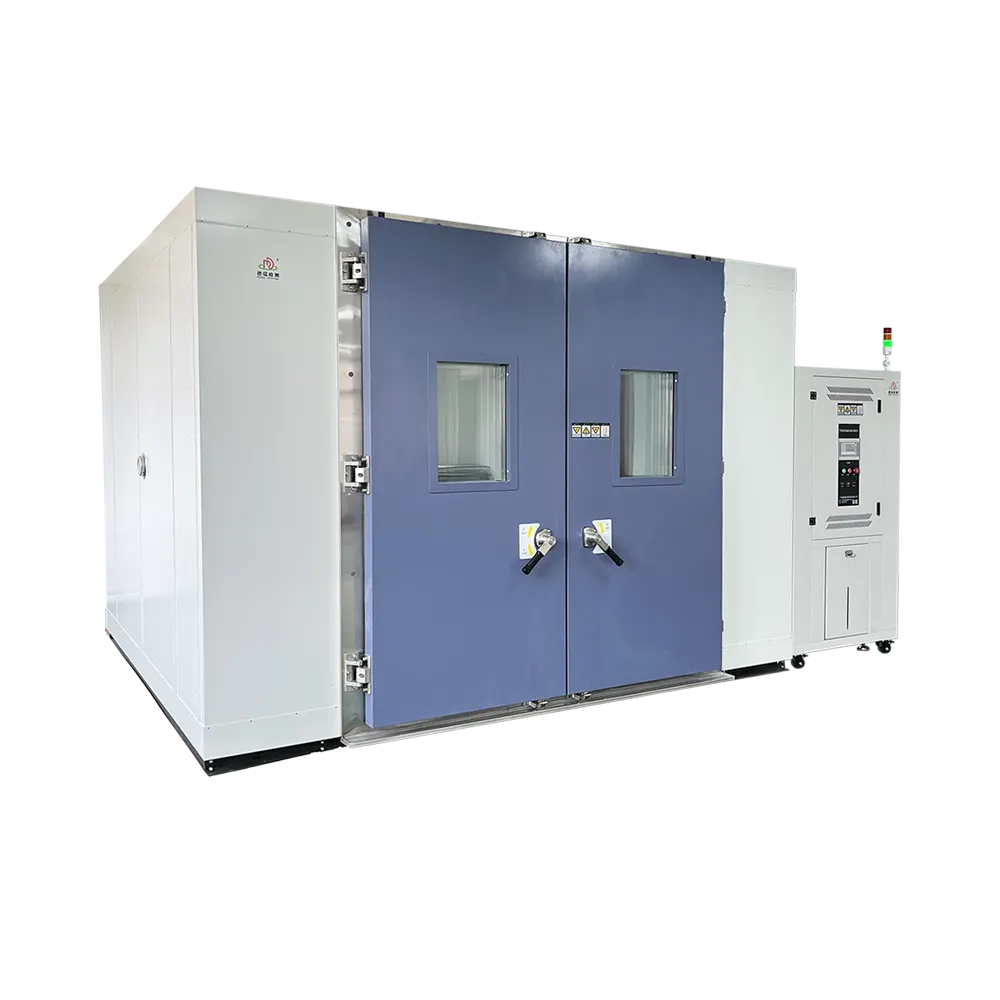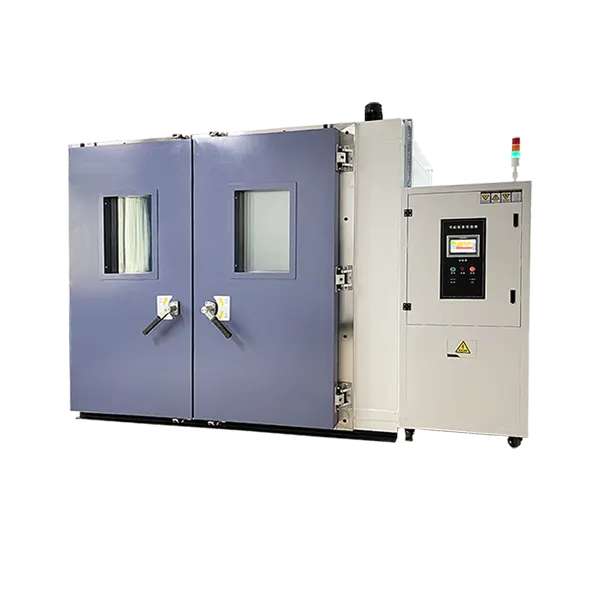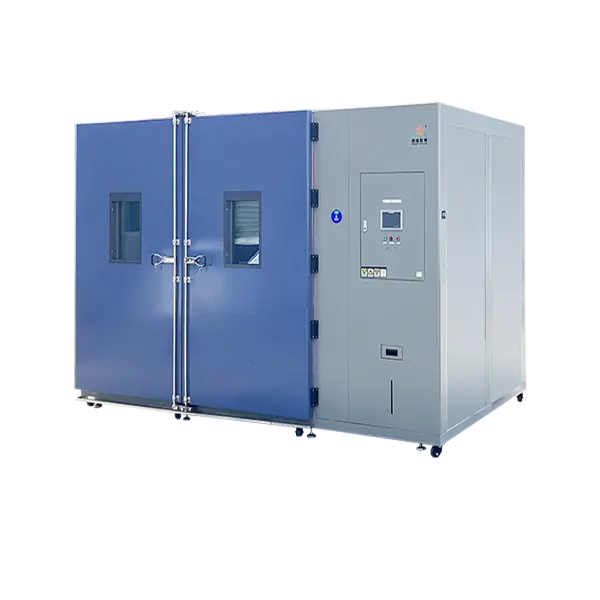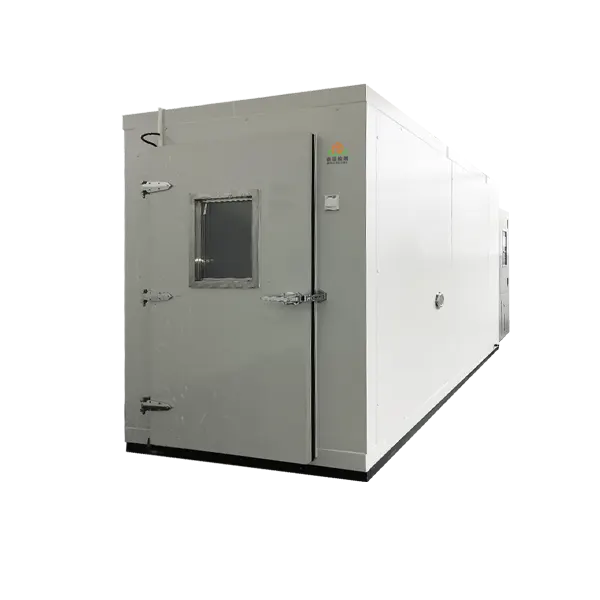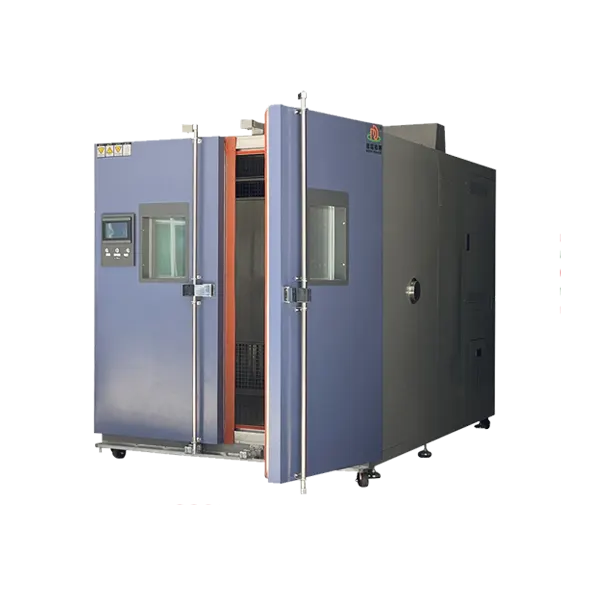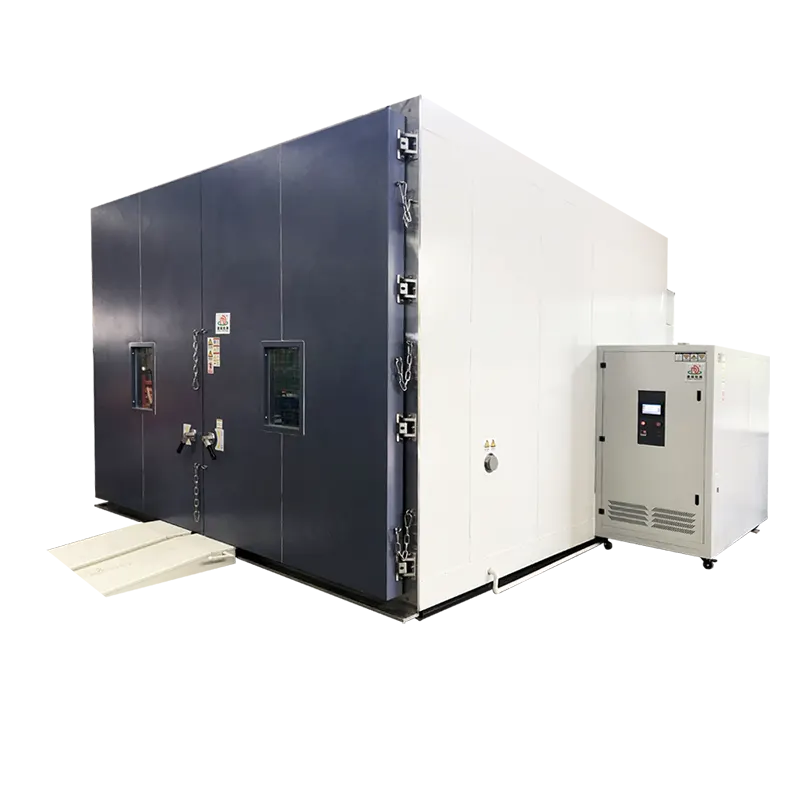








48m³ Walk-In Environmental Chamber for Large Assemblies and Batch Testing
Bring large specimens, racks and test fixtures into a room-sized temperature-humidity testing environment. The DERUI 48m³ walk-in environmental chamber is a large-volume equipment option for projects that need more loading space than a cabinet chamber can provide.
Plan the room around the actual test—not volume alone. Specimen dimensions, thermal mass, operating heat output, air circulation and site utilities determine the configuration needed to reproduce your temperature and humidity profile.
A Climate Test Room Sized Around Your Product
Choose this large walk-in format when the specimen and its handling equipment cannot fit comfortably in a smaller chamber, or when a batch requires a dedicated loading arrangement. Potential projects include automotive assemblies, electronics racks and large component fixtures, subject to the required test profile and safety review.
A nominal 48m³ volume is not the same as usable specimen space. Reserve room for the air-distribution system, return-air paths, sensor locations, fixtures and access. A loading drawing establishes what can actually be tested without obstructing circulation.
For a powered assembly, supply the maximum heat released inside the room, its duty cycle and its changes during the test. Electrical input is not automatically equal to heat released into the chamber; identify equipment or cooling circuits that carry energy outside it.
For batch testing, show specimen spacing and rack positions. The objective is repeatable exposure across the agreed working zone, not simply the highest number of items that can be packed inside.
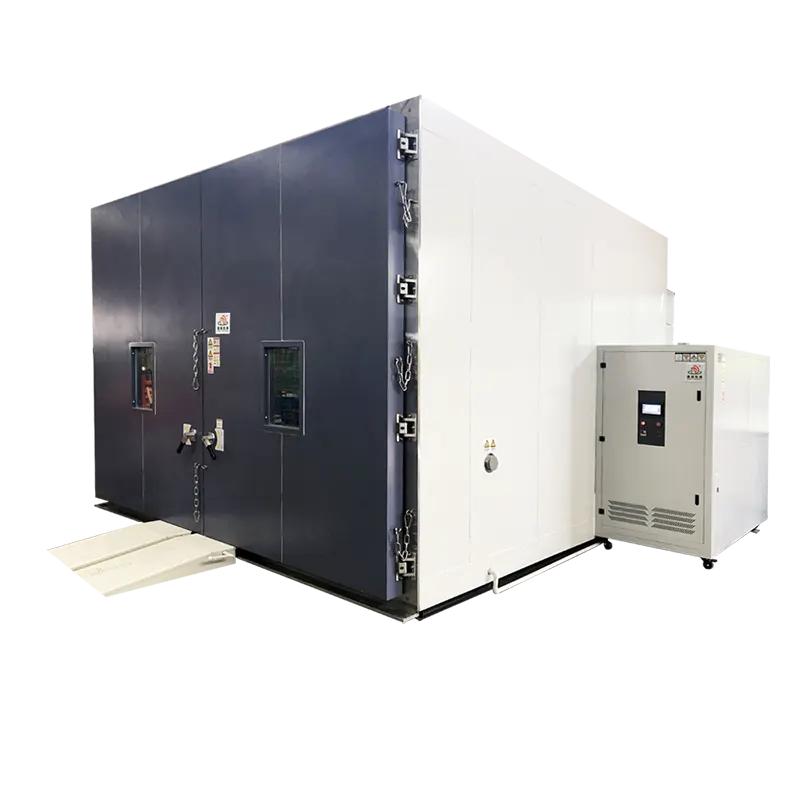
48m³ Chamber Configuration and Selection Basis
The chamber is specified as an engineering project. Use the following configuration schedule to align the room, environmental system and site services with your test load. Numerical performance and interface details belong in the project specification and quotation.
| Item | Configuration basis | Engineering requirement |
|---|---|---|
| Nominal volume | 48m³ | Develop the usable working zone and loading arrangement around the specimen and airflow clearances. |
| Internal geometry and door opening | Project-specific dimensions | Define internal width, depth and height separately from clear door dimensions and total installation footprint. |
| Temperature range | Select from the required test profile | State low/high setpoints, dwell periods, transitions and whether requirements apply to chamber air or specimen temperature. |
| Humidity capability | Specify the required temperature–RH operating points | Request an operating envelope for simultaneous conditions; separate temperature and RH limits do not establish every combination. |
| Heating, cooling and heat removal | Size for the declared load and site conditions | Include thermal mass, powered heat output, required recovery and installation ambient conditions. |
| Air distribution | Review with the representative loading layout | Preserve supply and return paths; define the working zone and sensor positions used for acceptance. |
| Floor and handling arrangement | Specify total and concentrated loads | Include racks, trolley wheels, loading equipment and any ramp or threshold requirements. |
| Control and records | Specify recipes, channels, alarms and data needs | Identify supplied logging, export and communication functions explicitly in the configuration. |
| Electrical and cooling utilities | Match the destination site | Define voltage, frequency, phases, rated demand, condenser arrangement and cooling-water requirements where applicable. |
| Safety and documentation | Match the specimen hazards and operating plan | Set out access, interlocks, independent protection and required installation, operation and acceptance documents. |
Measure the Conditions Your Specimen Actually Experiences
A controller reading describes one measurement location. It does not, by itself, establish spatial uniformity throughout a large working zone or demonstrate that a heavy specimen has reached the target temperature. Separate control performance, chamber-air distribution and specimen response in the test plan.
| Performance question | Define before ordering | Useful acceptance evidence |
|---|---|---|
| Will the loaded room reach the required condition? | Representative mass, layout, internal heat output and operating ambient | Loaded temperature records for the specified operating points. |
| How consistent is exposure across the working zone? | Sensor locations, loading arrangement, stabilization rule and allowed variation | Multipoint results identifying spatial differences and variation over time. |
| How quickly does the specimen respond? | Air versus specimen rate, transition interval and dwell-start rule | Air and specimen temperature traces from the agreed profile. |
| Can temperature and humidity be controlled together? | Required paired setpoints and transition sequence | Temperature–RH records at the actual operating points. |
| What happens after loading or an interruption? | Door-opening or interruption scenario and recovery criterion | A defined recovery demonstration, where required by the purchase specification. |
High thermal mass can delay specimen stabilization even after chamber air reaches its setpoint. Do not count the entire air transition as specimen dwell unless the adopted procedure permits it. During powered operation, review local hot spots and the air entering and leaving the assembly.
Humidity is a paired condition. Specify temperature and relative humidity together. Consider whether condensation is required, prohibited or a possible transition effect, and define the handling of wet specimens and moisture-sensitive interfaces.
Plan the Floor, Loading Route and Utilities Before Installation
Loading route and access
Check delivery access, assembly space, clear door opening, turning clearance and how the specimen moves from the laboratory into the room. Include its trolley or fixture in the dimensions.
Floor and point loads
Provide total specimen and fixture mass plus wheel, foot or support-point loads. Review both the building floor and chamber floor; a distributed load rating alone does not address concentrated contact loads.
Heat rejection and services
Identify where rejected heat will go. Plan electrical supply, ventilation or cooling-water services as applicable, humidification water, drains and service access around the proposed layout.
Cables and interfaces
List power, communication, instrumentation and fluid connections. Define sealed routing and clearance so interfaces do not compromise the door seal, create unintended heat leakage or obstruct airflow.
Access and abnormal conditions
Specify door release, emergency controls, alarms, independent temperature protection and the response to a power or utility failure. Verify their implementation during acceptance.
Sample-specific hazards
Identify batteries, volatile materials, pressure systems or other hazards at the proposal stage. A temperature-humidity room must not be assumed to provide explosion containment or thermal-runaway protection.
Walk-in access is for loading and approved access activities; it is not an invitation to occupy the room during extreme environmental exposure. Define a safe access procedure, isolation requirements and the release arrangement appropriate to the installation.
Maintenance planning should include access to the environmental system, door seals, sensors, water circuit and drains. Set inspection and calibration intervals from the supplied equipment instructions and laboratory quality requirements, rather than applying a generic calendar to every installation.
Turn the Purchase Specification into FAT and SAT Checks
Agree a factory acceptance test (FAT) and a site acceptance test (SAT) suited to the project. Define which checks can be completed before shipment and which depend on final installation, site utilities or the actual specimen. Keep empty-room characterization distinct from loaded application verification.
| Check | Agree in the acceptance plan | Record to retain |
|---|---|---|
| Room and loading geometry | Working zone, internal dimensions, door opening, floor arrangement and interface locations | Approved drawing and dimensional inspection. |
| Environmental performance | Selected setpoints, sensor layout, stabilization, duration and numerical acceptance limits | Calibrated measurement records and temperature–RH traces. |
| Loaded profile | Representative specimen or agreed substitute, mass, heat output and loading layout | Profile results documenting the actual load and operating state. |
| Controls and protection | Recipes, required channels, logging/export, alarms, door release and defined fault responses | Functional-check records for the ordered configuration. |
| Site commissioning | Supply conditions, cooling services, drains, installation checks and operator handover | Commissioning report, instructions and agreed training record. |
IEC 60068-3-6 addresses confirmation of temperature-humidity chamber performance without specimens. IEC 60068-3-7 addresses loaded temperature-chamber measurements for cold and dry-heat tests. Select applicable guidance and the adopted edition for your acceptance plan; these references are not a claim that this equipment or your tested product is certified.
Compare quotations on the same basis: required profile, declared load, environmental operating envelope, floor and door arrangement, utilities, interfaces, records and acceptance scope. A lower price based on an empty room or a smaller cooling duty may not address the same test requirement.
If energy consumption matters, agree a comparison cycle, load, ambient condition and measurement boundary. Compare measured energy for that duty instead of treating a general “energy-saving” description as a performance result.
48m³ Walk-In Environmental Chamber FAQ
What is the 48m³ walk-in environmental chamber used for?
It is a large-volume temperature-humidity testing option for large assemblies, racks, fixtures or batches that need a room-sized loading arrangement. Its configuration must match the required profile, load and site conditions.
Does 48m³ tell me the exact room dimensions or specimen capacity?
No. Volume alone does not establish the internal geometry, usable working zone, clear door opening or permissible floor load. Review these dimensions with the specimen, fixture and loading-route drawings.
What temperature and humidity range should I specify?
Provide the required temperature limits and paired temperature–RH operating points, including transitions and dwell periods. The quotation should state the supplied range and humidity envelope for the agreed load and site conditions.
Can it test powered assemblies or battery systems?
Powered loads require declared heat output and suitable interfaces. Battery or other hazardous specimens also require a sample-specific risk review and an appropriate protection plan. General temperature-humidity capability does not establish battery-abuse or explosion-protection capability.
How should performance be checked before delivery?
Agree geometry checks, calibrated environmental measurements, control and protection tests, and any representative loaded profile. Identify which results are verified at FAT and which need SAT after installation.
What information is needed for a quotation?
Send the test profile, specimen and fixture drawings, mass and point loads, powered heat output, loading quantity, interface needs, installation layout, utilities, hazards and acceptance requirements. Include your destination and target project schedule.
Request a 48m³ Chamber Configuration
Send the Test Profile, Load Drawing and Site Layout
Tell DERUI what must fit inside, which temperature–humidity conditions it must experience and how it will operate during the test. Include specimen mass, heat output, handling arrangement and site utilities to request a configuration proposal with a clear acceptance scope.
Still choosing the room size? Explore the walk-in test chamber range. For a smaller project, review the 10m³ walk-in temperature chamber or 8m³ walk-in test chamber; compare the actual loading layout and environmental duty, not volume alone.