
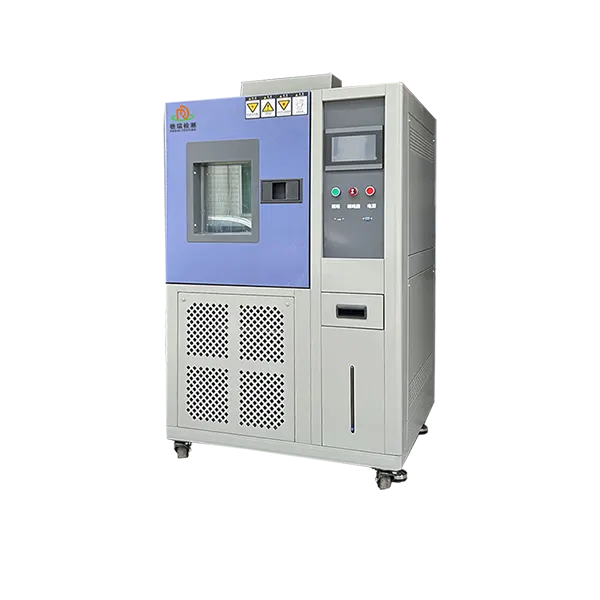
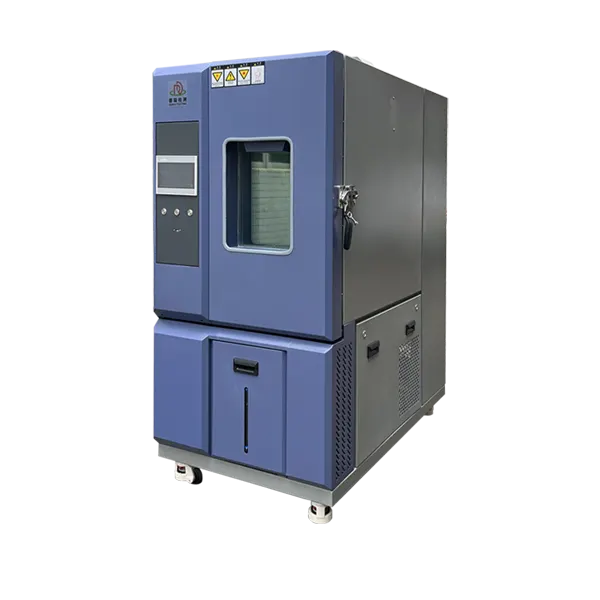
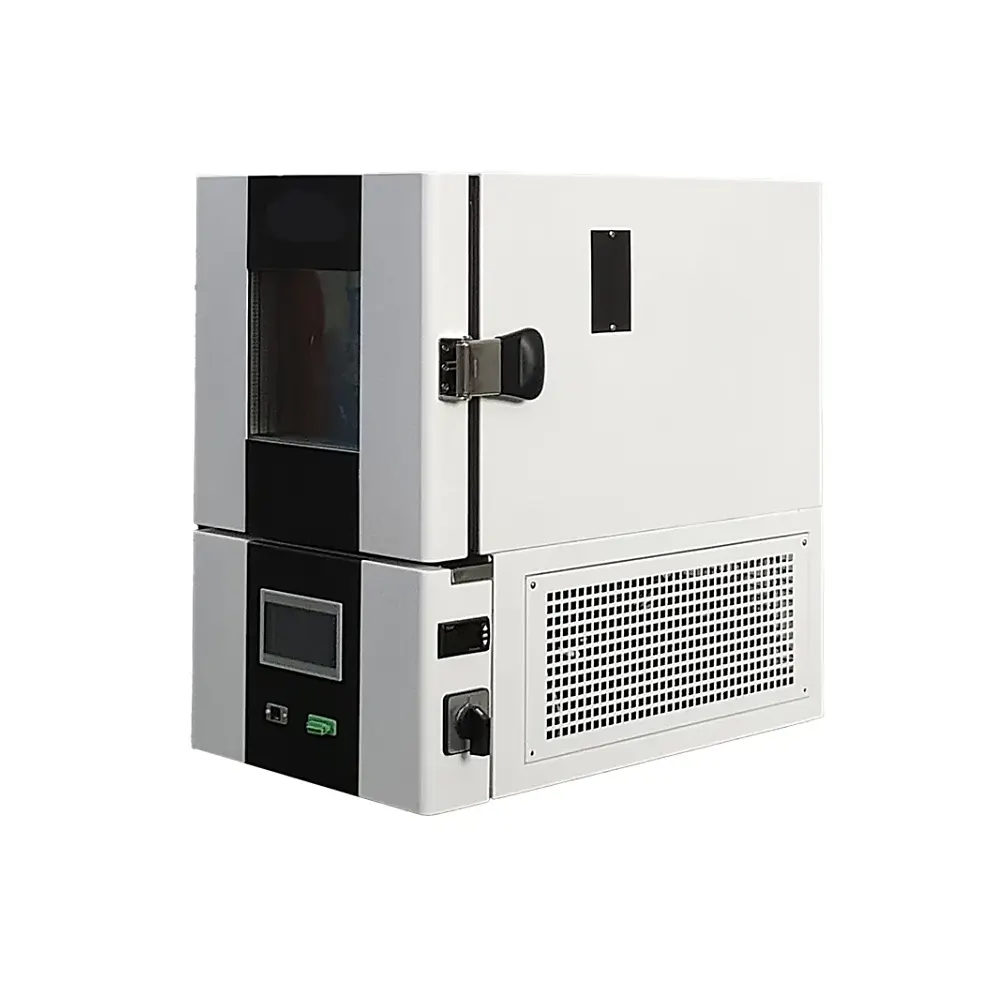
High and Low Temperature Bending Test Machine
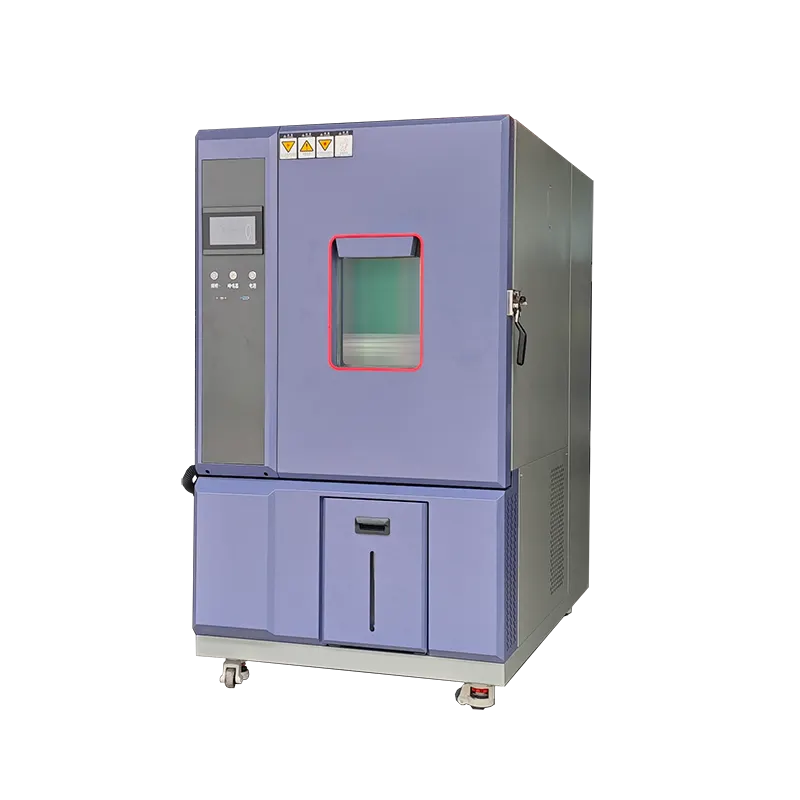
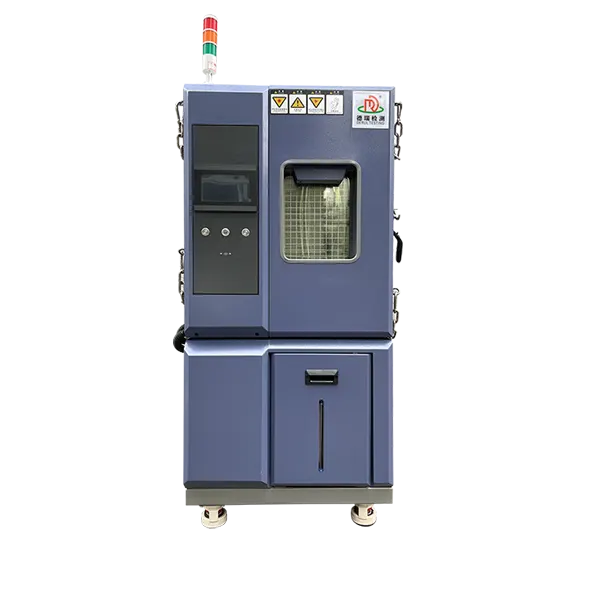
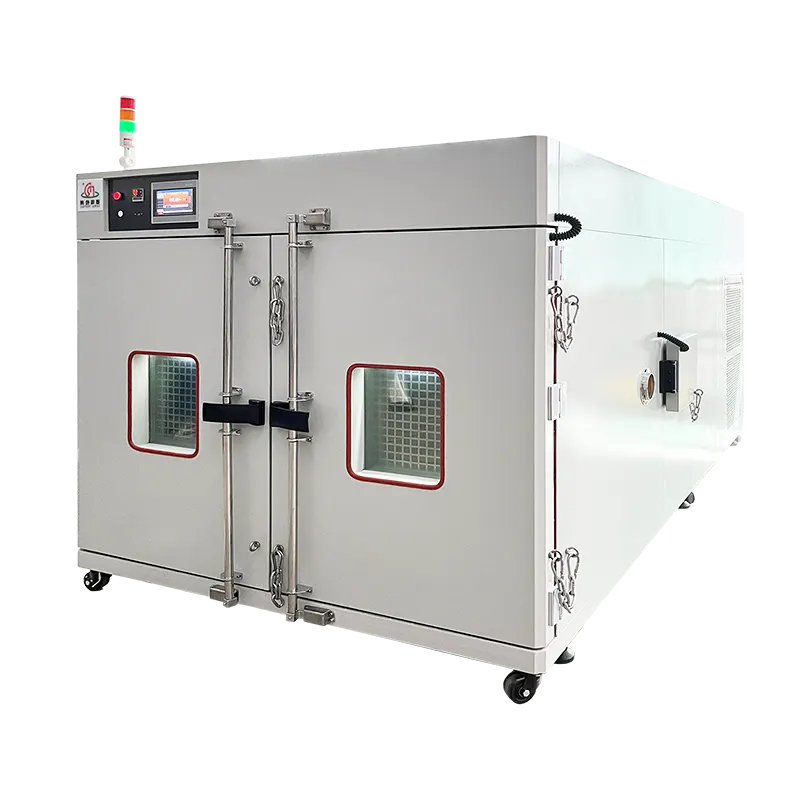
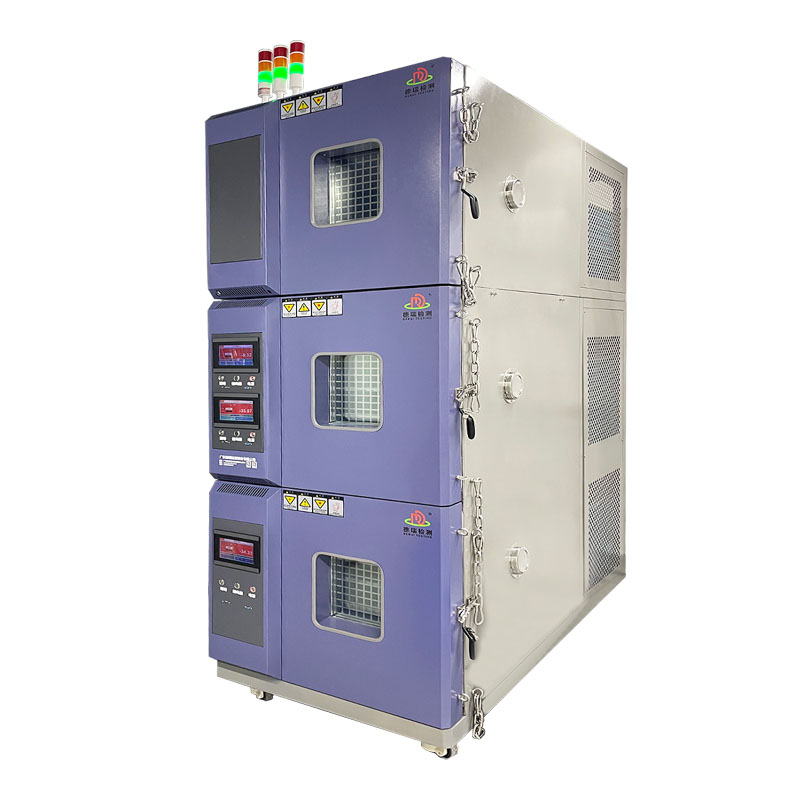
Evaluate how foldable phone displays, flexible assemblies and repeatedly folded materials perform while they are exposed to controlled high- and low-temperature conditions. This integrated system combines an environmental chamber with a programmable bending mechanism and accommodates three specimens in the same test run.
What This System Tests
A conventional temperature chamber can expose a specimen to heat or cold, while a conventional bending machine usually operates at room temperature. Neither one alone shows what happens when a flexible product is repeatedly folded during thermal exposure.
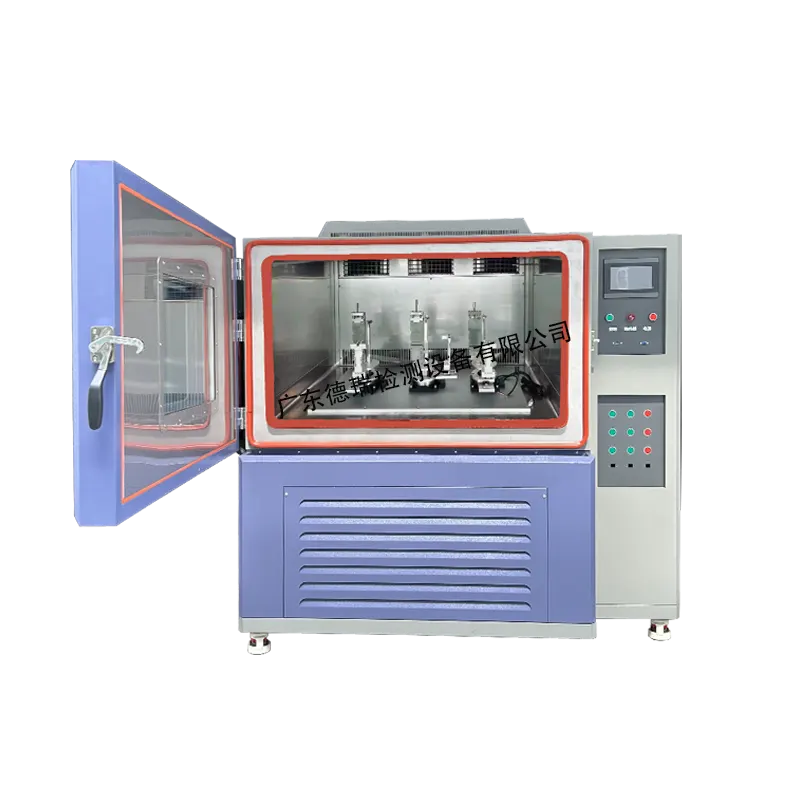
DERUI integrates both functions in one system. The bending fixture operates inside the controlled chamber so engineers can observe changes in folding life, hinge behavior, layer adhesion, electrical continuity and visible damage under the intended temperature profile.
Why Temperature-Controlled Folding Matters
Cold-condition flexibility
Low temperature can increase stiffness and change the response of polymers, adhesives, protective films and flexible interconnects. Repeated folding helps reveal cracking, delamination or loss of function that room-temperature tests may miss.
High-temperature durability
Heat can soften materials, affect adhesive layers and alter mechanical clearances. Dynamic folding during high-temperature exposure evaluates whether the assembly continues to move and function consistently.
Comparable three-sample testing
Three specimens can be tested simultaneously under the same chamber profile. This improves test efficiency and makes comparison between material versions, samples or process conditions easier.
Typical Test Specimens and Evaluation Targets
| Specimen or assembly | What can be evaluated | Possible observations |
|---|---|---|
| Foldable phone display modules | Repeated folding under hot and cold exposure | Crease development, layer separation, display abnormalities and mechanical damage |
| Flexible display stacks and films | Material and laminate response around the fold | Cracking, whitening, wrinkling, delamination or permanent deformation |
| Hinges and foldable assemblies | Movement consistency and clearance changes | Abnormal resistance, interference, wear or failure to complete the programmed motion |
| Flexible printed circuits and connectors | Electrical continuity during repeated bending | Intermittent signal, conductor fatigue or connection failure when external monitoring is configured |
| Other repeatedly folded materials | Application-specific thermal bending endurance | Failure cycle, visible damage and dimensional or functional change |
System Configuration
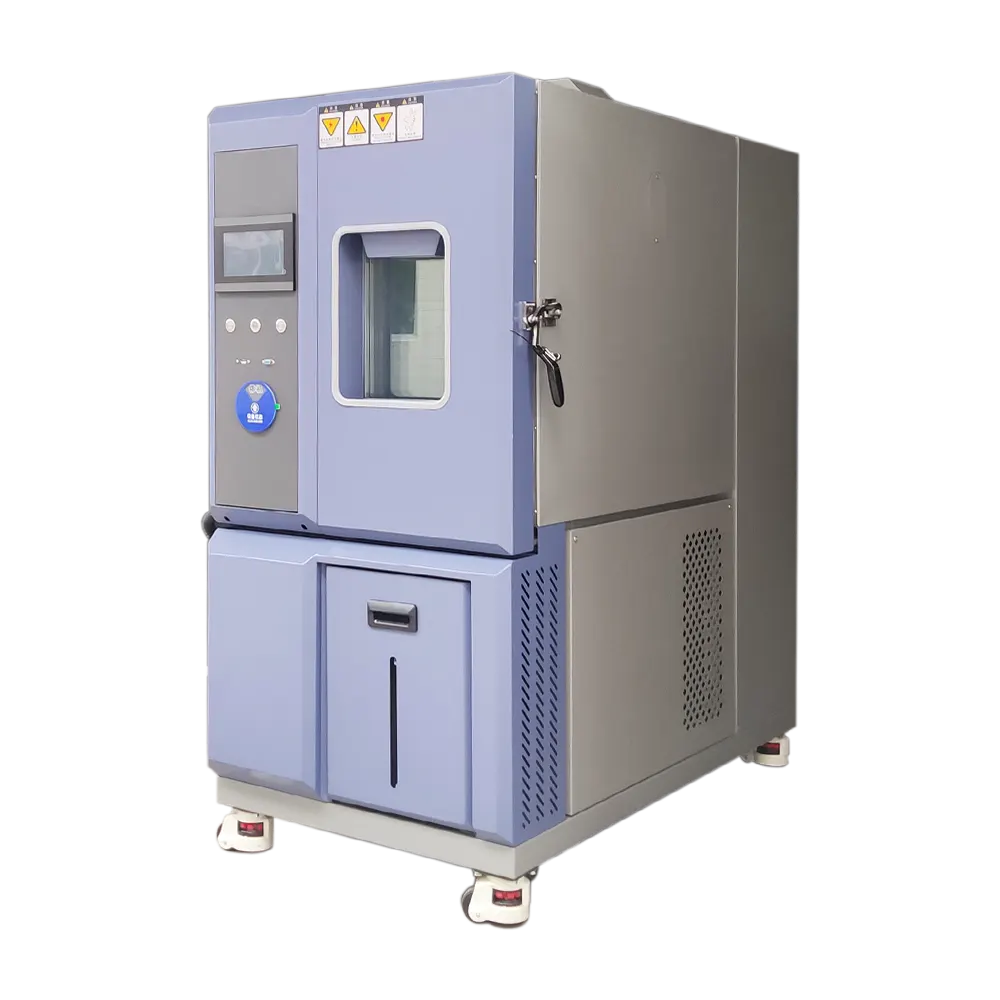
Environmental chamber
Provides programmable high- and low-temperature exposure around the specimen. The published platform can be configured for demanding test ranges, with the final operating range confirmed against the required profile and heat load.
Three-station bending fixture
Holds and cycles three specimens in one run. Fixture geometry, clamping points, bend radius, travel and folding direction should be matched to the actual sample.
Motion and cycle control
A programmable drive system coordinates bending motion and cycle counting. Speed, angle, dwell position and stop conditions are configured according to the approved test method.
Observation and access
The chamber can be configured with an observation window, cable ports and specimen connections so relevant signals can be routed to external monitoring equipment.
Data and alarms
Temperature records, test time, cycle status and alarm information support traceability. Optional data interfaces can be evaluated during configuration.
Safety protection
Typical protections include over-temperature protection, drive overload protection, emergency stop and chamber fault alarms. The final protection design depends on the specimen and test risk assessment.
Parameters to Confirm Before Manufacturing
This equipment is application-configured rather than selected from temperature range alone. Supplying the following information allows DERUI to size the chamber and design the bending fixture correctly.
| Required information | Why it affects the system |
|---|---|
| Specimen dimensions, thickness and photographs | Determines fixture size, clamping method and usable chamber space |
| Fold radius, angle, direction and travel path | Defines the bending mechanism and motion geometry |
| Required bending speed and dwell time | Determines drive sizing and cycle programming |
| Target number of cycles | Defines endurance requirements, counting logic and test duration |
| Temperature range and change profile | Determines refrigeration, heating and control capacity |
| Whether bending continues during temperature transition | Affects control sequencing and test-method programming |
| Electrical or visual monitoring requirements | Determines cable ports, connectors, cameras or external instrumentation interfaces |
| Applicable customer specification or laboratory method | Ensures the system is configured around the actual acceptance criteria |
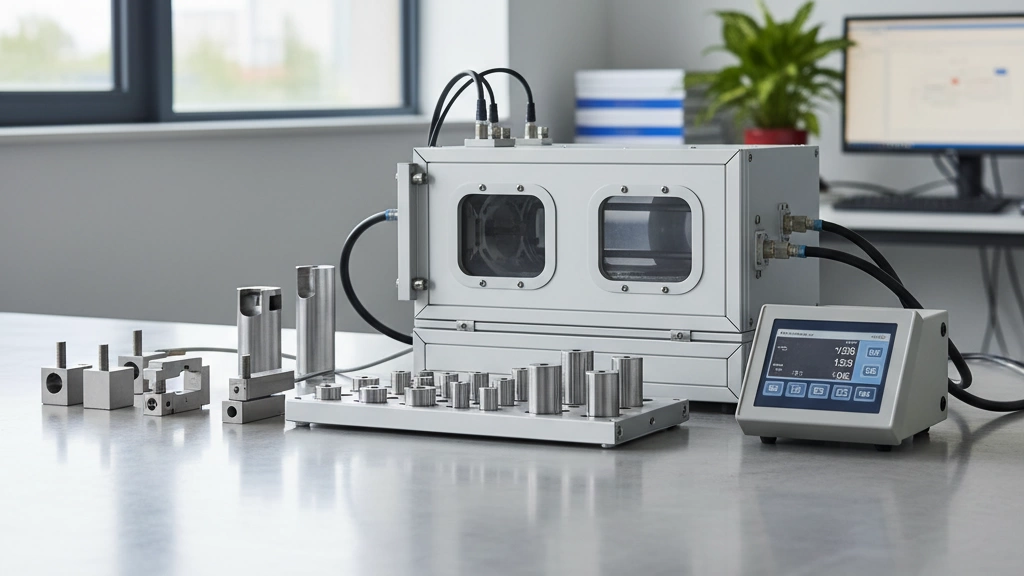
Custom Fixture and Monitoring Options
- Specimen-specific clamps for display modules, films, hinges or flexible circuits
- Adjustable bend radius, folding angle and motion profile
- Observation window and internal illumination
- Cable ports for electrical continuity or signal monitoring
- Camera or image-recording provisions when requested
- Optional humidity control when required by the test method
- Voltage, plug, controller language and communication options for the destination laboratory
Options should be selected from the failure modes the test must detect—not simply from the longest equipment specification list.
Recommended Test Workflow
Define the specimen
Record its dimensions, fold line, permitted clamping areas and functional monitoring points.
Define the motion
Specify bend radius, angle, speed, dwell position, cycle count and the failure stop condition.
Define the environment
Provide temperature setpoints, dwell periods, transitions and whether folding operates throughout the full profile.
Install three samples
Use consistent alignment and clamping force across all three test stations for comparable results.
Run and monitor
Track chamber temperature, cycle count and any electrical, visual or mechanical failure signals required by the method.
Inspect and report
Document failure cycle, visible damage, functional changes and differences among the three specimens.
Test Standards and Method Development
There is no single universal standard that defines every foldable-display bending profile. Fold radius, folding speed, sample orientation, cycle count, temperature exposure and failure criteria commonly come from the display manufacturer, device manufacturer or an agreed laboratory procedure.
Environmental references such as IEC 60068-2-1 for cold, IEC 60068-2-2 for dry heat and IEC 60068-2-14 for temperature change may help define the chamber exposure portion when applicable. They do not, by themselves, define the complete dynamic folding method.
Frequently Asked Questions
Can the machine bend specimens while the chamber is hot or cold?
Yes. That is the purpose of the integrated system: the bending mechanism operates within the controlled chamber so the specimens can be cycled under the programmed high- or low-temperature condition.
How many samples can be tested at the same time?
This configuration supports three specimens in the same test run. The three fixtures are designed around the supplied specimen dimensions and required folding path.
Is it only for complete foldable phone screens?
No. Complete display modules are a primary application, but flexible films, display stacks, hinges, flexible printed circuits and other repeatedly folded materials can also be evaluated with a suitable fixture.
What information is needed to design the fixture?
Please provide specimen drawings or photographs, dimensions, thickness, clamping restrictions, fold radius, angle, travel path, speed and the required monitoring points. A sample may be requested for final fixture validation.
Can humidity be added?
Humidity control can be evaluated as an option. Its feasibility depends on the required temperature-humidity profile, chamber construction, moving mechanism and condensation risk.
Can electrical continuity be monitored during folding?
Yes, cable ports and connections can be configured for external continuity, resistance or signal-monitoring equipment. Tell DERUI the channel count, connector type and measurement method during project review.
Can the system follow our internal test specification?
Yes. Send the complete test profile and acceptance criteria. DERUI will review the environmental range, motion sequence, fixture geometry, monitoring interfaces and safety requirements before confirming the configuration.
Configure a Three-Specimen Folding Test System
Send DERUI your specimen drawing, fold radius, bending angle and speed, target cycle count, temperature profile and monitoring requirements. Our engineering team will review the application and prepare a suitable chamber-and-fixture configuration.