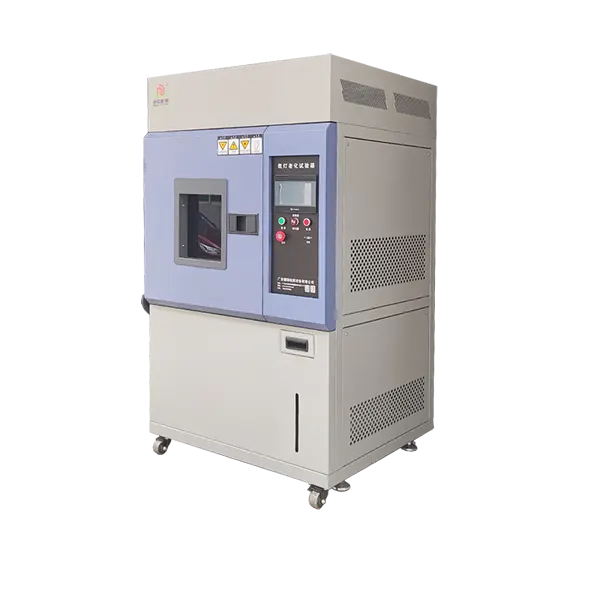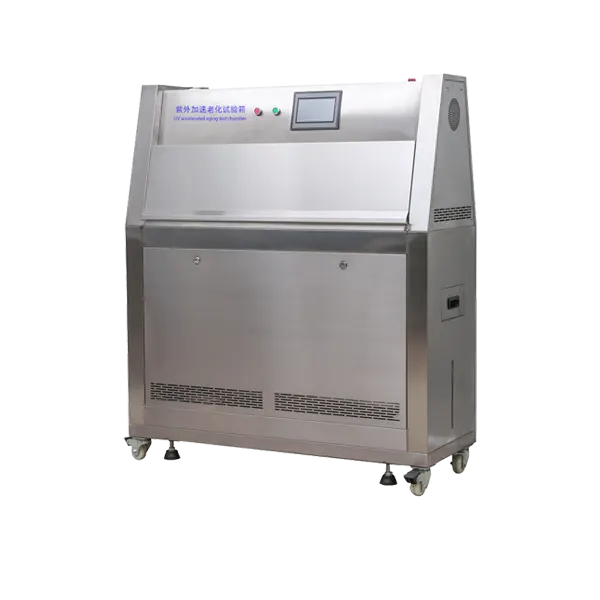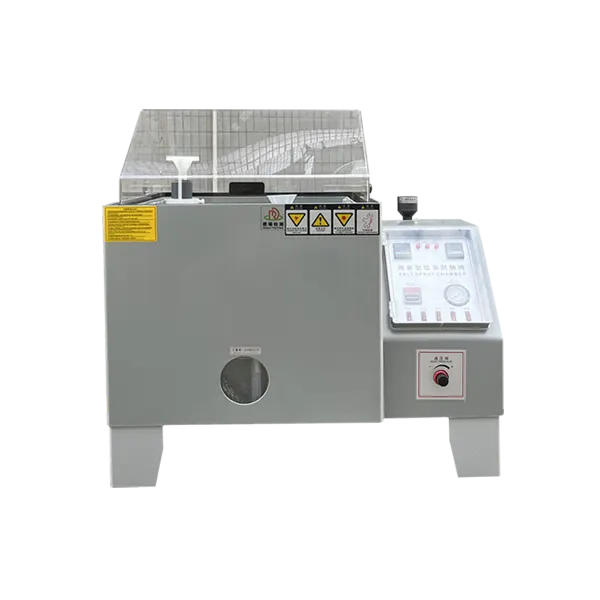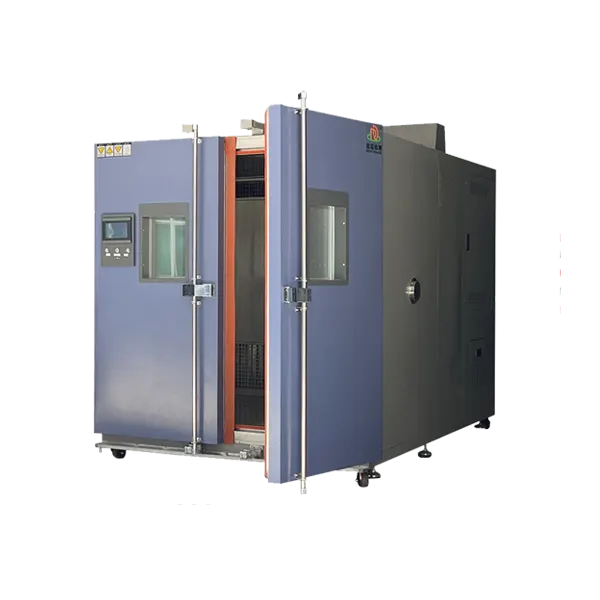
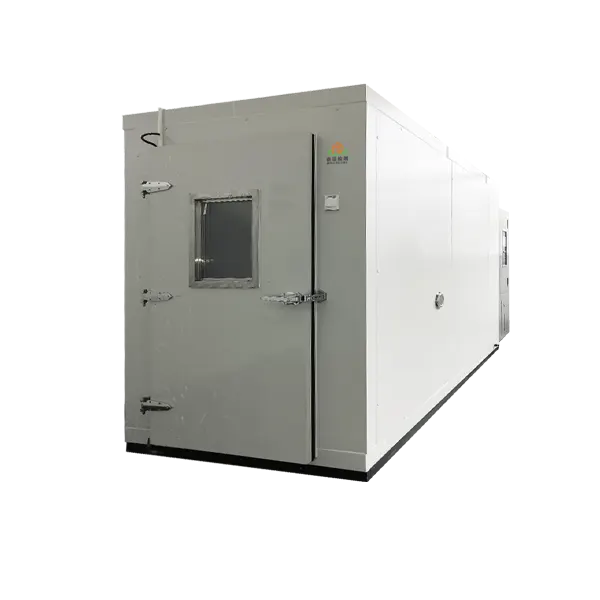
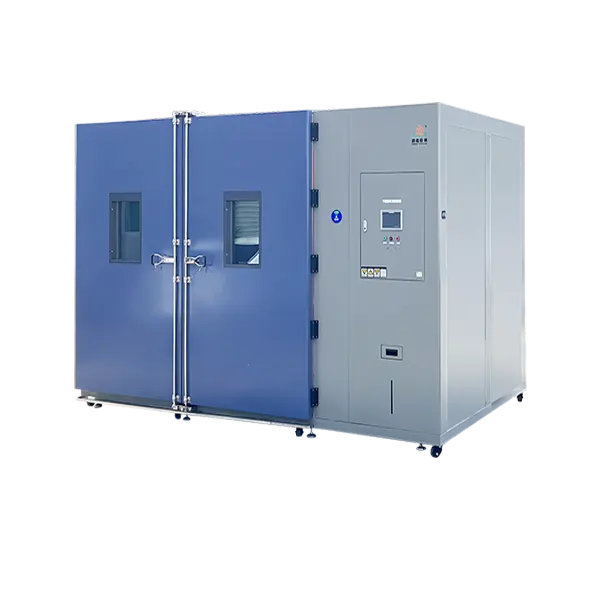
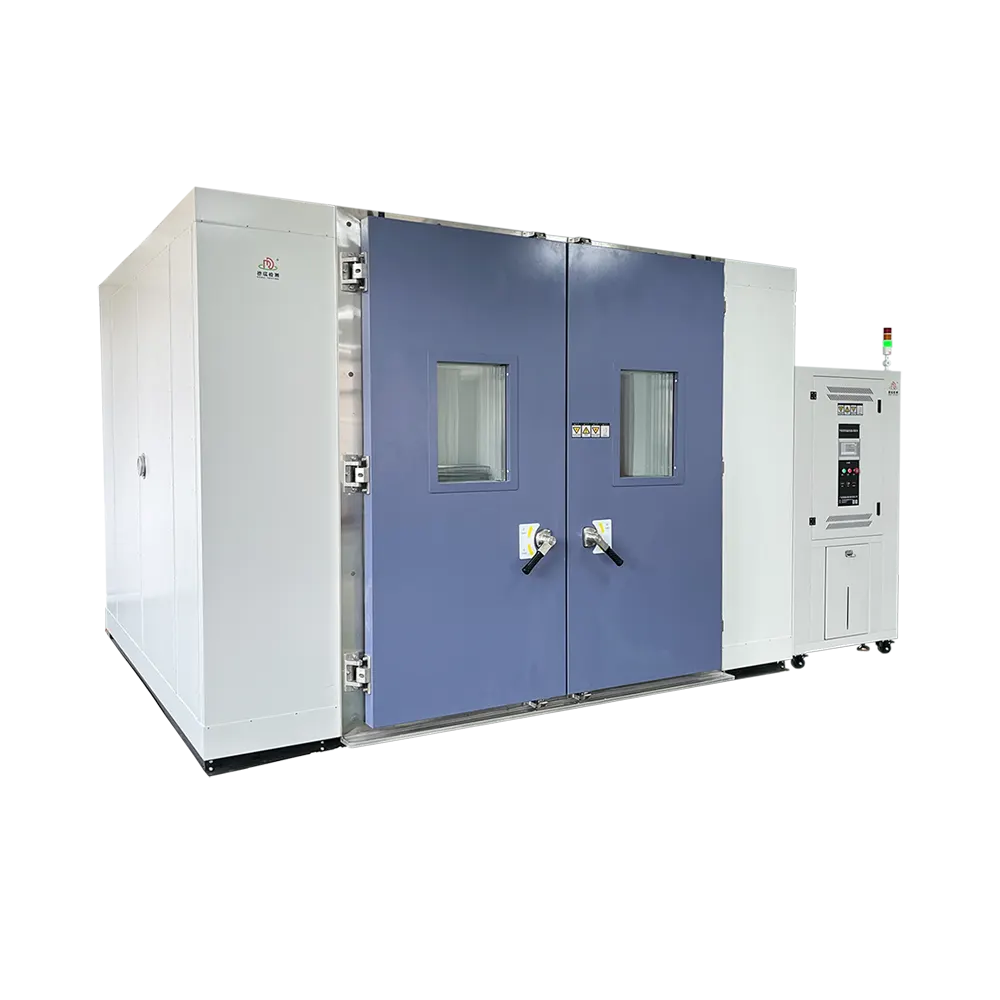
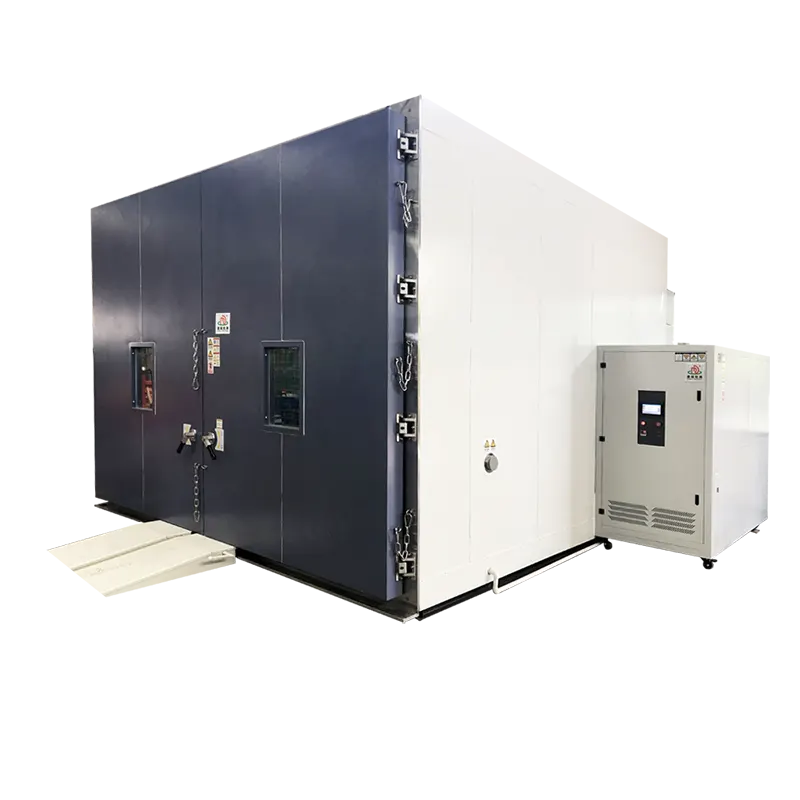
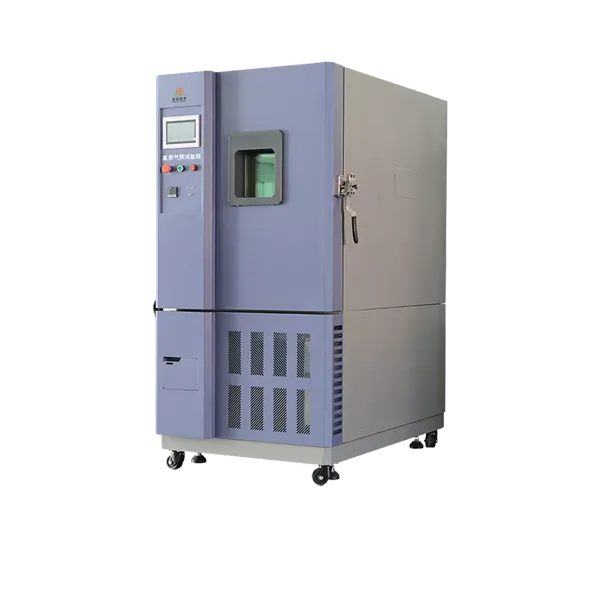
DR-H203-50
50L Thermal Shock Testing Chamber
The DERUI DR-H203-50 is a compact thermal shock testing chamber for components and small assemblies that need rapid exposure to prepared hot and cold environments. Select it around the loaded specimen, fixture and required cycle—not nominal volume alone. Send your sample layout and procedure for a configuration review.
DR-H203-50
DR-H203-50 Technical Parameters
Define final basket dimensions, exposure ranges and loaded performance in the approved technical agreement.
| Item | Specification |
|---|---|
| Nominal capacity | 50 L |
| High-temperature exposure range | +60°C to +150°C |
| Low-temperature exposure options | 0°C to −40°C or 0°C to −55°C |
| Hot-zone heating | Room temperature to 180°C in ≤35 min |
| Cold-zone cooling | Room temperature to −55°C in ≤60 min |
| conversion time | 2–10 s |
| recovery/stabilization | 5 min |
| Control | PID + SSR + microcomputer balanced temperature control |
| Cooling alternatives | Semi-hermetic two-stage water-cooled or fully hermetic two-stage air-cooled refrigeration |
| Controller | 7-inch or 10-inch LCD touch screen; Chinese/English display |
| Power supply | AC380 V, 50/60 Hz, three phase |
| Construction | SUS304 stainless-steel interior; treated cold-rolled-steel exterior |
Specify the representative load, sensor location and recovery tolerance with the required cycle. Conversion takes 2–10 s; this interval does not describe specimen-core temperature response.
DR-H203-50
Translate the Standard into a Loaded Thermal Shock Cycle
Use the exact procedure and edition named by the customer. IEC 60068-2-14 includes change-of-temperature tests, while semiconductor, automotive, aerospace and OEM documents can use different transfer, dwell and measurement rules.
Prepare both zones
Establish the specified hot and cold conditions before specimen exposure.
- Zone setpoints and tolerance
- Preconditioning time
- Empty or loaded readiness
- Alarm and abort limits
Transfer the specimen
Move the basket according to the method and record the actual transfer event.
- Transfer-time definition
- Basket payload
- Cable movement
- Door/opening losses
Recover and dwell
Clarify whether dwell starts at transfer, zone recovery or specimen stabilization.
- Sensor location
- Recovery tolerance
- Dwell at each extreme
- Cycle count and deviations
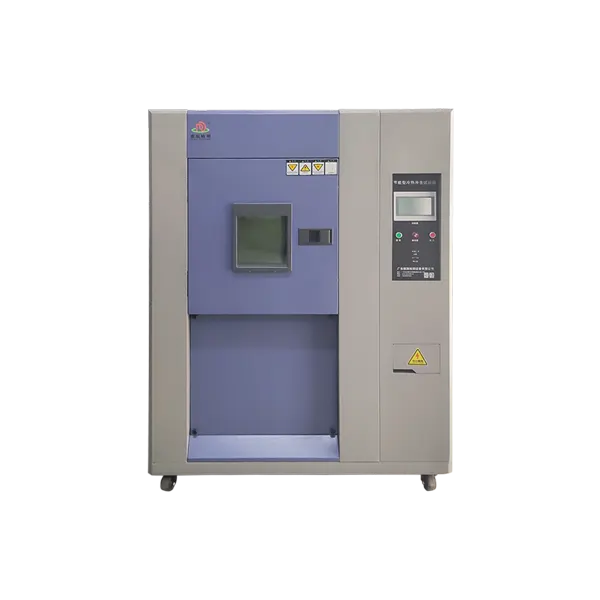
DR-H203-50
50 Litres Does Not Define Usable Test Capacity
The basket, airflow clearance and specimen thermal mass determine usable capacity. A small but dense metal assembly may challenge recovery more than a larger lightweight plastic part.
Specimen envelope
Confirm basket dimensions, fixture, orientation, clearance and any moving cables.
Thermal mass
Provide mass, materials and heat capacity so hot/cold zone recovery can be assessed.
Powered load
State heat dissipation, monitoring current, feedthroughs and whether operation continues during transfer.
Measurement basis
Separate basket movement time, zone-air recovery and specimen temperature response.
Throughput
Define specimens per batch, cycles, daily operating time and changeover needs.
Quotation requirement: every transfer and recovery claim should identify the representative load, temperature points, ambient condition, cooling method, sensor position and allowed tolerance.
DR-H203-50
Nine Inputs for DR-H203-50 Selection
Method and edition
Procedure, severity and customer-specific deviations.
Hot/cold profile
Exposure temperatures, transfer, recovery, dwell and cycles.
Specimen package
Dimensions, mass, materials, quantity, fixture and clearance.
Movement
Allowable orientation, shock, basket travel and cable routing.
Monitoring
Air/specimen sensors, powered state, channels and sampling.
Cooling method
Air- or water-cooled system, room heat rejection and water supply.
Utilities
Voltage, current, drainage, ventilation, access and floor loading.
Safety
Over-temperature, refrigeration, overcurrent, alarm and emergency stop.
Documentation
Drawings, calibration, test records, manuals and acceptance report.
Factory acceptance: verify ordered configuration, basket dimensions, zone ranges, transfer sequence, controller, protection logic and representative loaded cycle against one agreed protocol.
DR-H203-50
Plan the purchase around your specimen and laboratory
For the buyer
Compare the usable basket envelope, not just litres. Include fixtures, wiring loops and the clearance needed for basket movement. Ask each supplier to price the same hot/cold sequence, representative mass, powered heat, sensor arrangement and data package. A lower-priced unit with an unsuitable basket or undefined recovery condition is not an equivalent offer.
For the test engineer
For a connector or small PCB assembly, submit the fully mounted drawing rather than the loose component size. State whether the specimen remains powered during transfer, how cables are restrained and which functional checks occur at each extreme.
Evidence before approval
Before shipment, agree a representative loaded run. Record preconditioning, basket movement, chamber-air recovery and the specimen temperature separately. Keep the programmed cycle, time-stamped temperatures, load description and any alarm events together. The acceptance record should identify which sensor starts dwell and which deviations require a repeat.
DR-H203-50
Select the architecture that matches the test
100L Temperature Shock Test Chamber · Energy-Saving Temperature Shock Test Chamber
Choose the 100L stationary-specimen arrangement when movement or cables change the decision. Compare the energy-performance configuration when repeated daily cycling makes operating cost a purchasing priority.
Thermal shock equipment category · Rapid temperature change chamber · Temperature test chambers
Request a configuration review
Send the specimen and fixture drawing, quantity, mass, powered heat, temperature sequence, monitoring requirements and laboratory utilities. Include the governing method, acceptance criteria and destination so the proposed build and any open requirements can be reviewed before quotation.
Review DERUI company information and qualification documents. Ask which documents cover the proposed equipment and configuration.
Specify the complete basket test package
Include the usable basket drawing, specimen restraints, cable routing, temperature sensors and the selected refrigeration arrangement in the quotation. For small connectors, PCBs or molded assemblies, preserve airflow paths around every specimen rather than filling the nominal volume.
Program the cold/hot exposure, recovery rule and dwell trigger as separate settings. During acceptance, retain the load photograph, fixture mass, sensor map and time-stamped temperatures with the approved cycle. This makes repeat runs and quotation comparisons practical.