
DR-H304 SERIES · SIX CABINET SIZES · METHOD-MATCHED CONFIGURATION
Compare the Cabinet Geometry.
Then Specify the Exposure.
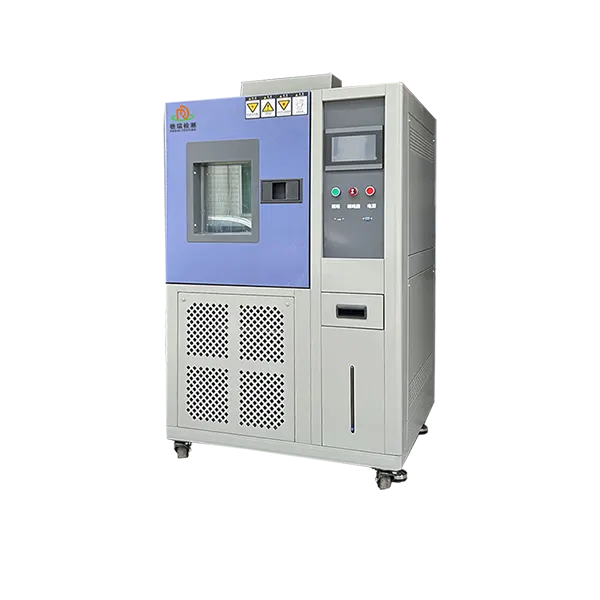
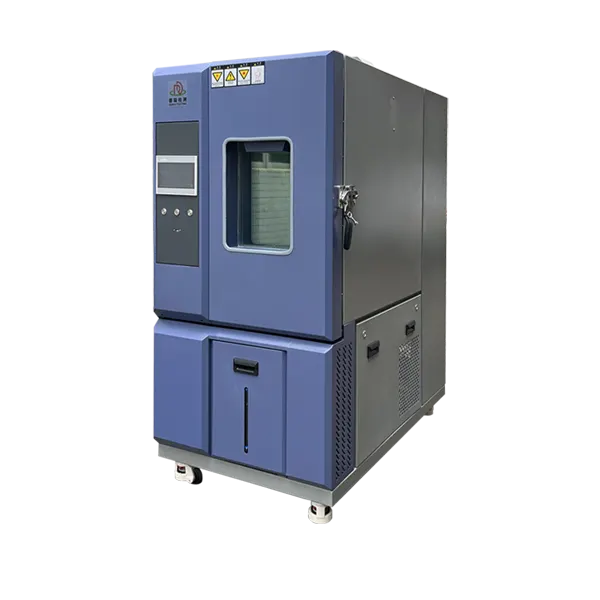
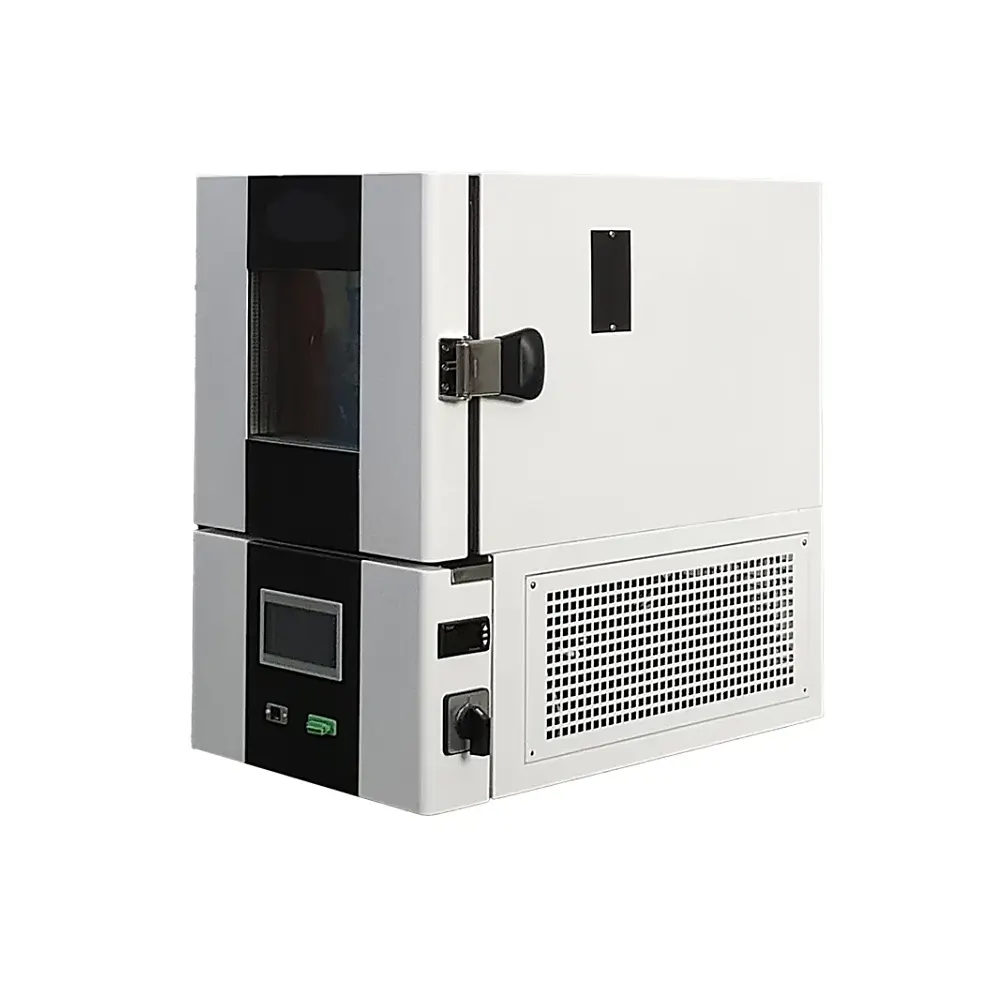
The DERUI DR-H304 salt spray corrosion test chamber series offers six cabinet configurations with geometric enclosure volumes from 108 to 1080 L. Compare internal dimensions, specimen arrangement and installation space to shortlist a model, then define the required salt fog method and equipment configuration.
Six model configurations
DR-H304-108, -270, -412, -663, -816 and -1080.
400–600 mm internal height
Height changes between models; volume alone is not a fit check.
108–1080 L enclosure range
Actual specimen capacity follows the loading drawing.
For metals, plated parts and coated specimens, a useful quotation identifies both the cabinet and the exposure. Send your part and fixture layout to select a size without losing the clearances needed for a valid test.
DR-H304 Model and Size Comparison
| Model | Internal W × D × H (mm) | Geometric volume (L) | External W × D × H (mm) |
|---|---|---|---|
| DR-H304-108 | 600 × 450 × 400 | 108 | 1140 × 780 × 1050 |
| DR-H304-270 | 900 × 600 × 500 | 270 | 1460 × 960 × 1150 |
| DR-H304-412 | 1100 × 750 × 500 | 412.5 | 1730 × 1100 × 1240 |
| DR-H304-663 | 1300 × 850 × 600 | 663 | 2150 × 1230 × 1410 |
| DR-H304-816 | 1600 × 850 × 600 | 816 | 2450 × 1230 × 1460 |
| DR-H304-1080 | 2000 × 900 × 600 | 1080 | 2850 × 1280 × 1460 |
The DR-H304-412 designation is retained although its listed dimensions calculate to 412.5 L. Volume figures describe the enclosure geometry; they are not promises of a fixed sample count or unrestricted usable capacity.
Shortlist by Width, Depth and Height—not Litres Alone
Start with the largest fixture arrangement and required specimen orientation. A width constraint, a deep assembly and a tall mounted component lead to different choices even when their total volumes look similar.
Use the following groups as dimension checks, not as fixed application assignments. The required method, fixture mass and exposure layout still determine whether a model is suitable.

| First dimension check | Models to compare | What changes |
|---|---|---|
| Smaller fixture envelopes | DR-H304-108 / DR-H304-270 | Internal width increases from 600 to 900 mm, depth from 450 to 600 mm and height from 400 to 500 mm. |
| More width/depth at 500 mm height | DR-H304-270 / DR-H304-412 | Compare 900 × 600 mm and 1100 × 750 mm horizontal envelopes. |
| A 600 mm-high enclosure | DR-H304-663 / -816 / -1080 | Width increases from 1300 to 2000 mm; depth is 850 or 900 mm. |
If no layout fits, provide the drawing for an alternative configuration. Do not rotate a specimen solely to make it fit if the procedure requires a different orientation. Include supports and collector locations before selecting the smallest suitable cabinet.
Turn a Cabinet Shortlist into a Loading Review
| Loading information | Why it changes selection |
|---|---|
| Specimen size and exposed surfaces | Determines the mounting envelope and access of fog to the assessed surfaces. |
| Quantity per run | Requires spacing, collector access and compatible exposure/inspection schedules. |
| Fixture geometry and total mass | Affects support design, contact points and loading feasibility. |
| Orientation and drainage | Prevents unintended shielding, cross-contamination and runoff between specimens. |
| Largest and routine layouts | Shows whether one configuration can cover the laboratory workload without crowding. |
Supply a top and side view showing the specimen identifiers, exposed faces, holders and intended collector positions. If the programme permits repositioning, record the schedule rather than change locations informally during the run.
Check the installed envelope as well
External cabinet dimensions are the starting point for the floor plan. Include cover movement, solution preparation, exhaust and drainage connections, electrical access and routine maintenance. Confirm the delivery route using the installation drawing.
Select NSS, AASS or CASS as a Configuration Requirement
Salt spray exposure can support quality-control and qualification programmes for a defined material or finish. Choose the method from the product requirement; a larger model does not make a more aggressive chemistry valid for every specimen.
| Procedure | Configuration decision |
|---|---|
| NSS | Neutral salt fog operation, required solution preparation, temperature and collected-fog checks. |
| AASS | Acidified chemistry, compatible wetted surfaces and solution paths, prescribed operating conditions and cleaning. |
| CASS | Copper-containing acidic chemistry, required thermal operation and contamination controls. |
The ISO 9227 scope separates these procedures and includes cabinet-corrosivity evaluation. Specimen details, duration and result interpretation follow the relevant product specification.
For ASTM B117 programmes, identify the required edition, exposure and acceptance endpoint in the test plan. Do not interpret a standard name on a quotation as approval of the tested product.
If CASS is the central purchase requirement, review the dedicated CASS corrosion chamber page. For a fuller explanation of methods and evaluation, read the salt spray testing guide.
Specify the Exposure Checks with the Selected Cabinet
A size comparison is only one part of procurement. Define how the ordered configuration will demonstrate the required exposure under the agreed loading conditions.
Temperature evidence
Required operating setpoints, measurement locations, tolerances and verification conditions. Calibration and spatial verification are different checks.
Fog and chemistry checks
Collector locations, volume and interval, solution checks and method-required cabinet verification. Keep collector results individually traceable.
Records and interruptions
Required timestamps, channels, inspection access and treatment of faults or pauses. Specify any logging or export functions explicitly.
Solution preparation is not the same as verification of collected fog. Retain the checks required by the procedure and investigate changes with the loading and operating conditions in view. Nozzle cleanliness, air quality and solution supply are routine operating controls, not one-time purchase features.
The acceptance report for the apparatus is separate from the specimen result. Salt fog hours do not provide a universal outdoor-life conversion, and results do not establish a universal ranking of unrelated material systems.
Series Accessories, Electrical Supply and Protection
| Configuration item | Specification or purchase decision |
|---|---|
| Specimen and fog accessories | V-shaped holders, support rods, nozzle, funnel, measuring cylinder and exhaust pipe; quantities defined for the ordered model |
| Protection functions | Overtemperature, low water level, electrical leakage and short-circuit protection; phase-loss/reverse-phase protection where applicable to the supplied electrical system |
| Operation indications | Test timing, completion and exhaust-related indications; agree the required controller and alarm functions |
| Supply configurations | AC 220 V ±10% / 50 Hz or AC 380 V ±10% / 50 Hz, depending on the ordered model and configuration |
| Installation ambient | 5–28°C, ≤85% RH in the listed series specification |
| Electrical rating | Model- and configuration-specific; obtain the rated power, phase and protective-device requirements in the electrical drawing |
| Exposure configuration | NSS, AASS or CASS selected with compatible materials, temperature operation and solution handling |
| Records | Specify required channels, timestamps, logging and export format in the quotation |
Prepare the destination electrical requirements before ordering. Voltage alone does not identify phase, rated current, cable size or breaker requirements. Use the selected model’s electrical drawing rather than a series-level power list to design the supply.
Agree the solution-reservoir capacity, replenishment arrangement, air delivery and pressure, water quality, exhaust and drainage. These should be defined for the selected configuration, not inferred from enclosure litres.
Chemistry compatibility applies to the cabinet, fixtures, fasteners and solution paths. Specify the intended exposure and cleaning or segregation arrangement if the laboratory plans to use more than one method.
Keep Standard Salt Fog and Cyclic Corrosion Separate
A cyclic corrosion procedure may require humidity, drying, solution application and defined transitions. Spray timing alone does not demonstrate those functions. Assess a proposed apparatus against the entire sequence, including representative-load recovery and the required records.
For large assemblies needing walk-in access, review the DR-H304-B walk-in salt spray test room. That is a separate project-sized equipment decision. Use the salt spray category to compare the broader range.
Build a Quotation That Your Engineering Team Can Review
| Inquiry item | Information to send |
|---|---|
| Method | Document and edition, selected exposure, full sequence and duration. |
| Loading | Specimen and fixture drawings, quantity, total mass and required orientation. |
| Installation | Delivery route, floor plan, electrical supply, air, water, exhaust and drainage. |
| Quality requirements | Verification scope, calibration, required records and any witnessing. |
| Handover | Accessory quantities, instructions, maintenance information and acceptance documentation. |
Use these requirements to agree a model and configuration, not simply a capacity and price. A clear loading review and utility specification reduce the risk of discovering an unsuitable installation or missing record function after delivery.
DR-H304 Series Selection FAQs
Which models are included on this series page?
DR-H304-108, -270, -412, -663, -816 and -1080. Use their internal and external dimensions to compare configurations.
Is the volume the usable specimen capacity?
No. Volumes are calculated from enclosure dimensions. Supports, collectors, specimen spacing and required orientation reduce the available loading space.
Why does DR-H304-412 calculate to 412.5L?
Its internal dimensions are 1100 × 750 × 500 mm. The model identifier remains DR-H304-412; geometric volume and model naming are different labels.
Is DR-H304-816 the same as the 800L DR-H304-160?
No. DR-H304-816 is 1600 × 850 × 600 mm internally, while DR-H304-160 is 1600 × 1000 × 500 mm. Compare the full geometry and configuration.
Can any size run NSS, AASS and CASS without changes?
Select the required chemistry and verify thermal operation, wetted materials, solution handling and contamination controls for the ordered configuration.
Does a bigger salt fog chamber perform cyclic humidity and drying tests?
Not by size alone. The entire multi-stage sequence and transitions must be supported by separately specified functions and verification.
Can electrical requirements be chosen from volume alone?
No. Obtain voltage, phase, frequency, rated power and protective-device requirements for the selected model and configuration.
What should I provide to compare two models?
Send the same complete loading drawing, required exposure, specimen quantity, fixture mass, site conditions and record requirements for both proposals.
FROM MODEL COMPARISON TO A DEFINED PROPOSAL
Send One Loading Drawing.
Compare the Right DR-H304 Configurations.
Share specimen dimensions, fixture layout and the required method. Include utilities, records and acceptance requirements so DERUI can review suitable cabinet sizes and prepare a configuration-based quotation.