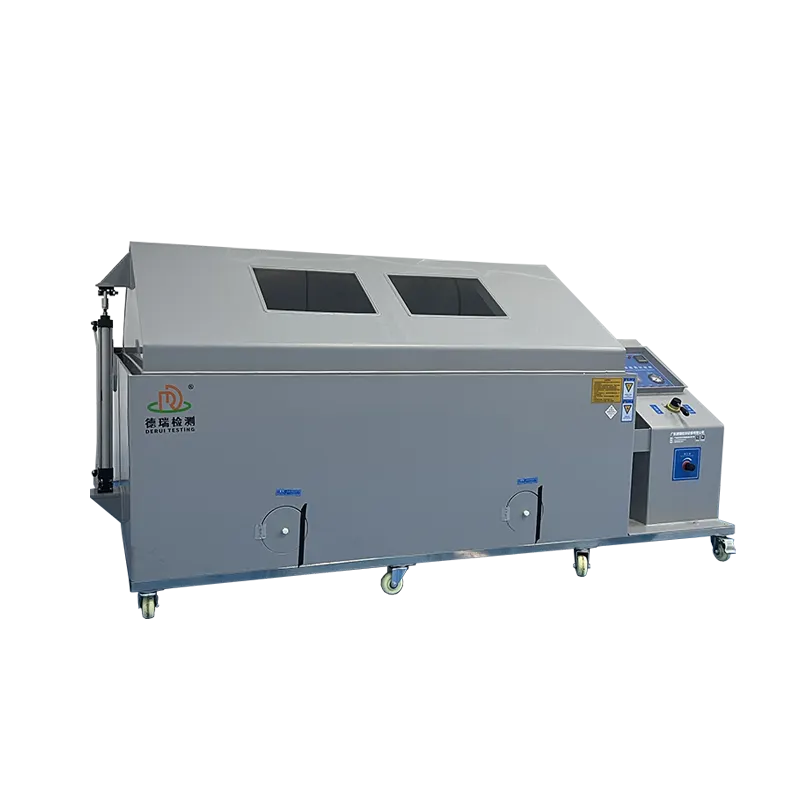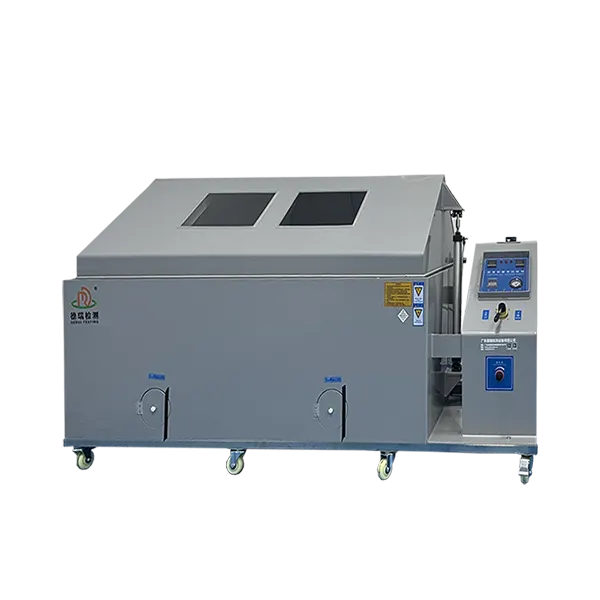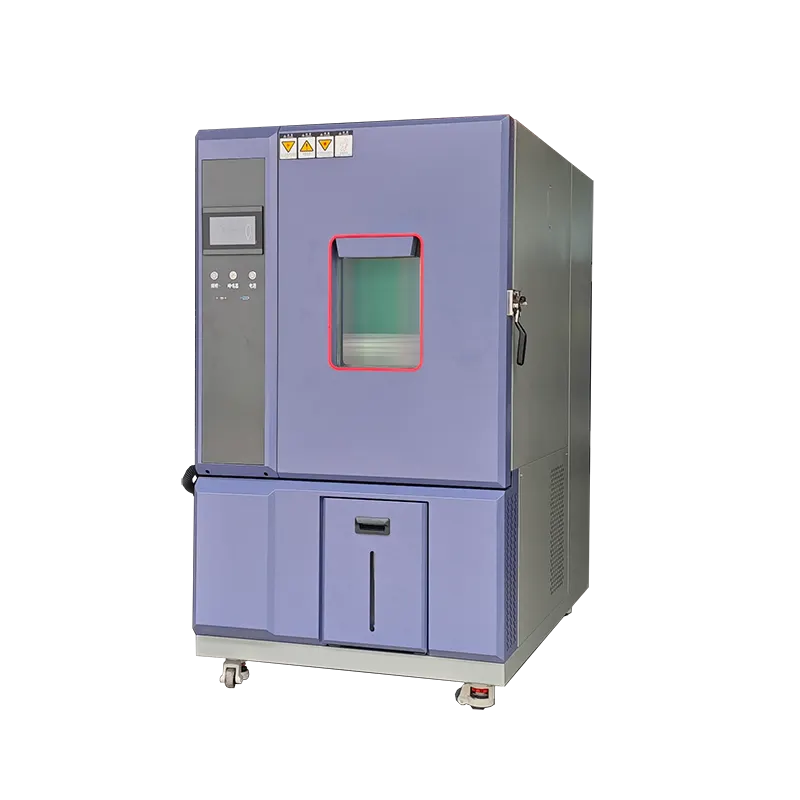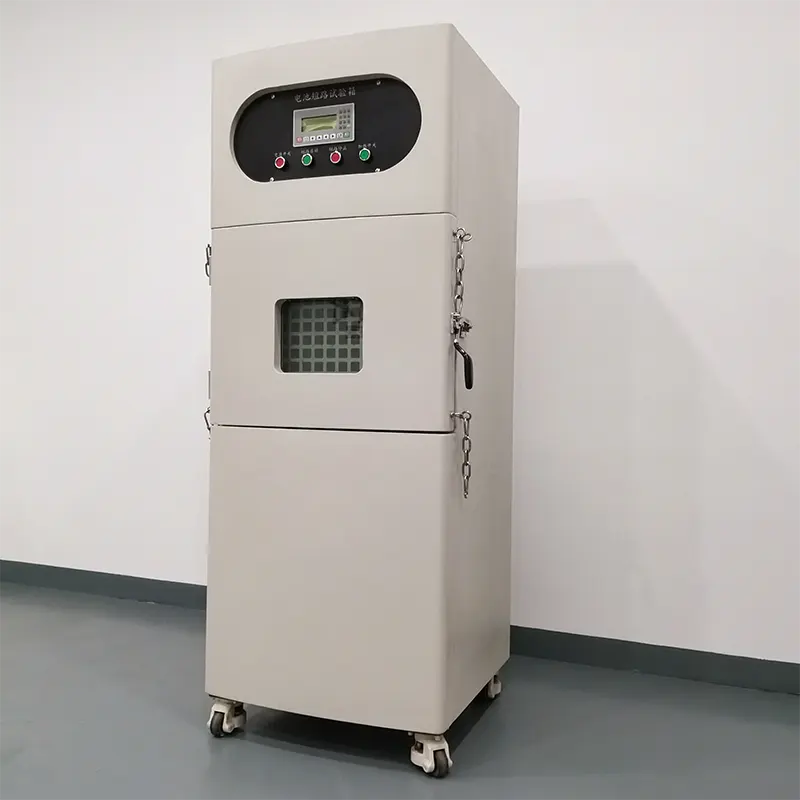
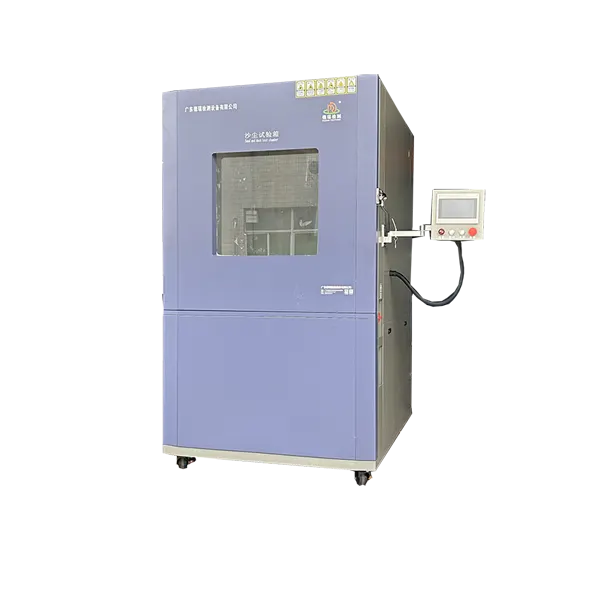

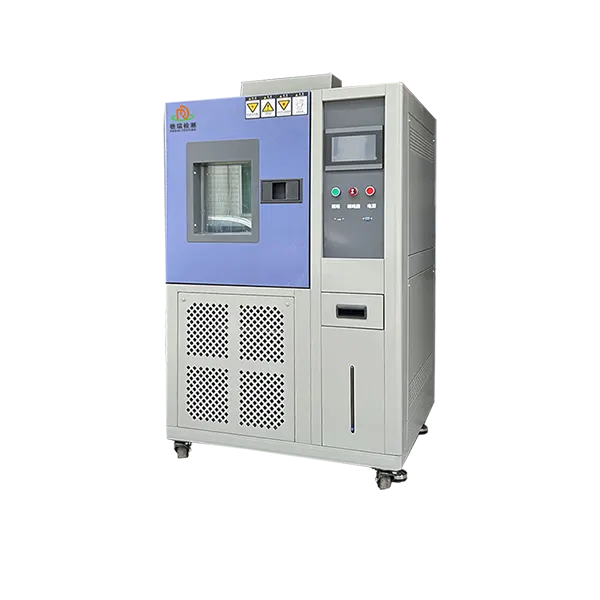
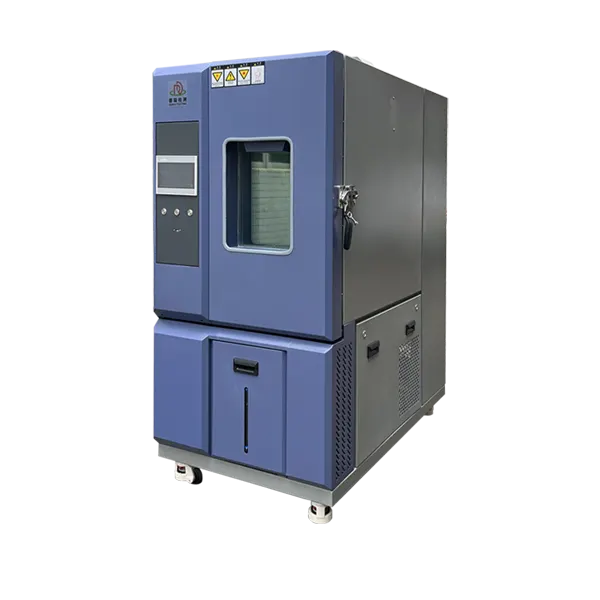
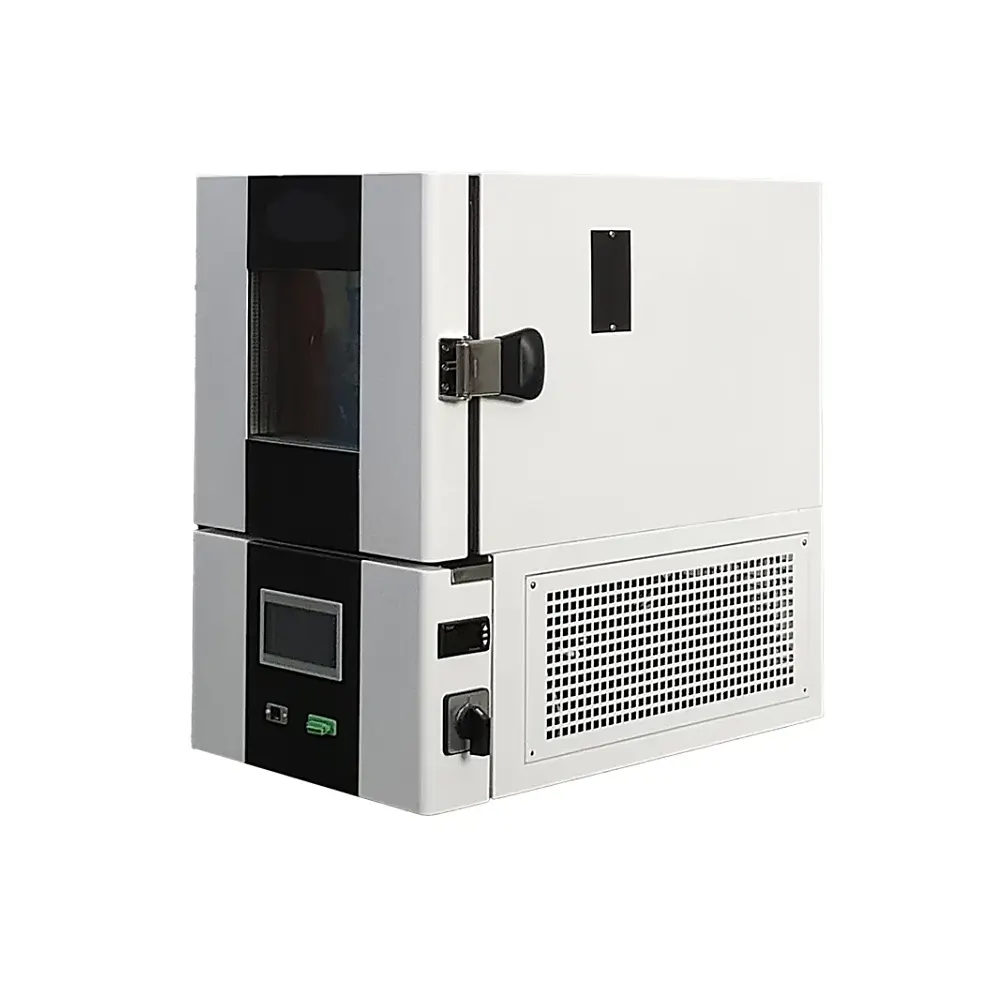
ASTM B368 CASS Corrosion Test Chamber
Model DR-H304-6 is intended for accelerated evaluation of decorative copper-nickel-chromium, nickel-chromium and suitable anodized aluminum coating systems under controlled CASS salt-fog conditions.
What CASS testing reveals
CASS means copper-accelerated acetic acid salt spray. Copper chloride and acetic acid are added to the sodium-chloride solution to create an aggressive, acidic fog environment. The method is especially useful for exposing pores, discontinuities and weak areas in decorative electrodeposited coatings.
ASTM B368 was developed specifically for decorative nickel/chromium and copper/nickel/chromium coatings. ISO 9227 also defines CASS apparatus, reagents and operating procedures, including assessment of cabinet corrosivity. Neither standard establishes one universal exposure duration, specimen geometry or acceptance limit; those requirements must come from the product, coating or customer specification.
CASS, AASS and NSS: choose the specified method
| Method | Solution and environment | Common application |
|---|---|---|
| NSS Neutral salt spray |
Neutral sodium-chloride fog under the referenced method | Metals, metallic coatings, conversion coatings, anodic oxide coatings and organic coatings on metals |
| AASS Acetic acid salt spray |
Acidified sodium-chloride solution | Decorative Cu/Ni/Cr or Ni/Cr coatings and some anodic or organic coatings on aluminum |
| CASS Copper-accelerated AASS |
Acidified sodium-chloride solution with copper chloride | Decorative Cu/Ni/Cr or Ni/Cr coatings; selected anodic and organic coatings on aluminum |
Do not describe the result as “four to eight times faster than NSS.” Acceleration varies by coating system and the methods can produce different corrosion mechanisms, so a fixed conversion factor is not technically defensible.
What a compliant CASS system must control
Published method conditions versus model specifications
The following values describe common ISO 9227 CASS method conditions, not the complete operating range of DR-H304-6. Confirm the purchased model against the current DERUI technical datasheet.
| Method item | CASS reference condition | Procurement check |
|---|---|---|
| Cabinet temperature | 50°C ±2°C | Control sensor location, uniformity and over-temperature protection |
| Collected solution pH | 3.1 to 3.3 | Measurement method and temperature correction |
| Collected fog rate | 1.5 mL/h ±0.5 mL/h per 80 cm² horizontal collection area | Collectors, calibration and distribution mapping |
| Sodium chloride | 50 g/L ±5 g/L in collected solution | Water quality, reagent grade and solution preparation |
| Exposure duration | Defined by product/customer specification | Controller duration, uninterrupted operation and refill capacity |
Recommended DR-H304-6 configuration checklist
| Item to confirm | Information DERUI needs |
|---|---|
| Test scope | ASTM B368, ISO 9227 CASS, NSS/AASS, or a separate OEM cyclic method |
| Specimens | Part material, coating system, dimensions, quantity, weight and holder requirements |
| Cabinet | Required working dimensions and usable specimen envelope—not just nominal liters |
| Programs | Continuous fog only or additional spray, humidity, dry-off and temperature stages |
| Records | Temperature, program status, alarms, data export and calibration documentation |
| Utilities | Site voltage/frequency, compressed air quality, water supply, exhaust and drainage |
| Safety | Solution handling, door interlock, low-liquid protection, over-temperature alarm and emergency response |
Typical applications
From test specification to defensible result
- Identify the governing document.
Record the exact standard edition, product specification, exposure duration and evaluation method. - Verify chamber capability.
Confirm CASS chemistry compatibility, cabinet controls, collection system and required utilities. - Prepare specimens consistently.
Clean, mask and mount parts only as required by the applicable specification. - Verify solution and fog.
Record reagent preparation, pH, temperature, collection rate and cabinet-corrosivity checks. - Control interruptions.
Document door openings, replenishment, alarms and any deviation that could affect results. - Evaluate to the product method.
Report defects, rating method and acceptance decision without converting chamber hours into service years.
Operation, maintenance and safety
Prevent contamination between test methods
Residual copper and acid can affect subsequent NSS or AASS work. If one cabinet will run several chemistries, obtain a documented cleaning and verification procedure and determine whether your laboratory quality system permits method sharing.
Maintain the fog path
Inspect nozzles, solution filters, collectors, saturator, compressed-air treatment and drains. Deposits or blocked components can change fog distribution even when the controller display appears normal.
Handle CASS solution responsibly
CASS solution is acidic and contains copper. Provide appropriate personal protective equipment, ventilation, spill controls and waste disposal based on the safety data sheets and local regulations. Do not discharge solution without an approved disposal process.
Frequently asked questions
What is the difference between CASS and ASTM B117?
ASTM B117 is an apparatus operating practice commonly associated with neutral salt fog. ASTM B368 specifically defines copper-accelerated acetic acid salt spray conditions for suitable decorative coating systems. The solution chemistry and operating temperature differ.
Is CASS the same as cyclic corrosion testing?
No. CASS is a copper-accelerated acidic salt-fog method. Some laboratories may use “cyclic” loosely, but true cyclic-corrosion methods can require alternating fog, humidity, drying and temperature stages. Confirm the exact method before configuring the chamber.
Which materials are appropriate for ASTM B368?
The method applies primarily to decorative copper/nickel/chromium or nickel/chromium coatings on steel, zinc alloys, aluminum alloys and plastics intended for severe service, as well as anodized aluminum. Suitability should be established for other systems.
Does ISO 9227 define the test duration and pass/fail limit?
No. ISO 9227 specifies apparatus, reagents and procedures, but the product or customer specification defines specimen details, exposure duration and result interpretation.
Can one chamber run NSS, AASS and CASS?
It may be possible if the model is designed for each mode and an effective cleaning/verification procedure is followed. Confirm DR-H304-6 capabilities and your laboratory’s contamination-control requirements before ordering.
Can this chamber run SAE J2334?
Not from CASS capability alone. SAE J2334 requires a defined cyclic environment. The chamber needs the corresponding humidity, drying, temperature-transition and solution-application functions.
Can CASS hours predict outdoor service life?
No fixed conversion is valid. The method is useful for specification acceptance, process control and comparative evaluation, but correlation depends on the coating system and real service environment.
What should I send with a quotation request?
Send the exact standard and cycle, specimen dimensions and quantity, coating system, working-volume requirement, utilities, supported modes, data requirements and destination voltage.
Related corrosion-testing equipment
For general neutral salt fog equipment, review the salt spray test chamber range. For a model focused on ASTM B117 continuous salt spray, see the ASTM B117 salt spray corrosion chamber. These methods should remain separate from the CASS page to avoid selecting the wrong chemistry and operating conditions.
Match the CASS chamber to your coating specification
Send DERUI your standard, specimen drawing, coating system and required test modes. We will confirm whether DR-H304-6 or another configuration fits the method.