Floor 1, No. 3, Shugang Avenue, Hongmei Town, Dongguan City, Guangdong Province, China

20 years environmental test chamber manufacturer3000+ customer deliverables worldwide           Email: shirley@deruitest.com
Global Consultation Hotline:+86 15580327593

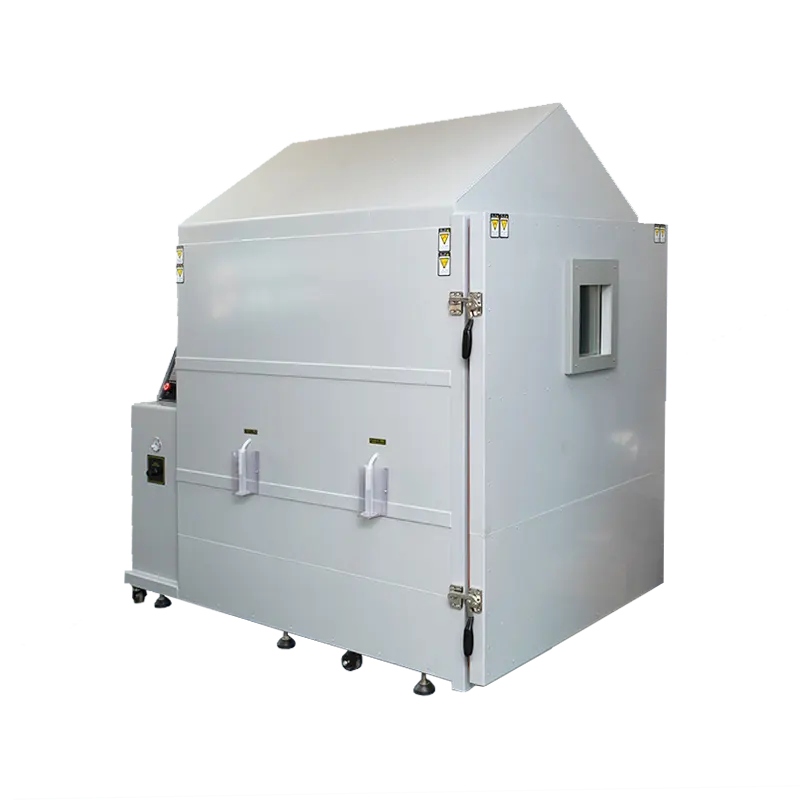
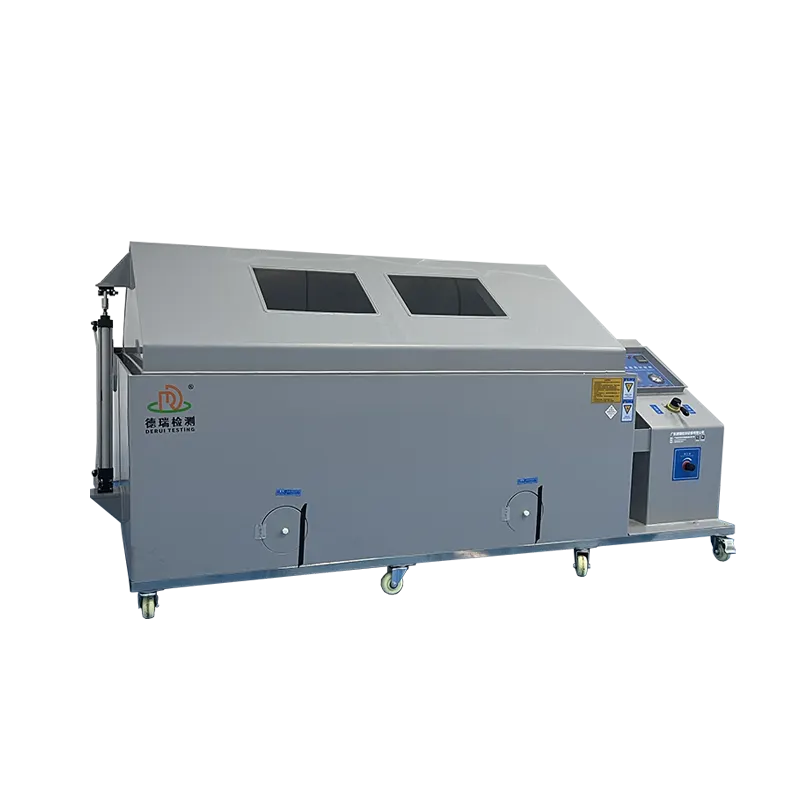
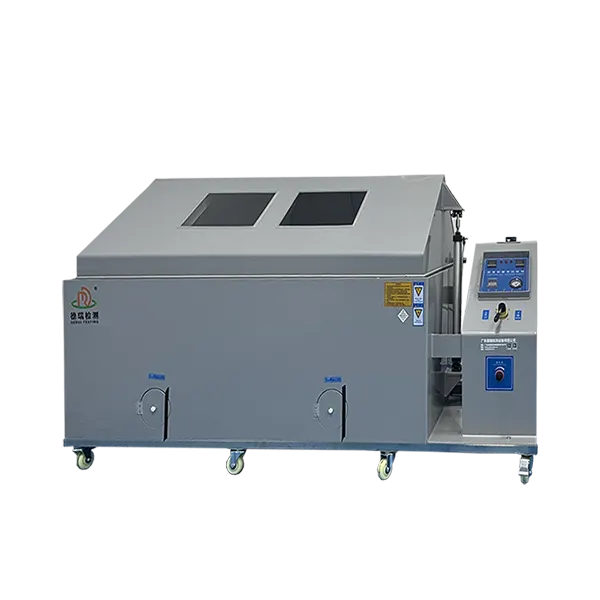
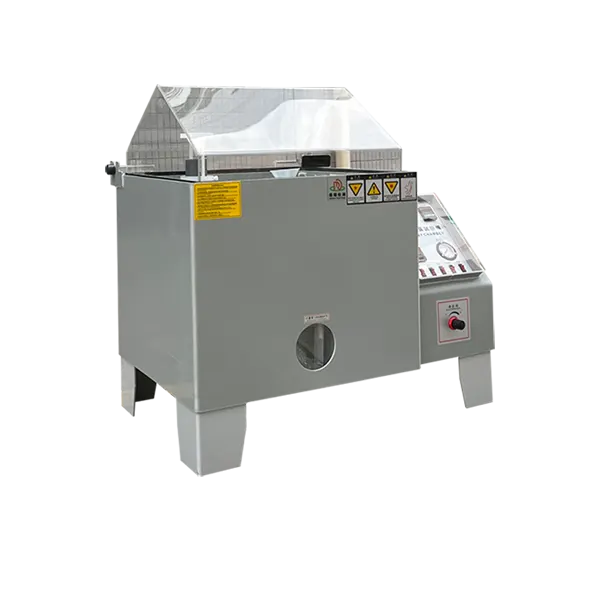
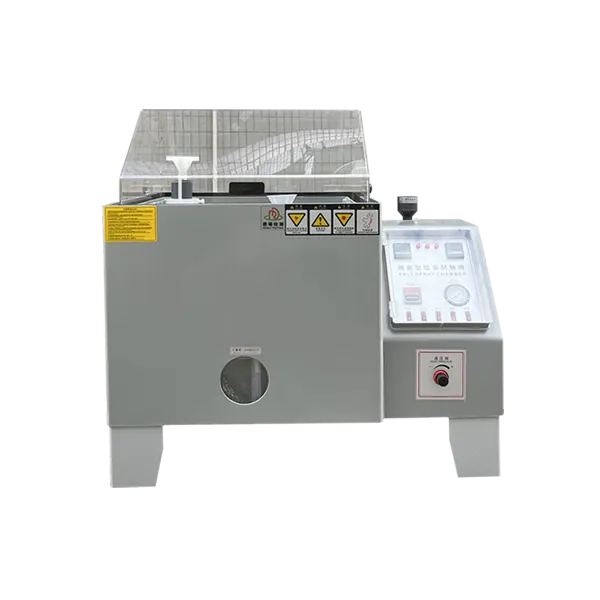
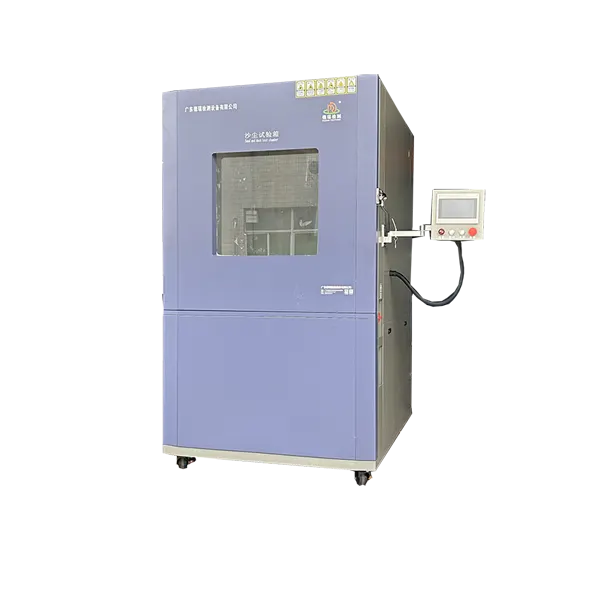
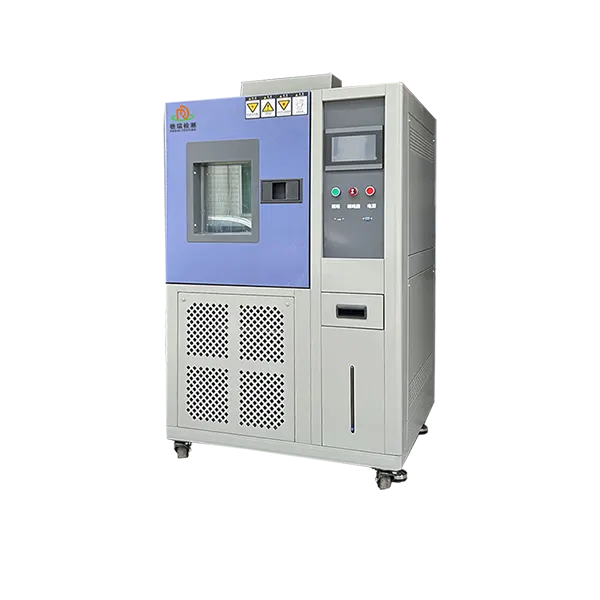
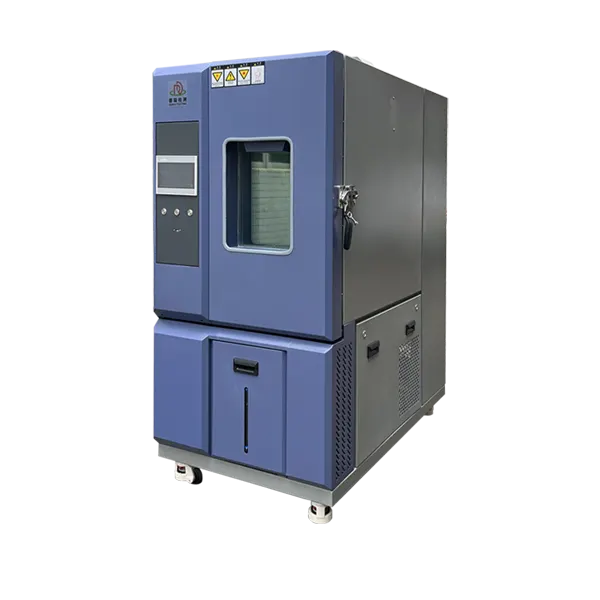
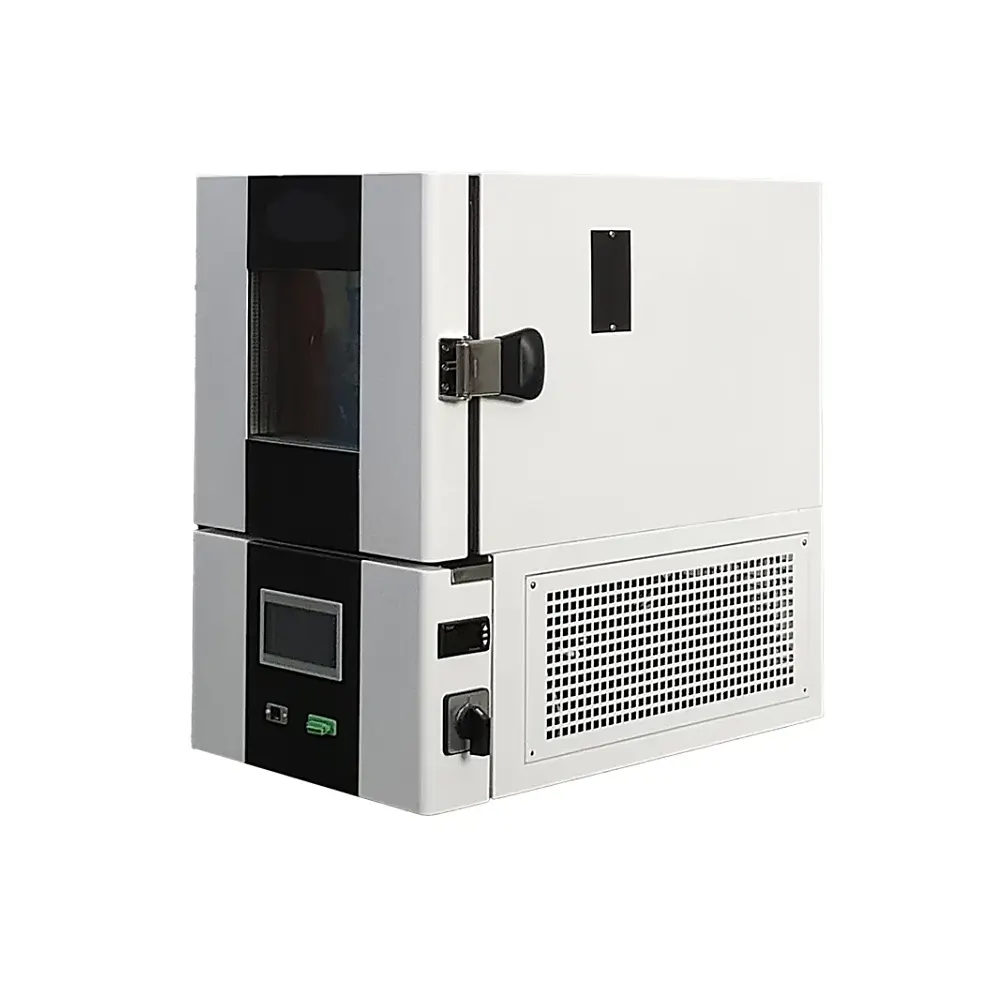
Large Salt Spray Test Chamber Features Benefits and Buying Guide

DR-H304-B

Price: FOB, CIF

Payment: L/C, D/P, T/T

Package: Each set protected with resin fiber and PP film, then put into Strong wooden case with operation manual and video inside.

Delivery: 15 days after order.

Safe and reliable
well-made
Quality assurance
customization
MessageWhatsApp
Hotline number 15580327593
  • Product Details
  • Technical parameters
  • FAQ
  • Contact us
● Buying Guide

Large Salt Spray Test Chamber: Features, Benefits, and Buying Guide

A procurement reference for walk-in and large salt spray chambers — covering capacity, atomizer design, ASTM B117 / ISO 9227 compliance, and the trade-offs between standard 480 L chambers and 2000 L+ walk-in units.

At a Glance

Chamber Volume
800–3000 L
Standard
ASTM B117 / ISO 9227
Test Type
NSS / AASS / CASS
Chamber Temp
35°C ± 1°C (B117)
Specimen Size
Up to 2m panels
Use Case
Auto body, aerospace
1

Why Large Salt Spray Chambers Are Required for Modern Manufacturing

Component size, automotive body panels, and the limits of bench-top chambers

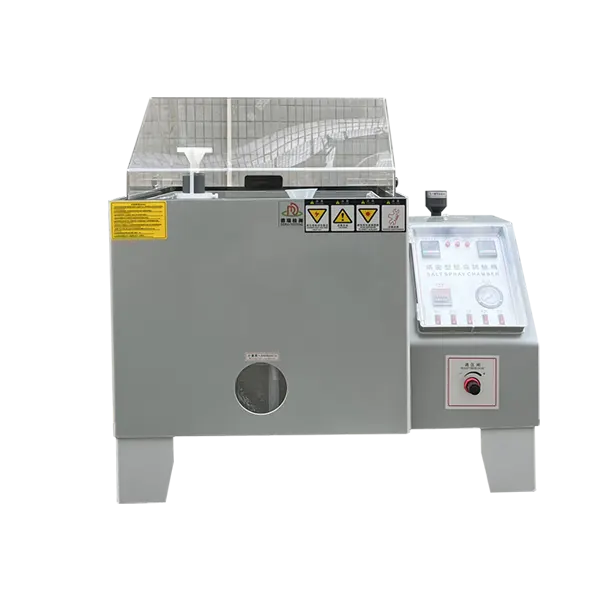
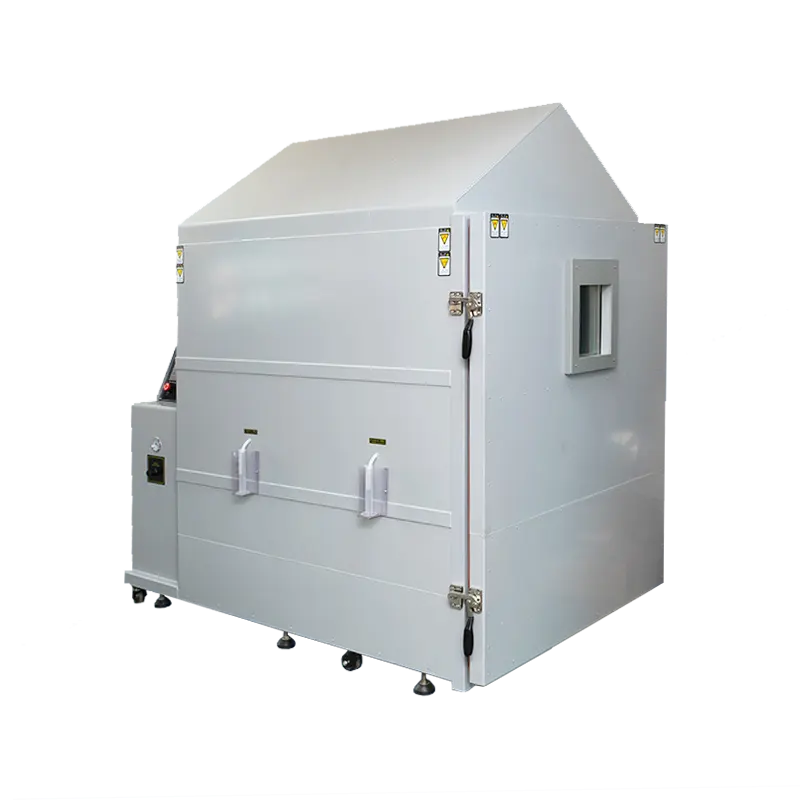
Standard 270–480 L bench-top salt spray chambers fit most QC samples: small fasteners, painted test panels, plated coupons. But for full-size automotive body panels, aerospace components, large enclosures, and pre-painted sheet metal coils, a large salt spray test chamber (800 L to 3000+ L, walk-in configuration) is the only practical option. These chambers handle components that simply do not fit through the door of a bench-top unit.

Large chambers follow the same standards as small ones — ASTM B117, ISO 9227 NSS / AASS / CASS, and ASTM G85 variants — but require careful attention to spray distribution uniformity, atomizer placement, and temperature uniformity across the larger working volume. This guide covers the key features and trade-offs for procurement.

Industry trend: Automotive OEMs and Tier-1 suppliers are moving to 2000 L+ walk-in salt spray chambers to accommodate pre-painted body panels (1.0×1.5 m), sub-assemblies (front-end modules, battery trays), and large aluminum die-castings. The chamber is a long-term capital investment, typically used 3000+ hours per year.
2

Large Salt Spray Chamber: Specification Comparison

Side-by-side comparison of common large chamber configurations

Chamber Sizes & Capacity

Specification
800 L
1500 L
2000 L
3000 L (Walk-in)
Chamber Dim. (L×W×H)
1.2×1.0×1.5 m
1.5×1.2×1.8 m
2.0×1.5×2.0 m
2.5×2.0×2.5 m
Door Size
1.0×1.2 m
1.2×1.5 m
1.5×1.8 m
1.8×2.0 m walk-in
Specimen Capacity
200 panels
400 panels
600 panels
1000+ panels
Solution Tank
80 L
120 L
200 L
300 L
Atomizers
2 standard
2–3
3–4
4–6
Price Range (USD)
$12K–$18K
$18K–$25K
$25K–$40K
$40K–$80K+

Common Specs (All Sizes)

Chamber Material
FRP or PP (corrosion-resistant, 6–10mm wall)
Workspace Temp
35°C ± 1°C (B117) / 50°C ± 1°C (CASS)
Air Saturator
10–30 L borosilicate glass, heated
Atomizer Pressure
0.7–1.4 kgf/cm², regulated
Spray Rate
1.0–2.0 mL/80cm²/h (B117)
Controller
PLC + 10" touchscreen, 99 program memory
Continuous Operation
Up to 3000 hours
Lid Configuration
Pneumatic lift, observation window, heating element
3

Large Chamber Setup & Operation

Site preparation, spray uniformity verification, and long-term reliability

Phase 1 — Site Preparation

Large salt spray chambers require a dedicated floor space with reinforced flooring (chamber + solution + specimens can weigh 2–5 tons). Exhaust ventilation must vent to the building exterior — salt-laden fog destroys HVAC ductwork, electronics, and metal furniture. Floor drainage must handle solution tank refills and chamber rinse water. Three-phase 380V power is standard; some larger walk-in units require 50A dedicated circuits.

Phase 2 — Spray Uniformity Verification

ASTM B117 §11 requires that the spray rate falls between 1.0 and 2.0 mL/h per 80 cm² of collection area, with not less than 0.5 mL/h on any single collector. For large chambers, place 8–16 collection cylinders distributed throughout the working volume. If any cylinder is below 0.5 mL/h, reposition atomizers or add atomizers. The verification must be repeated annually or after any chamber modification.

Phase 3 — Specimen Mounting

For large components (body panels, sub-assemblies), specimens are mounted on wheeled carts that roll into the walk-in chamber. Cart design must keep specimens angled 15–20° from vertical, with adequate spacing to allow fog circulation. Inert plastic or coated metal cart construction is required.

Phase 4 — Continuous Operation

Large chambers run 24/7 for the test duration. Daily operator checks: chamber temperature, atomizer operation, solution level, pH. Weekly: solution replacement (every 7 days maximum), atomizer inspection. Monthly: chamber interior rinse, drain trap cleaning. Annual: spray rate re-verification, controller calibration, atomizer replacement if needed.

Phase 5 — Evaluation

For body panels, evaluation follows the customer master specification: time to first red rust, scribe creep from a cross-cut, percent area corroded per ASTM D610. For sub-assemblies, disassembly and individual component evaluation per the BOM. Evaluation is typically documented with high-resolution photography at each check interval.

4

Large-Chamber Standards Compliance

Which standards apply to large component salt spray testing

Standard
Solution
Temp
Scope
ASTM B117 NSS
5% NaCl, pH 6.5–7.2
35°C
NA default neutral salt spray
ISO 9227 NSS
5% NaCl, pH 6.5–7.2
35°C
EU equivalent of B117 NSS
ISO 9227 AASS
5% NaCl + acetic acid, pH 3.1–3.3
35°C
Decorative chrome, automotive trim
ISO 9227 CASS
5% NaCl + CuCl₂ + acetic acid
50°C
Copper-accelerated, Cr coatings
ASTM G85 A1
5% NaCl + acetic acid
35°C
Dilute electrolyte fog
ASTM G85 A3 (Prohesion)
0.05% NaCl + 0.35% (NH₄)₂SO₄
30°C
Coatings, OEM paint
GM9540P
0.9% NaCl + 0.1% CaCl₂ + 0.075% NaHCO₃
Varies
Cyclic, replaces B117 for auto
SAE J2334
0.5% NaCl + 0.1% CaCl₂ + 0.075% NaHCO₃
Varies
Cyclic, lab-to-field correlation
Selection tip: For automotive body panels, GM9540P or SAE J2334 (cyclic corrosion) is increasingly preferred over B117 for field correlation. If your customer spec is B117 only, the chamber is straightforward. If they require cyclic testing, the chamber must support programmable wet/dry cycles and temperature ramps — confirm the controller has this capability.
5

How to Select a Large Salt Spray Chamber

Five decisions for choosing the right size and configuration

Decision 1 — Largest Specimen Size

Measure the largest specimen (or assembly) you need to test. Add 30 cm clearance in all directions for specimen mounting, fog circulation, and door access. For body panels, the chamber door must accommodate the panel angle (typically 70–80° from horizontal). Walk-in chambers are required for any specimen larger than 1.2×1.0 m.

Decision 2 — Volume vs Throughput

Larger chambers cost more but reduce per-test cost when testing many specimens. For a body-panel validation program testing 50 panels per cycle, a 2000 L walk-in is more cost-effective than running two cycles in a 1000 L chamber. For occasional large-component testing, a 1500 L chamber is a practical compromise.

Decision 3 — Atomizer Count & Placement

A 2000 L chamber typically requires 3–4 atomizers to achieve uniform spray distribution. The atomizers are placed at the top of the chamber, angled to distribute fog across the entire working volume. Insufficient atomizers cause "dead zones" with low spray rate, leading to failed tests. Confirm the chamber design includes CFD-verified atomizer placement.

Decision 4 — Solution Capacity & Plumbing

Solution tank should hold 7+ days of operation at typical evaporation rate (10–20 L/day for 2000 L chamber). An external 200–300 L tank is standard. Plumbing must be PP or PTFE, not metal. Confirm automatic refill from a deionized water source for long-duration tests.

Decision 5 — Data Logging & Compliance

For ISO 17025 / IATF 16949 automotive certification, the chamber must log chamber temperature, atomizer pressure, spray rate, and pH continuously. Look for Ethernet / OPC-UA connectivity for integration with plant SCADA / LIMS. For 21 CFR Part 11 compliance, audit trail and electronic signature support.

6

Large Chamber Construction & Maintenance

FRP vs PP, atomizer care, and operator safety

Chamber Material — FRP vs PP

FRP (fiberglass-reinforced plastic) is the standard material for large chambers. It is dimensionally stable, corrosion-resistant, and handles the temperature and humidity without warping. PP (polypropylene) is also used but is more prone to sag at elevated temperatures. Wall thickness should be 8–10 mm for chambers up to 2000 L, 10–15 mm for walk-in chambers.

Atomizer Maintenance

Atomizer nozzles (0.7 mm) should be inspected weekly. Clogging is the #1 cause of failed B117 tests. Clean with ultrasonic bath or replace nozzles as needed. The borosilicate saturator tower should be drained and refilled monthly. Replacement nozzles and gaskets should be stocked as spare parts.

Solution Management

For large chambers, solution consumption is significant (50–100 L/week for 2000 L chamber). A plumbed deionized water supply and floor drainage are required. Solution should be replaced every 7 days maximum, even if not empty. Used solution is high in NaCl — disposal must comply with local wastewater regulations.

Operator Safety

Salt spray is highly corrosive. The chamber room must have exhaust ventilation to the building exterior. Operators should wear safety glasses, nitrile gloves, and rubber boots when handling solution. The lid must have a safety interlock to prevent opening while atomizers are operating. Eyewash station and emergency shower within 10 m of the chamber are required by OSHA / EU-OSHA.

7

Frequently Asked Questions

Large salt spray chamber selection, installation, and operation

What size chamber do I need for automotive body panels?

For full-size body panels (1.0×1.5 m), a 2000 L walk-in chamber is the standard. Door opening should be at least 1.5×1.8 m. Specimen carts are designed to roll panels into the chamber at the proper 15–20° angle. The 3000 L walk-in is preferred for sub-assemblies (front-end modules, battery trays).

How much does a large salt spray chamber cost?

800 L: $12K–$18K. 1500 L: $18K–$25K. 2000 L: $25K–$40K. 3000 L walk-in: $40K–$80K+. Pricing varies with control sophistication, data logging, accessories (carts, racks, observation systems), and installation costs (exhaust, drainage, three-phase power). Contact Derui for a quote based on your size and standard requirements.

How long does installation take?

Site preparation: 4–8 weeks (concrete pad, exhaust ducting, drainage, three-phase power). Chamber delivery and installation: 2–4 weeks. Validation and operator training: 1–2 weeks. Total: 8–14 weeks from order to operational. Plan ahead for capital projects.

Can I run cyclic corrosion (GM9540P, SAE J2334) in a large chamber?

Yes. The same chamber hardware supports cyclic testing with a controller that programs wet/dry cycles, temperature ramps, and humidity transitions. Confirm the controller has cyclic profile capability and the chamber has humidity control (not just salt spray). Many modern chambers include both modes as standard.

What is the recommended maintenance schedule?

Daily: chamber temperature, atomizer, solution level. Weekly: solution replacement, atomizer inspection. Monthly: chamber interior rinse, drain trap cleaning, saturator tower refill. Quarterly: nozzle replacement (or as needed), controller calibration. Annual: spray rate verification, full preventive maintenance service.

Is the chamber suitable for ISO 17025 accredited testing?

Yes, with the right configuration. Confirm the chamber has NIST-traceable calibration certificates for temperature and pH. Data logging with audit trail is required. Derui chambers meet ISO 17025 requirements with the standard data logging package.

FacebookLinkedInXRedditWhatsApp

​No.​

​Item​

​Parameter / Specification​

1

Product Name

Large Salt Spray Test Chamber

2

Inner Chamber Volume

4400L (Other volumes available upon request)

3

Inner Chamber Dimensions

2200 × 2000 × 1000 mm

4

Total Power

Approx. 12.0 KW

5

Humidity Range

R.T +10 ~ 55 ℃ (Ambient Temperature +10 to 55℃)

6

Salt Fog Deposition

1 ~ 2 ml/h per 80 cm²

7

Temperature Fluctuation

≤ ±0.5 ℃

8

Temperature Uniformity

≤ 2 ℃

9

Temperature Deviation

± 2 ℃

10

Heating Time

≤ 60 minutes

11

Noise Level

< 65 dB

12

Air Saturator Material

Made of 304 stainless steel, withstands high pressure up to 3 Kpa

13

Control Method

Natural air balance temperature control + liquid expansion constant temperature control

14

Heating Method

Pure titanium alloy heating tubes, acid and alkali resistant

15

Operation Mode

Fixed value operation and program operation

16

Solution Tank Capacity

≥ 50 L

17

Water Filling System

Equipped with both automatic and manual water filling systems; automatically or manually replenishes water in pressure tank and test chamber to prevent damage from overheating due to water shortage

18

Defogging System

Manual removal of salt fog is required during the test or when shutting down, to prevent corrosive gas leakage and damage to other precision instruments in the lab

1. What is the price of a large salt spray test chamber?
Prices vary based on size, features, and automation. Contact suppliers for quotes tailored to ASTM B117, ISO 9227 standards, and your specific testing requirements.

2. How does a large salt spray chamber work?
It simulates corrosive environments by atomizing salt solution into a fine mist inside a controlled chamber, accelerating corrosion on samples to evaluate material durability and coating quality.

3. What is a large salt spray test chamber used for?
Used for corrosion testing in automotive, aerospace, and coating industries. It evaluates material resistance, coating quality, and compliance with international standards like ASTM B117.

4. How to maintain a large salt spray test chamber?
Regularly clean the chamber, replace nozzles, check salt solution levels, and ensure proper sealing. Follow manufacturer guidelines to maintain accuracy and extend equipment lifespan.

5. What are the technical specifications of a large salt spray chamber?
Key specs include chamber capacity (e.g., 1000L), temperature range, pH control, ASTM B117 compliance, and options for cyclic or continuous testing.

6. Where to buy a large salt spray test chamber?
Purchase from certified suppliers like LabTech, Qualitest, or direct manufacturers. Ensure they offer installation, calibration, and service support for your region.

7. How long does a salt spray test take?
Test duration ranges from 24 to 1000+ hours, depending on material standards and corrosion resistance requirements. Common periods are 96, 240, or 500 hours.

8. What is the difference between salt spray and cyclic corrosion tests?
Salt spray is continuous mist exposure. Cyclic tests alternate between salt spray, humidity, and drying phases, providing more realistic corrosion simulation for harsh environments.

9. Can a large salt spray chamber be customized?
Yes. Custom options include size extensions, programming cyclic tests, additional sensors, and compatibility with specific standards like GM9540P or Ford BI 103-01.

10. How to calibrate a large salt spray test chamber?
Calibrate using pH meters, thermometers, and fog collectors. Follow ASTM B117 guidelines to ensure consistent mist density, temperature, and solution concentration.

telephonetelephone

hotline:
155 8032 7593

WhapsAppWhapsApp
WhapsApp
LinkedinLinkedin

Derui LinkedIn Profile

messagemessage

Contact us to provide you with exclusive service!

Frequently Asked Questions

What is an environmental test chamber?

An environmental test chamber simulates controlled environmental conditions to evaluate product performance.

Do you offer custom solutions?

Yes, we provide fully customized test chambers.

What certifications do your chambers have?

Our chambers are ISO 9001 and CE certified.