Floor 1, No. 3, Shugang Avenue, Hongmei Town, Dongguan City, Guangdong Province, China

20 years environmental test chamber manufacturer3000+ customer deliverables worldwide           Email: shirley@deruitest.com
Global Consultation Hotline:+86 15580327593

Battery altitude simulation test chamber

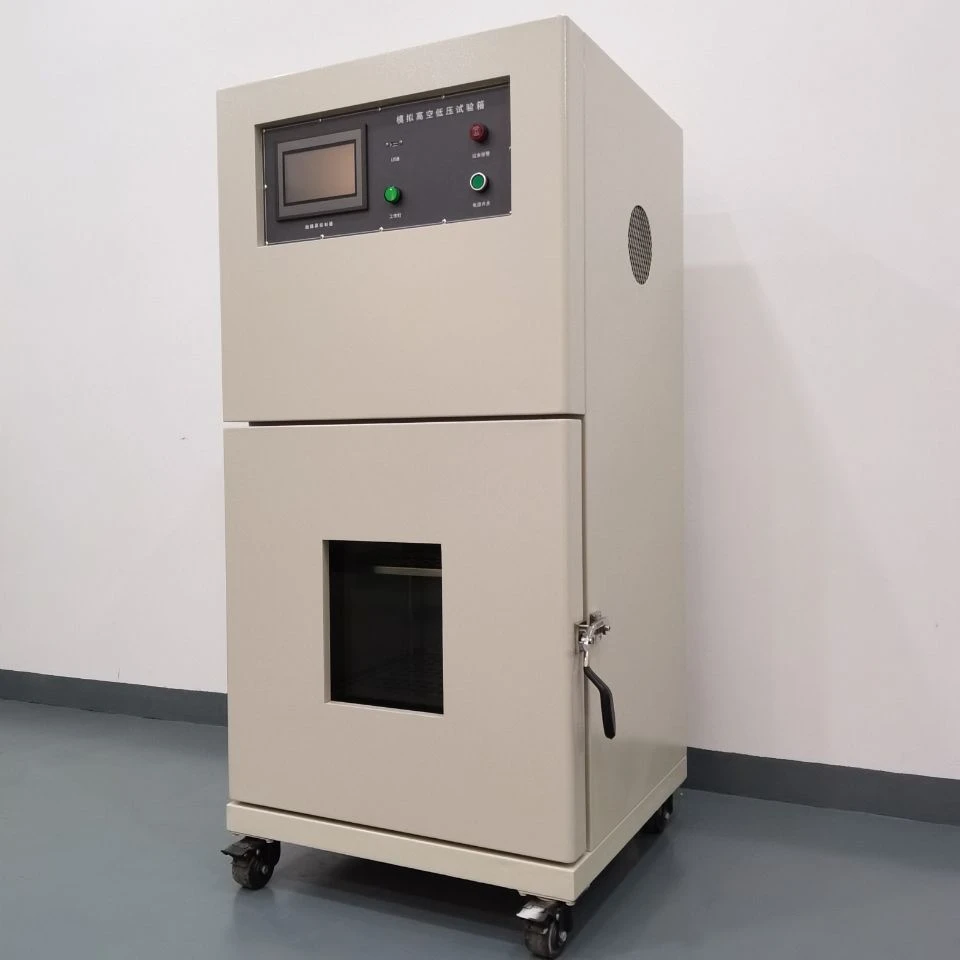
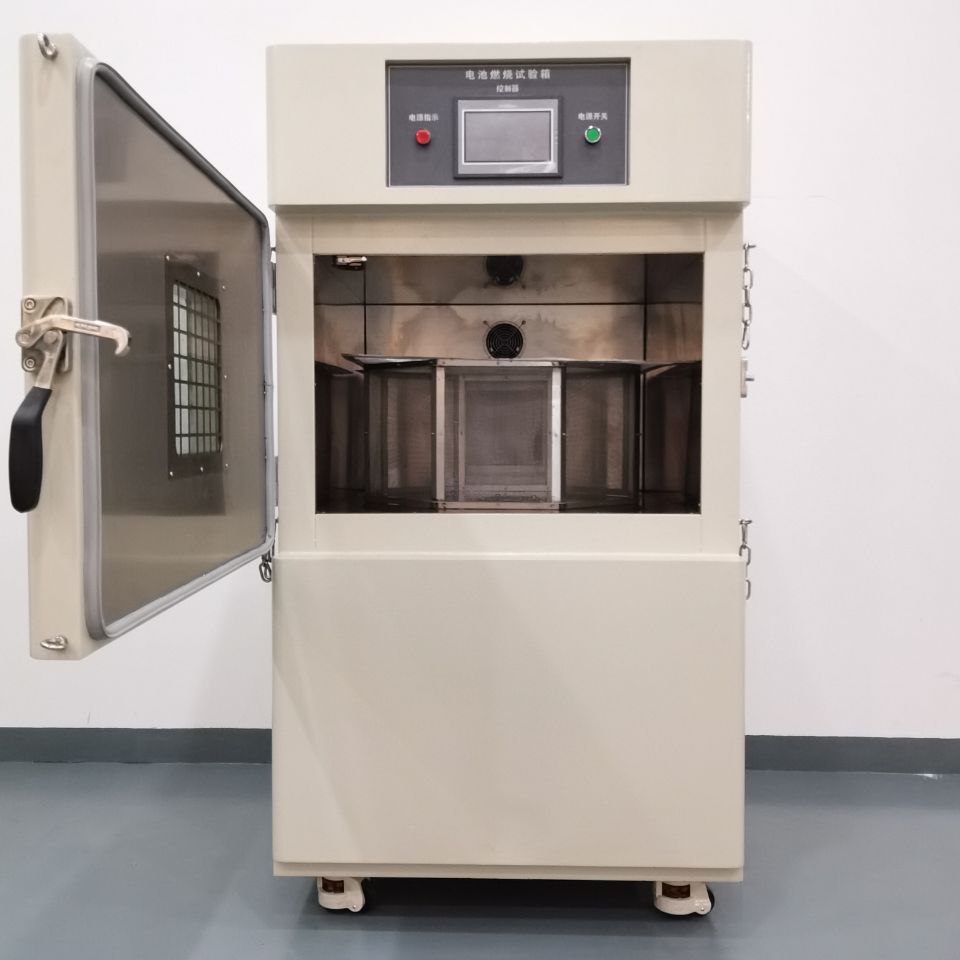
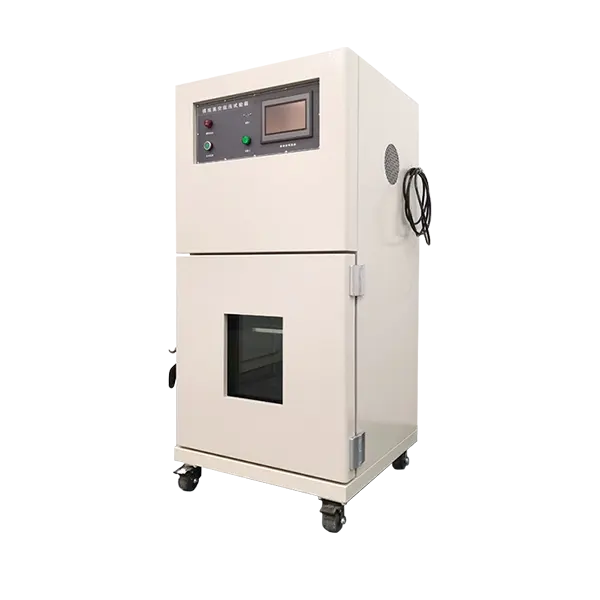
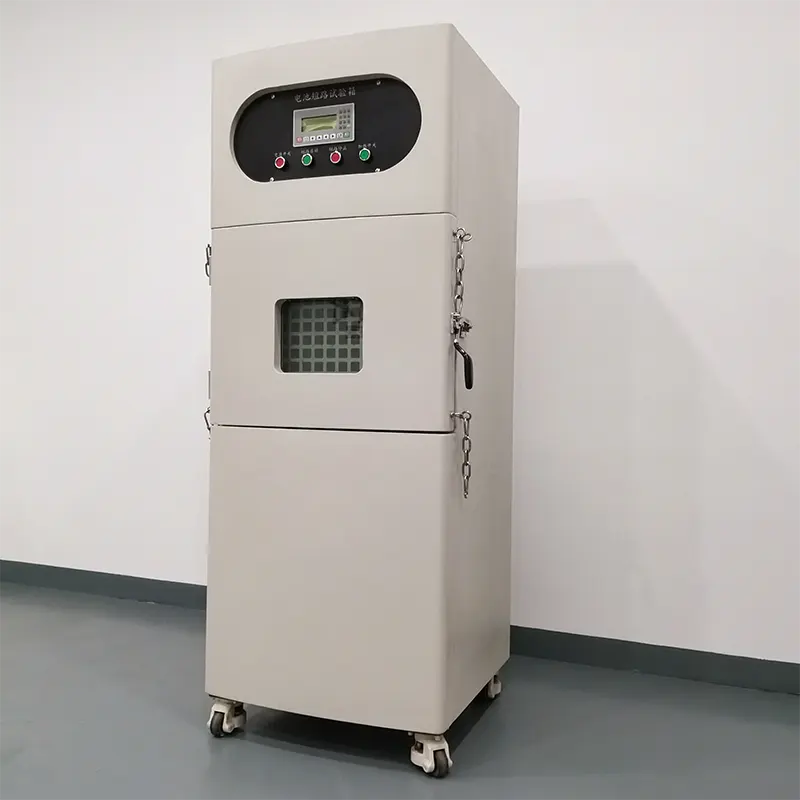
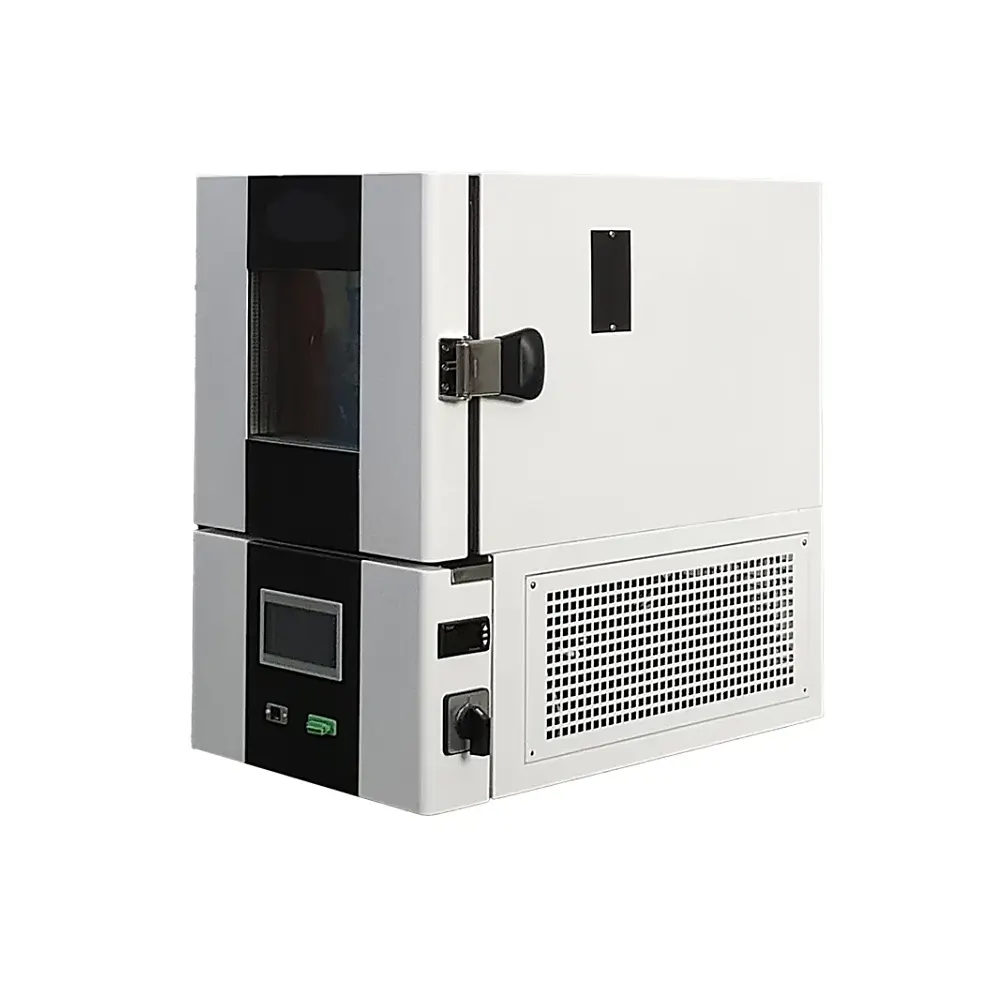
The DERUI DR-D203 battery altitude simulation test chamber provides controlled low-pressure exposure from 0.5 to 100 kPa. Its 64 L workspace supports lithium cell and battery transport testing, including the 11.6 kPa condition used in UN 38.3 T.1.

Model: DR-D203
Workspace: 400 × 400 × 400 mm (64 L)
Pressure Range: 0.5–100 kPa; common test pressure 11.6 kPa
Control: SMC digital pressure display and 0–9999 h timer
Application: Battery low-pressure and UN 38.3 T.1 altitude simulation
Safe and reliable
well-made
Quality assurance
customization
MessageWhatsApp
Hotline number 15580327593
  • Product Details
  • Technical parameters
  • FAQ
  • Contact us

DR-D203 Battery Low-Pressure Chamber

Controlled Low-Pressure Testing for Lithium Battery Transport Qualification

The DERUI DR-D203 battery altitude simulation test chamber reproduces reduced-air-pressure conditions from 0.5 to 100 kPa. Its 64 L workspace is suited to the 11.6 kPa condition used in UN 38.3 T.1 altitude simulation and to other battery low-pressure test profiles defined by the customer.

0.5–100 kPaControllable pressure range
11.6 kPaCommon UN 38.3 T.1 condition
64 L400 × 400 × 400 mm workspace
0–9999 hProgrammable test timer

Application

What Does This Battery Altitude Chamber Test?

Air pressure falls during air transport. A sealed cell, battery pack or component can therefore experience a pressure difference that stresses housings, seals, vents and internal connections. The DR-D203 creates a repeatable low-pressure environment so laboratories can observe the specimen under a defined pressure and exposure time.

Lithium Cell and Battery Transport

Run the low-pressure portion of a transport test plan, including the pressure and duration specified for UN 38.3 T.1 when the complete method and specimen preparation requirements are followed.

Sealing and Vent Evaluation

Check whether reduced ambient pressure causes leakage, unintended venting, deformation or loss of enclosure integrity.

Component Screening

Evaluate battery modules, housings and non-energized electrical products against a customer-defined low-pressure profile within the chamber's rated capacity.

Scope matters: this model is specified as a low-pressure chamber. The verified parameter table does not include a refrigeration system, heater or controlled temperature range. If your procedure requires simultaneous temperature and altitude control, ask DERUI for a temperature-altitude chamber configuration instead.

Test Method

UN 38.3 T.1 Altitude Simulation: Practical Test Summary

UN 38.3 T.1 is intended to simulate the low-pressure conditions experienced during air transport. In the current UN Manual of Tests and Criteria framework, cells and batteries are stored at a pressure of 11.6 kPa or less for at least six hours at 20 ±5°C. Always work from the edition required by your customer, carrier or certification body.

1

Prepare and Record

Confirm specimen state, identification and required measurements. Load samples with sufficient clearance and connect only approved monitoring interfaces.

2

Reduce and Hold Pressure

Evacuate the chamber using the laboratory's controlled procedure, stabilize at the specified pressure and maintain it for the required duration.

3

Recover and Evaluate

Return the chamber safely to ambient pressure, observe the required rest period and assess the specimens against the applicable acceptance criteria.

Passing T.1 does not by itself establish complete UN 38.3 compliance. The applicable cell or battery type must complete every required test in the relevant test sequence, with documented specimen conditioning and results.

Technical Data

DR-D203 Battery Altitude Simulation Chamber Specifications

Model DR-D203
Internal workspace 400 × 400 × 400 mm (W × D × H), approximately 64 L
Overall dimensions 630 × 620 × 1130 mm
Pressure range 0.5–100 kPa
Common test pressure 11.6 kPa
Pressure fluctuation ≤5%
Pressure indication SMC digital pressure gauge
Timer LED display, 0–9999 hours
Control Push-button control
Interior SUS 304 stainless steel, stated thickness 3.0 mm
Exterior Cold-rolled steel with baked-paint finish, stated thickness 1.5 mm
Observation window 250 × 250 mm; two tempered-glass layers with stainless-steel protective mesh
Door and restraint Single left-opening door with side-mounted safety chain
Sample shelves 2
Mobility 4 casters
Power supply AC 220 V, rated power 1 kW
Approximate weight 130 kg

Specifications should be confirmed on the approved quotation and drawing. Pressure accuracy, evacuation rate, feedthroughs and safety options should be selected for the actual specimen and procedure.

Engineering Design

Construction for Repeatable Low-Pressure Exposure

  • SUS 304 stainless-steel test space for durability and straightforward cleaning.
  • Digital pressure indication for monitoring chamber conditions throughout the hold period.
  • Two removable specimen shelves to organize cells, batteries or small packs.
  • Tempered observation window with protective mesh for external viewing.
  • Door safety chain and a rigid enclosure designed for vacuum service.
  • Casters support repositioning during installation and maintenance.

Pressure Is the Controlling Variable

“Altitude” is a convenient description, but pressure-to-altitude conversion varies with the atmospheric model and reference conditions. For standards work, program and report the required absolute pressure in kPa rather than relying only on an indicated altitude value.

Calibration and Traceability

A digital gauge is not automatically a calibrated measurement system. Define calibration interval, permissible error and traceability with your quality team. DERUI can discuss third-party calibration documentation when specified with the order.

Safety and Selection

Information Needed Before Chamber Configuration

Test Profile

Provide the governing standard and edition, target absolute pressure, ramp or evacuation requirement, hold time, recovery method and number of cycles.

Specimen Details

State cell chemistry, quantity, dimensions, mass, state of charge, energy, sample spacing and whether the specimen will be energized or monitored.

Measurement Interfaces

List required voltage, temperature or data leads. Electrical feedthroughs, sealed access ports and data acquisition are options that must be engineered for vacuum use.

Risk Controls

Identify the hazard assessment, exhaust handling, gas detection, fire response and facility interlocks required by your EHS team. A standard chamber should not be assumed to contain a battery thermal runaway event.

For broader equipment choices, visit the altitude test chamber category. If the project needs controlled hot or cold conditions in addition to pressure, specify a temperature-altitude configuration rather than this ambient low-pressure model.

Frequently Asked Questions

Battery Altitude Simulation Test Chamber FAQs

What is a battery altitude simulation test chamber?

It is a low-pressure chamber that reproduces reduced atmospheric pressure so cells and batteries can be evaluated for leakage, venting, rupture and other effects associated with transport at altitude. The DR-D203 controls pressure from 0.5 to 100 kPa.

Can the DR-D203 perform UN 38.3 T.1?

Its pressure range includes the 11.6 kPa-or-less condition used for T.1 and its timer supports the required exposure duration. The laboratory remains responsible for the applicable edition, specimen preparation, ambient-temperature condition, calibrated measurement, acceptance evaluation and complete test record.

Does passing this chamber test mean a battery is UN 38.3 certified?

No. Altitude simulation is only T.1. Complete UN 38.3 conformity depends on all tests applicable to the cell or battery type, the prescribed sequence and compliant documentation.

Does this model also control temperature?

No verified controlled temperature range is listed for the standard DR-D203 configuration. It is presented here as a low-pressure chamber. Ask for a temperature-altitude chamber if pressure and temperature must be controlled simultaneously.

What sample size can fit inside the chamber?

The workspace is 400 × 400 × 400 mm with two shelves. Usable capacity depends on specimen clearance, cable routing and safety spacing, so provide sample dimensions and quantity before ordering.

Can batteries be powered or monitored during the test?

Only when suitable sealed electrical feedthroughs, monitoring hardware and risk controls are included in the approved configuration. Do not route temporary cables through the door seal.

How should pressure measurement be calibrated?

Set an interval and permissible error based on the governing procedure and laboratory quality system. Verification should use a suitable traceable reference; request the required calibration documentation when ordering.

What safety information does DERUI need?

Provide chemistry, state of charge, total stored energy, specimen condition, expected failure modes and the facility's ventilation, detection and emergency-response requirements. These details determine whether additional ports, exhaust, detection or protective functions are needed.

Configure the DR-D203 for Your Battery Test Plan

Send DERUI the applicable standard and edition, specimen dimensions and quantity, pressure profile, monitoring points and safety requirements. Our engineering team will confirm capacity, interfaces, documentation and optional risk controls before quotation.

Request an Engineering Review

FacebookLinkedInXRedditWhatsApp
Model DR-D203
Inner box size 400*400*400mm (W*D*H)
Equipment size 630*620*1130mm (W*D*H)
Inner box material SUS304 stainless steel plate, 3.0mm thick
Outer box material Cold-rolled steel plate baking paint treatment, 1.5mm thick
Viewing Window Size 250*250mm two layers of tempered glass, transparent window with stainless steel mesh
Equipment Mobility The bottom of the equipment has four universal casters, which can be moved freely
Pressure range 0.5-100kPa, commonly used test air pressure 11.6 kPa
Vacuum level display SMC meter digital display type
Control method Push-button control
Timer LED digital display, free setting within 0-9999h
Pressure fluctuations ≤5%
Box door Single door with left opening and explosion-proof chain on the side of the door
Storage tray 2
Equipment weight 130kg
Power supply AC220V
Power 1kW

1、What is a Battery Altitude Simulation Test Chamber?
It's a specialized chamber desianed to test batteries under various simulated altitudeconditions.

2、How does the altitude simulation work?
The chamber uses precise sensors and control systems to replicate different altitudeconditions for accurate testing.

3、Why is altitude testing important for batteries?
Altitude testing is crucial to understand battery performance and reliability in differentenvironmental conditions.

4、What types of batteries can be tested?
The chamber is versatile and can test a variety of batteries including lithium-ion, nickelmetal hydride, and others.

5、Is temperature control included?
Yes, our chamber includes advanced thermal management to maintain ideal testingtemperatures.

6、Can I customize testing profiles?
Absolutely! The chamber allows for custom test configurations tailored to specific batterytypes.

7、What safety features are included?
Safety mechanisms include emergency shut-off systems, overpressure protection, andcomprehensive ventilation.

8、Is installation complex?
Installation is straightforward, and our experts provide support to ensure proper setup.

telephonetelephone

hotline:
155 8032 7593

WhapsAppWhapsApp
WhapsApp
LinkedinLinkedin

Derui LinkedIn Profile

messagemessage

Contact us to provide you with exclusive service!