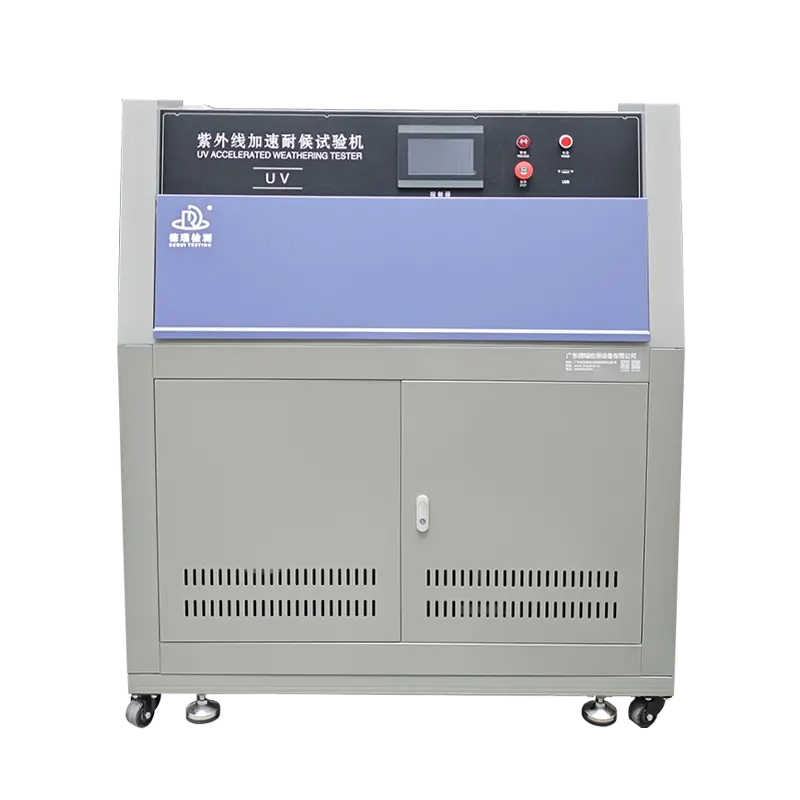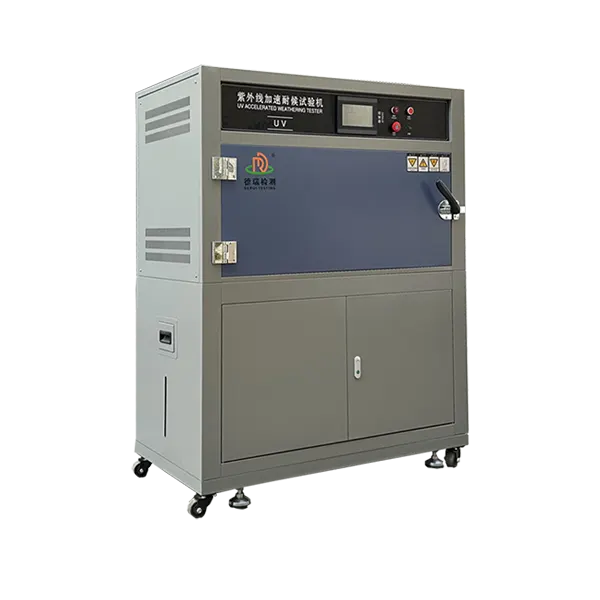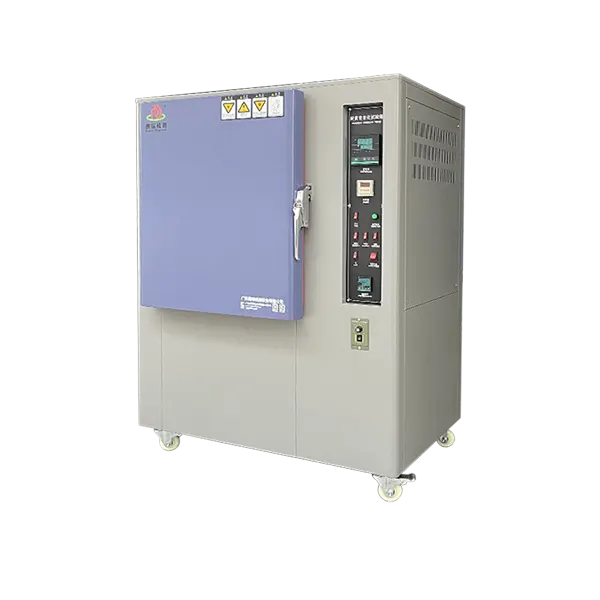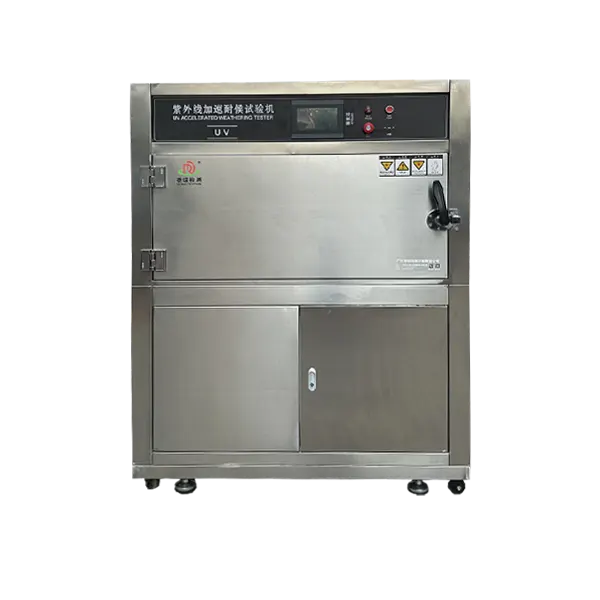








Compare Material Color Change in a Compact Light-Exposure Chamber
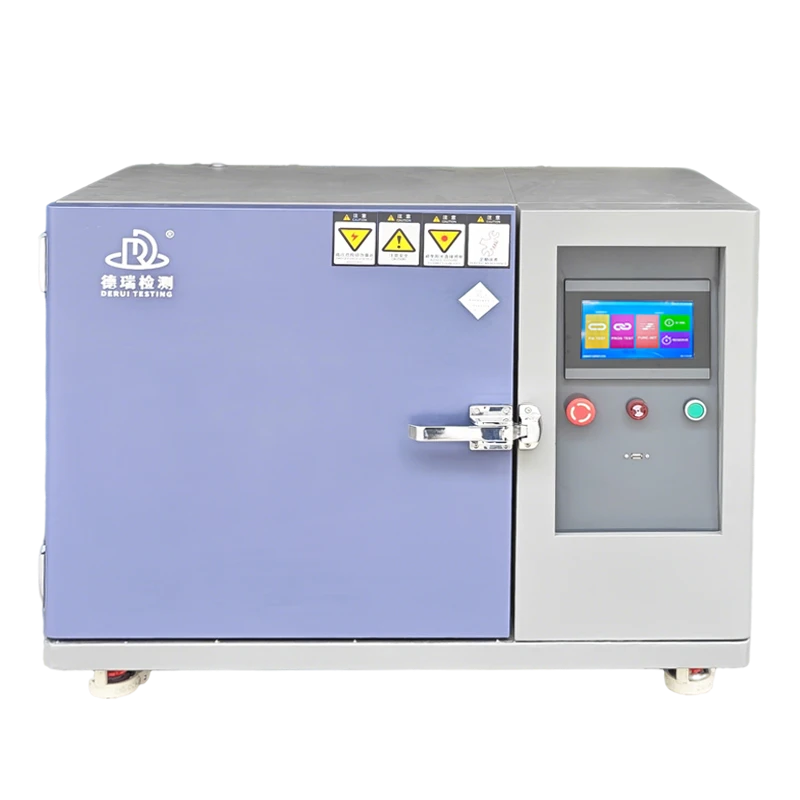
Yellowing tests are comparative exposures. The useful result comes from a defined light source, specimen arrangement, exposure time and color-evaluation method. This desktop chamber provides a compact workspace for routine material screening and quality-control comparisons.
The published configuration uses two 15 W lamps, a fixed two-level specimen tray and an electronic timer. Send the exact test procedure and specimen details so DERUI can review whether this configuration matches the required exposure.
Start With the Exposure Procedure
The current page references ASTM D1148 and HG/T 3689. They address different material and procedure scopes. ASTM D1148-25 evaluates discoloration of white or light-colored vulcanized rubber using fluorescent UV or xenon-arc weathering apparatus. HG/T 3689-2014 addresses footwear yellowing test methods. The cited name alone does not establish that one compact chamber covers every procedure.
| Testing need | Equipment direction | Confirm before ordering |
|---|---|---|
| Compact footwear-material yellowing comparison | Desktop yellowing chamber with method-matched lamps and layout | Exact standard, lamp designation, distance, duration and evaluation scale |
| ASTM D1148 fluorescent-UV exposure | Apparatus review against the current D1148 procedure | Light source, moisture and temperature conditions, specimen exposure and color assessment |
| Xenon-arc discoloration procedure | Xenon chamber configuration | Filter system, irradiance, chamber climate, wetting and specimen holder |
ASTM notes that fluorescent UV and xenon-arc procedures can produce different performance rankings. Results from different apparatus types should not be compared as though the exposures were equivalent.
Published Desktop Chamber Configuration
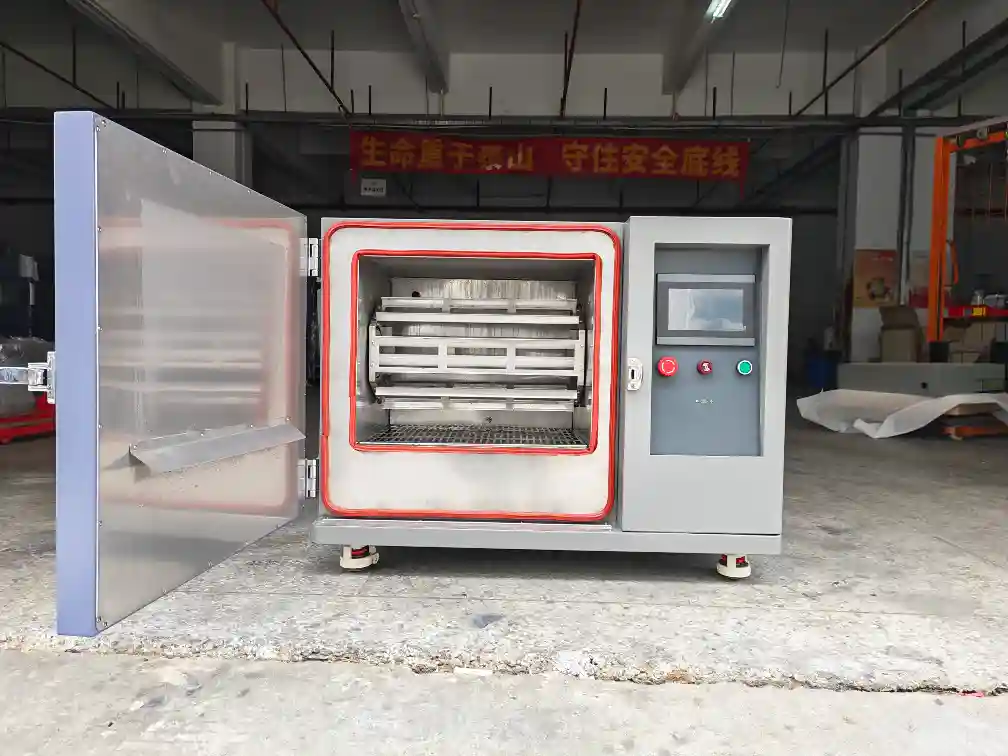
The published internal size is 510 × 320 × 260 mm. Confirm usable tray area, lamp clearance and the loaded specimen envelope.
The lamp type must be identified in the technical quotation. Lamp power alone does not define spectrum, irradiance or method compatibility.
The two tray levels are not height adjustable. Review lamp-to-specimen distance, shielding and position-to-position exposure before selecting sample quantity.
The published setting range is 0–999 minutes. Confirm the required cycle, end-of-test action and whether longer exposure requires repeated settings.
Plan the Specimen Layout Before Counting Capacity
Provide specimen dimensions, thickness, color, quantity and the surface that must face the lamps. Include control specimens and the number of evaluation intervals. The usable count depends on exposed area and spacing rather than the chamber volume alone.
- Keep specimens flat and separated so one sample does not shade another.
- Record the tray level, position and orientation for every specimen.
- Use consistent preparation, conditioning and backing across comparison groups.
- Reserve an unexposed control or approved reference material where the method requires one.
- Confirm whether specimens are removed during exposure or only evaluated at the end.
Define How Yellowing Will Be Evaluated
A timer setting is not a result. The test plan must define the comparison condition and the instrument or scale used to judge color change.
| Evaluation item | Buyer input | Record to retain |
|---|---|---|
| Visual comparison | Reference sample, viewing conditions and rating scale | Position, exposure time, photographs and assigned grade |
| Instrumental color | Instrument geometry, illuminant, observer and color-difference formula | Initial and exposed values with sample identification |
| Acceptance | Maximum change, grade or customer limit | Pass/fail decision linked to the cited procedure |
Do not convert exposure minutes into outdoor service life without a material-specific correlation supported by field data.
What to Send for a Configuration Review
Standard, edition, clause, lamp requirement, exposure time and environmental condition.
Material, color, dimensions, thickness, quantity, backing and conditioning.
Required exposed area, tray level, distance, orientation and control specimens.
Visual scale or color instrument, inspection intervals and acceptance criteria.
Position map, timer record, lamp identification, calibration and report format.
Destination voltage, bench space, ventilation, access and operating environment.
Confirm the Delivered Scope and Acceptance Checks
The quotation should identify the lamp designation, quantity and replacement specification; chamber and tray dimensions; timer; electrical supply; protective functions; and included documentation. Agree the following checks before shipment:
- Inspect the chamber, tray and lamp arrangement against the approved drawing.
- Verify timer operation, end-of-test response and power configuration.
- Confirm lamp model markings and the required warm-up or maintenance instructions.
- Demonstrate specimen loading with the agreed representative pieces.
- Review operating instructions, lamp replacement guidance and safety labels.
Equipment acceptance confirms the ordered functions. Test validity still depends on the approved procedure, specimen preparation, exposure conditions and color-evaluation method.
Request a Desktop Yellowing-Chamber Proposal
Send the standard, lamp requirement, specimen dimensions, exposure time and evaluation method. DERUI can review whether the published desktop configuration fits the test.