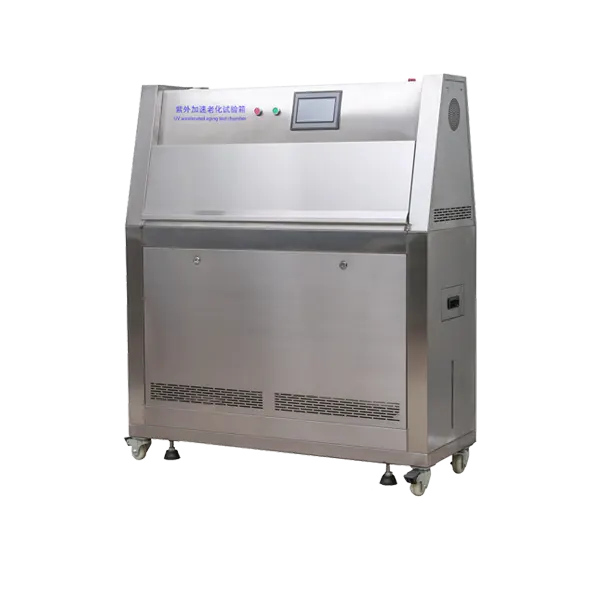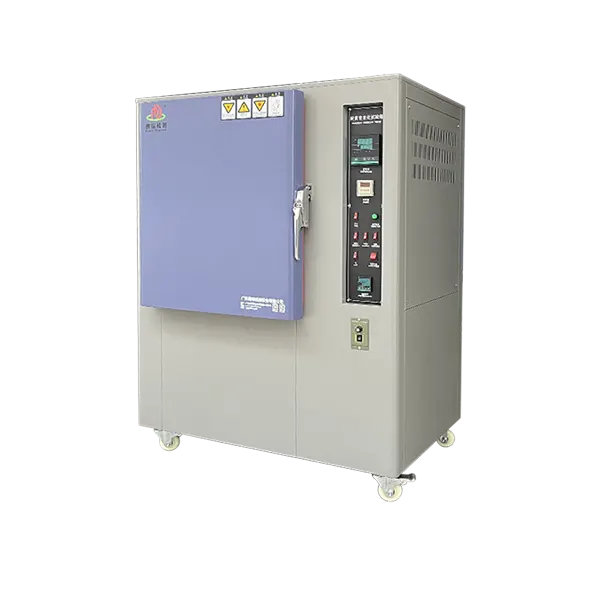








One Chamber for Defined Light Exposure and Heat-Aging Work
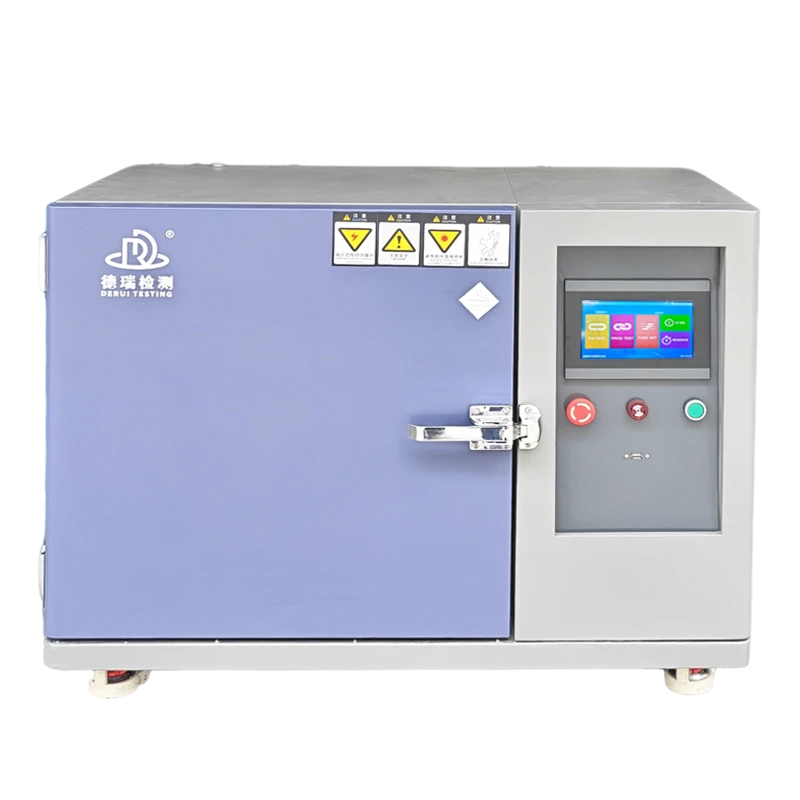
When a light-colored rubber part, footwear component or other material changes appearance, the result depends on the exposure source, temperature, time, specimen position and evaluation procedure. The DR-H303 is published with a 300 W OSRAM lamp, hot-air circulation, a rotating sample tray and a temperature range from room temperature to 200°C.
Use the equipment to run a controlled exposure defined by your test plan. The chamber does not itself measure tensile strength, calculate service life or establish that every yellowing standard is covered. Send the exact method and sample layout for a configuration review.
Match the Chamber to the Yellowing or Aging Procedure
“Yellowing” can describe different test objectives. A lamp exposure that compares surface discoloration is not interchangeable with heat aging or phenolic yellowing. Confirm the method, edition and required exposure source before treating the DR-H303 as suitable for a named standard.
| Test objective | What the procedure evaluates | What to confirm for DR-H303 |
|---|---|---|
| Light-induced discoloration of light-colored vulcanized rubber | ASTM D1148-25 covers discoloration evaluation using fluorescent UV or xenon-arc apparatus. | The listed 300 W OSRAM bulb is not identified by spectrum or apparatus type. Confirm source, exposure conditions, specimen setup and evaluation against the required procedure. |
| Footwear material yellowing | HG/T 3689-2014 is the footwear yellowing test method. | Confirm the method-specific lamp, specimen arrangement, exposure duration and rating approach. The standard reference alone is not proof of equipment conformity. |
| Rubber heat aging | Controlled heating conditions specimens; tensile strength and elongation are measured before and after with a separate mechanical test system. | Confirm the required temperature, duration, air circulation and specimen conditioning. Do not treat the chamber as a tensile tester. |
| Phenolic yellowing of textiles | ISO 105-X18:2007 is specific to assessing the potential for phenolic yellowing in textile materials. | Check the standard’s specified materials and procedure. This is not a general test for every cause of yellow discoloration. |
ASTM D1148 states that results indicate the effect of the specified exposure source and should not be treated as equivalent to natural exposure without an established material-specific correlation. Fluorescent UV and xenon-arc procedures may also produce different rankings.
What the Published DR-H303 Configuration Includes
The current listing identifies an OSRAM bulb but does not give its model, spectral distribution or irradiance. Put the exact lamp identity and replacement specification in the quotation.
Published rotation is 3 rpm. Confirm tray diameter, usable loading area, specimen fixing and exposure uniformity for the actual sample geometry.
The published temperature range is RT to 200°C with PID control. Confirm the specified ambient basis, operating limits, uniformity and test-point verification.
Compare sample envelopes and fixture clearances with the chamber’s internal dimensions; usable exposure area can be smaller than the chamber volume.
Plan Sample Loading and Exposure Consistency
The rotating tray is useful only when each sample remains correctly positioned throughout the cycle. Send a simple drawing or photographs of representative specimens so the loading arrangement can be reviewed before equipment selection.
- List material, color, dimensions, thickness, quantity and surface orientation.
- Provide the footprint, height and mass of any shoe, component, fixture or holder.
- Identify the exposed face and whether samples need backing or support.
- Indicate the desired spacing and whether reference/control specimens share the tray.
- Confirm if the test plan requires rotation during exposure or fixed specimen orientation.
- Agree the usable tray area and clearance around the lamp before setting a batch capacity.
Define How the Result Will Be Evaluated
The chamber controls the exposure conditions listed in the order. The test method defines how to assess the material. Agree on the record and acceptance rule before the run so the result can be compared with the customer’s requirement.
| Evaluation route | Define in the test plan | Retain in the report |
|---|---|---|
| Visual discoloration rating | Reference scale, viewing conditions and inspection interval | Before/after images, specimen location and rating |
| Instrumental color measurement | Instrument geometry, illuminant, observer and color-difference formula | Initial and exposed readings linked to each sample ID |
| Heat-aging property change | Tensile method, specimen conditioning and acceptance limit | Pre- and post-aging strength/elongation results from the separate test equipment |
Accelerated exposure time does not have a universal conversion to months or years of service. Use a correlation only when supported for the specific material, exposure source and end point.
What to Send for an Accurate DR-H303 Quotation
Standard, edition, clause, test objective and exposure source.
Material, color, dimensions, quantity, shape and conditioning.
Temperature, duration, lamp identity, rotation requirement and operating sequence.
Visual scale or color instrument, tensile-property measurements if applicable, and acceptance criteria.
Destination voltage/frequency, bench or floor space, ventilation and access.
Required operating records, calibration evidence, demonstration and report format.
Agree the Delivered Scope and Acceptance Checks
The approved quotation should identify the lamp model and replacement specification, usable tray layout, temperature range, timer unit and resolution, rotation speed, electrical supply, safety protections and included accessories. Agree the following checks before shipment:
- Inspect the chamber dimensions, tray and lamp arrangement against the approved drawing.
- Demonstrate tray rotation and verify the stated 3 rpm operating speed.
- Check temperature control and distribution at agreed measurement points and setpoints.
- Verify the timer range, unit, resolution, alarm and power-failure behavior in the delivered configuration.
- Confirm the lamp marking and safe operating/replacement instructions.
- Review the two included test plates and dual over-temperature protection against the order.
Equipment acceptance checks the purchased functions. Method validity also depends on specimen preparation, exposure source, environmental conditions and the agreed evaluation procedure.
Request a DR-H303 Anti-Yellowing Aging Chamber Proposal
Send your test standard, lamp requirement, sample dimensions, temperature and exposure duration. DERUI can review the required configuration and quotation scope.