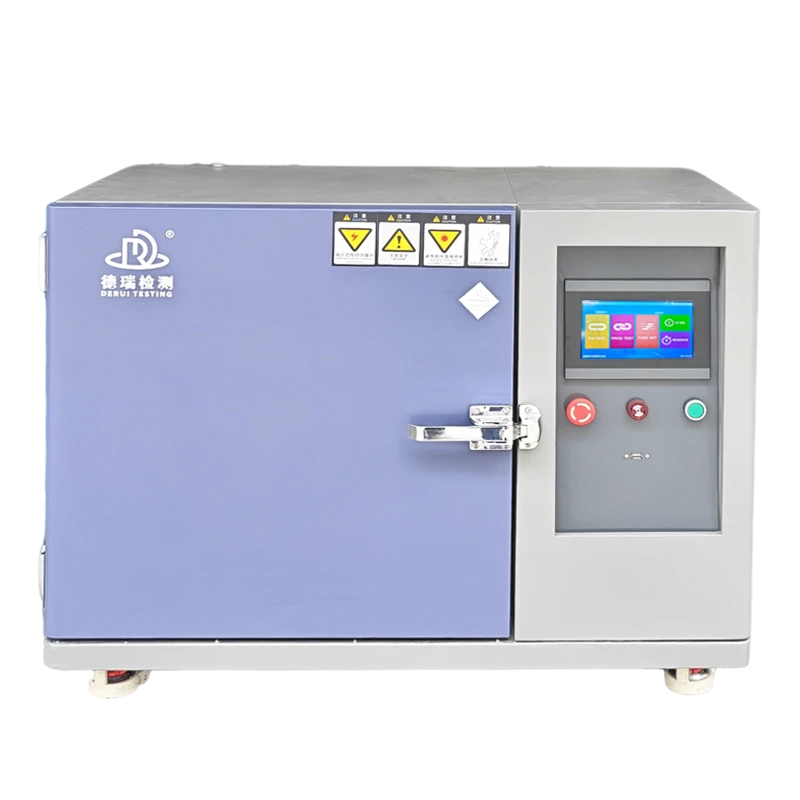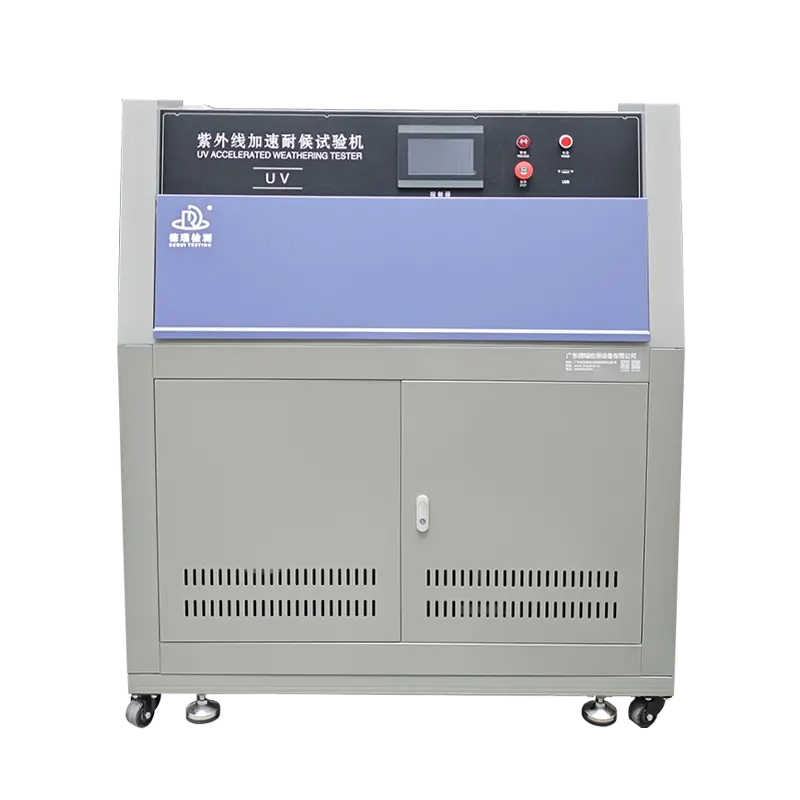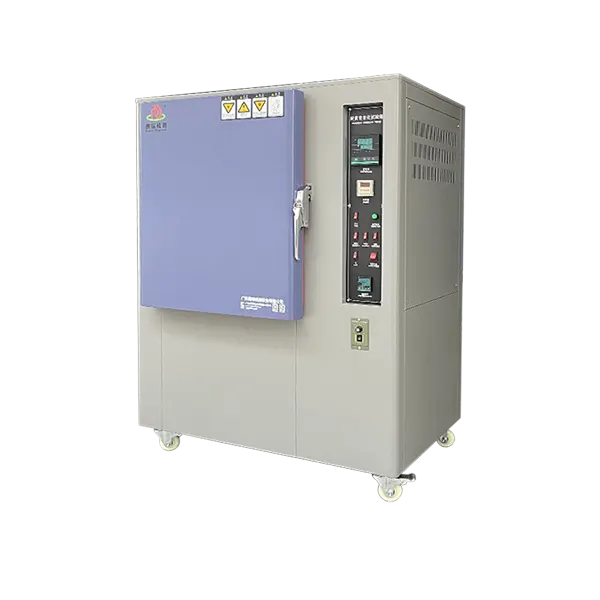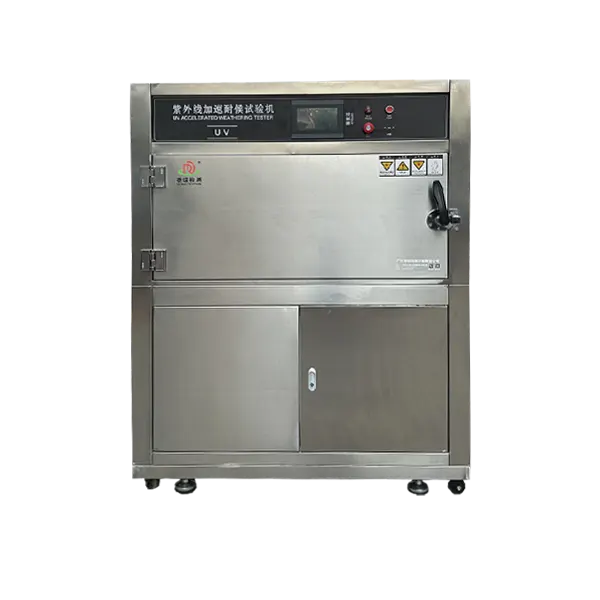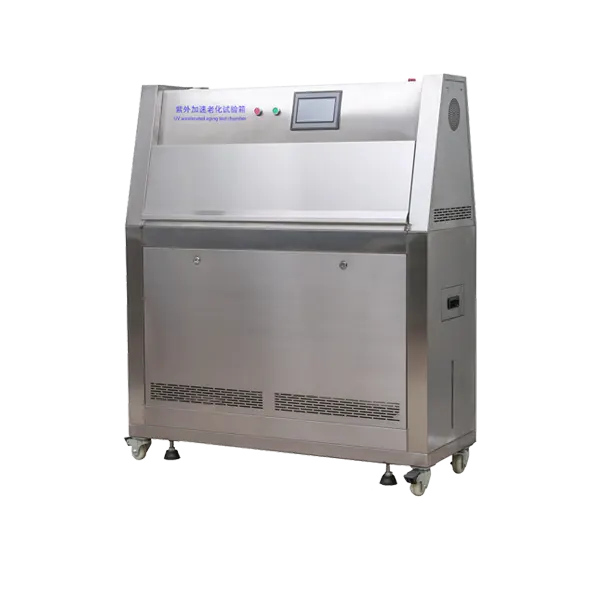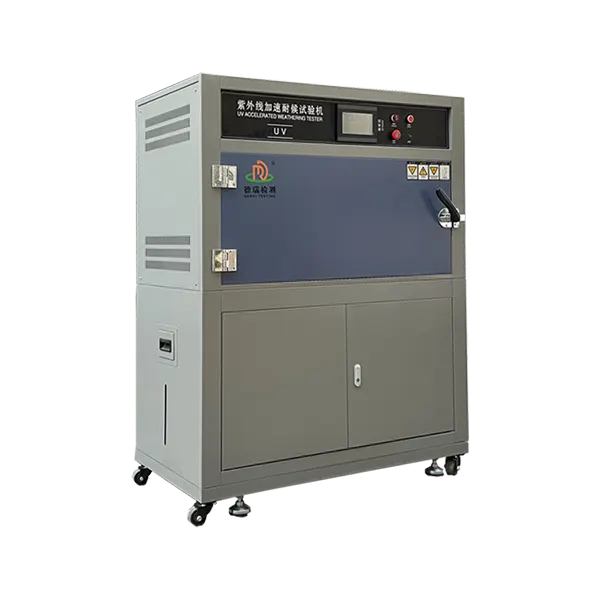


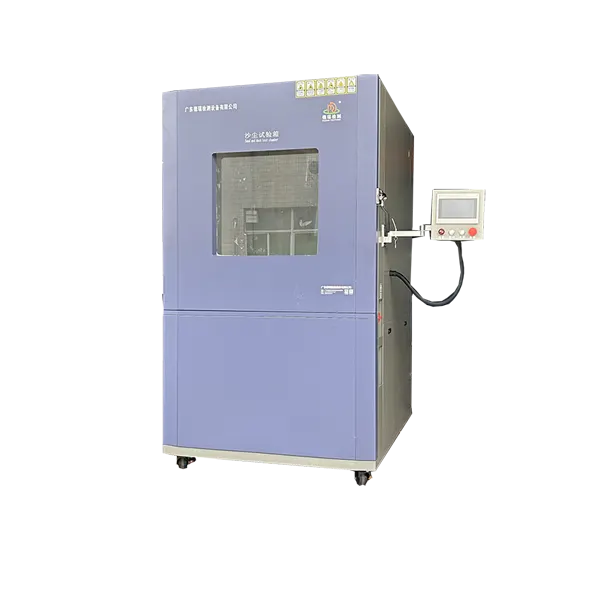

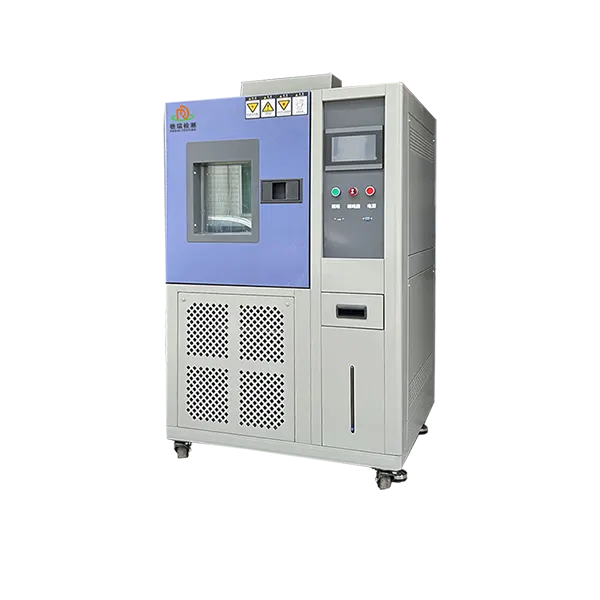
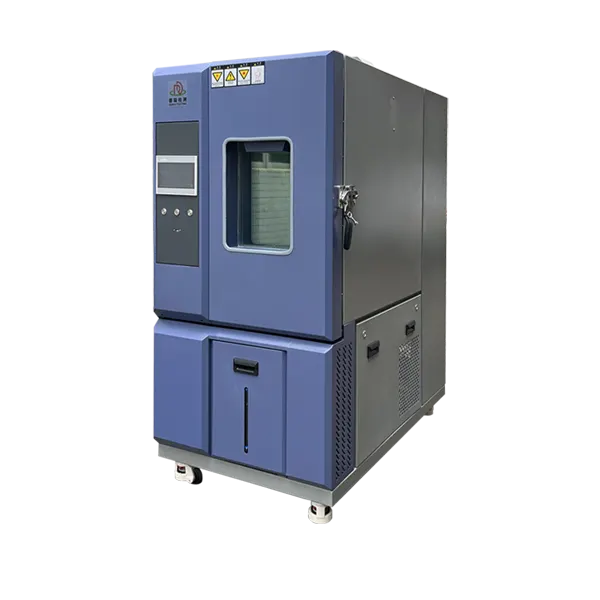
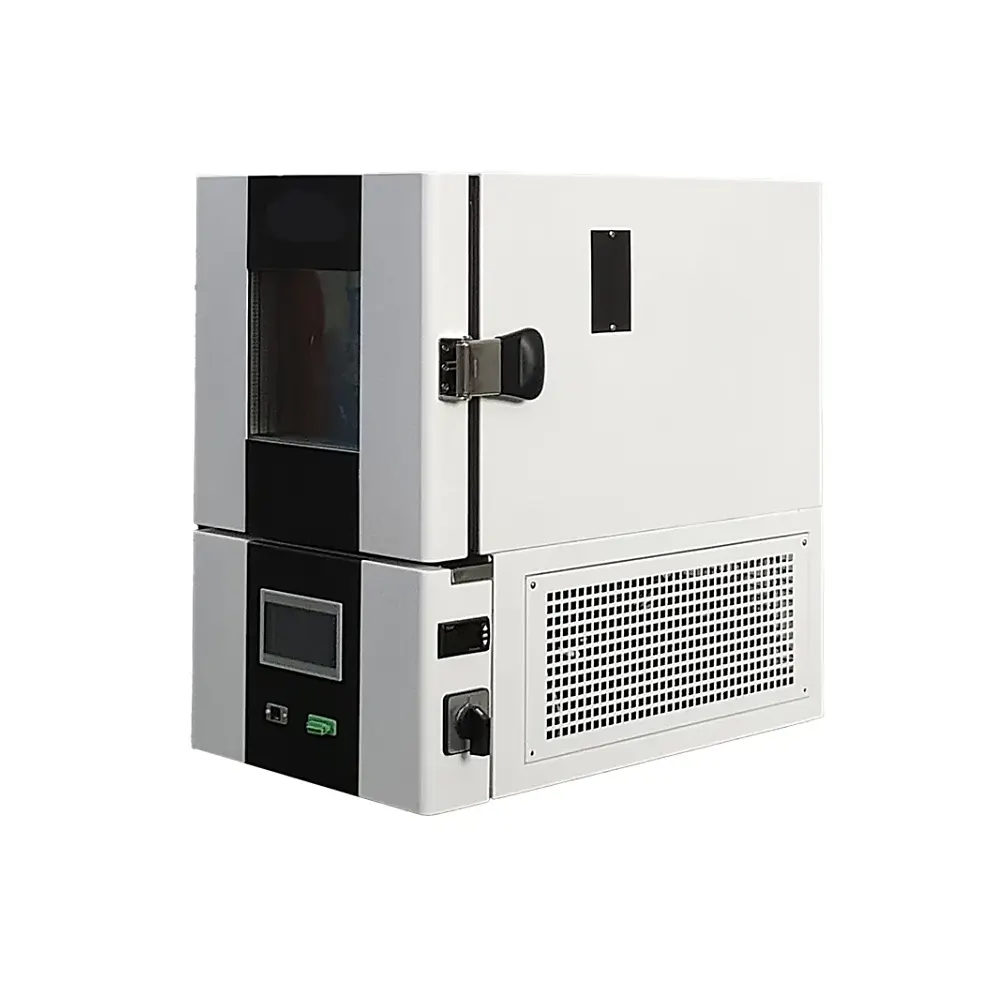
DR-302 Fabric UV Aging Test Chamber
Expose textile fabrics, coated fabrics, synthetic leather and related nonmetallic materials to programmable fluorescent UVA light, heat, condensation and water spray. The chamber helps laboratories compare color change, strength retention, surface deterioration and weathering durability after controlled accelerated exposure.
8 × 40 W UVA lamps
UV / condensation / spray cycles
Up to 48 textile specimens
What This Fabric UV Chamber Measures
Fluorescent UV exposure is an accelerated conditioning step. After exposure, textile properties are measured using the applicable evaluation method. The chamber does not directly calculate every durability result.
Color and Appearance
Compare fading, yellowing, shade change, chalking, cracking or coating deterioration before and after exposure.
Mechanical Retention
Measure tensile, tear, abrasion or adhesion retention with separate instruments after the programmed weathering cycle.
Moisture Durability
Use condensation and optional water spray to evaluate how repeated UV and moisture affect coated or outdoor textiles.
UPF is a different measurement: ASTM D6544, AATCC TM183, ASTM D6603 and EN 13758 address UV transmission, preparation, labeling or classification of UV-protective textiles. A spectrophotometer or UV-transmittance instrument is normally required to calculate UPF. The DR-302 can age the fabric before that measurement, but it does not replace the UPF instrument.
DR-302 Published Specifications
| Model | DR-302 (the old body content also says DR-H302; confirm the equipment nameplate) |
|---|---|
| External dimensions | 1300 × 500 × 1460 mm |
| Chamber material | SUS304 stainless steel |
| Temperature range | Ambient to +70°C |
| Temperature fluctuation | ±2°C |
| Temperature control | PID / SSR control |
| Condensation humidity condition | Published as ≥95%RH |
| Controller | Programmable LCD touchscreen |
| Control mode | Balance temperature-humidity control (BTHC) |
| Programmable phases | UV exposure, condensation and water-spray cycles |
| Lamps | 8 imported Atlas UVA fluorescent lamps, 40 W each; published wavelength range 315–400 nm |
| Published lamp life | Approximately 1600 h; actual replacement depends on irradiance verification and operating conditions |
| Specimen-to-lamp distance | 50 ±2 mm |
| Lamp center distance | 70 mm |
| Published irradiance option | 0.45–0.8 W/m² as written on the page; confirm wavelength basis and whether the correct unit is W/m²/nm |
| Standard specimen capacity | 24 specimens at 75 × 290 mm or 48 specimens at 75 × 150 mm |
| Maximum specimen thickness | 5 mm |
| Timer | 0–999 h adjustable |
Irradiance clarification: “0.45–0.8 W/m²” is incomplete without wavelength or bandwidth. Before publishing a precise control claim, confirm the controller/calibration documentation—for example, whether the value is spectral irradiance at 340 nm.
UVA Lamp, Condensation and Spray Functions
Fluorescent UVA Exposure
UVA lamps reproduce the short-wave UV portion used in accelerated weathering. The selected lamp type and irradiance setpoint must match the test method.
Heated Condensation
A heated water reservoir creates high-humidity condensation on specimen surfaces to reproduce a controlled moisture phase.
Water Spray
Programmable spray can add thermal shock and rinsing/moisture effects when the selected textile or material method requires it.
Textile Applications
Outdoor and Transport Textiles
- Awnings, tents and shade fabrics
- Automotive interior and trim textiles
- Outdoor furniture upholstery
- Protective covers and technical fabrics
Coated and Synthetic Materials
- PU/PVC-coated fabrics
- Synthetic leather
- Printed and dyed textiles
- Laminated membranes and textile composites
Natural or synthetic fiber type alone does not determine UV durability. Dye chemistry, pigment, UV stabilizer, weave/knit density, coating, thickness and end-use exposure all influence the result.
Standards and Method Selection
- AATCC TM186: textile weather resistance using UV light and moisture exposure; confirm the current method edition and required cycle.
- ASTM G154-23: operation of fluorescent UV lamp and water apparatus for exposing materials. It does not by itself define the best exposure cycle or pass/fail criterion for a textile.
- ISO 4892-3:2024: fluorescent UV exposure methods for plastics; applicable when testing polymeric textile components or where the product specification cites it.
- ISO 16474-3:2021: fluorescent UV exposure of paints and coatings; potentially relevant to coated-textile surfaces when specified.
Do not mix light sources: AATCC TM16.3 and ISO 105-B02 are commonly associated with xenon-arc colorfastness-to-light testing. A fluorescent UVA chamber cannot be declared equivalent to a xenon-arc tester unless the specific method permits it.
Controller, Construction and Safety
Control and Records
- Fixed-value and programmable operation
- Touchscreen cycle editing and status display
- Program time and segment information
- Optional SD/USB export, computer connection or recording
- Lamp replacement alarm
Protection Functions
- Door interlock that switches off lamps when opened
- Overtemperature protection
- Low-water protection
- Leakage, short-circuit and overcurrent protection
- Controller power-failure memory
The inner chamber and wet-area components use corrosion-resistant materials. Specimen holders are adjustable for quick loading while maintaining the published 50 ±2 mm lamp distance.
How to Build a Useful Fabric UV Test
Define the Failure Mode
Decide whether the goal is color change, strength loss, coating cracking, adhesion loss, water repellency or UPF retention.
Select the Cycle
Specify lamp type, irradiance, black-panel/chamber temperature, exposure duration, condensation and spray phases.
Measure Before and After
Condition specimens consistently and use the correct color, tensile, tear, microscopy, adhesion or UV-transmission method.
Information Needed Before Quotation
Material and Method
- Fabric or coating composition
- Specimen dimensions and thickness
- Applicable standard and cycle
- Required UVA lamp type
- Properties evaluated after exposure
Equipment Requirements
- Irradiance monitoring and calibration
- Condensation and spray phases
- Specimen capacity and holders
- Data export and controller language
- Voltage, water quality and installation environment
Frequently Asked Questions
What does a fabric UV aging chamber evaluate?
It conditions textiles under fluorescent UV, heat and moisture. Separate instruments then measure changes such as fading, yellowing, strength loss, cracking, adhesion or water-repellency loss.
Can this chamber measure UPF directly?
No. UPF requires spectral UV-transmittance measurements and the applicable calculation method. The chamber can age the textile before measuring whether UPF has changed.
What lamp type does the DR-302 use?
The live page specifies eight 40 W Atlas UVA lamps covering a published 315–400 nm range. Confirm the exact lamp designation, such as UVA-340, on the quotation.
Can UVB lamps be installed?
Only if the chamber, controller and selected method support the exact UVB lamp. UVA and UVB spectra create different degradation and should not be interchanged without a documented method.
How many fabric specimens can it hold?
The published capacity is 24 specimens at 75 × 290 mm or 48 specimens at 75 × 150 mm, with maximum thickness of 5 mm.
Is fluorescent UV the same as xenon-arc testing?
No. Fluorescent UV emphasizes selected UV wavelengths, while xenon arc reproduces a broader solar spectrum using filters. Use the light source required by the textile or product standard.
How often should lamps be replaced?
The page publishes an approximate 1600 h lamp life, but replacement should be based on irradiance verification, calibration and the manufacturer's maintenance criteria rather than hours alone.
What information is needed for a quotation?
Provide the textile type, failure mode, standard and cycle, lamp requirement, irradiance control, specimen size and count, moisture phases, data needs and facility utilities.
Match the UV Source to the Textile Test Method
Send DERUI the textile construction, coating, target failure mode, test standard, lamp type and exposure cycle. We will confirm specimen capacity, irradiance control, moisture phases and post-exposure evaluation workflow.