


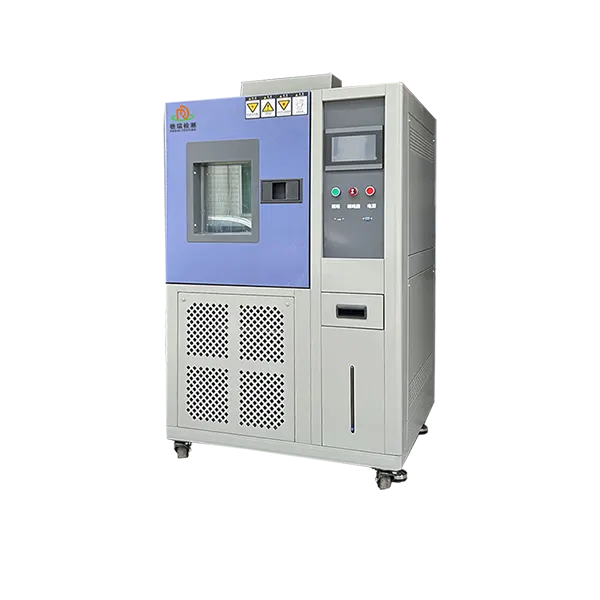
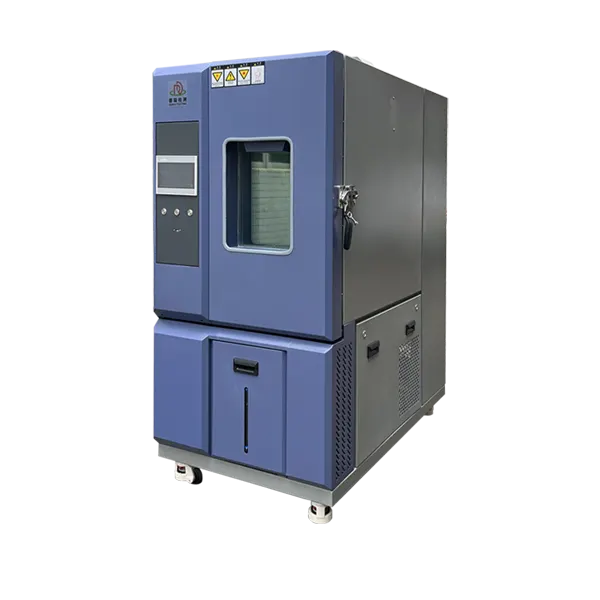
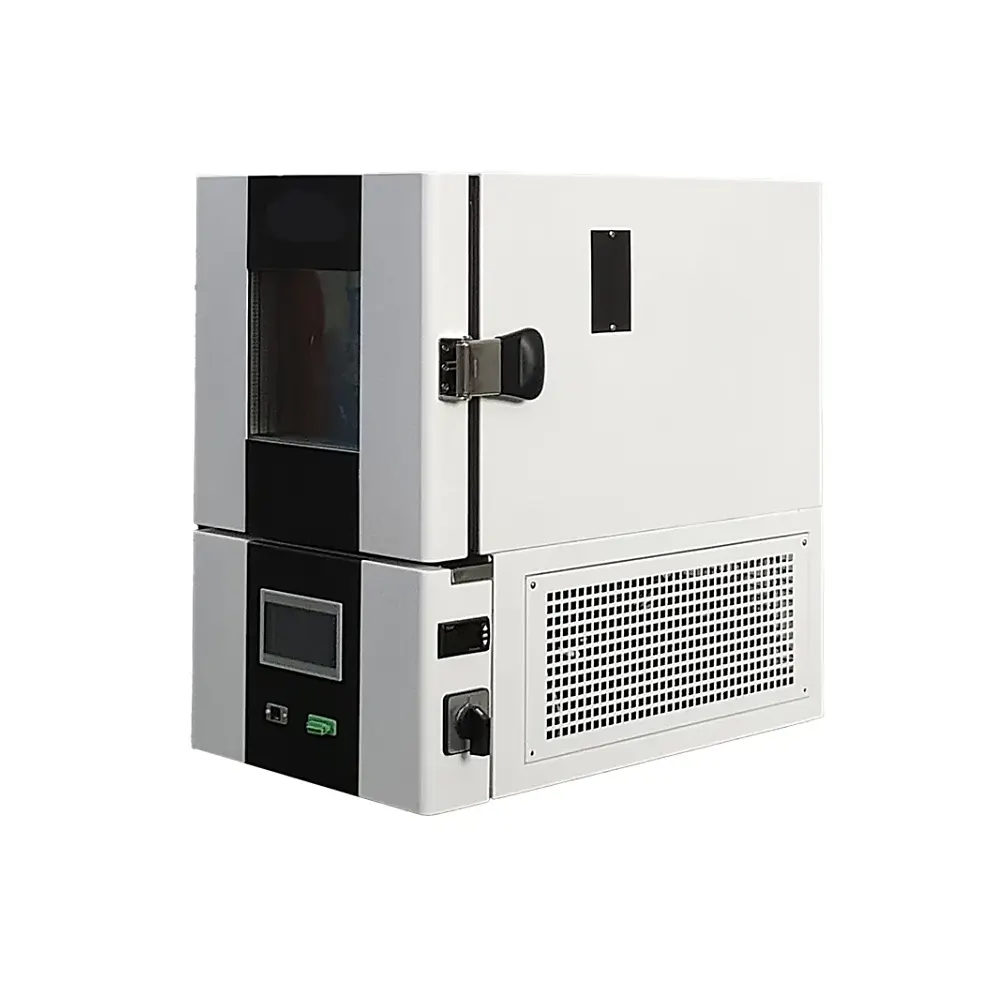
1m³ VOC and Formaldehyde Emission Test Chamber
Measure VOC and formaldehyde emissions from furniture, flooring, wood-based panels and building products under controlled temperature, humidity and ventilation conditions.
What a VOC emission chamber measures
A VOC emission chamber creates a defined indoor climate around a test specimen. Clean, humidified air enters at a controlled rate; emitted compounds mix in the chamber air and are collected through sampling ports for laboratory analysis. The measured chamber concentration, specimen area and ventilation rate can then be used to determine an area-specific emission rate under the selected method.
ISO 16000-9:2024 covers VOC emissions from newly produced or aged building products and furnishings. It can also be applied to formaldehyde emission-rate testing of wood-based panels and other building products. ASTM D5116-25 provides guidance for small-scale chamber determinations of organic emissions and emphasizes temperature, humidity, air speed and air-change rate as key variables.
Why low background and low adsorption matter
Standards must match the specimen and result
| Reference | Typical scope | What to verify |
|---|---|---|
| ISO 16000-9:2024 | VOC emission rates from building products and furnishing in an emission chamber | Climate, air change, loading factor, air velocity, background, recovery and QA/QC |
| ASTM D5116-25 | Small-scale chamber guidance for organic emissions from indoor materials/products | Study objective, specimen handling, environmental variables, sampling and data analysis |
| ISO 16000-11:2024 | Sampling, storage and preparation of building-product and furnishing specimens | Packaging, transport, conditioning, timing and exposed area |
| EN 16516 | Release of dangerous substances from construction products into indoor air | Product-specific testing and reporting requirements |
| Formaldehyde/product methods | Wood-based panels, furniture or other regulated products | Whether chamber volume, analytical method and conditioning comply with the governing standard |
Automotive-interior VOC testing can follow different OEM or ISO 12219 procedures. Do not claim compliance from chamber volume alone; confirm the specific vehicle-component method, test temperature, loading and sampling procedure.
Verified one-cubic-meter chamber specifications
The values below are taken from the existing DERUI product parameter table. They should be retained in the quotation and checked against the acceptance tolerances of the selected test method.
| Parameter | Published specification | Selection significance |
|---|---|---|
| Test chamber volume | (1 ±0.02) m³ | Defines specimen fit and the loading factor used in emission calculations. |
| Temperature | 15–40°C; accuracy ±0.5°C | Emission rate is temperature dependent; verify uniformity and sensor calibration separately. |
| Relative humidity | 30–80% RH; accuracy ±3% RH | Humidity can influence material behavior and formaldehyde/VOC release. |
| Air exchange rate | 0.2–2.0 m³/h, equivalent to 0.2–2 air changes/h; accuracy ±1% of ventilation rate | Directly affects chamber concentration and area-specific emission-rate calculations. |
| Surface air velocity | 0.1–0.3 m/s; accuracy ≤0.05 m/s | Influences gas-phase mass transfer at the specimen surface. |
| Air tightness | Leakage ≤1 × 10⁻³ m³/min at 1 kPa differential pressure | Limits uncontrolled infiltration and changes to the effective ventilation rate. |
| Empty-chamber background | Formaldehyde <0.006 mg/m³; TVOC <0.05 mg/m³; individual VOC <0.005 mg/m³ | Determines whether low-emitting specimens can be measured without excessive blank interference. |
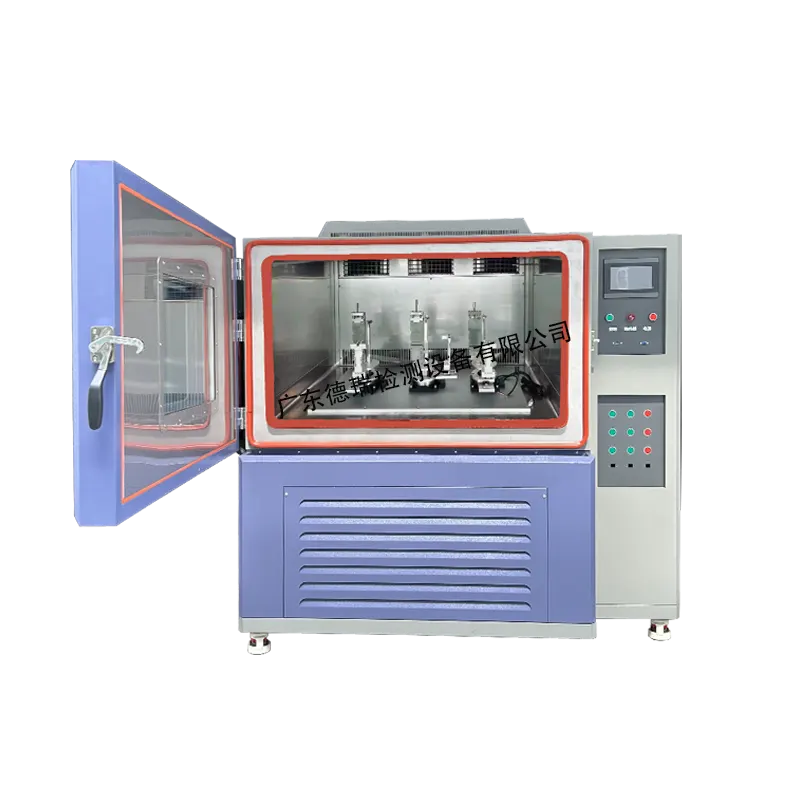
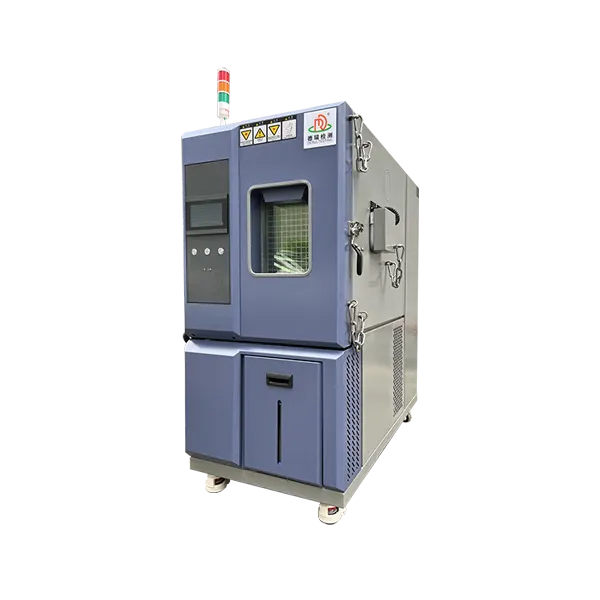
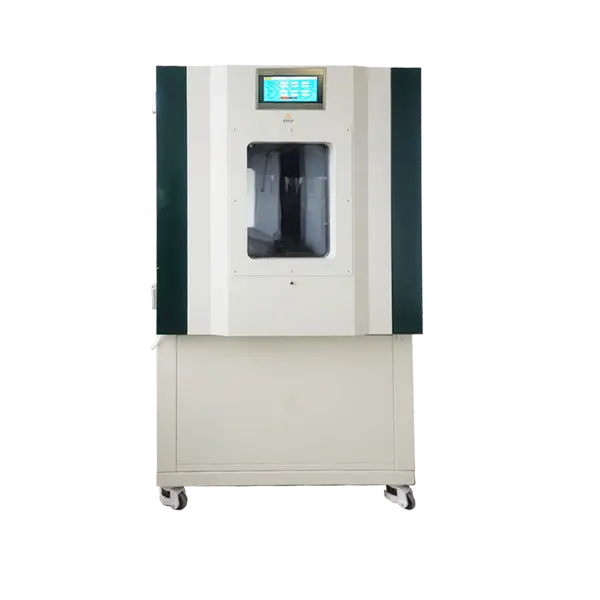
| Structure | Jacketed chamber design with stainless-steel inner chamber and forced air circulation | Supports stable climate control, cleaning and reduced adsorption. |
System architecture
From sample arrival to emission result
- Define the method.
Select the product standard, chamber conditions, loading factor, sampling schedule and analytical method. - Control specimen history.
Package, transport, store and prepare samples according to ISO 16000-11 or the governing procedure. - Clean and verify the chamber.
Complete cleaning/bake-out, establish the blank and confirm environmental controls before loading. - Load consistently.
Expose the correct specimen area, seal cut edges where required and document placement. - Condition and sample.
Maintain climate and ventilation; collect air at defined times using validated media and flow rates. - Analyze and report.
Apply blank correction, calculate emission rates and report all chamber, specimen and analytical conditions.
Application examples
Questions to answer before purchase
- Which exact standard and edition will the laboratory use?
- What specimen dimensions, exposed area and loading factor are required?
- Are VOCs, formaldehyde or both being measured, and by which analytical method?
- What blank/background and recovery acceptance limits must be demonstrated?
- What air-change rates, temperature and humidity setpoints are required?
- How many sampling ports and simultaneous sampling trains are needed?
- Does the laboratory need automated cleaning, heated bake-out or multi-chamber operation?
- Which calibration certificates, raw-data exports and audit records are required?
Frequently asked questions
What is a VOC emission test chamber?
It is a controlled chamber that exposes a material or product to defined temperature, humidity and ventilation while air samples are collected to determine emitted volatile organic compounds.
Is a VOC chamber the same as a temperature-humidity chamber?
No. A VOC chamber must also control clean-air background, air exchange, internal adsorption, recovery and sampling. A general climate chamber is not automatically suitable for trace emission measurements.
Can the chamber measure formaldehyde?
It can provide the controlled environment and sampling air for formaldehyde testing when configured for the applicable method. Formaldehyde concentration still requires the specified sampling and analytical procedure.
Why is the air-change rate important?
It affects chamber concentration, emission mass transfer and the emission-rate calculation. It must be controlled and documented with the loading factor.
Why must chamber background be tested?
Emissions from chamber materials, seals, supply air or previous specimens can create false positives. A blank establishes whether the system is clean enough for the target detection level.
Can one cubic meter accommodate complete furniture?
Only if the item fits the usable internal dimensions and produces the required loading factor. Large furniture may require a room-size chamber or component-based test method.
Does ISO 16000-9 specify pass/fail emission limits?
It provides an emission-chamber method. Product regulations, certification programs or customer specifications establish limits and evaluation rules.
What information should accompany a quotation request?
Provide the test method, specimen dimensions, chamber volume, climate and air-exchange conditions, target compounds, analytical sampling setup, background/recovery limits and site utilities.
Related DERUI equipment
For general reliability testing without trace-emission requirements, review the environmental testing chamber range. A standard temperature-humidity chamber should not replace a VOC emission chamber unless its materials, clean-air system, background and recovery have been validated for the emission method.
Configure the chamber around your analytical method
Send DERUI the test standard, specimen dimensions, target compounds, air-change rate and sampling setup. We will confirm the one-cubic-meter chamber configuration and required utilities.