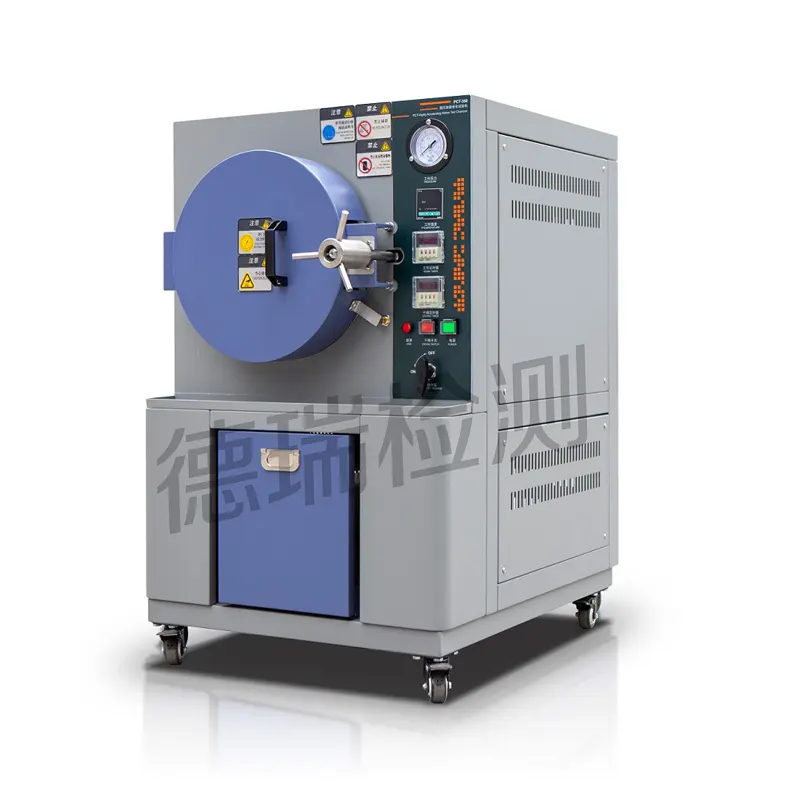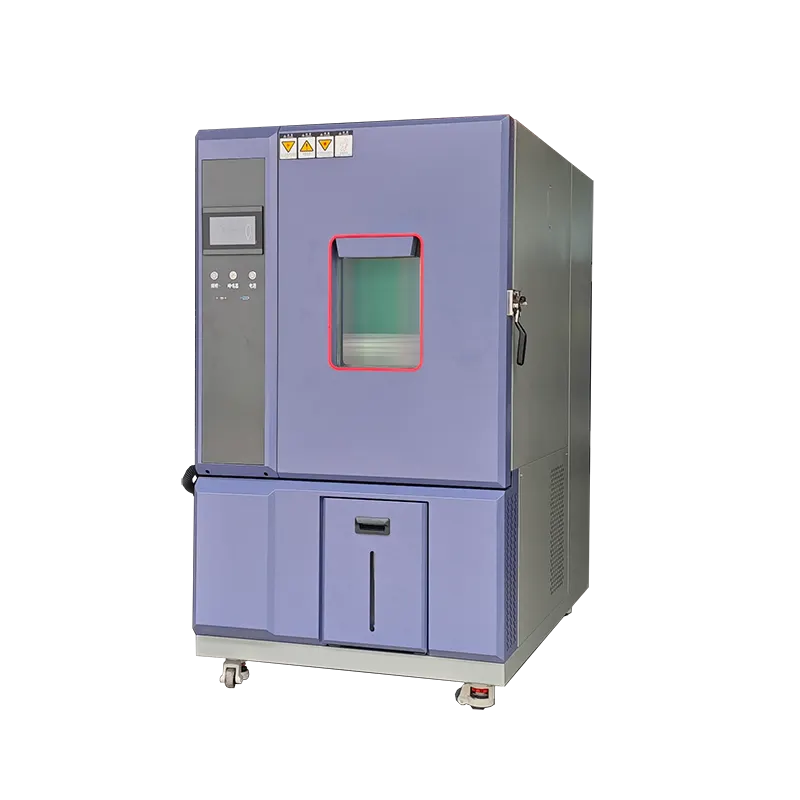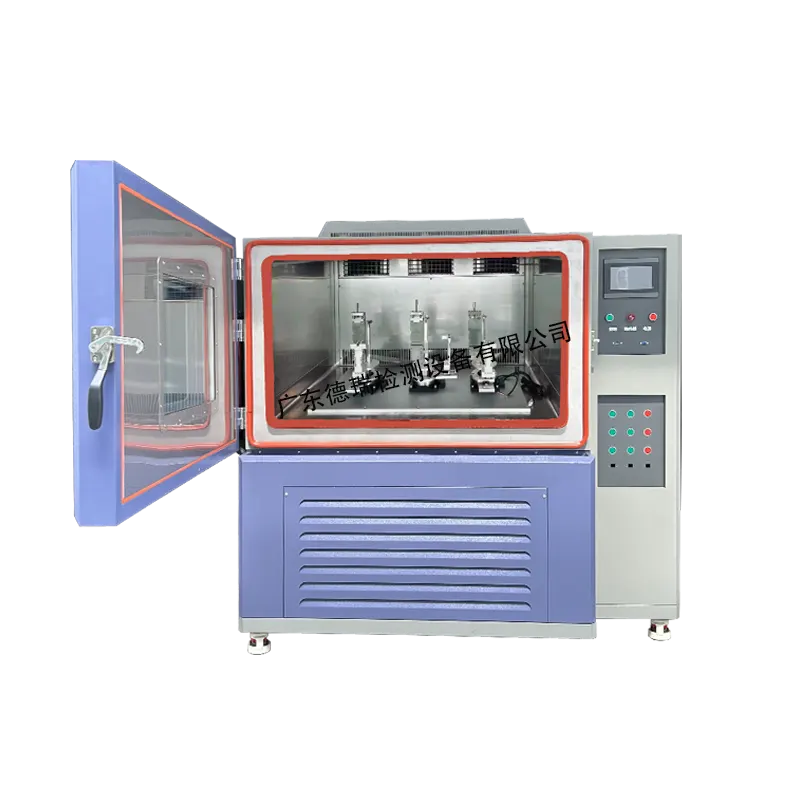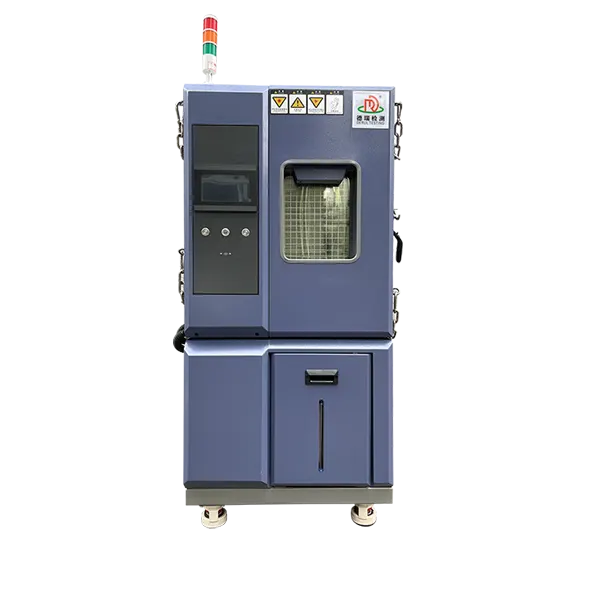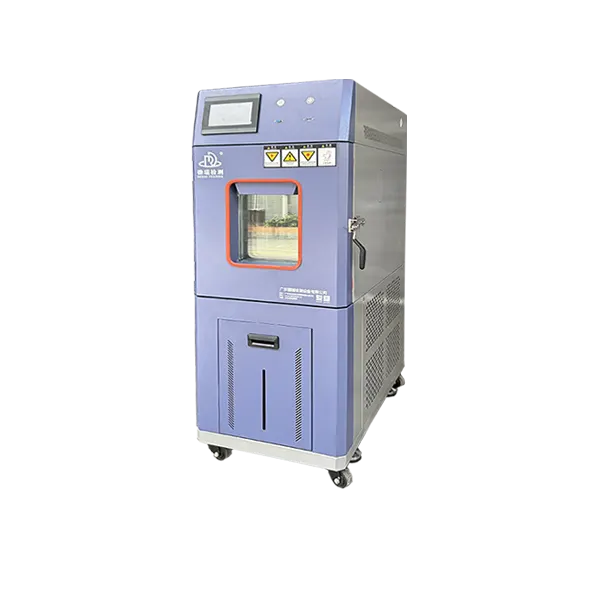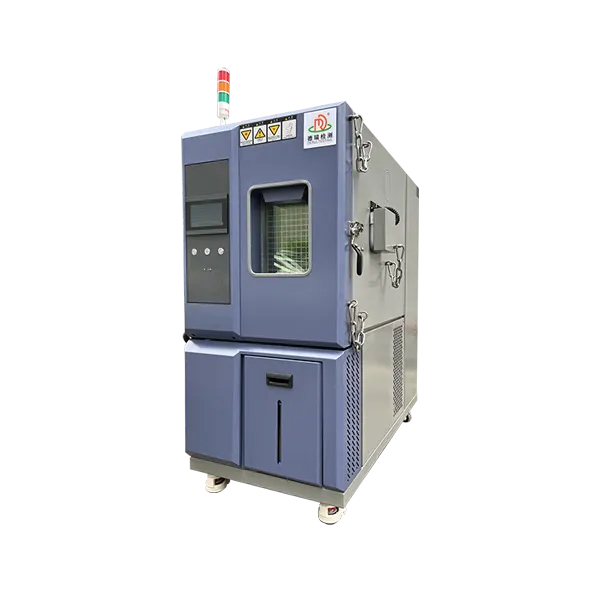


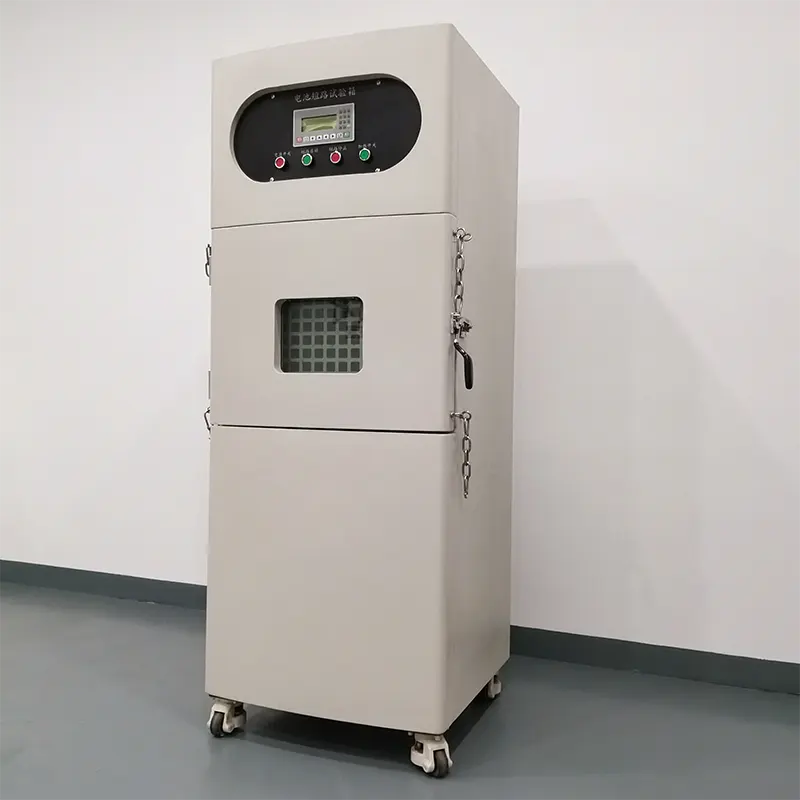
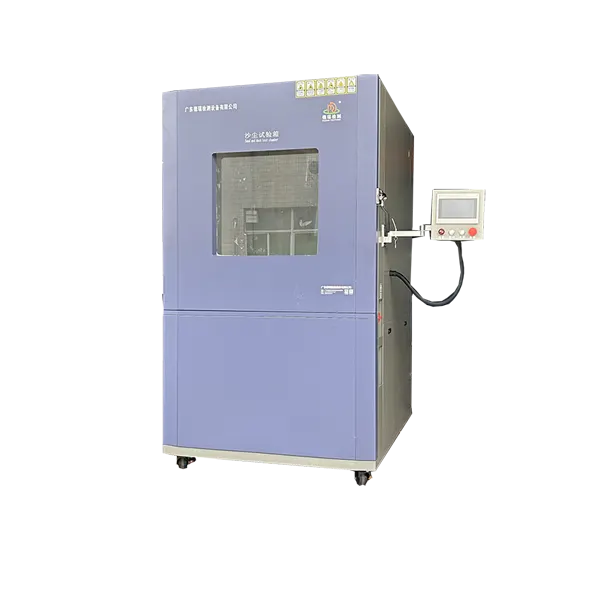

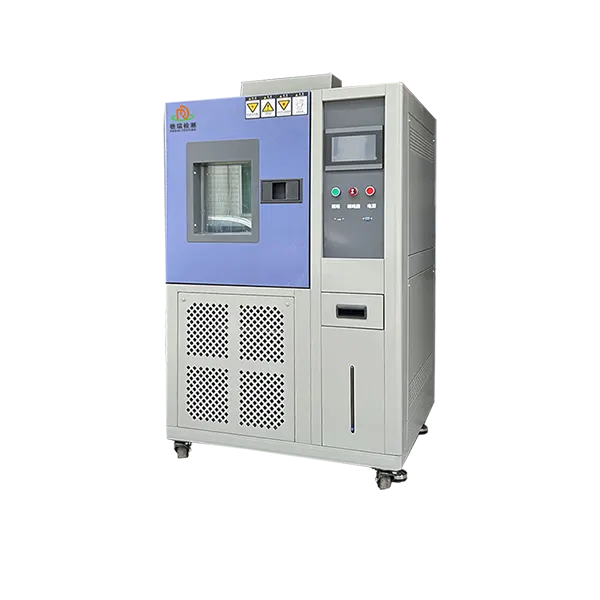
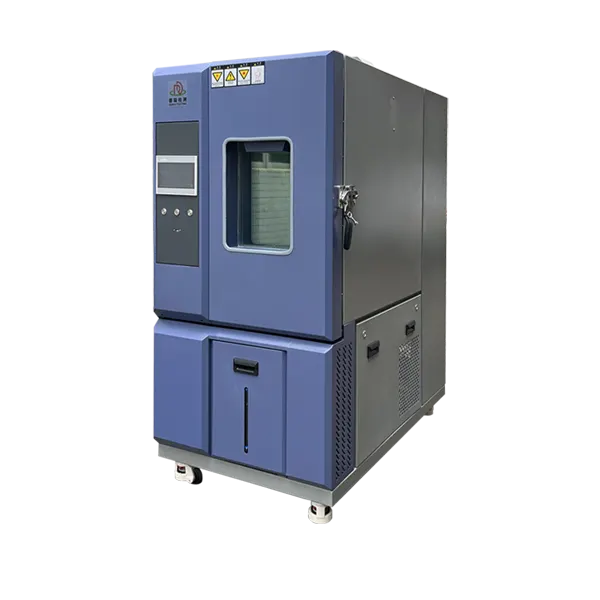
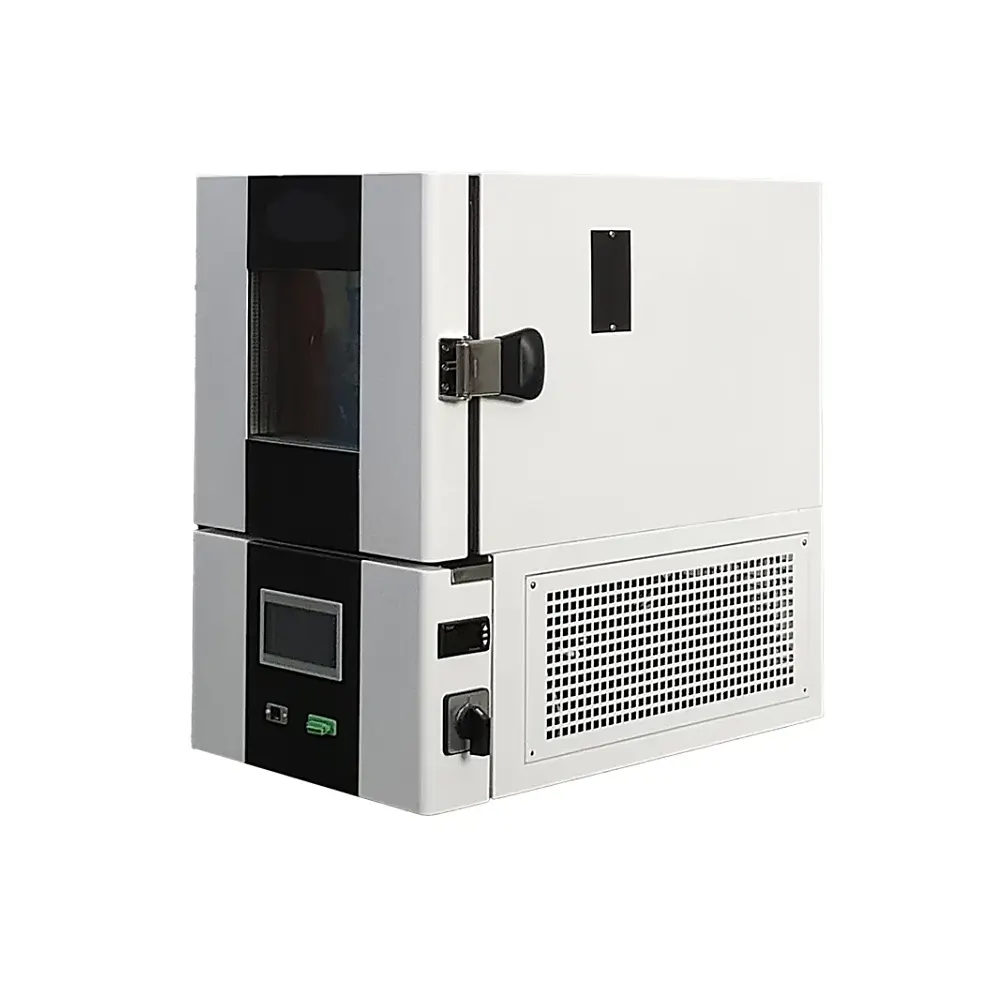
Battery Environmental Reliability Test Chamber
A configurable 80–1000 L chamber series for long-duration temperature and humidity exposure, performance cycling and reliability evaluation of lithium-ion cells, modules and battery packs. External cyclers and monitoring systems can operate the specimen while the chamber controls its climatic environment and safety interlocks.
Down to -70°C options
Up to +150°C
Smoke alarm and exhaust options
Reliability Testing Focus
This chamber series is intended to generate repeatable climatic stress while engineers measure how a battery's capacity, power, resistance, cycle life, BMS behavior and physical condition change over time. It supports reliability programs rather than combining every environmental or abuse test into one cabinet.
Life and Performance Cycling
Combine hot, cold or humid exposure with an external battery cycler to study capacity retention, power capability and degradation.
Temperature and Humidity Stress
Program dwell and transition profiles for storage, climatic adaptation and controlled humidity exposure where required.
Failure Detection
Use specimen temperature, voltage and external measurement channels together with chamber alarms to identify abnormal behavior.
Page positioning: the Battery Temperature Test Chamber focuses on temperature exposure; the Environmental Chamber for Battery Testing focuses on interfaces and system configuration. This page focuses on repeated reliability, life-cycle and degradation evaluation.
Published Chamber Sizes
| Nominal volume | Internal dimensions | Published external dimensions |
|---|---|---|
| 80 L | 400 × 500 × 400 mm | 600 × 1590 × 1370 mm |
| 150 L | 500 × 600 × 500 mm | 700 × 1670 × 1500 mm |
| 225 L | 600 × 750 × 500 mm | 800 × 1750 × 1500 mm |
| 408 L | 800 × 850 × 600 mm | 1000 × 1850 × 1600 mm |
| 800 L | 1000 × 1000 × 800 mm | 1200 × 1950 × 1750 mm |
| 1000 L | 1000 × 1000 × 1000 mm | 1200 × 1950 × 1950 mm |
Dimension check: confirm the W × H × D order on the approved drawing. Published website tables use inconsistent dimension labels. Also allow clearance for airflow, fixtures, cables, coolant lines and safe specimen spacing.
Performance and Control Specifications
| Temperature-range options | 0°C, -20°C, -40°C or -70°C low-temperature configuration; maximum +150°C |
|---|---|
| Published standard performance | -40°C to +150°C for the battery-focused configuration shown on the page |
| Temperature stability | ±0.5°C at steady state, no load |
| Temperature deviation | ±2.0°C at steady state, no load |
| Temperature uniformity | <2°C under the published specified conditions |
| Published heating performance | -20°C to +150°C in ≤60 minutes, no load, average non-linear |
| Typical rate series | Heating approximately 3°C/min and cooling approximately 1°C/min, average non-linear, no load |
| Declared specimen heat load | ≤300 W for the published configuration; higher active loads require engineering selection |
| Published humidity deviation | ±3%RH above 75%RH; ±5%RH at or below 75%RH |
| Humidity operating range | Not stated consistently on the live specification; must be confirmed against temperature and specimen load |
| Controller | 7-inch touchscreen; fixed-value and program control; Chinese/English interface |
| Published program capacity | 120 programs / 1200 segments; up to 999 full cycles or 99 partial cycles |
| Temperature sensor | Class-A sheathed PT100 |
| Chamber construction | SUS304 stainless-steel interior; coated steel exterior; PU foam and fine glass-fiber insulation |
| Cooling | Air-cooled or water-cooled according to configuration and installation |
Load matters: the published temperature rates and uniformity values are no-load data. Battery heat generation, cables, coolant hoses and frequent cycling can change attainable performance.
Battery Test Interfaces and Safety Functions
Test Interfaces
- 50 mm or 100 mm access port
- Optional high-current cable feedthroughs
- Thermocouple and voltage-sense wiring
- BMS/CAN communication
- Optional coolant supply/return connections
- USB and controller data functions
Published Chamber Protection
- Independent overtemperature protection
- Compressor pressure, overload and overheat protection
- Circulation-fan fault protection
- Phase sequence/loss and leakage protection
- Overload and short-circuit protection
- Smoke detector and linked exhaust fan
Safety configuration is risk-based: smoke detection and exhaust do not by themselves make a chamber suitable for every abuse test. Battery energy, chemistry, state of charge and failure mode may require pressure relief, gas detection, reinforced construction, remote isolation and a suppression interface.
What the Chamber Does Not Contain by Default
Mechanical Vibration
A vibration test requires a separate shaker and a compatible chamber interface. It is not created by the refrigeration cabinet itself.
Altitude / Low Pressure
Low-pressure testing requires a vacuum-rated altitude system. It cannot be claimed from a standard temperature-humidity chamber.
Salt or Chemical Corrosion
Salt fog and corrosive-gas exposure require purpose-built materials, air handling and chemical systems and should not share this chamber.
Reliability Programs by Battery Level
Cells and Cell Blocks
- Capacity and power at temperature
- Storage and cycle-life evaluation
- Temperature cycling and degradation comparison
- Reliability observation with external measurement
Modules and Packs
- BMS response under climatic stress
- Pack performance and electrical functionality
- Thermal-management operation
- Energy-storage and EV duty-cycle studies
Standards and Test Scope
The applicable standard depends on whether the specimen is a cell, cell block, module or complete pack and whether the goal is performance, reliability, transport or safety.
- IEC 62660-1:2018: performance and life testing for lithium-ion cells used in electric-vehicle propulsion.
- IEC 62660-2:2018: reliability and abuse behavior of propulsion lithium-ion cells and cell blocks.
- ISO 12405-4:2018: performance, reliability and electrical functionality testing for traction battery packs and systems.
- UN 38.3: transport testing; only the exact environmental procedures relevant to the chamber should be claimed.
Correction to the old page: UN 38.3 does not define “overcharge in Part 3” or “external short circuit in Part 16.” Do not publish invented clause numbers. Always use the applicable manual revision and subsection 38.3 test designation.
Information Needed to Configure the System
Battery and Test Profile
- Cell, module or pack dimensions and mass
- Chemistry, capacity, voltage and state of charge
- Temperature/humidity profile and duration
- Maximum charge/discharge heat load
- Applicable standard and exact clause
Interfaces and Facility
- Cycler cable size and current
- Sensor and communication channels
- Coolant-line requirements
- Exhaust and safety concept
- Voltage, cooling method and installation clearance
Frequently Asked Questions
What is a battery environmental reliability test chamber?
It is a temperature and optional humidity chamber configured for repeated battery performance, life-cycle and reliability testing while external equipment cycles and measures the specimen.
How is it different from a battery temperature test chamber?
This series is positioned around long-duration reliability programs, multiple chamber sizes, active heat loads, external cycling and failure monitoring. A basic battery temperature chamber focuses more narrowly on controlled hot and cold exposure.
Can the chamber test cells, modules and packs?
Yes, with the correct workspace, floor/shelf load, ports, heat-load capacity and safety system. Large packs may require a larger cabinet or walk-in solution.
Can it perform vibration and temperature simultaneously?
Only when paired with a separate shaker and a vibration-compatible chamber interface. The standard cabinet does not generate mechanical vibration by itself.
Can batteries be charged and discharged during testing?
Yes, using an external cycler and appropriately rated feedthroughs and interlocks. Declare the maximum heat load, cable current and fault-shutdown requirements.
Does the 300 W heat-load rating apply to every size?
No. It is the published value for one configuration. Allowable active load depends on chamber size, setpoint, ambient conditions, cooling system and required control performance.
Is smoke extraction enough for thermal-runaway testing?
Not necessarily. High-energy abuse testing may require pressure relief, gas monitoring, reinforced construction, remote isolation and suppression planning based on a hazard assessment.
What information is required for a quotation?
Provide specimen level and dimensions, chemistry, energy, state of charge, test profile, active heat load, standard clause, cycler interfaces, safety requirements and facility utilities.
Build a Reliability System Around the Actual Battery
Send DERUI the specimen drawing, energy level, state of charge, reliability profile, heat load, interface list and safety assessment. We will confirm chamber volume, refrigeration capacity, humidity performance, ports and protection functions.