







IPX1 IPX2 Drip Water Test Chamber for Mobile Phones
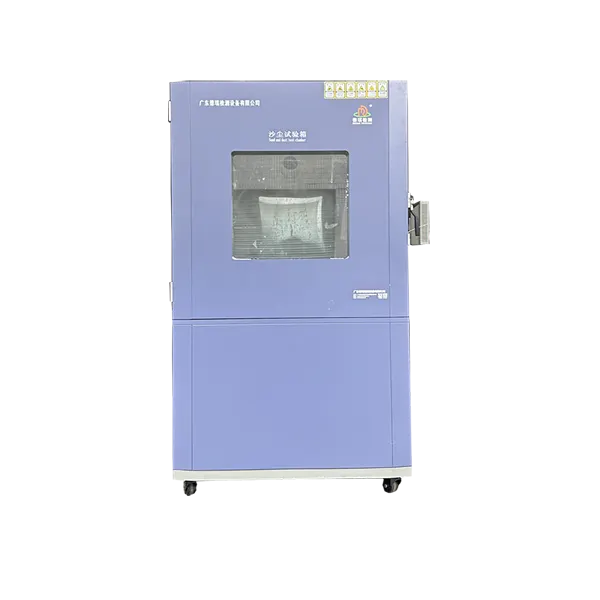
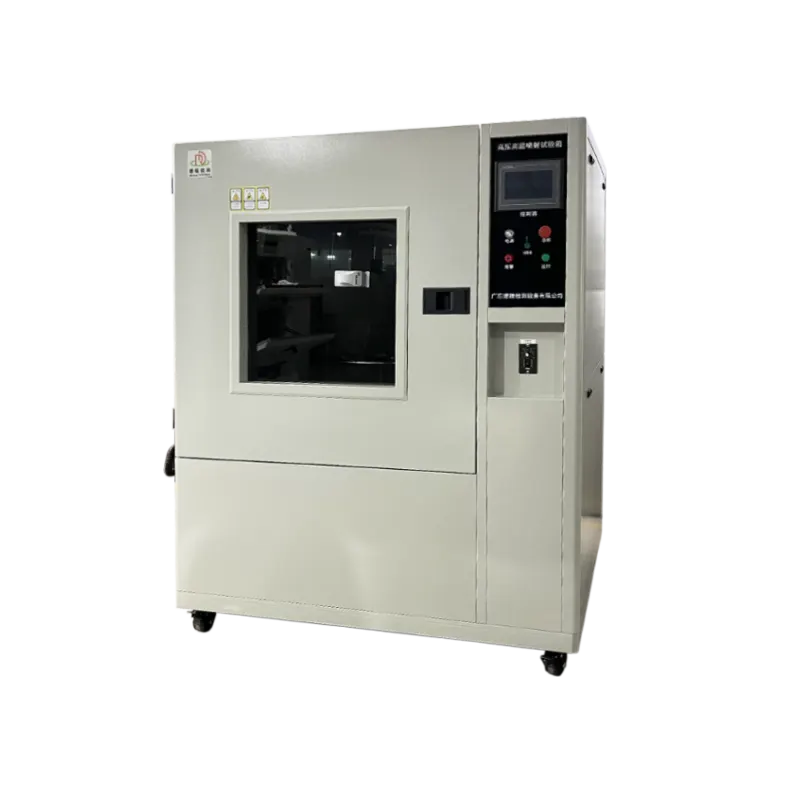
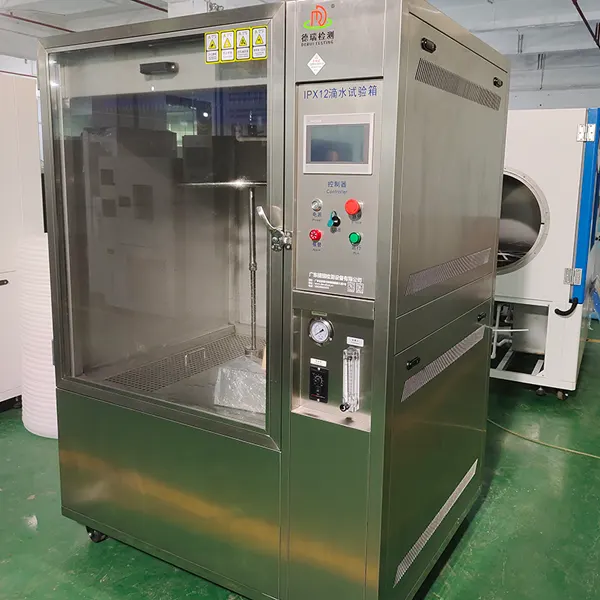
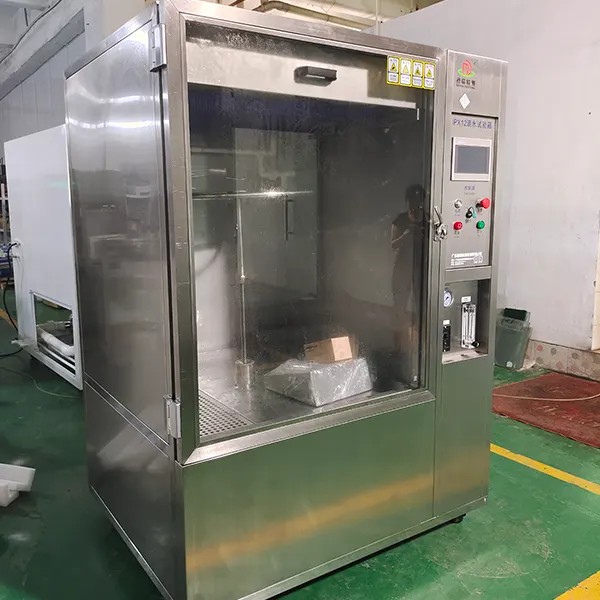
Evaluate phone enclosures under vertically falling water drops with a dedicated drip-test setup. The DERUI chamber shown here is labeled IPX1/2 and provides an enclosed specimen area beneath the overhead drip arrangement, with front-panel controls for the test setup.
For smartphone development and quality-control teams, the useful result is more than a completed exposure: it is a traceable comparison of enclosure design, specimen position and post-test performance. Match the chamber configuration to the required IEC 60529 drip-water procedure and your actual phone fixture.
Find Weak Points in the Phone Enclosure
Use drip-water exposure to investigate ingress paths around display bonding, enclosure seams, buttons, camera windows, speaker openings, charging ports and SIM-tray seals. These are inspection targets, not a claim that every product has the same failure mechanism.
Document whether the sample is a complete phone, a sealed housing or an assembly with temporary plugs. Results from an empty housing cannot be presented as evidence for a fully assembled device without the required evaluation.
In comparative development work, keep mounting, closures, water conditions and inspection timing consistent when comparing adhesive systems, gasket revisions or assembly changes. Record any preconditioning separately so a design change is not confused with a change in the test.
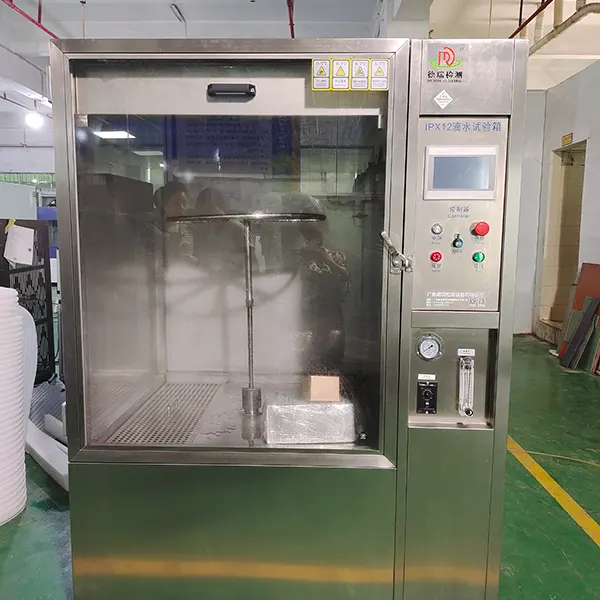
IPX1 and IPX2: Define the Drip Exposure Before the Recipe
| Test | Exposure principle | Setup to control |
|---|---|---|
| IPX1 | Vertically falling water drops | Normal-use mounting, drip distribution, specimen movement and exposure timing required by the adopted method. |
| IPX2 | Vertically falling water drops with the enclosure tilted | Required tilted positions, fixture stability, uninterrupted drip coverage and the timing sequence specified by the method. |
| Result assessment | Protection against harmful water ingress | Apply the relevant inspection and functional acceptance criteria to the tested product configuration. |
IEC 60529 identifies drip-box procedures separately from oscillating-tube spraying, hose-nozzle jets and immersion. Specify the adopted edition and clause, then use its prescribed delivery rate, geometry, specimen positions and duration. A convenient controller preset does not replace those requirements.
Drip testing is not IP67/IP68 immersion testing. Choose equipment for the requested exposure, rather than assuming that one phone waterproof tester covers every IP rating.
Match the Chamber to Your Phone and Fixture
Select the drip-test arrangement from the specimen envelope and required procedure. The enclosure volume alone does not define how many phones can be tested or whether the fixture can achieve the required positions.
| Configuration item | Selection basis | Why it matters |
|---|---|---|
| Equipment type | Enclosed IPX1/IPX2 drip-water test arrangement | Phone enclosure development, quality control and method-defined ingress evaluation. |
| Active drip area | Select around the complete specimen and fixture envelope | Every intended test surface must remain within the required exposure area in each prescribed position. |
| Specimen support | Define normal-use and tilted mounting | Include phone dimensions, mass, cable routes and fixture footprint in the layout. |
| Water delivery | Specify method-required drip rate and distribution | Agree how delivery is checked across the active area, including setup and maintenance checks. |
| Timing and movement | Specify the procedure sequence | Include exposure duration, position changes and any required movement; align controls with that sequence. |
| Water circuit | Define supply, collection and discharge | Identify filtration and recirculation requirements, if selected, along with water quality and maintenance. |
| Electrical interfaces | Match the intended specimen operating state | Specify safe interfaces if the phone is powered or monitored during exposure. |
| Installation and documentation | Match destination utilities and acceptance needs | Set out power, water, drain, service clearance, operating instructions and requested test records in the proposal. |
Request a configuration proposal with the equipment model, workspace, active drip area, fixture capacity, control functions and utilities. The proposal should identify the supplied equipment and measurable acceptance checks for your laboratory.
Build a Repeatable Phone Drip-Test Workflow
1. Identify the assembly
Record specimen ID, enclosure revision, seals, port covers, SIM-tray state and any previous conditioning. Photograph closures before exposure.
2. Set the fixture
Reproduce the required orientation without covering openings or diverting drops away from the device. Check each specified tilted position before starting.
3. Verify the drip field
Check delivery, distribution, clearances and the programmed duration against the controlled method. Inspect for blocked or uneven outlets.
4. Run the exposure
Record position sequence, operating state, water conditions and interruptions. Treat a deviation as a test-plan decision, not simply a reason to restart unnoticed.
5. Handle and inspect
Follow the agreed sequence for external drying, opening and inspection. Keep external water from being introduced into the device during disassembly.
6. Evaluate and report
Compare observed ingress and functional results with the defined acceptance criteria. Retain exposure records, inspection photographs and the acceptance decision together.
For functional checks, define the relevant endpoints in advance—for example, display, touch, camera, audio or connector function. Use the product test plan to decide which checks are appropriate and when they are performed.
Batch Testing: Coverage Matters More Than Phone Count
A phone is small, but its fixture, tilt envelope and cable routing may occupy considerably more space. For multiple specimens, review the complete loading drawing rather than dividing the chamber floor area by the dimensions of one phone.
| Decision | What to review | Evidence to request |
|---|---|---|
| Multiple phones per run | Spacing, overlapping footprints, shielding and each required position | Layout showing each specimen within the usable drip area. |
| Fixture interaction | Water redirected by clamps, supports or upper specimens | Loaded demonstration showing that the fixture does not unintentionally shelter the sample. |
| Exposure consistency | Drip distribution, water delivery and timing | Method-matched measurement records and an agreed acceptance procedure. |
| Wet-test operation | Specimen supply, communication leads, cable seals and termination criteria | Interface and protection arrangement for the requested operating mode. |
| Routine maintenance | Water cleanliness, outlets, collection and drain access | Operating and maintenance instructions matched to the supplied circuit. |
Include a representative phone and fixture in the acceptance plan when practical. Agree what will be demonstrated and measured before delivery, rather than accepting the equipment on cabinet appearance or a completed empty cycle alone.
Mobile Phone IPX1/IPX2 Drip Chamber FAQ
What does this mobile phone IP test chamber test?
This page covers IPX1/IPX2 drip-water exposure for phone enclosures and small electronic products. It is a dedicated dripping-water application, not an all-in-one dust, spray, jet and immersion system.
Can this chamber verify an IP67 or IP68 phone rating?
Not by drip testing alone. IP67/IP68 involve dust and immersion requirements. Use the relevant dust and immersion equipment and the applicable product evaluation procedure.
Can several phones be tested in one run?
Batch capacity depends on the active drip area, complete fixture, required positions and absence of specimen shielding. Provide a loading drawing so coverage can be reviewed; phone size alone does not determine capacity.
Can the phone operate during the test?
Define its operating state in the test plan. Powered or monitored testing requires suitable wet-test interfaces and electrical protection in the ordered setup. This should not be inferred from the chamber control panel.
Does a completed cycle mean the phone passed?
No. Evaluate harmful ingress and the required functional or safety checks against the applicable acceptance criteria. The exposure record and the post-test assessment serve different purposes.
What should I send for a quotation?
Send the required IP code and standard edition, phone and fixture drawings, sample quantity and mass, mounting positions, operating state, inspection criteria, site utilities and requested measurement or reporting functions.
Request a Phone Drip-Test Configuration
Send Your Phone Drawing and Required IP Test
Give DERUI the phone dimensions, fixture or loading drawing, IPX1/IPX2 procedure, sample quantity and operating state. Request a proposal identifying the drip area, mounting arrangement, water circuit and acceptance checks for your test workflow.
Need a different exposure? Use the rain and water-ingress test equipment range to compare methods. Choose the IPX3/IPX4 rain spray chamber for spraying and splashing, the IPX5/IPX6 water-jet chamber for jets, or the IPX7/IPX8 immersion chamber for submerged exposure. These are separate equipment selections.