IPX3 / IPX4 Rain Spray Testing with a Defined Specimen Setup
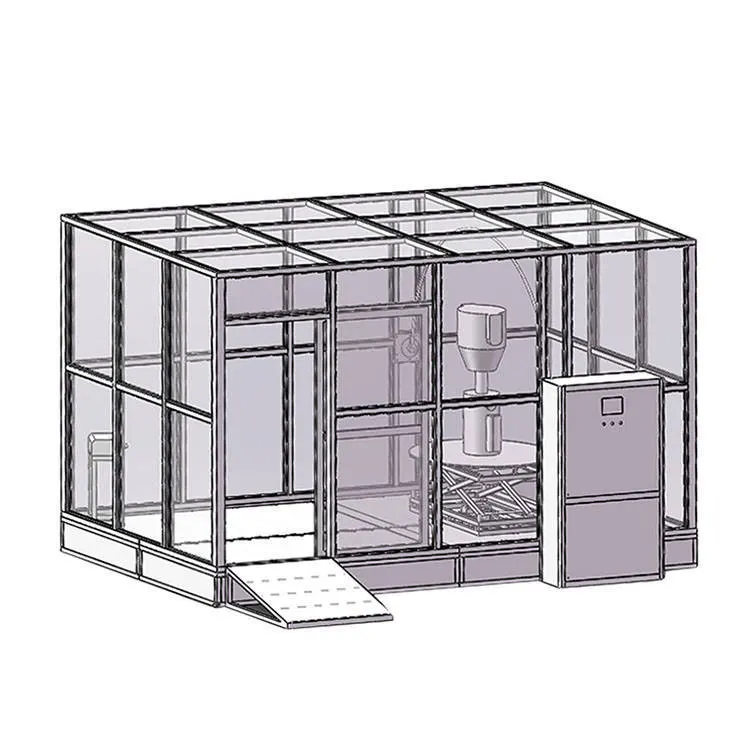
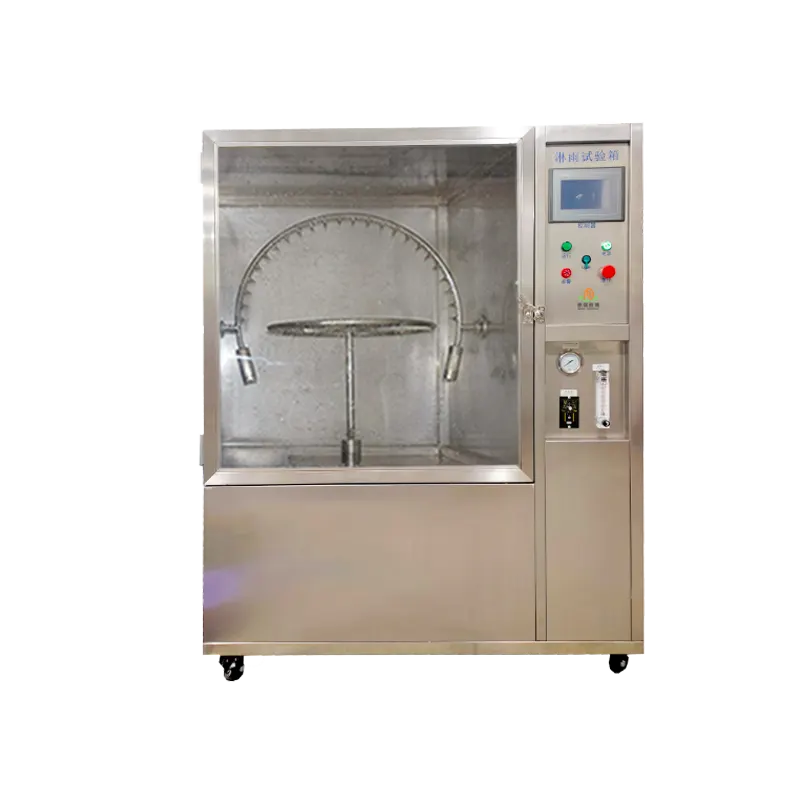
Evaluate how enclosure joints, cable entries and exposed interfaces resist spraying and splashing water. DERUI DR-H502-2 pairs an R400 oscillating tube with a height-adjustable, rotating specimen table inside a 900 mm test enclosure.
Choose the Spray Geometry Your Enclosure Needs
Repeatable spraying and splashing—not immersion
DR-H502-2 is intended for enclosure testing where the specified exposure is delivered by an oscillating tube. Applications can include electrical housings, outdoor instruments, lighting assemblies and components with seals or connections that need controlled water exposure.
The moving tube distributes water around the specimen. Table rotation changes the presented surfaces, and height adjustment helps position the assembly relative to the spray geometry. These mechanisms make mounting and coverage part of the test setup—not an afterthought.
Use the chamber to compare sealing designs during development and to execute a documented qualification procedure. Record the fixture and operating state as well as the water exposure so later tests can reproduce the same arrangement.
Start with the complete assembly: a cable gland or mounting bracket can change both the part’s clearance and the path water takes toward its seals.
IPX3 and IPX4: Coverage Is More Than an Angle
| Setup question | IPX3 spraying water | IPX4 splashing water |
|---|---|---|
| Exposure intent | Spraying water within the prescribed angular region around the vertical | Splashing water from the directions specified by the method |
| Spray arrangement | Use the prescribed active-hole region and oscillating-tube setup | Use the prescribed broader spray arrangement and specimen support |
| Motion | Verify the selected sweep, speed/cycle and exposure time | Verify the required sweep, speed/cycle and surface coverage |
| Specimen positioning | Place the assembly at the required reference position without obstructing the spray | Check support, orientation and whether all required surfaces receive exposure |
| Evaluation | Apply the product-specific harmful-ingress and functional/electrical criteria | Apply the product-specific harmful-ingress and functional/electrical criteria |
IEC 60529 provides the enclosure IP-code framework. Its IPX3/IPX4 procedures distinguish the oscillating-tube arrangement from the spray-nozzle arrangement. Identify which apparatus your product standard or customer procedure requires.
DR-H502-2 Technical Parameters
| Parameter | Configuration |
|---|---|
| Model | DR-H502-2 |
| Test arrangement | Oscillating-tube spraying and splashing water for IPX3 / IPX4 applications |
| Internal workspace (L × D × H) | 900 × 900 × 900 mm; nominal geometric volume 729 L |
| External dimensions (L × D × H) | 1400 × 1120 × 1750 mm |
| Oscillating-tube radius | R400 mm; R200 mm listed as an option |
| Listed tube travel | 120° for IPX3; 350° for IPX4; custom settings available. Verify the travel definition and method-specific motion during acceptance |
| Specimen-table motion | Continuous forward rotation or alternating forward/reverse rotation |
| Specimen-table height adjustment | 350–600 mm |
| Listed table load | 50 kg; include specimen and fixture in the loading review |
| Equipment supply / rated power | 220 V / 1.0 kW; destination frequency and connection defined in the proposal |
| Listed specimen supply | 220 V; electrical interface, allowable load and wet-test protection defined by the selected arrangement |
| Protection functions | Electrical leakage protection, water-shortage protection and short-circuit protection |
| Listed warranty | 1 year; coverage and service terms specified in the quotation |
The 729 L figure is calculated from cabinet dimensions; usable specimen capacity is governed by the tube, support and clearances. For a method-matched configuration, agree spray-hole geometry, water delivery, motion cycle, table dimensions and timing requirements alongside these mechanical specifications.
Will Your Assembly Fit the R400 Spray Area?
Check the swept envelope
Include the fixture, cable bends, protruding connectors and the changing envelope during rotation. Keep the assembly clear of the moving tube across the complete programmed travel.
Align height and support
The listed table height is adjustable from 350 to 600 mm. Check the relevant specimen reference point against the tube center and use a support that follows the method without masking surfaces.
Account for fixture mass
Use the listed 50 kg table load for preliminary selection, then review combined specimen/fixture mass, mounting stability and off-center loading. Do not size the setup by specimen mass alone.
Fixture choices can change the result
A plate placed beneath the enclosure may shield the underside; a clamp may compress a gasket; an incorrectly routed cable may divert water away from a gland. The fixture should hold the specimen in the required orientation without improving its sealing performance or hiding an exposure surface.
If you want to test multiple units, submit a layout showing spacing, mounting and water access to each specimen. More parts fitting in the cabinet does not establish that each receives an acceptable exposure.
Water Delivery, Test Records and Factory Acceptance
Verify flow for the installed tube
Required total flow depends on the selected tube and active spray holes. Check the applicable method’s per-hole delivery and open-hole arrangement; total flow follows Q = N × q when N active holes each deliver q. Do not apply the same total flow to R200 and R400 without checking their geometry.
Before testing, inspect for blocked holes, confirm the flow indication and check tube motion and specimen position. A pressure reading alone cannot establish the correct water delivery. Follow the supplied water-quality and cleaning instructions to limit deposits and maintain the spray pattern.
| Acceptance item | What to agree and demonstrate |
|---|---|
| Tube and water distribution | Installed radius, hole geometry and active-hole arrangement for each required exposure |
| Flow measurement | Specified operating flow, instrument calibration and verification procedure |
| Motion and timing | Angle definition, travel, cycle/speed and exposure timing at the agreed settings |
| Specimen setup | Table diameter, usable height, loaded rotation, fixture clearance and required coverage |
| Electrical operation | Equipment supply, sample supply/load, cable routing and protection checks |
| Records and documents | Setup drawing, measured settings, test record format, manual, maintenance and agreed acceptance report |
Separate exposure records from product approval
Record specimen ID, sealing configuration, mounting, test settings, water conditions, exposure duration and any interruptions. After testing, use the prescribed handling and inspection sequence; assess harmful ingress, operation and any electrical checks against the governing document.
Automatic logging, USB export, remote monitoring and water-temperature control should be specified separately if your laboratory needs them. For site planning, provide voltage/frequency, water supply, drain location, access route and service clearance. Maintain spray holes and filters where fitted, and never bypass wet-test electrical protection.
DR-H502-2 IPX3 / IPX4 Rain Spray Chamber FAQ
Does DR-H502-2 perform both IPX3 and IPX4 tests?
It is offered for oscillating-tube IPX3/IPX4 exposure. Each test requires its own active spray-hole arrangement, flow, motion, duration and specimen support. Match those settings to the adopted procedure rather than changing only an angle on the controller.
Does a 900 mm chamber accept a 900 mm specimen?
No. The specimen and fixture must fit within the useful spray area and clear the R400 tube throughout its motion. Connectors, cables, table height and the specimen’s swept envelope also matter. Send the full assembly dimensions and mounting drawing for a fit review.
How is the R200 option different from R400?
R200 is a smaller-radius tube option, not an automatic capacity upgrade. The required radius depends on specimen size and the accepted test arrangement. A different tube also changes the active-hole configuration and corresponding total flow requirement.
Can specimens be energized during testing?
A 220 V specimen supply is listed. The proposal must define the outlet/interface, permitted electrical load, cable routing, leakage protection and shutdown procedure for the actual specimen. Other voltages or DC operation require a separately specified arrangement.
Is water pressure alone enough to verify spray severity?
No. Tube geometry, open spray holes, water delivery, motion, positioning and timing together define the exposure. Pressure is useful for operating checks but does not replace verification of the required flow and spray arrangement.
Will an IPX4 result demonstrate IPX6 or IPX8 resistance?
No. Water jets and immersion are different test arrangements. Select an IPX5/IPX6 jet chamber or an IPX7/IPX8 immersion system when those exposures are required. Evaluate the specimen according to its governing acceptance criteria; the machine itself does not issue a product certificate.
Request a Method-Matched Rain Spray Configuration
Send the Specimen Drawing—Get a More Useful Proposal
Request a DR-H502-2 configuration review around the tube radius, specimen mounting and water exposure required by your test plan.
Include: standard edition and clause; IPX3/IPX4 apparatus requirement; assembly dimensions and mass; fixture/orientation; powered state and supply; exposure timing; flow/motion acceptance; recording needs and destination utilities.
For water jets, review the IPX5/IPX6 chamber. For submerged enclosures, see the DR-H504 immersion chamber. The rain test chamber category compares the wider range of water-exposure equipment.