







IPX5 Water-Jet Testing for Automotive Lamps and Electrical Enclosures
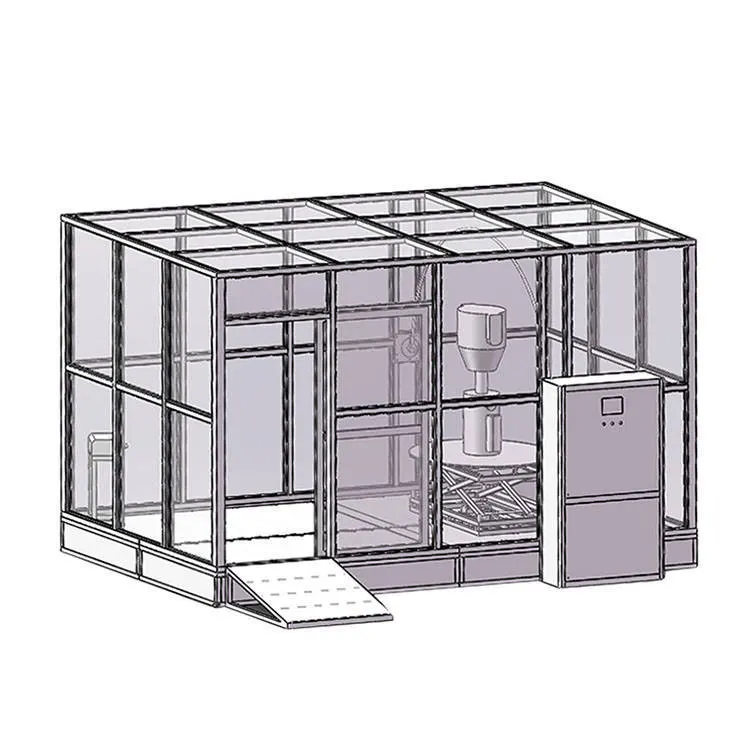
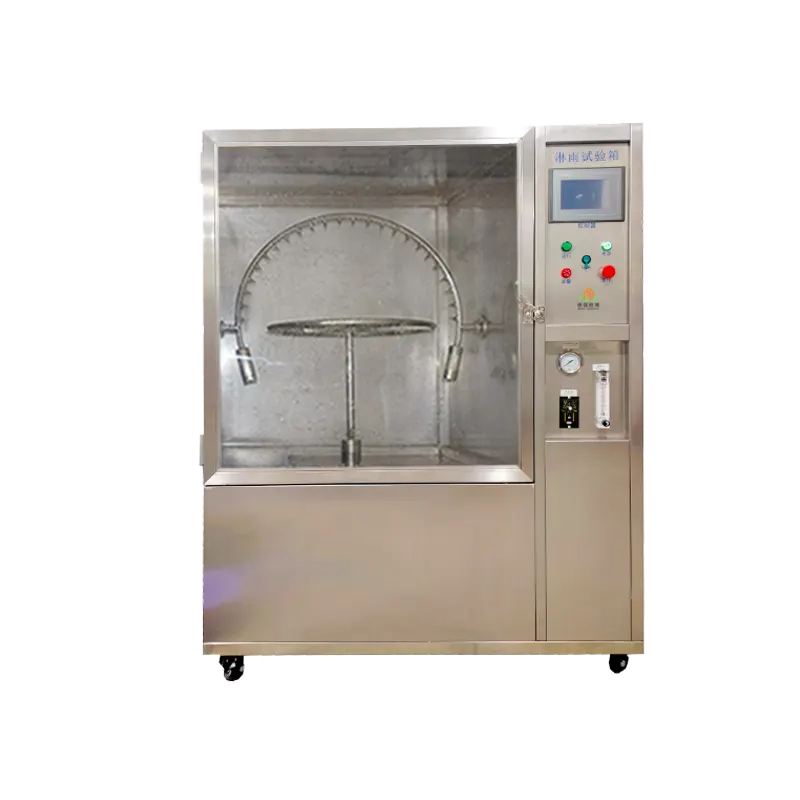
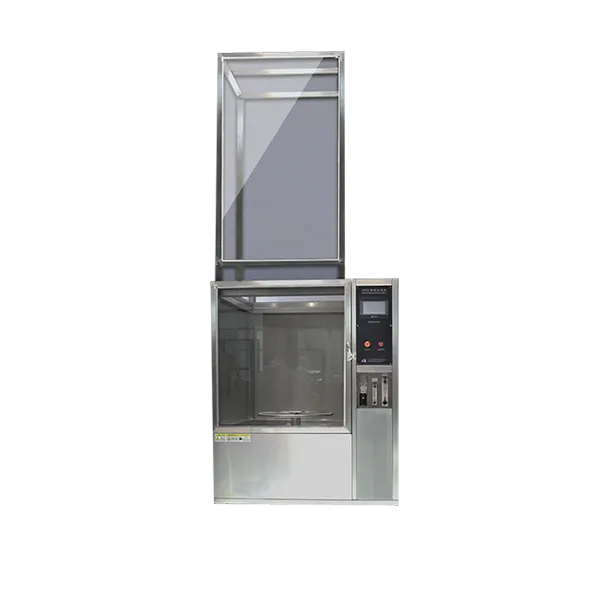
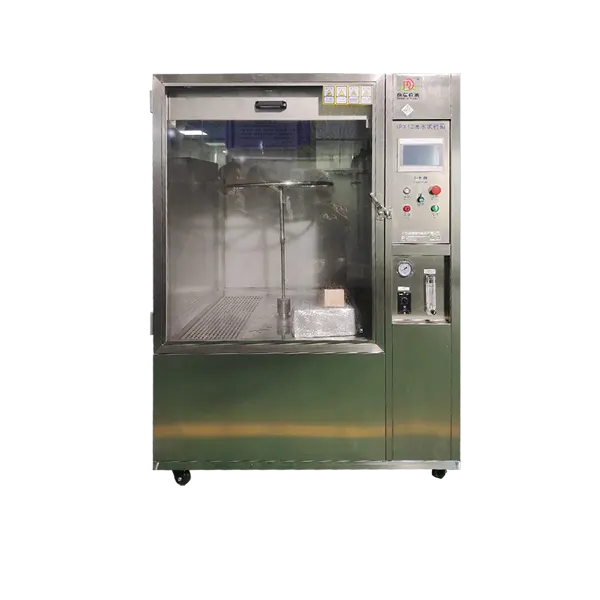
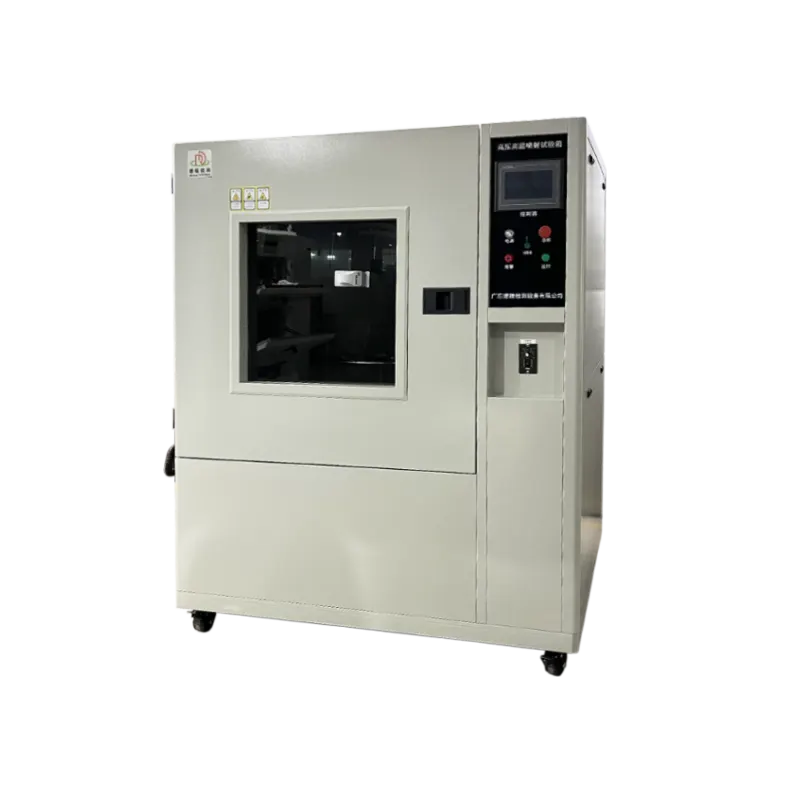
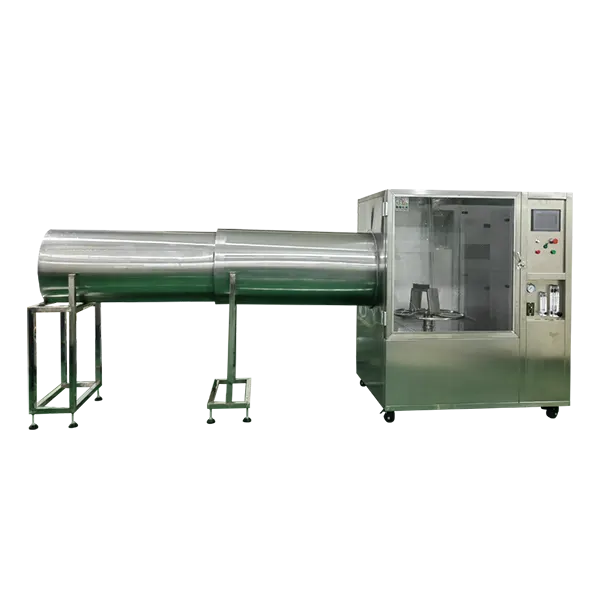
The H503-3 is an enclosed water-spray chamber configured around an IPX5-type 6.3 mm nozzle, controlled delivery rate, defined spray distance and rotating specimen table. It provides a repeatable setup for evaluating headlamps, rear lamps, signal lamps and other electrical enclosures against the water-ingress procedure specified by the buyer.
The chamber creates the exposure; the product standard, customer drawing or OEM specification defines specimen operation, mounting, spray directions, duration, post-test checks and acceptance criteria. Water droplets, internal condensation or electrical malfunction must be evaluated according to that governing document rather than a universal “no water” rule.
Direct answer: choose H503-3 when the required specimen fits the 1200 mm workspace and 500 mm turntable, and the procedure calls for the confirmed 6.3 mm water-jet arrangement. If the program also requires IPX6, IPX6K, IPX9K, drip, oscillating-tube or immersion testing, specify those exposures separately.
H503-3 Technical Specifications
Use these values for preliminary assessment. Confirm the ordered drawing, water system, utilities and options in the signed technical agreement.
| Item | H503-3 specification |
|---|---|
| Internal workspace | 1200 × 1200 × 1200 mm (W × D × H) |
| External dimensions | 1600 × 1400 × 3500 mm (W × D × H) |
| Nozzle internal diameter | 6.3 mm |
| Water delivery rate | 12.5 L/min ±5% |
| Substantial-stream core | Approximately 40 mm diameter at 2.5 m from the nozzle |
| Spray distance | 2.5–3 m from nozzle to enclosure surface |
| Minimum test duration | 3 min |
| Duration basis | 1 min per square metre of enclosure surface likely to be sprayed |
| Specimen turntable | 500 mm diameter; adjustable rotation speed |
| Controller | PLC touch screen |
| Chamber construction | SUS304 stainless-steel interior; stainless-steel exterior |
| Power supply | AC 380 V, 50 Hz, three phase |
Configuration boundary: temperature-controlled water, deionized-water treatment, automatic specimen power cycling, additional nozzles, electrical test instruments and data-export functions are not confirmed as standard by this parameter list. Request each required function explicitly.
Do Not Treat Every Automotive Water Test as the Same IPX5 Program
IEC 60529 provides the general IP-code framework for electrical enclosures. ISO 20653:2023 applies to electrical equipment of road vehicles and includes automotive-specific degrees of protection, including “K” designations not covered by IEC 60529. An OEM document may add mounting, operation, thermal conditioning or evaluation requirements.
IEC 60529 route
Confirm the cited edition and IPX5 procedure, then map its nozzle, delivery rate, distance, exposure coverage, duration and acceptance provisions to the chamber.
- IP code under evaluation
- Accessible enclosure surfaces
- Specimen operating condition
- Post-exposure assessment
ISO 20653 route
For road-vehicle electrical equipment, obtain ISO 20653:2023 or the edition named by the customer. Do not convert IPX5, IPX5K and other automotive codes into one generic program.
- Exact degree of protection
- Device-under-test orientation
- Water and environmental conditions
- Method-specific evaluation
OEM route
VW, GM, Ford, Toyota and other manufacturer documents can define additional sequences. Quote against the actual controlled document instead of a brand-name list.
- Document revision
- Preconditioning
- Powered monitoring
- Combined or repeated exposures
From Lamp Mounting to a Traceable Ingress Decision
The test record should show how the water jet reached the relevant lamp surfaces and how the assembly was evaluated after exposure.
Identify the DUT
Record model, revision, sealing components, connectors, vents, cable exits and pre-test condition.
Condition and mount
Apply required preconditioning and reproduce the vehicle or method-defined orientation and supports.
Verify the water system
Check nozzle identity, measured flow, spray distance, water condition and calibration status.
Program the exposure
Set duration, turntable speed, spray direction sequence and specimen operating cycle from the approved method.
Monitor the test
Record interruptions, flow deviation, specimen function and any safety event without changing the setup informally.
Evaluate and report
Drain or open only as required, inspect defined areas, perform specified electrical or lighting checks and document the result.
Recommended evidence: specimen and seal photographs, mounting drawing, nozzle and distance verification, measured water flow, program revision, exposure timeline, powered-state record, internal inspection and method-defined pass/fail conclusion.
Check More Than the IPX5 Nozzle
A correct nozzle does not prove that the complete chamber fits the lamp or the customer’s sequence. Confirm workspace, rotation, electrical monitoring, water management and access before approving the machine.
Usable specimen envelope
Compare lamp dimensions, fixture, cable bend radius and spray clearance with the 1200 mm workspace and 500 mm table.
Coverage and movement
Confirm whether rotation alone exposes every required surface or whether nozzle positioning and additional mounting angles are needed.
Powered operation
Define voltage, current, control sequence, feedthroughs, leakage protection and data to record while water is applied.
Water circuit
Agree on supply, filtration, tank, drainage, recirculation, water quality, cleaning and any temperature requirement.
Laboratory installation
Verify AC380V three-phase power, floor loading, water and drain connections, access route, service clearance and humidity management.
Acceptance checks: approved drawing and ordered options, workspace and turntable dimensions, nozzle diameter, measured flow, distance range, controller sequence, rotation, water containment, safety interlocks, documentation and a mutually agreed demonstration load.
H503-3 IPX5 Water Spray Chamber FAQs
Is IEC 60529 IPX5 the same as ISO 20653 IPX5K?
No. ISO 20653 addresses road-vehicle electrical equipment and includes automotive “K” codes. Use the exact code, edition and procedure specified by the customer; do not substitute a similar-sounding IP designation.
Can H503-3 perform IPX6 or IPX9K testing?
The confirmed H503-3 data describes a 6.3 mm, 12.5 L/min arrangement. Different protection levels can require different nozzles, flow, pressure, distance or temperature. They must be quoted and verified separately.
Does passing mean absolutely no water can enter the lamp?
Not universally. The governing product or OEM document defines the permitted ingress and required functional or safety checks. Record the internal inspection and decision against that criterion.
Can the lamp operate during spraying?
Only when the approved test calls for powered operation and the ordered chamber includes suitable electrical interfaces and protection. Send the voltage, current, switching sequence and monitoring requirement.
Is temperature-controlled spray included?
It is not identified in the confirmed H503-3 parameter list. If the OEM procedure specifies water temperature or thermal conditioning, request the required range, stability and sequence as a project option.
What is required for quotation?
Provide the standard and edition, IP code, lamp drawing, fixture and orientation, powered state, spray sequence, water conditions, evaluation criteria, utilities and required documentation.
Match H503-3 to Your Automotive Lamp Procedure
Send the test document, lamp drawing, mounting, powered sequence, water conditions and acceptance checks for a configuration review.