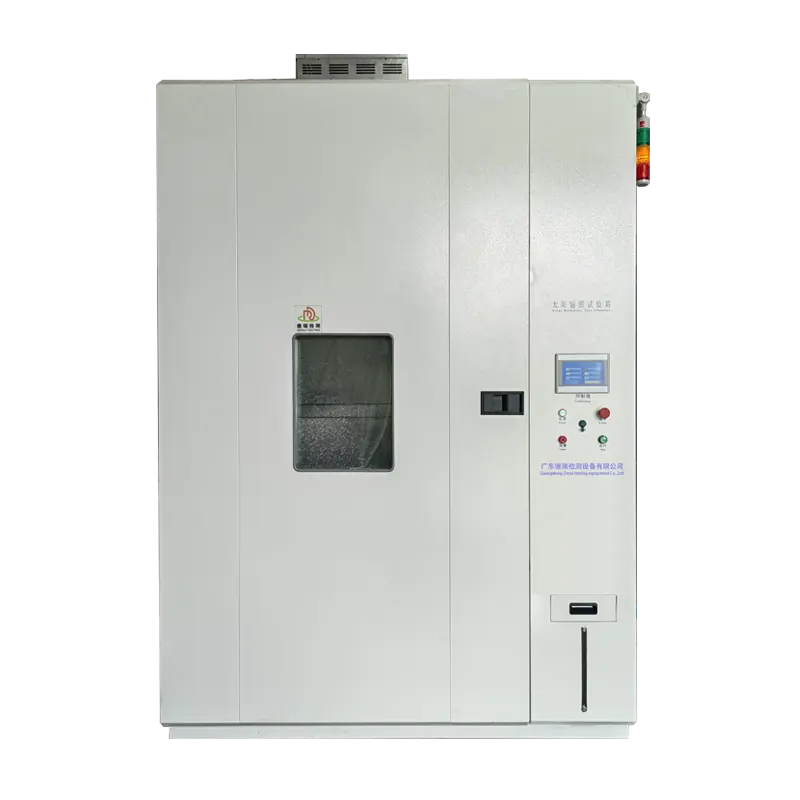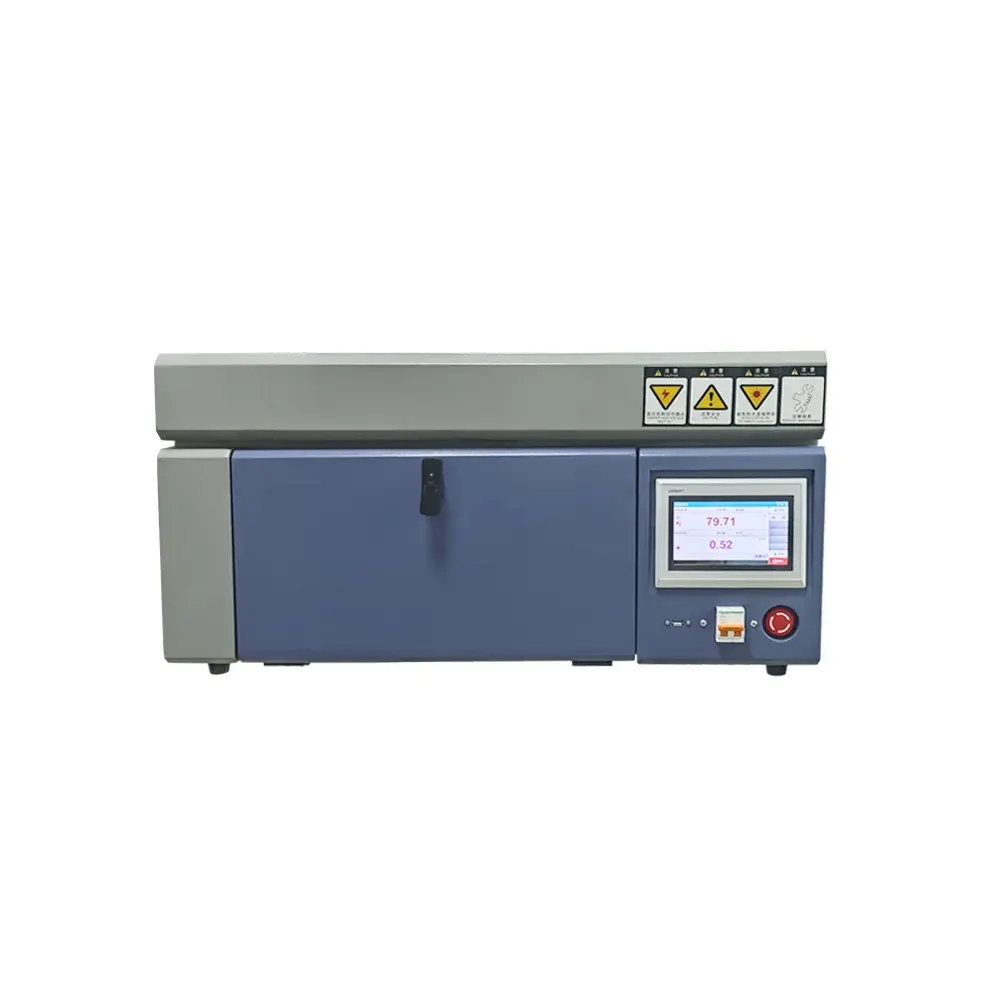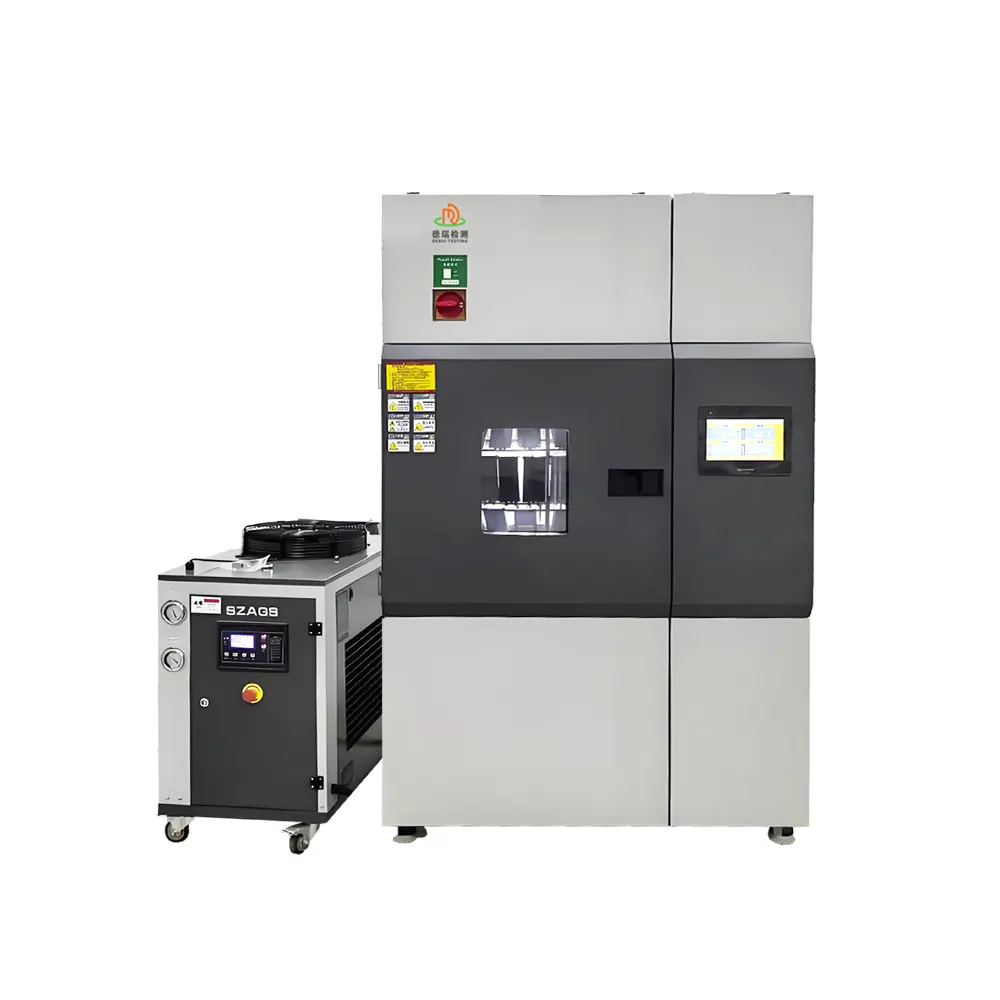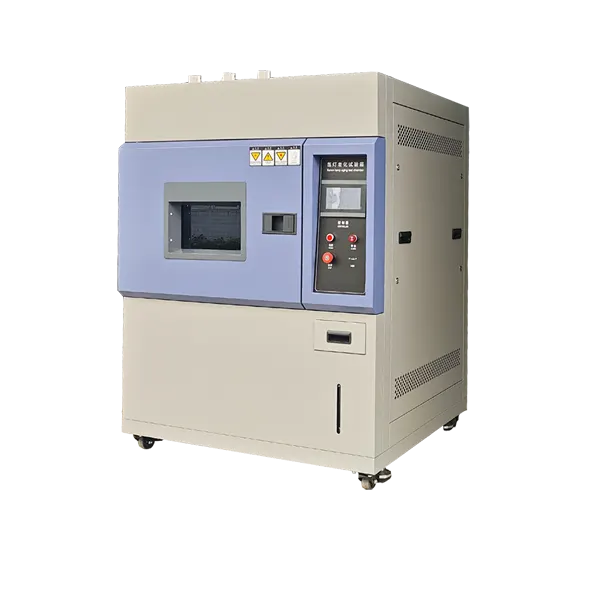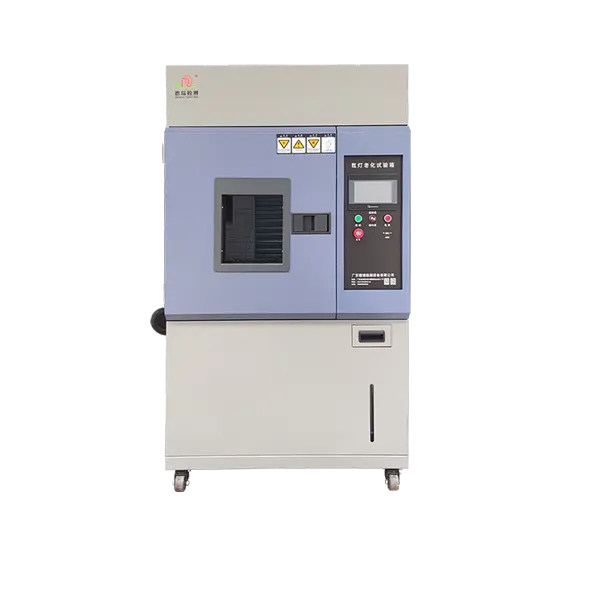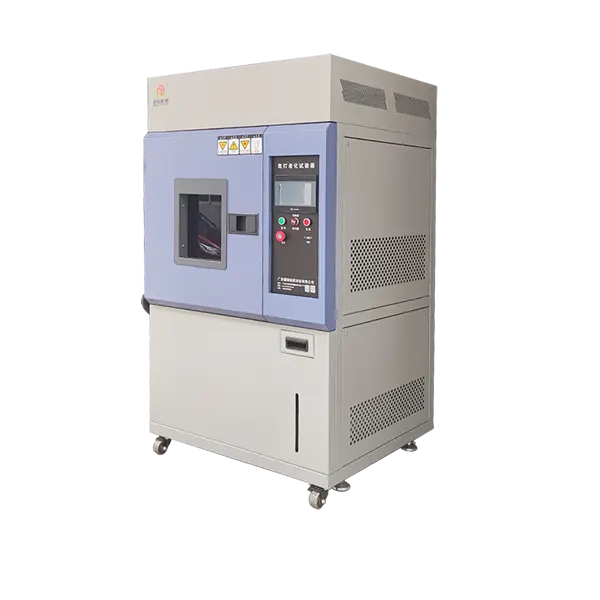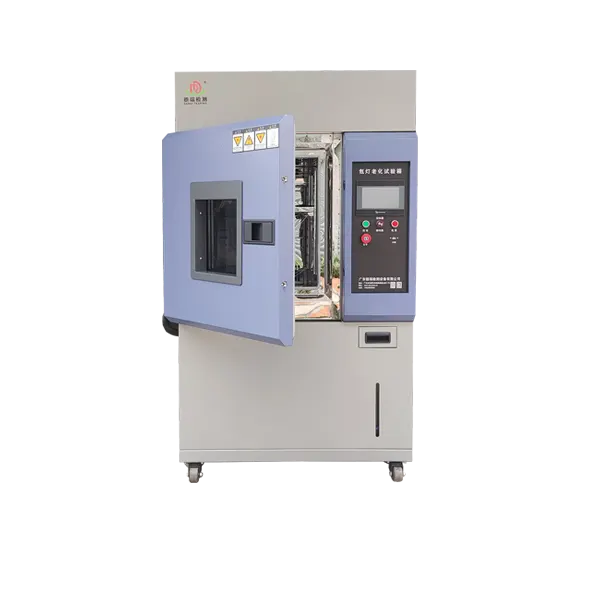








Air-Cooled Xenon Lamp Aging Test Chamber
Build a repeatable weathering program around the exposure your material actually needs. DERUI combines filtered xenon light with separately specified light/dark temperature and humidity conditions, plus programmable water spray, for comparative accelerated-aging evaluations.
What This Xenon Aging System Helps You Evaluate
Expose specimens consistently
Filtered xenon radiation, surface temperature and moisture act together on coatings, polymers and other exposed materials. Use an agreed cycle to compare formulations, suppliers or protective treatments under the same laboratory conditions.
Relevant outcomes include color change, gloss loss, cracking, embrittlement and retention of selected physical properties. The chamber produces the exposure; measurements such as tensile strength and color difference require the corresponding evaluation instruments.
Specify the Light, Dark and Spray Cycle
| Cycle element | What to define | Why it matters |
|---|---|---|
| Light exposure | Filter type, irradiance band/setpoint and exposure duration | A different spectrum or irradiance can change the degradation mechanism. Lux is not a substitute for method-specified irradiance. |
| Light-cycle climate | Chamber-air temperature, BPT or BST, and RH | The illuminated RH range is 20–60%; surface and air temperature are separate channels. |
| Dark-cycle climate | Duration, temperature and RH | Dark RH is specified separately at 30–98%; verify the selected combined operating points. |
| Water spray | Specimen spray timing, water quality, supply pressure and drainage | Wet/dry exposure must match the procedure; a rain interval alone does not define the full cycle. |
| Cycle repetition | Sequence, total exposure, inspection intervals and interruption rules | Consistent conditioning and restart rules improve comparability between runs. |
Published spray examples include 18 minutes spray / 102 minutes no spray and 12 minutes spray / 48 minutes no spray. These are programming examples, not interchangeable prescriptions for every ASTM or ISO method.
Published Configuration and Operating Ranges
Use these published configuration values to shortlist the system. The selected equipment specification should identify the actual lamp rating, exposure area and achievable cycle conditions.
| Parameter | Published specification | Selection guidance |
|---|---|---|
| Chamber-air temperature | Ambient +10°C to 70°C | The lower limit depends on laboratory ambient temperature. This is not a sub-zero chamber range. |
| Black-panel temperature: light cycle | 40–100°C | Surface-temperature channel; not the chamber-air temperature. |
| Black-panel temperature: dark cycle | 25–85°C | Select achievable combinations with the air-temperature and humidity program. |
| Relative humidity: light cycle | 20–60% RH | Not a claim of 98% RH during illuminated exposure. |
| Relative humidity: dark cycle | 30–98% RH | The usable temperature/RH envelope must match the selected cycle. |
| Temperature uniformity | ±3°C | Specify the measuring channel, mapping points, load and operating condition for acceptance. |
| Lamp arrangement | Three air-cooled xenon lamps | Confirm the lamp arrangement in the selected configuration. |
| Published lamp-power options | 1.8 kW or 2.5 kW | Confirm the installed lamp rating. Lamp power is not total machine power. |
| Published irradiation-area options | 2,200–6,400 cm² | Usable specimen area depends on the selected chamber, holders and exposure geometry. |
| Spray duration setting | 0–9,999 minutes | Programmed duration; not a prescribed standard exposure. |
| Spray interval setting | 1–240 minutes | Select timing according to the adopted procedure. |
| Spray-water pressure | 0.12–0.15 MPa | Include water quality, supply and drainage in the installation plan. |
| Interior and specimen holders | SUS304 stainless-steel interior; stainless-steel holders | Confirm holder dimensions and fixture layout for your specimens. |
| Control | Programmable touchscreen; irradiance compensation | Agree the control wavelength, setpoint, calibration and recording requirements. |
Match the Apparatus to Your Test Procedure
| Reference | Primary purpose | Configuration to agree |
|---|---|---|
| ASTM G155 | Operation of xenon-arc light apparatus for exposure of materials | Adopted cycle, optical filters, irradiance control, temperature and moisture sequence. |
| ISO 4892-2 | Xenon-arc exposure methods for plastics | Required method and edition, specimen mounting, exposure conditions and evaluation plan. |
| ISO 16474-2 | Xenon-arc exposure methods for paints and varnishes | Coated-panel preparation, selected exposure method, reference specimens and endpoints. |
A standard name is not proof that every configuration supports every cycle. Include the exact procedure in the technical agreement, particularly the irradiance wavelength, sensor type and illuminated humidity requirement.
Plan Specimen Capacity, Utilities and Acceptance
Specimen layout
Send specimen dimensions, thickness, count and fixture drawings. Preserve the agreed exposure geometry and avoid mutual shading. The published irradiation area is not automatically the usable loaded test area.
Laboratory installation
Published site guidance specifies ambient 5–28°C, a 24-hour average no higher than 28°C, RH no higher than 85%, and approximately 80 cm clearance around the machine. Confirm the final drawing, heat rejection, power, water and drainage before installation.
Acceptance evidence
Agree calibration for irradiance and temperature/RH channels, loaded specimen layout, cycle execution checks, spray verification, alarms and the recording/report format. Define tolerances and sensor locations before acceptance testing.
The published control system includes programmable touchscreen operation and irradiance compensation. Door-open lamp shutoff is listed as a safeguard. Agree the supplied interlocks and alarm checks in the final equipment specification; never bypass UV-exposure protections.
For small flat-specimen workloads, review the desktop xenon chamber. For a different cooling architecture, review the water-cooled xenon weathering chamber. For material evaluation planning, see the paint and plastic xenon testing page. Compare the wider range in the xenon chamber category.
Air-Cooled Xenon Aging Chamber FAQ
What does air-cooled mean?
It describes cooling of the xenon lamp. It does not mean that the entire machine needs no cooling system, water supply or drainage. Humidity control and specimen spray still require the appropriate utilities.
Can the chamber run at 98% RH with the lamps on?
The published light-cycle humidity range is 20–60% RH; the dark-cycle range is 30–98% RH. Do not combine the highest values from separate cycles into one guaranteed operating point.
Are black-panel and chamber-air temperature the same?
No. A black-panel or black-standard sensor represents a surface response to the exposure, while the air-temperature channel measures the chamber environment. BPT and BST are different sensor types; specify the one required by the procedure.
How many hours represent one year outdoors?
There is no universal conversion. Correlation depends on the material, climate, exposure spectrum, moisture cycle and failure endpoint. Use outdoor comparison data or a validated material-specific relationship.
Does a standards reference mean the product is certified?
No. ASTM G155 describes operation of xenon-arc apparatus; ISO 4892-2 addresses plastics exposure and ISO 16474-2 addresses paints and varnishes exposure. Suitability depends on the selected filter, irradiance control, temperature, moisture cycle and adopted edition.
What should be supplied for a quotation?
Provide the test procedure and cycle, specimen dimensions and count, required exposure area, filter and irradiance setting, temperature/RH targets, spray timing, destination utilities and acceptance/reporting requirements.
Request a Cycle-Matched Xenon Chamber Proposal
Send Your Exposure Cycle and Specimen Layout
Get a configuration proposal built around your required light/dark conditions, spray sequence and usable specimen area—not simply the largest published range.
Include: material and end use; standard/procedure; specimen dimensions and count; optical filter and irradiance target; temperature/RH sequence; spray timing; destination power/water; acceptance and reporting requirements.