


Full-Spectrum Xenon Arc Exposure in a Benchtop Format
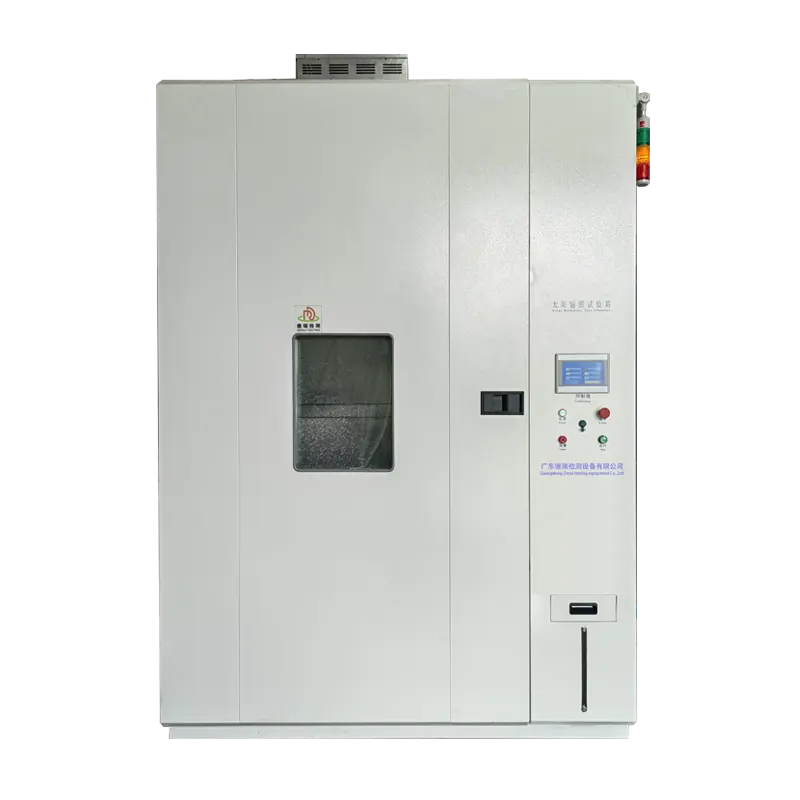
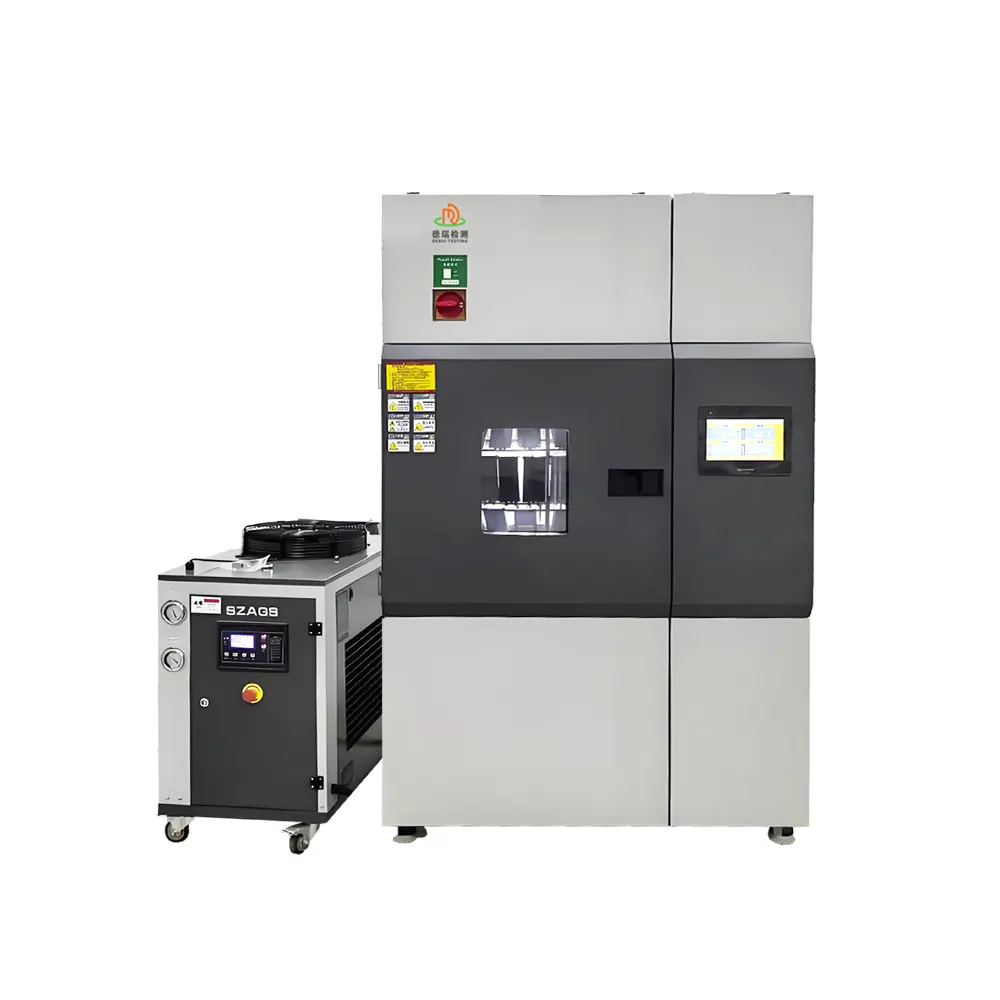
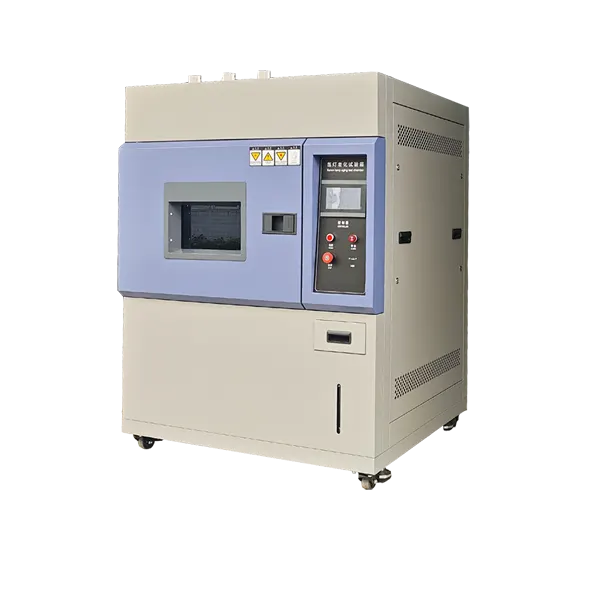
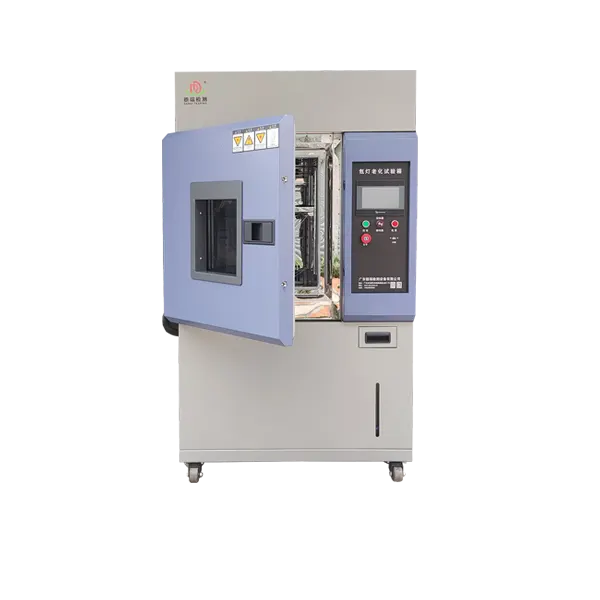
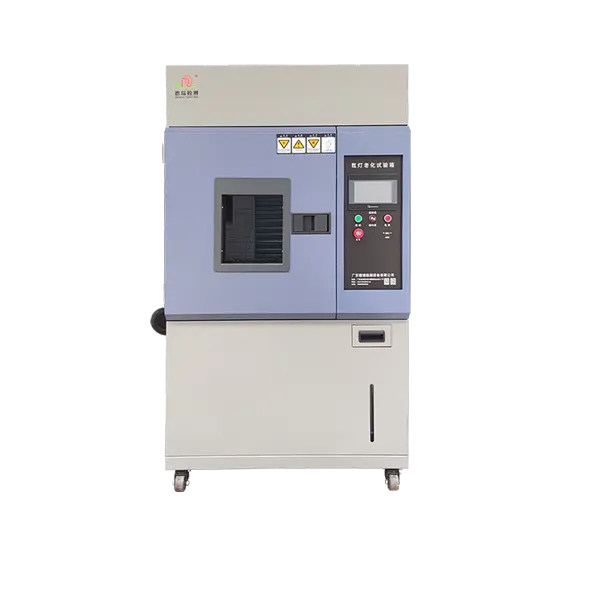
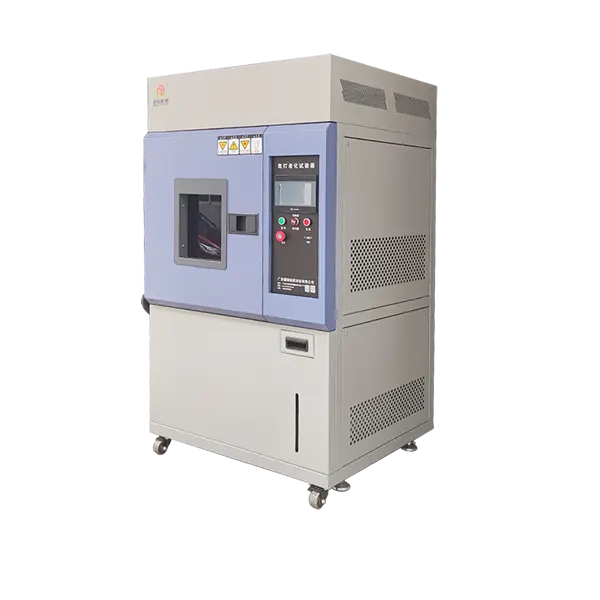
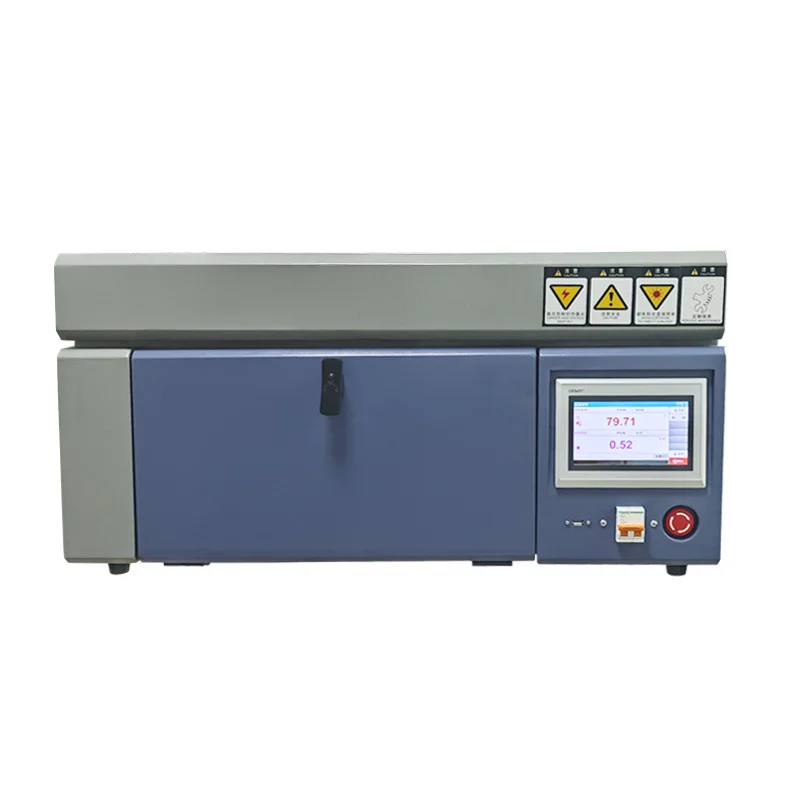
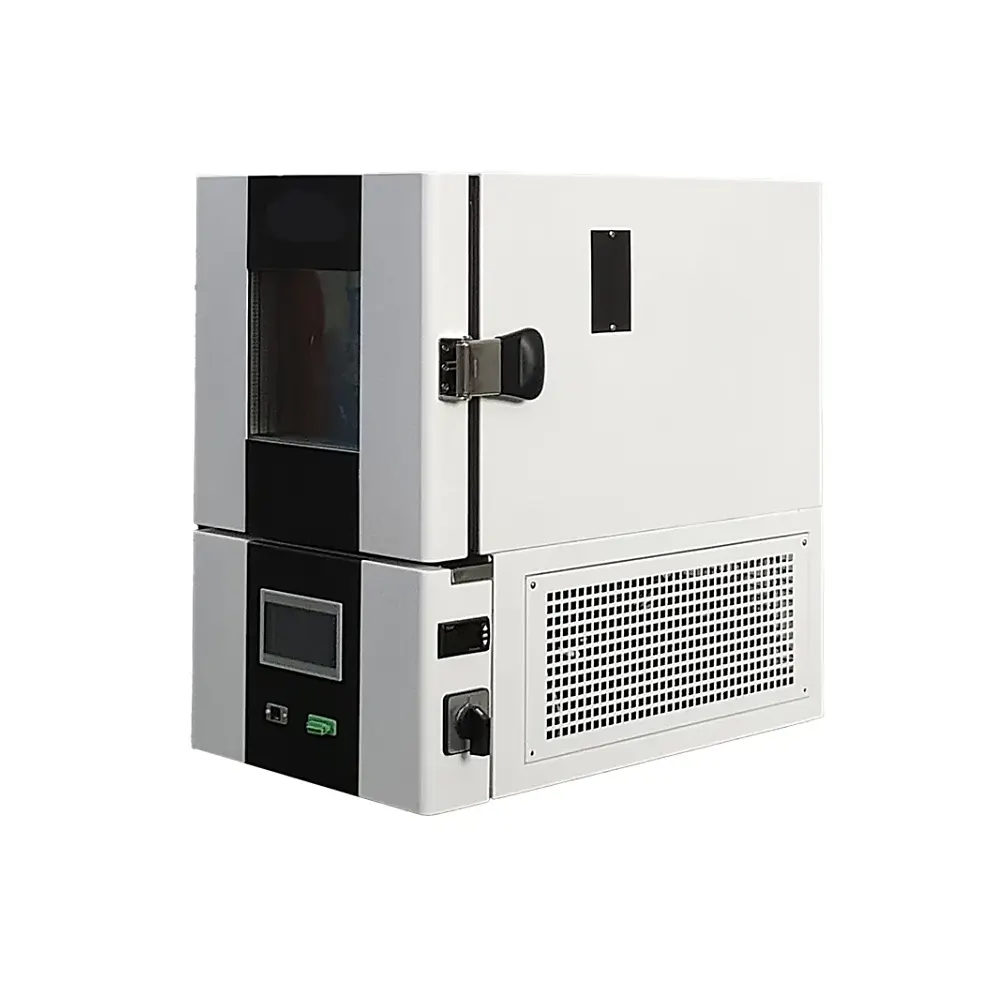
The DERUI DR-H301-MINI desktop xenon lamp aging test chamber brings filtered xenon-arc exposure to small-specimen material development and quality control. Its air-cooled, 1.8 kW lamp system and flat specimen layout are suited to comparative fading, yellowing and surface-durability testing. Match the filter, irradiance setting and black-standard temperature to your required exposure procedure.
When Is a Desktop Xenon Tester the Right Choice?
A compact xenon tester works best when the priority is repeatable comparison of small specimens, easy access and lower facility demand. It is commonly selected for formulation screening, incoming inspection and routine quality checks where a large specimen capacity or complex multi-factor climate cycle is not required.
Material Development
Compare formulations, pigments, stabilizers, coatings and adhesives under the same controlled exposure before committing to long outdoor trials.
Lightfastness and Color Change
Track color difference, fading, yellowing and gloss retention in textiles, plastics, inks, leather and interior materials.
Routine Quality Control
Use a defined exposure and reference material to identify batch-to-batch changes in durability and photostability.
Light, Temperature and Moisture Must Match the End Use
Filtered Xenon Light
A xenon arc lamp produces UV, visible and infrared radiation. Optical filters shape the spectrum for outdoor daylight, sunlight through window glass or another method-defined exposure.
Specimen Temperature
A black-panel or black-standard sensor represents the temperature reached by a dark exposed surface. It is not interchangeable with chamber-air temperature.
Moisture Exposure
Some benchtop systems provide spray, immersion or humidity; others are light-and-temperature-only instruments. Confirm the installed option before selecting a weathering method.
After exposure, evaluate the material property identified by the relevant specification: color difference, gloss, cracking, chalking, adhesion, tensile-strength retention, elongation, hardness or another measurable change.
DR-H301-MINI Configuration and Specimen Capacity
| Model | DR-H301-MINI |
|---|---|
| Inner chamber (W × D × H) | 460 × 250 × 200 mm |
| Outer dimensions (W × D × H) | Approximately 980 × 650 × 480 mm; allow additional installation and service clearance. |
| Specimen layout | Up to 9 flat specimens, nominally 75 × 150 mm each. Capacity depends on holder layout and exposure requirements. |
| Lamp and cooling | One 1.8 kW xenon lamp; air-cooled. Lamp power is not the total machine power. |
| Temperature sensor | Black Standard Thermometer (BST). |
| Black-standard temperature | 40–100°C with the lamp on, at 25°C laboratory ambient. This is not a chamber-air temperature range. |
| Construction | SUS304 stainless-steel interior; painted cold-rolled steel exterior. |
| Timer setting | 1 second to 999 hours 59 minutes 59 seconds. |
| Electrical supply | Published configuration: AC 380 V ±10%, three-phase five-wire, 3 kW total power. Confirm destination frequency, breaker and cable sizing in the electrical drawing. |
Choose the Material Method Before the Chamber Configuration
ASTM G155 provides operating principles for filtered xenon-arc exposure, while ISO 4892-2 covers plastics exposed to xenon-arc light in the presence of controlled temperature and moisture. Paints, automotive materials and textiles use additional material-specific standards. The chamber must reproduce the exact conditions required by the selected procedure.
Methods Commonly Reviewed
- ASTM G151 and ASTM G155
- ISO 4892-2 for plastics
- ISO 11341 for paints and varnishes
- SAE J2412 and SAE J2527 for automotive materials
- ISO 105 xenon-arc methods for textiles
What “Supports a Standard” Means
A standard name in a brochure is not enough. Confirm the specified spectrum, filter category, irradiance setpoint, specimen temperature, chamber-air conditions, moisture cycle, timing and calibration. Only then can the offered configuration be matched to a particular method.
A Repeatable Benchtop Xenon Workflow
Define the Endpoint
Select the property to evaluate and record initial color, gloss, mechanical or electrical measurements.
Mount Consistently
Use representative specimens, consistent orientation and spacing, and appropriate masking. Include control materials where the procedure requires them.
Report the Exposure
Record filter, irradiance, temperatures, moisture cycle, radiant exposure and interruptions—not only total clock hours.
Results from different chambers should not be treated as directly interchangeable until reproducibility has been established for the material and exposure. For larger or different exposure requirements, compare this compact unit with DERUI's high-irradiance xenon arc weathering chamber.
Protect Exposure Consistency
- Follow the specified lamp inspection and replacement interval.
- Clean the chamber and optical components without damaging filters or sensors.
- Calibrate irradiance and temperature sensors at defined intervals.
- Inspect specimen holders for corrosion, contamination and incorrect alignment.
- If moisture is fitted, maintain nozzles, water quality, tanks and drains.
- Document maintenance and any exposure interruption in the test record.
Do Not Promise an Outdoor-Time Conversion
There is no universal statement such as “500 chamber hours equals one outdoor year.” Acceleration depends on material, climate, spectrum, irradiance, temperature, wetness and the property being measured. Establish correlation with outdoor exposure or a validated internal method.
Specify What a Successful Exposure Must Demonstrate
Optical setup
Agree the installed filter, irradiance wavelength, unit, calibration evidence and usable specimen plane. Request an exposure-area check for the intended holder arrangement.
Temperature and cycle
Define BST setpoint and tolerance, laboratory ambient, exposure timing and any wet/dry sequence. Keep chamber-air and black-standard readings separate.
Records and evaluation
Agree the required test log, recording/export format and interruption handling. Measure the specified endpoint with suitable external instruments; the exposure chamber does not itself measure color difference or gloss.
Benchtop Xenon Arc Weathering Tester FAQs
What is a benchtop xenon arc weathering tester used for?
It exposes small material specimens to filtered xenon light and controlled temperature, with optional moisture functions, to compare fading, yellowing, cracking, gloss loss and other durability changes.
Is “desktop xenon lamp aging chamber” the same product?
This page describes the compact DR-H301-MINI. Desktop xenon lamp aging chamber and benchtop xenon arc weathering tester are two names used for this type of instrument.
Can this tester run ASTM G155 or ISO 4892-2?
Only if the offered configuration can reproduce every required condition of the selected procedure, including filter spectrum, irradiance, temperature and moisture. Send DERUI the exact method and edition for confirmation.
What is the difference between 340 nm and 420 nm irradiance control?
These are different irradiance monitoring wavelengths, not interchangeable settings. Select the wavelength, setpoint and filter required by your test method, and check the sensor bandwidth and unit in the technical specification.
Can it test three-dimensional products?
That depends on tray dimensions, lamp-to-specimen geometry and maximum specimen height. Provide the part drawing and exposed surface so DERUI can verify fit and irradiance uniformity.
Does the desktop chamber include water spray and humidity?
Do not assume water spray or humidity control from the xenon lamp alone. Send the wet/dry sequence and humidity requirement so the offered configuration can be checked against the complete cycle.
How many specimens can be tested at one time?
The stated layout accommodates up to nine flat specimens measuring 75 × 150 mm. Other specimen sizes, thicknesses or three-dimensional shapes require a holder and exposure-area review.
What information should I send for selection?
Provide the standard and edition, material, specimen size and quantity, filter, irradiance band, temperatures, moisture cycle, exposure duration, required evaluation and available utilities.
Confirm the Compact Xenon Configuration Before Ordering
Send your test procedure and specimen layout to DERUI. Request a DR-H301-MINI proposal covering the filter, irradiance sensor, BST settings, holder capacity, moisture requirements, destination power supply and agreed acceptance checks.