




Tầng 1, số 3, đại lộ Shugang, thị trấn Hongmei, thành phố Đông Quan, tỉnh Quảng Đông, Trung Quốc

Nhà sản xuất buồng kiểm tra môi trường 20 nămHơn 3000 khách hàng trên toàn thế giới giao hàng           Email: shirley@deruitest.com
WhatsApp Consultation:+86 135 2795 8363

Hệ Thống Kiểm Tra Pin Năng Lượng

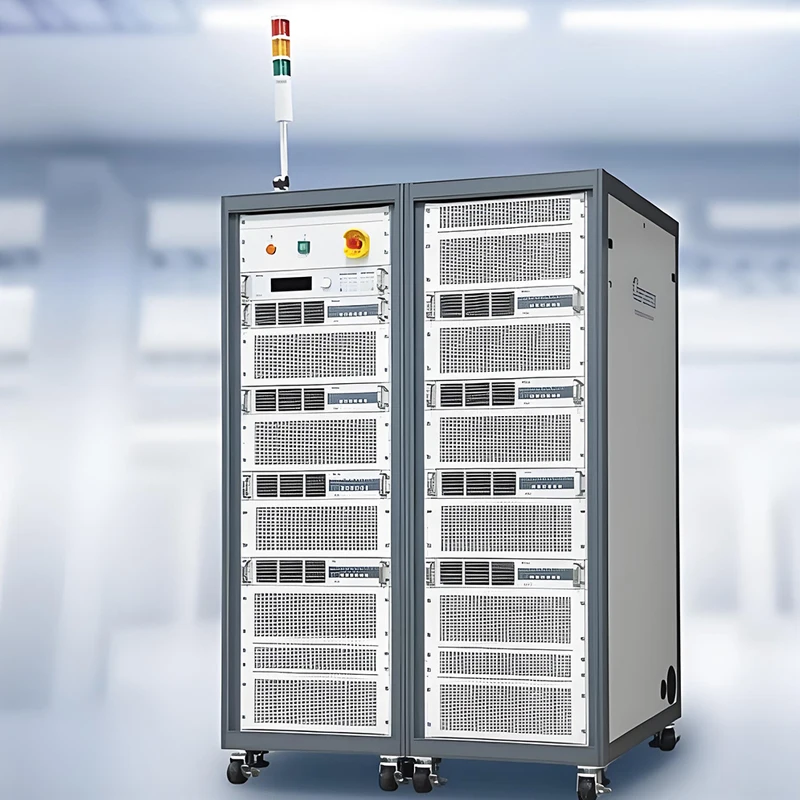
The DERUI DR-D213 power battery cell testing system supports programmable cell charge–discharge, pulse and DCIR workflows. Select the current variant, channels, fixtures and data interfaces around your cell and approved test recipe.

Mẫu DR-D213
Cell Voltage Published 0.8–5 V per channel
Current Variants 30 / 60 / 100 / 150 / 300 A; confirm ordered variant
Độ chính xác Published voltage/current ±0.02% F.S.; verify conditions
Recording Published 10 ms interval; Excel / TXT export
Before Quotation Confirm channel count, fixtures, recipe, software, site power and FAT
An toàn và đáng tin cậy
Chế tạo tốt
Đảm bảo chất lượng
Tùy chỉnh
Tin nhắnWhatsApp
Số điện thoại đường dây nóng 15580327593
  • Chi tiết sản phẩm
  • Thông số kỹ thuật
  • Câu hỏi thường gặp
  • Liên hệ với chúng tôi
CELL CHARGE–DISCHARGE & PERFORMANCE TESTING

DR-D213 Power Battery Cell Testing System

Run programmable charge–discharge, pulse and DCIR workflows on battery cells with a configuration selected for the cell, current, channel count and facility. Use the published DR-D213 electrical specification as the starting point, then verify the ordered cabinet, fixtures and software in the technical agreement.

Important distinction: this is an electrical cell-test system. It does not by itself provide a temperature chamber, mechanical abuse rig or certification of a finished battery.
Single-channel voltage0.8–5 V published
Current variants30 / 60 / 100 / 150 / 300 A published
Voltage / current accuracy±0.02% F.S. published
Data interval10 ms published

Start with the Cell and the Test Profile

A useful proposal begins with the cell's voltage window, maximum charge and discharge current, connector design, heat output and required test sequence. Those inputs determine the channel rating, fixture, cabinet quantity and how results will be recorded. DR-D213 is relevant to R&D, cell screening and cycle-performance workflows when the selected configuration matches those inputs.

Performance cycling

Define CC, CV, CCCV, CP or CR steps, end conditions, rest periods and repeat count.

Pulse and DCIR

Provide pulse width, current, SOC points, rest time and the DCIR calculation method.

Production data

Specify channels, traceability fields, export format, uptime and MES requirements before quoting.

Published DR-D213 Electrical Baseline

Thông số Published DR-D213 value Confirm in purchase specification
AC supply 380 ±10% VAC, 50 ±5% Hz; three-phase five-wire Site supply, breaker, earthing and total cabinet input
DC voltage and current 0.8–5 V per channel; 30 / 60 / 100 / 150 / 300 A variants Selected current rating, channel count and parallel operation
Measurement Voltage and current accuracy ±0.02% F.S.; voltage resolution 0.1 mV; current resolution 0.1 mA Range, calibration method, temperature and measurement points
Dynamic response Current response 5 ms (10–90% F.S.); switching 10 ms (−90 to 90% F.S.) Applicable load, method and waveform record
Logging 10 ms recording interval; Excel / TXT export Actual fields, timestamps, retention and export sample
Power feedback Published maximum feedback efficiency ≥75%; power factor >0.99; THD <5% Operating point, grid conditions and witnessed measurement
Environment IP20; 0–40°C working temperature; forced-fan cooling; noise <75 dB Room ventilation, clearances and measurement conditions
Do not carry over the old promotional table: its 0–10 V, 1000 A+, 96–512+ channels and “80%+ energy savings” are not substantiated by the DR-D213 technical parameter tab. Quoted systems may vary; request a model-specific drawing and signed specification.

Workflow and Data: What Is Published, What Needs a Demo

Program the recipe

Published charge modes include CC, CV, CCCV and CP; discharge modes include CC, CV, CP and CR. The page also lists pulse and DCIR workflows.

Protect the test

Published software protections cover over-current, over-voltage, under-voltage, reverse/wrong connection and abnormal communication. Request a fault-response demonstration.

Review the record

Check actual 10 ms data files, timestamps, channel ID, alarms, power interruption behavior and export into your analysis process.

The published software specification lists up to 10,000 editable/program steps and 10 nested-loop layers. These are configuration limits to verify in a live software demonstration, not a promise that every requested test sequence is supported without review.

Select the System Without Mixing It with Other Battery Equipment

Yêu cầu DR-D213 role Separate or project-specific scope
Cell cycling, capacity, pulse, DCIR Electrical source/sink and measurement channels Cell fixture, channel rating, method and software configuration
Temperature-conditioned cycling Published support for linkage with a temperature chamber External chamber, communication protocol, interlocks and profile validation
Mechanical, flame or thermal-abuse tests Not provided by the electrical cycler itself Dedicated abuse equipment and site risk controls
UN 38.3 or product certification May supply electrical data for an applicable program Exact test methods, approved laboratory and complete evidence package

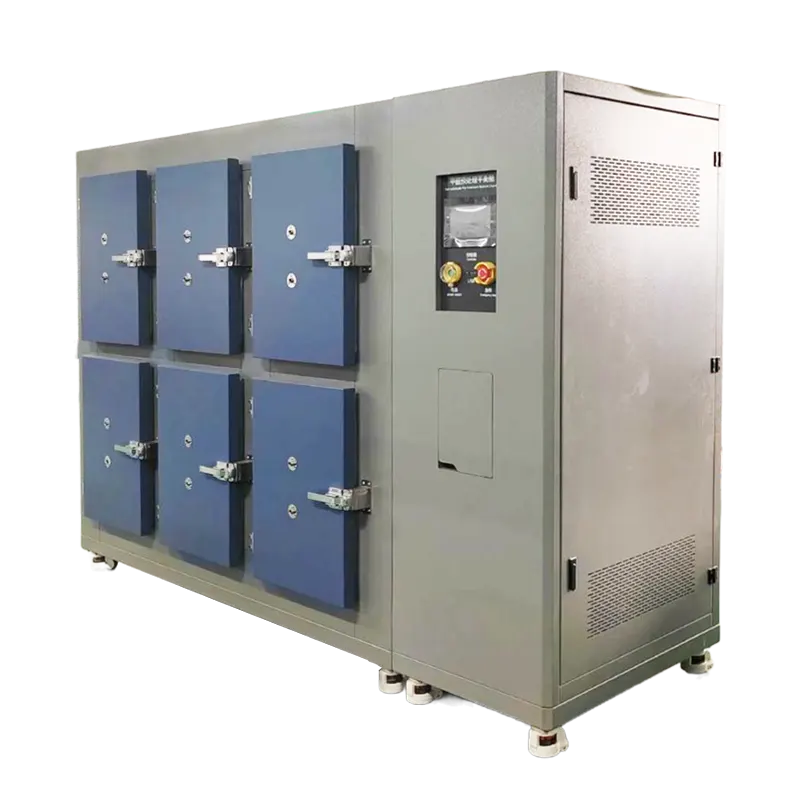
For climatic exposure, review the cURL Too many subrequests by single Worker invocation. To configure this limit, refer to https://developers.cloudflare.com/workers/wrangler/configuration/#limits as a separate equipment decision.

Acceptance Evidence for Engineering and Procurement

Channel proof

Verify the ordered channel count and current/voltage variant on cabinet labels and wiring diagrams.

Accuracy proof

Agree calibrated instrument, operating points, load and acceptance limits for voltage/current checks.

Workflow proof

Witness charge, discharge, pulse, DCIR, safety trip, interruption recovery and file export.

Ask for real evidence: proposed cabinet photos, fixture drawings, a representative data export, calibration material and a signed FAT checklist. Do not use unapproved customer logos or case-study percentages.

Câu hỏi thường gặp

What current range does DR-D213 offer?

The published technical table lists 30, 60, 100, 150 and 300 A variants. Confirm the selected variant and its channel count in the quotation.

Is 1000 A standard?

The current DR-D213 technical table does not substantiate a 1000 A variant. Ask DERUI for a separate documented design if that current is required.

Does it include a climatic chamber?

No chamber is established as part of the base electrical system. The published specification mentions linkage with external temperature equipment; confirm hardware and protocol for the project.

Is EIS included?

The legacy marketing copy calls it optional, while the DR-D213 technical parameter table does not specify an EIS module. Treat it as unconfirmed until documented.

Does the equipment itself have UL or UN 38.3 certification?

The present product record does not provide model-specific certificates supporting those claims. Request relevant documents; specimen compliance requires the complete applicable test program.

Request a Cell-Matched DR-D213 Configuration

Send the electrical limits and one representative test recipe. Ask for a channel/cabinet layout, fixture drawing, software demo and measurable FAT plan before approving the proposal.

Request a DR-D213 review

Include with your inquiry

  • Cell format and voltage window
  • Charge/discharge current and channels
  • Pulse/DCIR or cycling recipe
  • Site power, cooling and data interfaces
FacebookLinkedInXRedditWhatsApp

Published DR-D213 baseline. The ordered current variant, channel quantity, accuracy conditions, fixtures and software interfaces require a signed technical agreement.

Mục Published specification / confirmation
Mẫu DR-D213
AC wiring / supply Three-phase five-wire; 380 ±10% VAC; 50 ±5% Hz
Power factor / THD >0.99 / <5% (published; test conditions to confirm)
Maximum feedback efficiency ≥75% (published; operating point to confirm)
Single-channel voltage 0.8–5 V
Output-current variants 30 / 60 / 100 / 150 / 300 A; ordered variant and channel count to confirm
Voltage accuracy / resolution ±0.02% F.S. / 0.1 mV
Current accuracy / resolution ±0.02% F.S. / 0.1 mA
Current response / switching 5 ms (10–90% F.S.) / 10 ms (−90 to 90% F.S.)
Khoảng cách ghi dữ liệu 10 ms; Excel / TXT export
Charge / discharge modes CC, CV, CCCV, CP / CC, CV, CP, CR
Other modes Rest, pause, condition simulation, pulse, DCIR
Program capacity Up to 10,000 steps and 10 nested-loop layers, as published
Bảo vệ phần mềm OCP, OVP, UVP, reverse/wrong connection and abnormal-communication protection
External linkage Temperature chamber, MTV/MTS and pressure sensor listed; interface details to confirm
Environment / cooling IP20, 0–40°C, forced-fan cooling
Noise / cabinet dimensions <75 dB; 600 × 850 × 1030 or 600 × 800 × 1980 mm (W × D × H), by configuration

1. Hệ thống kiểm tra pin năng lượng là gì?
Hệ thống kiểm tra pin năng lượng là một thiết bị chuyên dụng dùng để đánh giá hiệu suất, tuổi thọ và an toàn của từng tế bào pin. Nó thực hiện các kiểm tra quan trọng như vòng đời chu kỳ, dung lượng, hiệu quả và điện trở nội bộ, cung cấp dữ liệu thiết yếu cho Nghiên cứu và Phát triển cũng như kiểm soát chất lượng trong các ngành công nghiệp như xe điện và lưu trữ năng lượng.

2. Chi phí của một hệ thống kiểm tra pin năng lượng là bao nhiêu?
Chi phí thay đổi đáng kể dựa trên số kênh, phạm vi dòng/áp, và các tính năng như phản hồi năng lượng. Các hệ thống cấp nhập cảnh có thể bắt đầu từ vài chục nghìn đô la, trong khi các hệ thống nhiều kênh, công suất cao với tự động hóa đầy đủ có thể lên đến hàng trăm nghìn đô la. Tốt nhất là yêu cầu báo giá tùy chỉnh dựa trên yêu cầu kiểm tra cụ thể của bạn.

3. Lợi ích của hệ thống phản hồi năng lượng (hồi phục) là gì?
Hệ thống phản hồi năng lượng thu hồi và tái sử dụng hơn 80% năng lượng tiêu hao trong quá trình kiểm tra sạc xả trở lại lưới điện. Điều này giảm đáng kể chi phí điện và sinh nhiệt, dẫn đến thời gian hoàn vốn nhanh hơn và chi phí vận hành thấp hơn, đặc biệt cho các phòng thí nghiệm kiểm tra quy mô lớn.

4. Hệ thống kiểm tra có thể xử lý các loại tế bào pin khác nhau như hình hộp, hình trụ và túi không?
Có, một hệ thống kiểm tra pin năng lượng chất lượng cao được thiết kế để không phân biệt dạng hình của tế bào. Với các phụ kiện và cấu hình kênh phù hợp, nó có thể kiểm tra tất cả các loại tế bào phổ biến, bao gồm 18650, 21700, 4680 dạng trụ, cũng như các tế bào hình hộp và túi lớn.

5. Phần mềm đi kèm hệ thống kiểm tra là gì và khả năng của nó như thế nào?
Các hệ thống này thường đi kèm phần mềm độc quyền (ví dụ, BATTEST® của Derui). Các khả năng chính bao gồm chỉnh sửa không giới hạn các bước kiểm tra, đồ thị và ghi dữ liệu theo thời gian thực, kiểm soát nhiều kênh song song, và các tùy chọn xuất dữ liệu nâng cao (đến Excel, SQL, v.v.) để phân tích và báo cáo chi tiết.

6. Tất cả các kênh có hoạt động độc lập không?
Có, trong một hệ thống kiểm tra hiện đại, mỗi kênh hoạt động độc lập. Điều này cho phép bạn chạy các hồ sơ kiểm tra khác nhau trên các kênh khác nhau cùng lúc, tạm dừng từng kênh riêng lẻ, và xử lý các loại tế bào hoặc mức SoC (Tình trạng sạc) khác nhau mà không làm gián đoạn các kiểm tra khác, tối đa hóa hiệu quả phòng thí nghiệm.

7. Các chứng nhận nào một hệ thống kiểm tra tế bào pin đáng tin cậy cần có?
Tìm kiếm các hệ thống tuân thủ các tiêu chuẩn an toàn và chất lượng quốc tế. Các chứng nhận chính bao gồm UL và CE đối với an toàn điện, ISO 9001 đối với quản lý chất lượng, và các tiêu chuẩn cụ thể như UN38.3 đối với tuân thủ kiểm tra pin lithium-ion.

8. Độ chính xác và ổn định của kiểm soát điện áp và dòng điện như thế nào?
Đối với kiểm tra pin năng lượng, độ chính xác cao là rất quan trọng. Các hệ thống hàng đầu cung cấp độ chính xác tốt hơn ±0.05% của toàn bộ phạm vi (FS) và dòng rò nhỏ hơn 0.05% FS. Điều này đảm bảo kết quả kiểm tra của bạn đáng tin cậy, lặp lại và có thể phát hiện những khác biệt nhỏ về hiệu suất giữa các tế bào pin.

9. Hệ thống có thể tích hợp với buồng môi trường không?
Chắc chắn rồi. Hầu hết các hệ thống cung cấp tùy chọn giao diện (thường qua CAN hoặc Ethernet) để đồng bộ với các buồng môi trường bên ngoài. Điều này cho phép bạn thực hiện các thử nghiệm chu kỳ nhiệt độ, mô phỏng điều kiện thực tế từ cực kỳ thấp đến nhiệt độ cao để xác nhận hiệu suất pin dưới áp lực.

10. Các tính năng an toàn nào được tích hợp trong hệ thống?
Ngoài các bảo vệ điện tiêu chuẩn (quá áp, quá dòng, chạm chập), các hệ thống nâng cao bao gồm cảnh báo dựa trên phần mềm, cảnh báo sớm quá nhiệt bằng phân tích dV/dt và dT/dt, và tích hợp liền mạch với hệ thống an toàn của cơ sở để bảo vệ thiết bị và người vận hành.

11. Thời gian giao hàng và lắp đặt điển hình là bao lâu?
Thời gian có thể từ 8 đến 16 tuần sau khi xác nhận đơn hàng, tùy thuộc vào độ phức tạp và tùy chỉnh của hệ thống. Điều này bao gồm sản xuất, kiểm tra chấp nhận tại nhà máy và phối hợp lắp đặt tại chỗ cùng đào tạo bởi các kỹ sư chuyên nghiệp.

12. Các hỗ trợ và bảo hành nào được cung cấp?
Các nhà sản xuất uy tín cung cấp bảo hành toàn diện (ví dụ, 24 tháng) và hỗ trợ liên tục. Điều này thường bao gồm chẩn đoán từ xa, cập nhật phần mềm qua không gian mạng (OTA), mạng lưới linh kiện thay thế toàn cầu và dịch vụ lắp đặt, đào tạo tại chỗ tùy chọn để đảm bảo hệ thống của bạn hoạt động trơn tru.


WhatsAppWhatsApp
WhatsAppWhatsApp
WhatsApp
Tin nhắnTin nhắn

Yêu cầu báo giá