




Piso 1, No. 3, Avenida Shugang, Vila Hongmei, Cidade de Dongguan, Província de Guangdong, China

Fabricante de câmaras de teste ambiental há 20 anosMais de 3000 entregas a clientes em todo o mundo           Email: shirley@deruitest.com
WhatsApp Consultation:+86 135 2795 8363

Sistema de Teste de Células de Bateria de Energia

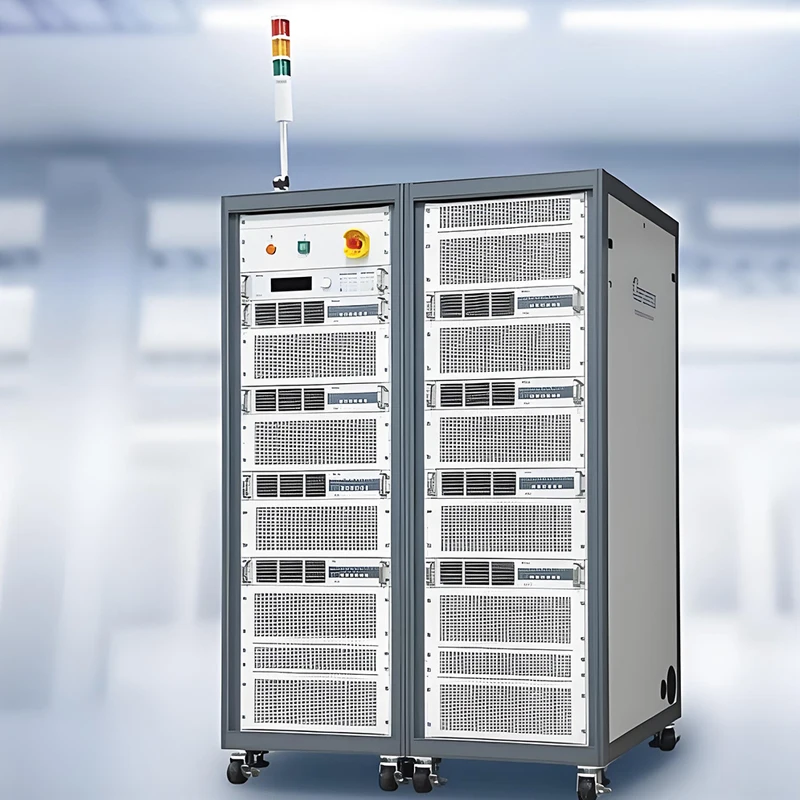
A DERUI DR-D213 power battery cell testing system supports programmable cell charge–discharge, pulse and DCIR workflows. Select the current variant, channels, fixtures and data interfaces around your cell and approved test recipe.

Modelo DR-D213
Cell Voltage Published 0.8–5 V per channel
Current Variants 30 / 60 / 100 / 150 / 300 A; confirm ordered variant
Precisão Published voltage/current ±0.02% F.S.; verify conditions
Recording Published 10 ms interval; Excel / TXT export
Before Quotation Confirm channel count, fixtures, recipe, software, site power and FAT
Seguro e fiável
bem construído
Garantia de qualidade
personalização
MensagemWhatsApp
Número de Linha Direta 15580327593
  • Detalhes do Produto
  • Parâmetros técnicos
  • Perguntas Frequentes
  • Contacte-nos
CELL CHARGE–DISCHARGE & PERFORMANCE TESTING

DR-D213 Power Battery Cell Testing System

Run programmable charge–discharge, pulse and DCIR workflows on battery cells with a configuration selected for the cell, current, channel count and facility. Use the published DR-D213 electrical specification as the starting point, then verify the ordered cabinet, fixtures and software in the technical agreement.

Important distinction: this is an electrical cell-test system. It does not by itself provide a temperature chamber, mechanical abuse rig or certification of a finished battery.
Single-channel voltage0.8–5 V published
Current variants30 / 60 / 100 / 150 / 300 A published
Voltage / current accuracy±0.02% F.S. published
Data interval10 ms published

Start with the Cell and the Test Profile

A useful proposal begins with the cell's voltage window, maximum charge and discharge current, connector design, heat output and required test sequence. Those inputs determine the channel rating, fixture, cabinet quantity and how results will be recorded. DR-D213 is relevant to R&D, cell screening and cycle-performance workflows when the selected configuration matches those inputs.

Performance cycling

Define CC, CV, CCCV, CP or CR steps, end conditions, rest periods and repeat count.

Pulse and DCIR

Provide pulse width, current, SOC points, rest time and the DCIR calculation method.

Production data

Specify channels, traceability fields, export format, uptime and MES requirements before quoting.

Published DR-D213 Electrical Baseline

Parâmetro Published DR-D213 value Confirm in purchase specification
AC supply 380 ±10% VAC, 50 ±5% Hz; three-phase five-wire Site supply, breaker, earthing and total cabinet input
DC voltage and current 0.8–5 V per channel; 30 / 60 / 100 / 150 / 300 A variants Selected current rating, channel count and parallel operation
Measurement Voltage and current accuracy ±0.02% F.S.; voltage resolution 0.1 mV; current resolution 0.1 mA Range, calibration method, temperature and measurement points
Dynamic response Current response 5 ms (10–90% F.S.); switching 10 ms (−90 to 90% F.S.) Applicable load, method and waveform record
Logging 10 ms recording interval; Excel / TXT export Actual fields, timestamps, retention and export sample
Power feedback Published maximum feedback efficiency ≥75%; power factor >0.99; THD <5% Operating point, grid conditions and witnessed measurement
Environment IP20; 0–40°C working temperature; forced-fan cooling; noise <75 dB Room ventilation, clearances and measurement conditions
Do not carry over the old promotional table: its 0–10 V, 1000 A+, 96–512+ channels and “80%+ energy savings” are not substantiated by the DR-D213 technical parameter tab. Quoted systems may vary; request a model-specific drawing and signed specification.

Workflow and Data: What Is Published, What Needs a Demo

Program the recipe

Published charge modes include CC, CV, CCCV and CP; discharge modes include CC, CV, CP and CR. The page also lists pulse and DCIR workflows.

Protect the test

Published software protections cover over-current, over-voltage, under-voltage, reverse/wrong connection and abnormal communication. Request a fault-response demonstration.

Review the record

Check actual 10 ms data files, timestamps, channel ID, alarms, power interruption behavior and export into your analysis process.

The published software specification lists up to 10,000 editable/program steps and 10 nested-loop layers. These are configuration limits to verify in a live software demonstration, not a promise that every requested test sequence is supported without review.

Select the System Without Mixing It with Other Battery Equipment

Requisito DR-D213 role Separate or project-specific scope
Cell cycling, capacity, pulse, DCIR Electrical source/sink and measurement channels Cell fixture, channel rating, method and software configuration
Temperature-conditioned cycling Published support for linkage with a temperature chamber External chamber, communication protocol, interlocks and profile validation
Mechanical, flame or thermal-abuse tests Not provided by the electrical cycler itself Dedicated abuse equipment and site risk controls
UN 38.3 or product certification May supply electrical data for an applicable program Exact test methods, approved laboratory and complete evidence package

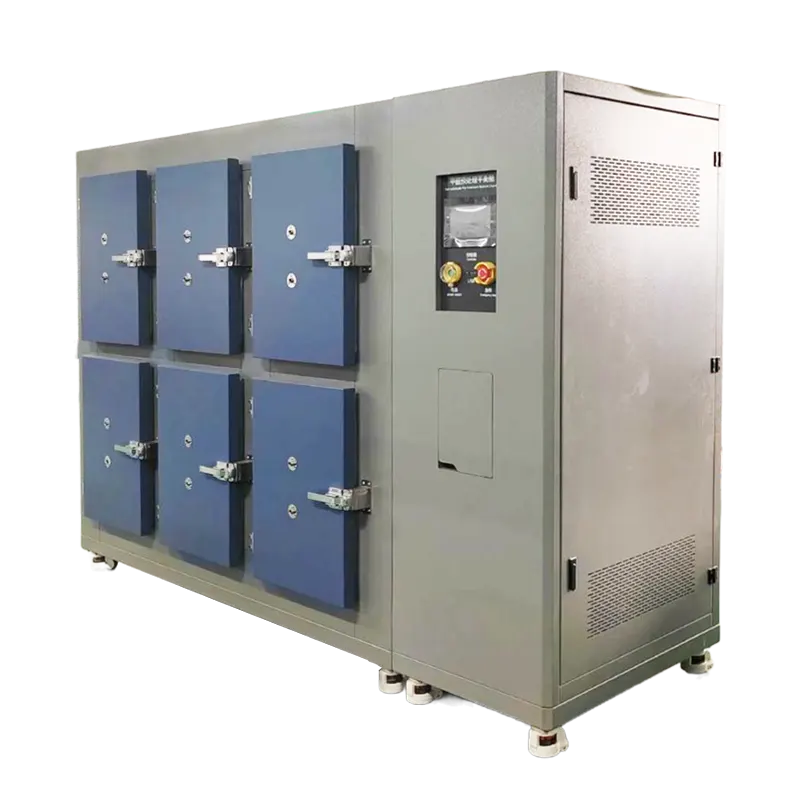
For climatic exposure, review the cURL Too many subrequests by single Worker invocation. To configure this limit, refer to https://developers.cloudflare.com/workers/wrangler/configuration/#limits as a separate equipment decision.

Acceptance Evidence for Engineering and Procurement

Channel proof

Verify the ordered channel count and current/voltage variant on cabinet labels and wiring diagrams.

Accuracy proof

Agree calibrated instrument, operating points, load and acceptance limits for voltage/current checks.

Workflow proof

Witness charge, discharge, pulse, DCIR, safety trip, interruption recovery and file export.

Ask for real evidence: proposed cabinet photos, fixture drawings, a representative data export, calibration material and a signed FAT checklist. Do not use unapproved customer logos or case-study percentages.

Perguntas Frequentes

What current range does DR-D213 offer?

The published technical table lists 30, 60, 100, 150 and 300 A variants. Confirm the selected variant and its channel count in the quotation.

Is 1000 A standard?

The current DR-D213 technical table does not substantiate a 1000 A variant. Ask DERUI for a separate documented design if that current is required.

Does it include a climatic chamber?

No chamber is established as part of the base electrical system. The published specification mentions linkage with external temperature equipment; confirm hardware and protocol for the project.

Is EIS included?

The legacy marketing copy calls it optional, while the DR-D213 technical parameter table does not specify an EIS module. Treat it as unconfirmed until documented.

Does the equipment itself have UL or UN 38.3 certification?

The present product record does not provide model-specific certificates supporting those claims. Request relevant documents; specimen compliance requires the complete applicable test program.

Request a Cell-Matched DR-D213 Configuration

Send the electrical limits and one representative test recipe. Ask for a channel/cabinet layout, fixture drawing, software demo and measurable FAT plan before approving the proposal.

Request a DR-D213 review

Include with your inquiry

  • Cell format and voltage window
  • Charge/discharge current and channels
  • Pulse/DCIR or cycling recipe
  • Site power, cooling and data interfaces
FacebookLinkedInXRedditWhatsApp

Published DR-D213 baseline. The ordered current variant, channel quantity, accuracy conditions, fixtures and software interfaces require a signed technical agreement.

Item Published specification / confirmation
Modelo DR-D213
AC wiring / supply Three-phase five-wire; 380 ±10% VAC; 50 ±5% Hz
Power factor / THD >0.99 / <5% (published; test conditions to confirm)
Maximum feedback efficiency ≥75% (published; operating point to confirm)
Single-channel voltage 0.8–5 V
Output-current variants 30 / 60 / 100 / 150 / 300 A; ordered variant and channel count to confirm
Voltage accuracy / resolution ±0.02% F.S. / 0.1 mV
Current accuracy / resolution ±0.02% F.S. / 0.1 mA
Current response / switching 5 ms (10–90% F.S.) / 10 ms (−90 to 90% F.S.)
Intervalo de gravação de dados 10 ms; Excel / TXT export
Charge / discharge modes CC, CV, CCCV, CP / CC, CV, CP, CR
Other modes Rest, pause, condition simulation, pulse, DCIR
Program capacity Up to 10,000 steps and 10 nested-loop layers, as published
Proteção de software OCP, OVP, UVP, reverse/wrong connection and abnormal-communication protection
External linkage Temperature chamber, MTV/MTS and pressure sensor listed; interface details to confirm
Environment / cooling IP20, 0–40°C, forced-fan cooling
Noise / cabinet dimensions <75 dB; 600 × 850 × 1030 or 600 × 800 × 1980 mm (W × D × H), by configuration

1. O que é um Sistema de Teste de Células de Bateria de Potência?
Um Sistema de Teste de Células de Bateria de Potência é um equipamento especializado usado para avaliar o desempenho, longevidade e segurança de células de bateria individuais. Realiza testes críticos como ciclo de vida, capacidade, eficiência e resistência interna, fornecendo dados essenciais para P&D e controlo de qualidade em indústrias como veículos elétricos e armazenamento de energia.

2. Quanto custa um Sistema de Teste de Células de Bateria de Potência?
O custo varia significativamente com base no número de canais, faixas de corrente/tensão e recursos como feedback de energia. Sistemas de nível básico podem começar na casa das dezenas de milhares de euros, enquanto sistemas de múltiplos canais e alta potência com automação completa podem atingir várias centenas de milhares. É melhor solicitar uma cotação personalizada com base nos seus requisitos específicos de teste.

3. Qual é o benefício de um sistema de feedback de energia (regenerativo)?
Um sistema de feedback de energia recupera e reutiliza mais de 80% da energia dissipada durante os testes de ciclo de carga-descarga de volta à rede. Isso reduz drasticamente os custos de eletricidade e a geração de calor, levando a um retorno mais rápido do investimento e a menores despesas operacionais, especialmente para laboratórios de testes de alto volume.

4. O sistema de teste consegue lidar com diferentes tipos de células de bateria, como prismáticas, cilíndricas e pouch?
Sim, um Sistema de Teste de Células de Bateria de Alta Qualidade é projetado para ser indiferente às formas das células. Com os acessórios e configurações de canais adequados, pode testar todos os tipos comuns de células, incluindo 18650, 21700, 4680 cilíndricas, bem como células prismáticas e pouch de grande formato.

5. Que software está incluído no sistema de teste e quais são as suas capacidades?
Estes sistemas normalmente vêm com software proprietário (por exemplo, BATTEST® da Derui). As principais capacidades incluem edição ilimitada de etapas de teste, gráficos e registo de dados em tempo real, controlo paralelo de canais e opções avançadas de exportação de dados (para Excel, SQL, etc.) para análises aprofundadas e relatórios.

6. Todos os canais operam de forma independente?
Sim, num sistema de teste moderno, cada canal opera de forma independente. Isto permite executar diferentes perfis de teste em canais diferentes simultaneamente, pausar canais individuais e lidar com uma mistura de tipos de células ou níveis de Estado de Carga (SoC) sem interromper outros testes, maximizando a eficiência do laboratório.

7. Quais certificações deve possuir um Sistema de Teste de Células de Bateria fiável?
Procure sistemas que cumpram os padrões internacionais de segurança e qualidade. As principais certificações incluem UL e CE para segurança elétrica, ISO 9001 para gestão da qualidade e padrões específicos como UN38.3 para conformidade nos testes de baterias de íon de lítio.

8. Quão preciso e estável é o controlo de tensão e corrente?
Para testes de baterias de potência, alta precisão é fundamental. Sistemas de topo oferecem precisão superior a ±0,05% do Escala Completa (EC) e ondulação de corrente abaixo de 0,05% EC. Isto garante que os seus resultados de teste sejam fiáveis, reproduzíveis e capazes de detectar diferenças subtis de desempenho entre células.

9. O sistema pode integrar-se com câmaras ambientais?
Com certeza. A maioria dos sistemas oferece opções de interface (frequentemente via CAN ou Ethernet) para sincronizar com câmaras ambientais externas. Isto permite realizar testes de ciclo de temperatura, simulando condições do mundo real desde temperaturas sub-zero até altas temperaturas para validar o desempenho da bateria sob stress.

10. Quais recursos de segurança estão incorporados no sistema?
Para além das proteções elétricas padrão (sobretensão, sobrecorrente, curto-circuito), sistemas avançados incluem alarmes baseados em software, aviso precoce de fuga térmica usando análise de dV/dt e dT/dt, e integração perfeita com sistemas de segurança da instalação para proteger tanto o equipamento quanto os operadores.

11. Qual é o tempo de entrega e instalação típico?
Os prazos podem variar de 8 a 16 semanas após a confirmação do pedido, dependendo da complexidade e personalização do sistema. Isto inclui fabricação, testes de aceitação na fábrica e coordenação para instalação e formação no local por engenheiros especializados.

12. Que tipo de suporte e garantia são fornecidos?
Fabricantes de renome oferecem uma garantia abrangente (por exemplo, 24 meses) e suporte contínuo. Isto frequentemente inclui diagnóstico remoto, atualizações de software OTA, uma rede global de peças sobressalentes e serviços opcionais de instalação e formação no local para garantir o funcionamento perfeito do seu sistema.


WhatsAppWhatsApp
WhatsAppWhatsApp
WhatsApp
MensagemMensagem

Solicitar Orçamento