Tầng 1, số 3, đại lộ Shugang, thị trấn Hongmei, thành phố Đông Quan, tỉnh Quảng Đông, Trung Quốc

Nhà sản xuất buồng kiểm tra môi trường 20 nămHơn 3000 khách hàng trên toàn thế giới giao hàng           Email: shirley@deruitest.com
WhatsApp Consultation:+86 135 2795 8363

Bàn kiểm tra rung điện từ với phạm vi tần số 600Hz

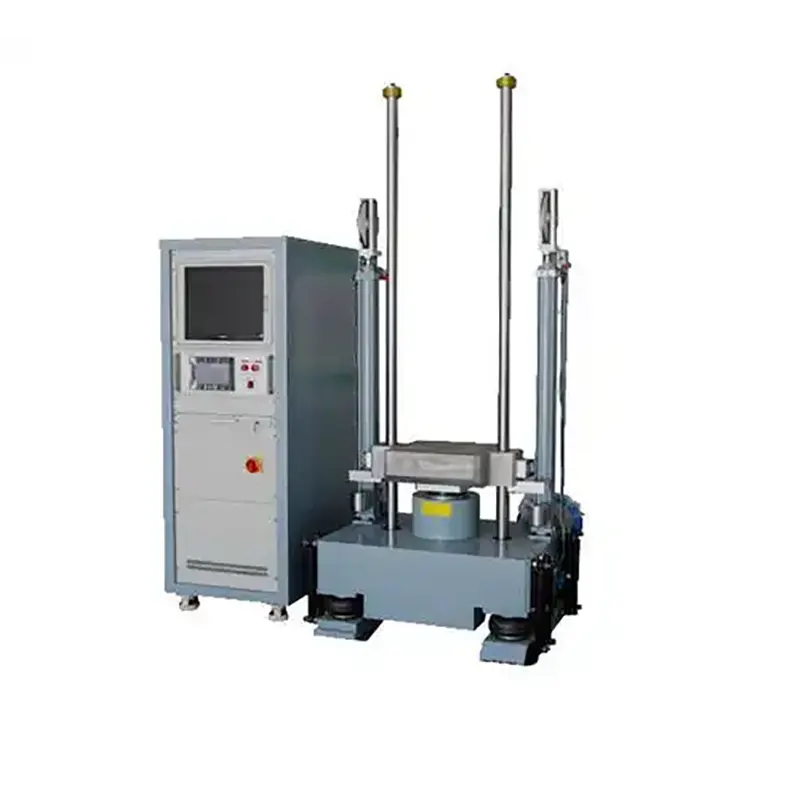
The DERUI DR-D701 electromagnetic vibration test bench should be selected against the specimen's actual sine, random or battery-transport vibration profile. Confirm its drive architecture and loaded force–stroke–velocity–frequency envelope before committing to a test method.

Mẫu DR-D701
Engineering Focus Reproduce the specified profile with specimen and fixture installed
Architecture Shaker versus four-point platform requires approved drawing
Frequency Current page conflicts: 600 Hz heading versus 5–5,000 Hz body
Sizing Check total moving mass, force, stroke, velocity, acceleration and axes together
Before Quotation Send profile, load/fixture drawing and FAT targets; request signed DR-D701 datasheet
An toàn và đáng tin cậy
Chế tạo tốt
Đảm bảo chất lượng
Tùy chỉnh
Tin nhắnWhatsApp
Số điện thoại đường dây nóng 15580327593
  • Chi tiết sản phẩm
  • Câu hỏi thường gặp
  • Thông số kỹ thuật
  • Liên hệ với chúng tôi
VIBRATION PROFILE → MACHINE ARCHITECTURE → WITNESSED PROOF

Can DR-D701 Reproduce Your Vibration Profile with the Real Payload?

A frequency number alone cannot answer that. The proposed machine must sustain the specified acceleration or displacement after the specimen and fixture are installed, in the required axis, for the full test duration. Use this page to define that engineering decision before ordering DR-D701.

Model evidence status: DERUI's live page identifies DR-D701 but labels it “600Hz” in the H1 while its body claims “5–5,000Hz.” Those cannot both be treated as a single confirmed rating. Ask for the serial/model-specific datasheet.
Start withMethod + waveform + axis
Then sizeSpecimen + fixture + moving element
Then verifyForce + stroke + velocity + control
01 · Identify the machine

Is DR-D701 a Shaker System or a Multi-Point Vibration Platform?

The present page uses “electromagnetic shaker,” “four-point excitation” and “uniform table vibration” as if they describe one unambiguous machine. They may imply different actuator and control architectures. This must be resolved before a technical claim—or a vibration-standard comparison—is credible.

Electrodynamic shaker route

Request the shaker model, armature diameter/mass, amplifier rating, cooling method, controller, head expander or slip table, and loaded performance envelope. A single shaker system is normally selected around force, displacement, velocity and acceleration limits.

Multi-point platform route

Request actuator count/location, table size, payload distribution, phase synchronization, control-point placement and measured spatial uniformity. A “four-point” statement cannot substitute for this evidence.

Publishing gate: obtain a real DR-D701 machine photo, nameplate and mechanical drawing before describing its drive mechanism. The present gallery and prose alone do not resolve the architecture.
02 · Size the load

Why 100 kg and 50 g Cannot Be Quoted in Isolation

The first screening calculation for a shaker is required force ≈ total moving mass × target acceleration. “Total” includes the specimen, fixture, armature or slip-table moving parts, adapters, cables and relevant attachments—not just the specimen on the bench. Resonance and control strategy can increase the practical demand, so final selection requires the vendor's rated envelope and a witnessed run.

Illustrative sizing only—not a DR-D701 capability claim

If a proposed test has a 20 kg specimen, 10 kg fixture and 8 g peak acceleration, even the specimen plus fixture alone call for approximately (20 + 10) × 8 × 9.81 = 2,354 N peak. The moving-element mass, margins and dynamic effects would increase the required system rating. This example cannot prove DR-D701 can perform the test.

Low frequencies: stroke

Large displacement may be required before a high acceleration value is reached. Confirm peak-to-peak stroke and mechanical clearance.

Middle band: velocity

The velocity limit can constrain the sweep even when force and stroke appear adequate.

High frequencies: force/control

Moving mass, fixture resonances and sensor placement govern whether target acceleration is actually maintained.

For a sinusoidal point, peak displacement is x = a/(2πf)². This relationship explains why the same acceleration target can demand very different travel at different frequencies. It is a physics check, not a substitute for the machine's measured performance curve.

03 · Choose the right test

Three Profiles That Should Not Be Merged into One Claim

Buyer request Required input What DR-D701 must demonstrate
IEC 60068-2-6 sinusoidal vibration Frequency band, sweep rate, amplitude/acceleration, axes, duration, functional checks and mounting Loaded sine sweep with control tolerance and resonance handling
IEC 60068-2-64 broadband random vibration PSD breakpoints, overall grms, duration, axes, control/abort channels Installed random controller, force rating, control spectra and data report
UN 38.3 T.3 battery transport vibration Adopted manual revision, specimen definition, mounting orientations, prescribed sweep and post-test criteria Method-specific profile, fixture/monitoring and witnessed evidence; no automatic product certification

IEC describes cURL Too many subrequests by single Worker invocation. To configure this limit, refer to https://developers.cloudflare.com/workers/wrangler/configuration/#limits as a sinusoidal method and IEC 60068-2-64 as broadband random. The UN Manual of Tests and Criteria has a separate T.3 transport-vibration procedure. The final test plan, not the standard name in a brochure, determines suitability.

04 · Control the specimen

The Fixture and Accelerometer Can Decide the Result

Mounting review

Document the bolt pattern, fixture material, stiffness, first fixture resonance, specimen center of gravity and cable routing. A heavy, flexible fixture may consume force and distort the input before the specimen sees the intended vibration.

When the test changes axis, define whether a horizontal slip table or a separate mounting orientation is used. The horizontal assembly's mass and travel must be included in sizing.

Control review

Place control and monitoring accelerometers according to the method and fixture dynamics. Agree single- or multi-point control, abort limits, notching where appropriate, sensor calibration and what waveform/PSD report will be delivered.

At resonances, the specimen can experience an amplified response while the control point remains within tolerance. Compare both control and response channels during FAT.

Battery-specific boundary: the shaker is only one part of a battery test. State the cell/battery condition, voltage and temperature monitoring, containment/exhaust review and post-test inspection separately.
05 · Evidence that closes the purchase risk

Ask DERUI to Prove One Representative Loaded Profile

1. Identify the build

DR-D701 nameplate, actual machine and fixture photos, shaker/actuator, amplifier, controller and axis hardware.

2. Show the envelope

Rated sine/random force, frequency, stroke, velocity, acceleration, payload and table size—with definitions and simultaneous-limit conditions.

3. Witness the profile

Run a representative specimen/fixture mass at agreed low-, mid- and high-band points. Supply raw control data and deviation/abort record.

Also agree factory utilities: electrical input, cooling airflow, floor loading, room noise, lifting/access clearance and any climate-chamber interface. If combined temperature/vibration is required, review the separate combined system rather than assuming it is part of DR-D701.

06 · Buyer questions

Questions to Resolve Before Quotation

Is the DR-D701 frequency ceiling 600 Hz or 5,000 Hz?

The live page states both. The correct value—and whether it changes by configuration—requires a signed DR-D701 datasheet and loaded performance curve. The H1 should not retain “600Hz” until resolved.

Does “100 kg load” mean it can deliver 50 g with 100 kg installed?

No such combined capability is proven by the page. Total moving mass and the force, velocity, stroke and frequency limits must be checked at the required test points.

Is random vibration standard?

The current copy claims sine and random, but the exact controller, amplifier and loaded random-force rating are not identified. Confirm the ordered software and witnessed PSD run.

Does the machine provide four-point excitation?

The phrase appears in the existing copy without a machine drawing. Confirm the actual actuator architecture before making it a product feature.

Will this automatically satisfy UN 38.3?

No. A qualified laboratory must follow the adopted T.3 procedure with the correct specimen and records; the equipment must first be shown capable of the required loaded profile.

Send One Profile. Get a Verifiable System Proposal.

Share the test method and your specimen/fixture data. Ask for the exact DR-D701 configuration, a sizing calculation and a witnessed sample run—not a collection of unrelated headline maximums.

Request DR-D701 engineering review

Attach these four items

  • Waveform or PSD and duration
  • Specimen and fixture mass/drawing
  • Axes and sensor locations
  • Acceptance/reporting requirements
FacebookLinkedInXRedditWhatsApp
  1. H: Bàn thử nghiệm rung động điện từ dùng để làm gì?
    A: Bàn thử nghiệm rung động điện từ (hoặc shaker) được sử dụng để mô phỏng môi trường rung động thực tế trong phòng thí nghiệm kiểm soát. Nó cần thiết để kiểm tra độ bền, độ tin cậy và tính toàn vẹn cấu trúc của các sản phẩm như linh kiện ô tô, bộ phận hàng không vũ trụ, điện tử (bảng mạch in), và pin để đảm bảo chúng có thể chịu đựng rung động trong quá trình vận chuyển và sử dụng.

  2. H: Bàn thử nghiệm rung động điện từ hoạt động như thế nào?
    A: Nó hoạt động dựa trên nguyên lý của điện từ. Một tín hiệu điện (dạng sóng sine, ngẫu nhiên hoặc hồ sơ sốc) được gửi đến bộ khuếch đại công suất, điều này dẫn dòng điện lớn qua một cuộn dây (cực) treo trong một trường từ. Điều này tạo ra một lực (lực Lorentz) làm di chuyển cuộn dây và bàn/đế thử nghiệm gắn liền, tạo ra các rung động cơ học chính xác và lặp lại.

  3. H: Những lợi ích chính của shaker điện từ so với các loại khác là gì?
    A: Các shaker điện động cung cấp khả năng kiểm soát vượt trội trên dải tần số rộng (thường từ 5 Hz đến hơn 5.000 Hz), khả năng gia tốc cao (lên đến 50 g hoặc hơn), và khả năng mô phỏng chính xác các hồ sơ rung phức tạp như sine, ngẫu nhiên và sốc. Chúng thường sạch hơn, chính xác hơn và yêu cầu bảo trì ít hơn so với shaker thủy lực cho hầu hết các ứng dụng tần số cao.

  4. H: “Phương pháp kích thích bốn điểm” trên bàn thử nghiệm rung động có nghĩa là gì?
    A: Phương pháp kích thích bốn điểm đề cập đến hệ thống truyền động nơi bốn bộ truyền động điện từ (một ở mỗi góc của bàn) hoạt động đồng bộ. Thiết kế này đảm bảo phân bố rung đều khắp toàn bộ bề mặt thử nghiệm, loại bỏ các “điểm nóng” và cung cấp ứng suất nhất quán, đáng tin cậy cho tất cả các mẫu thử, điều này rất quan trọng để có kết quả chính xác và lặp lại.

  5. H: Các ngành công nghiệp nào thường sử dụng hệ thống thử nghiệm rung động điện từ?
    A: Các ngành công nghiệp chính bao gồm Ô tô (kiểm tra các thành phần và tuân thủ pin UN38.3), Hàng không vũ trụ & Quốc phòng (đánh giá các bộ phận đủ điều kiện cho rung động bay), Thiết bị điện tử tiêu dùng (kiểm tra độ bền cho điện thoại, máy tính xách tay), Sản xuất công nghiệp, và Nghiên cứu & Phát triển phòng thí nghiệm trên nhiều lĩnh vực khác nhau.

  6. H: Tôi nên tìm gì khi chọn bàn kiểm tra rung động điện từ?
    A: Các thông số kỹ thuật chính cần xem xét là: Phạm vi tần số, Gia tốc tối đa (g), Độ dịch chuyển (mm), Khả năng chịu tải (kg), liệu bạn có cần Hướng dọc hoặc ngang và Tuân thủ các tiêu chuẩn (ví dụ, IEC 60068, MIL-STD). Ngoài ra, đánh giá các tính năng như mạch chống nhiễu, phần mềm điều khiển, và hỗ trợ cùng bảo hành của nhà sản xuất.

  7. H: Làm thế nào để bạn đảm bảo độ chính xác của thử nghiệm rung động điện từ?
    A: Độ chính xác được đảm bảo thông qua hiệu chỉnh định kỳ sử dụng các bộ gia tốc tham chiếu, bộ điều khiển kỹ thuật số tiên tiến quản lý chính xác tín hiệu đầu vào, và tích hợp mạch chống nhiễu để giảm thiểu tiếng ồn điện tử. Các tính năng như kích thích bốn điểm đồng đều cũng ngăn chặn sai lệch dữ liệu do chuyển động bàn không đều.

  8. H: Một bàn rung điện từ có thể thực hiện kiểm tra đa trục không?
    A: Máy rung thẳng tiêu chuẩn kiểm tra theo một trục. Đối với kiểm tra đa trục, hệ thống thường được sử dụng với bàn trượt (cho chuyển động ngang) hoặc cấu hình thành hệ thống nhiều máy rung. Một số hệ thống tích hợp tiên tiến được thiết kế đặc biệt để mô phỏng rung đa trục cùng lúc.

  9. H: Thiết kế chống nhiễu quan trọng như thế nào trong một máy rung rung?
    A: Rất quan trọng. Nhiễu điện từ từ nguồn cung cấp hoặc thiết bị xung quanh có thể làm nhiễu tín hiệu điều khiển và đo lường, dẫn đến kết quả kiểm tra không chính xác. Các máy rung chất lượng cao có mạch chống nhiễu riêng biệt để đảm bảo rung “sạch” và dữ liệu đáng tin cậy, điều này rất quan trọng cho kiểm tra tuân thủ và phát hiện lỗi sớm.

  10. H: Bảo trì của bàn rung điện từ cần những gì?
    A: Bảo trì định kỳ bao gồm kiểm tra và siết chặt các bu lông cố định, kiểm tra hệ thống làm mát (khí hoặc nước), theo dõi vòng bi trục để phát hiện mài mòn, và thực hiện hiệu chuẩn hệ thống định kỳ. Tuân thủ lịch trình của nhà sản xuất và sử dụng phụ tùng chính hãng là rất quan trọng để đảm bảo độ tin cậy và hiệu suất lâu dài.

Use this sheet to close the gaps in the current DR-D701 page. It is not a signed performance guarantee or a replacement for the manufacturer's datasheet.

Selection item Current evidence / required document
Identity and architecture DR-D701 on live page; request nameplate, real photos and actuator/drive drawing
Frequency 600 Hz in H1; 5–5,000 Hz in body. Do not publish either as confirmed ceiling until reconciled
Sine/random force No model-specific rating or force-versus-frequency curve supplied
Stroke and velocity 25 mm peak-to-peak appears in general copy; velocity is not defined. Require both with conditions
Acceleration/payload 50 g and 100 kg appear separately. No simultaneous loaded point is established
Fixture and axes Table size, bolt pattern, allowed center of gravity, vertical/horizontal hardware and effective moving mass to confirm
Controller and sensors Sine/random licensing, control/limit accelerometers, calibration and raw export to confirm
Facility Amplifier nameplate, power, cooling, floor loading, noise and installation clearance to confirm
FAT Witness selected loaded sine and/or random profile with tolerance, abort and report data
WhatsAppWhatsApp
WhatsAppWhatsApp
WhatsApp
Tin nhắnTin nhắn

Yêu cầu báo giá