




ชั้น 1, หมายเลข 3, ถนนชูการ์, เมืองหงเหมย, ตงกวน, มณฑลกวางตุ้ง, ประเทศจีน

ผู้ผลิตห้องทดสอบสิ่งแวดล้อม 20 ปีส่งมอบลูกค้าทั่วโลกกว่า 3000 ราย           อีเมล: shirley@deruitest.com
WhatsApp Consultation:+86 135 2795 8363

ระบบทดสอบเซลล์แบตเตอรี่พลังงาน

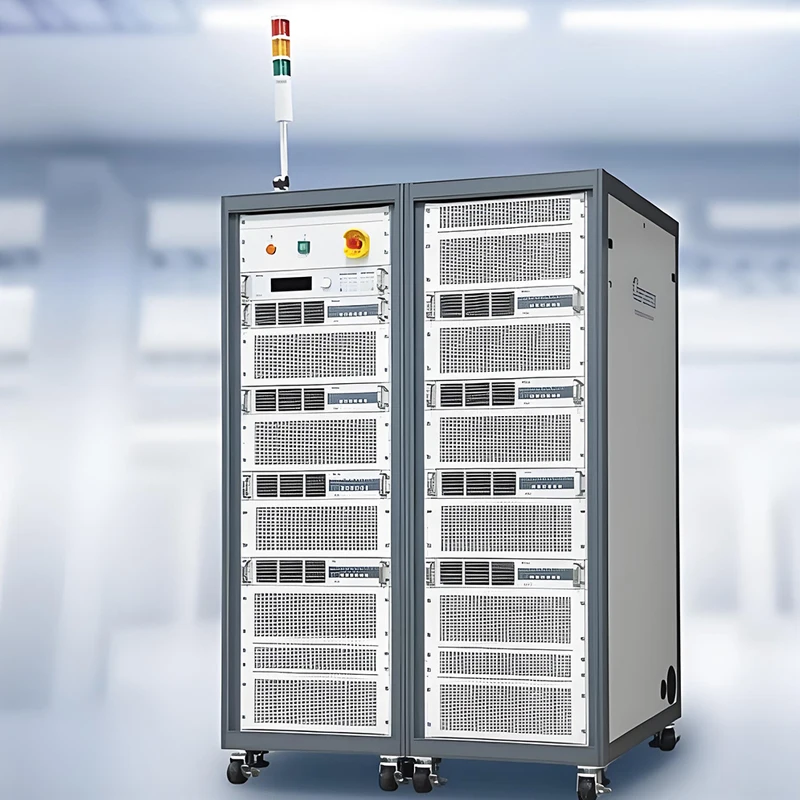
The DERUI DR-D213 power battery cell testing system supports programmable cell charge–discharge, pulse and DCIR workflows. Select the current variant, channels, fixtures and data interfaces around your cell and approved test recipe.

รุ่น DR-D213
Cell Voltage Published 0.8–5 V per channel
Current Variants 30 / 60 / 100 / 150 / 300 A; confirm ordered variant
ความแม่นยำ Published voltage/current ±0.02% F.S.; verify conditions
Recording Published 10 ms interval; Excel / TXT export
Before Quotation Confirm channel count, fixtures, recipe, software, site power and FAT
ปลอดภัยและเชื่อถือได้
คุณภาพดี
การรับประกันคุณภาพ
การปรับแต่ง
ข้อความWhatsApp
หมายเลขสายด่วน 15580327593
  • รายละเอียดสินค้า
  • พารามิเตอร์ทางเทคนิค
  • คำถามที่พบบ่อย
  • ติดต่อเรา
CELL CHARGE–DISCHARGE & PERFORMANCE TESTING

DR-D213 Power Battery Cell Testing System

Run programmable charge–discharge, pulse and DCIR workflows on battery cells with a configuration selected for the cell, current, channel count and facility. Use the published DR-D213 electrical specification as the starting point, then verify the ordered cabinet, fixtures and software in the technical agreement.

Important distinction: this is an electrical cell-test system. It does not by itself provide a temperature chamber, mechanical abuse rig or certification of a finished battery.
Single-channel voltage0.8–5 V published
Current variants30 / 60 / 100 / 150 / 300 A published
Voltage / current accuracy±0.02% F.S. published
Data interval10 ms published

Start with the Cell and the Test Profile

A useful proposal begins with the cell's voltage window, maximum charge and discharge current, connector design, heat output and required test sequence. Those inputs determine the channel rating, fixture, cabinet quantity and how results will be recorded. DR-D213 is relevant to R&D, cell screening and cycle-performance workflows when the selected configuration matches those inputs.

Performance cycling

Define CC, CV, CCCV, CP or CR steps, end conditions, rest periods and repeat count.

Pulse and DCIR

Provide pulse width, current, SOC points, rest time and the DCIR calculation method.

Production data

Specify channels, traceability fields, export format, uptime and MES requirements before quoting.

Published DR-D213 Electrical Baseline

พารามิเตอร์ Published DR-D213 value Confirm in purchase specification
AC supply 380 ±10% VAC, 50 ±5% Hz; three-phase five-wire Site supply, breaker, earthing and total cabinet input
DC voltage and current 0.8–5 V per channel; 30 / 60 / 100 / 150 / 300 A variants Selected current rating, channel count and parallel operation
Measurement Voltage and current accuracy ±0.02% F.S.; voltage resolution 0.1 mV; current resolution 0.1 mA Range, calibration method, temperature and measurement points
Dynamic response Current response 5 ms (10–90% F.S.); switching 10 ms (−90 to 90% F.S.) Applicable load, method and waveform record
Logging 10 ms recording interval; Excel / TXT export Actual fields, timestamps, retention and export sample
Power feedback Published maximum feedback efficiency ≥75%; power factor >0.99; THD <5% Operating point, grid conditions and witnessed measurement
Environment IP20; 0–40°C working temperature; forced-fan cooling; noise <75 dB Room ventilation, clearances and measurement conditions
Do not carry over the old promotional table: its 0–10 V, 1000 A+, 96–512+ channels and “80%+ energy savings” are not substantiated by the DR-D213 technical parameter tab. Quoted systems may vary; request a model-specific drawing and signed specification.

Workflow and Data: What Is Published, What Needs a Demo

Program the recipe

Published charge modes include CC, CV, CCCV and CP; discharge modes include CC, CV, CP and CR. The page also lists pulse and DCIR workflows.

Protect the test

Published software protections cover over-current, over-voltage, under-voltage, reverse/wrong connection and abnormal communication. Request a fault-response demonstration.

Review the record

Check actual 10 ms data files, timestamps, channel ID, alarms, power interruption behavior and export into your analysis process.

The published software specification lists up to 10,000 editable/program steps and 10 nested-loop layers. These are configuration limits to verify in a live software demonstration, not a promise that every requested test sequence is supported without review.

Select the System Without Mixing It with Other Battery Equipment

ข้อกำหนด DR-D213 role Separate or project-specific scope
Cell cycling, capacity, pulse, DCIR Electrical source/sink and measurement channels Cell fixture, channel rating, method and software configuration
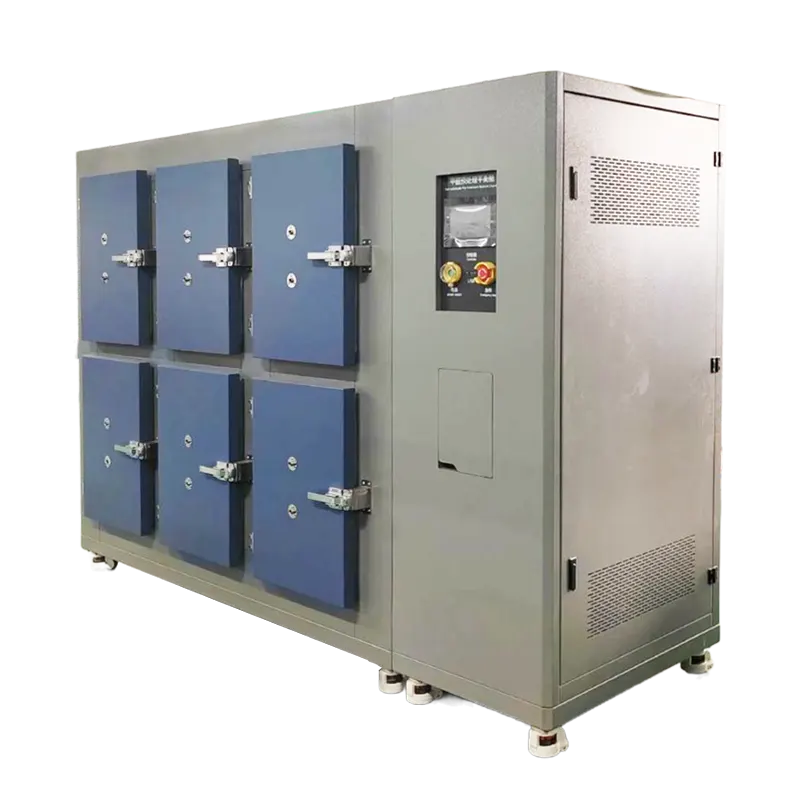
Temperature-conditioned cycling Published support for linkage with a temperature chamber External chamber, communication protocol, interlocks and profile validation
Mechanical, flame or thermal-abuse tests Not provided by the electrical cycler itself Dedicated abuse equipment and site risk controls
UN 38.3 or product certification May supply electrical data for an applicable program Exact test methods, approved laboratory and complete evidence package

For climatic exposure, review the cURL Too many subrequests by single Worker invocation. To configure this limit, refer to https://developers.cloudflare.com/workers/wrangler/configuration/#limits as a separate equipment decision.

Acceptance Evidence for Engineering and Procurement

Channel proof

Verify the ordered channel count and current/voltage variant on cabinet labels and wiring diagrams.

Accuracy proof

Agree calibrated instrument, operating points, load and acceptance limits for voltage/current checks.

Workflow proof

Witness charge, discharge, pulse, DCIR, safety trip, interruption recovery and file export.

Ask for real evidence: proposed cabinet photos, fixture drawings, a representative data export, calibration material and a signed FAT checklist. Do not use unapproved customer logos or case-study percentages.

คำถามที่พบบ่อย

What current range does DR-D213 offer?

The published technical table lists 30, 60, 100, 150 and 300 A variants. Confirm the selected variant and its channel count in the quotation.

Is 1000 A standard?

The current DR-D213 technical table does not substantiate a 1000 A variant. Ask DERUI for a separate documented design if that current is required.

Does it include a climatic chamber?

No chamber is established as part of the base electrical system. The published specification mentions linkage with external temperature equipment; confirm hardware and protocol for the project.

Is EIS included?

The legacy marketing copy calls it optional, while the DR-D213 technical parameter table does not specify an EIS module. Treat it as unconfirmed until documented.

Does the equipment itself have UL or UN 38.3 certification?

The present product record does not provide model-specific certificates supporting those claims. Request relevant documents; specimen compliance requires the complete applicable test program.

Request a Cell-Matched DR-D213 Configuration

Send the electrical limits and one representative test recipe. Ask for a channel/cabinet layout, fixture drawing, software demo and measurable FAT plan before approving the proposal.

Request a DR-D213 review

Include with your inquiry

  • Cell format and voltage window
  • Charge/discharge current and channels
  • Pulse/DCIR or cycling recipe
  • Site power, cooling and data interfaces
เฟซบุ๊กLinkedInXRedditWhatsApp

Published DR-D213 baseline. The ordered current variant, channel quantity, accuracy conditions, fixtures and software interfaces require a signed technical agreement.

รายการ Published specification / confirmation
รุ่น DR-D213
AC wiring / supply Three-phase five-wire; 380 ±10% VAC; 50 ±5% Hz
Power factor / THD >0.99 / <5% (published; test conditions to confirm)
Maximum feedback efficiency ≥75% (published; operating point to confirm)
Single-channel voltage 0.8–5 V
Output-current variants 30 / 60 / 100 / 150 / 300 A; ordered variant and channel count to confirm
Voltage accuracy / resolution ±0.02% F.S. / 0.1 mV
Current accuracy / resolution ±0.02% F.S. / 0.1 mA
Current response / switching 5 ms (10–90% F.S.) / 10 ms (−90 to 90% F.S.)
ช่วงเวลาการบันทึกข้อมูล 10 ms; Excel / TXT export
Charge / discharge modes CC, CV, CCCV, CP / CC, CV, CP, CR
Other modes Rest, pause, condition simulation, pulse, DCIR
Program capacity Up to 10,000 steps and 10 nested-loop layers, as published
การป้องกันซอฟต์แวร์ OCP, OVP, UVP, reverse/wrong connection and abnormal-communication protection
External linkage Temperature chamber, MTV/MTS and pressure sensor listed; interface details to confirm
Environment / cooling IP20, 0–40°C, forced-fan cooling
Noise / cabinet dimensions <75 dB; 600 × 850 × 1030 or 600 × 800 × 1980 mm (W × D × H), by configuration

1. ระบบทดสอบเซลล์แบตเตอรี่พลังงานคืออะไร?
ระบบทดสอบเซลล์แบตเตอรี่พลังงานเป็นอุปกรณ์เฉพาะทางที่ใช้ประเมินประสิทธิภาพ ความทนทาน และความปลอดภัยของเซลล์แบตเตอรี่แต่ละเซลล์ ทำการทดสอบสำคัญเช่น อายุรอบ, ความจุ, ประสิทธิภาพ และความต้านทานภายใน ให้ข้อมูลสำคัญสำหรับงานวิจัยและพัฒนา รวมถึงการควบคุมคุณภาพในอุตสาหกรรมเช่น ยานยนต์ไฟฟ้าและการเก็บพลังงาน.

2. ระบบทดสอบเซลล์แบตเตอรี่พลังงานมีค่าใช้จ่ายเท่าไร?
ราคาจะแตกต่างกันอย่างมากขึ้นอยู่กับจำนวนช่อง, ช่วงกระแส/แรงดันไฟฟ้า และคุณสมบัติ เช่น การคืนพลังงาน ระบบระดับเริ่มต้นสามารถเริ่มต้นในหลักหมื่นดอลลาร์ ในขณะที่ระบบที่มีช่องจำนวนมากและพลังงานสูงพร้อมอัตโนมัติเต็มรูปแบบอาจมีราคาหลายแสนดอลลาร์ ควรขอใบเสนอราคาสำหรับความต้องการทดสอบเฉพาะของคุณ.

3. ประโยชน์ของระบบคืนพลังงาน (regenerative) คืออะไร?
ระบบคืนพลังงานสามารถกู้คืนและนำพลังงานที่สูญเสียไปในระหว่างการทดสอบรอบชาร์จ-ปล่อย กลับเข้าสู่กริดไฟฟ้าได้มากกว่า 80% ซึ่งช่วยลดค่าไฟฟ้าและการสร้างความร้อนอย่างมาก ส่งผลให้คืนทุนได้เร็วขึ้นและลดค่าใช้จ่ายในการดำเนินงาน โดยเฉพาะในห้องปฏิบัติการทดสอบจำนวนมาก.

4. ระบบทดสอบสามารถรองรับเซลล์แบตเตอรี่ประเภทต่าง ๆ เช่น แพรสมิทิก, กระบอก, และถุงได้หรือไม่?
ได้ ระบบทดสอบเซลล์แบตเตอรี่พลังงานคุณภาพสูงออกแบบให้ไม่ขึ้นอยู่กับรูปแบบเซลล์ ด้วยอุปกรณ์ยึดและการกำหนดช่องที่เหมาะสม สามารถทดสอบเซลล์ประเภทต่าง ๆ ได้ทั้งหมด รวมถึง 18650, 21700, 4680 กระบอก รวมถึงเซลล์แพรสมิทิกและถุงขนาดใหญ่.

5. ซอฟต์แวร์ที่รวมอยู่ในระบบทดสอบคืออะไร และความสามารถของมันคืออะไร?
ระบบเหล่านี้มักมาพร้อมกับซอฟต์แวร์เฉพาะทาง (เช่น Derui's BATTEST®) ความสามารถหลักรวมถึงการแก้ไขขั้นตอนการทดสอบไม่จำกัด การแสดงข้อมูลแบบเรียลไทม์และบันทึกข้อมูล การควบคุมช่องแบบคู่ขนาน และตัวเลือกส่งออกข้อมูลขั้นสูง (เช่น Excel, SQL) สำหรับการวิเคราะห์และรายงานเชิงลึก.

6. ช่องทั้งหมดทำงานอิสระหรือไม่?
ใช่ ในระบบทดสอบสมัยใหม่ แต่ละช่องทำงานอิสระ ซึ่งช่วยให้คุณสามารถรันโปรไฟล์การทดสอบต่าง ๆ บนช่องต่าง ๆ พร้อมกัน หยุดชั่วคราวช่องใดช่องหนึ่ง และจัดการเซลล์ประเภทหรือระดับ SoC (สถานะการชาร์จ) ต่าง ๆ โดยไม่รบกวนการทดสอบอื่น ๆ เพื่อเพิ่มประสิทธิภาพของห้องปฏิบัติการ.

7. ระบบทดสอบเซลล์แบตเตอรี่ที่เชื่อถือได้ควรมีใบรับรองอะไรบ้าง?
มองหา ระบบที่เป็นไปตามมาตรฐานความปลอดภัยและคุณภาพสากล ใบรับรองสำคัญได้แก่ UL และ CE เพื่อความปลอดภัยทางไฟฟ้า, ISO 9001 เพื่อการจัดการคุณภาพ และมาตรฐานเฉพาะเช่น UN38.3 เพื่อความสอดคล้องในการทดสอบแบตเตอรี่ลิเธียมไอออน.

8. ความแม่นยำและเสถียรภาพของการควบคุมแรงดันไฟฟ้าและกระแสไฟฟ้ามีความแม่นยำเพียงใด?
สำหรับการทดสอบแบตเตอรี่พลังงานสูง ความแม่นยำสูงเป็นสิ่งสำคัญ ระบบระดับท็อปมีความแม่นยำดีกว่า ±0.05% ของสเกลเต็ม (FS) และการสั่นสะเทือนของกระแสต่ำกว่า 0.05% FS ซึ่งช่วยให้ผลการทดสอบของคุณเชื่อถือได้ ทำซ้ำได้ และสามารถตรวจจับความแตกต่างของประสิทธิภาพที่ละเอียดอ่อนระหว่างเซลล์ได้.

9. ระบบสามารถเชื่อมต่อกับห้องสภาพแวดล้อมได้หรือไม่?
แน่นอน ระบบส่วนใหญ่มีตัวเลือกอินเทอร์เฟซ (มักผ่าน CAN หรือ Ethernet) เพื่อซิงค์กับห้องสภาพแวดล้อมภายนอก ซึ่งช่วยให้คุณสามารถทำการทดสอบวัฏจักรอุณหภูมิ จำลองสภาพแวดล้อมจริงตั้งแต่ต่ำกว่าศูนย์ถึงอุณหภูมิสูงเพื่อยืนยันประสิทธิภาพของแบตเตอรี่ภายใต้ความเครียด.

10. ระบบมีคุณสมบัติด้านความปลอดภัยอะไรบ้าง?
นอกจากการป้องกันไฟฟ้ามาตรฐาน (แรงดันเกิน, กระแสเกิน, การลัดวงจร) แล้ว ระบบขั้นสูงยังรวมถึงการแจ้งเตือนด้วยซอฟต์แวร์ การเตือนล่วงหน้าการลุกไหม้ทางความร้อนโดยใช้การวิเคราะห์ dV/dt และ dT/dt และการเชื่อมต่ออย่างราบรื่นกับระบบความปลอดภัยของสถานที่เพื่อปกป้องทั้งอุปกรณ์และผู้ปฏิบัติงาน.

11. ระยะเวลาการส่งมอบและติดตั้งโดยทั่วไปเป็นเท่าใด?
ระยะเวลาการส่งมอบอาจอยู่ระหว่าง 8 ถึง 16 สัปดาห์หลังจากยืนยันคำสั่งซื้อ ขึ้นอยู่กับความซับซ้อนและการปรับแต่งของระบบ ซึ่งรวมถึงการผลิต การทดสอบรับรองโรงงาน และการประสานงานสำหรับการติดตั้งและฝึกอบรมบนสถานที่โดยวิศวกรเฉพาะทาง.

12. การสนับสนุนและการรับประกันเป็นอย่างไร?
ผู้ผลิตที่มีชื่อเสียงมอบการรับประกันครอบคลุม (เช่น 24 เดือน) และการสนับสนุนอย่างต่อเนื่อง ซึ่งมักรวมถึงการวินิจฉัยระยะไกล การอัปเดตซอฟต์แวร์แบบ OTA เครือข่ายอะไหล่ทั่วโลก และบริการติดตั้งและฝึกอบรมบนสถานที่เป็นตัวเลือกเพื่อให้แน่ใจว่าระบบของคุณทำงานได้อย่างราบรื่น.


WhatsAppWhatsApp
WhatsAppWhatsApp
WhatsApp
ข้อความข้อความ

ขอใบเสนอราคา