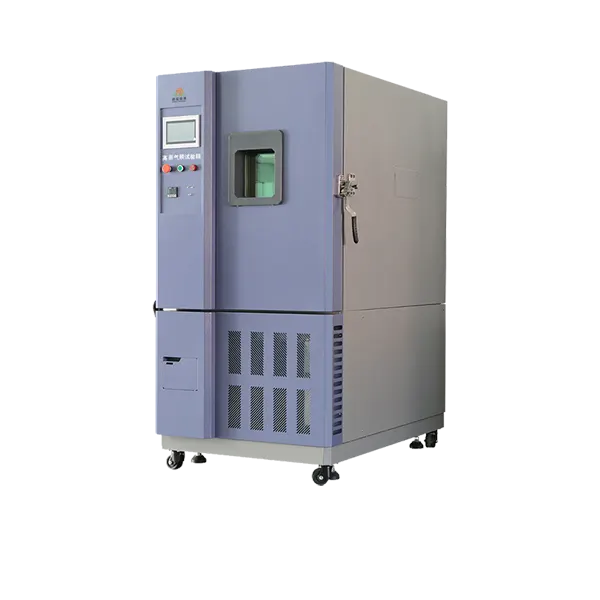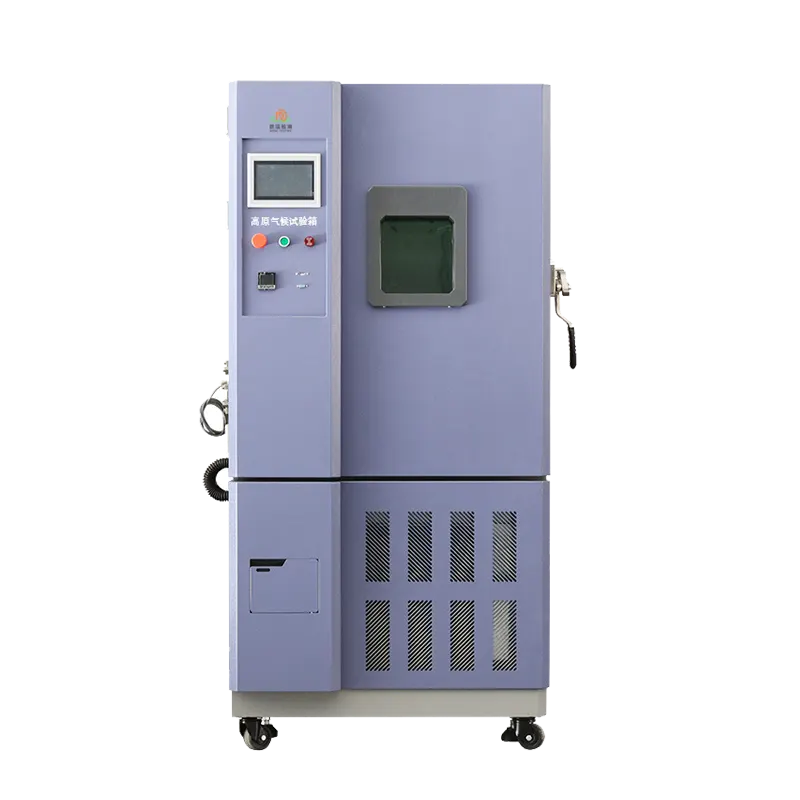



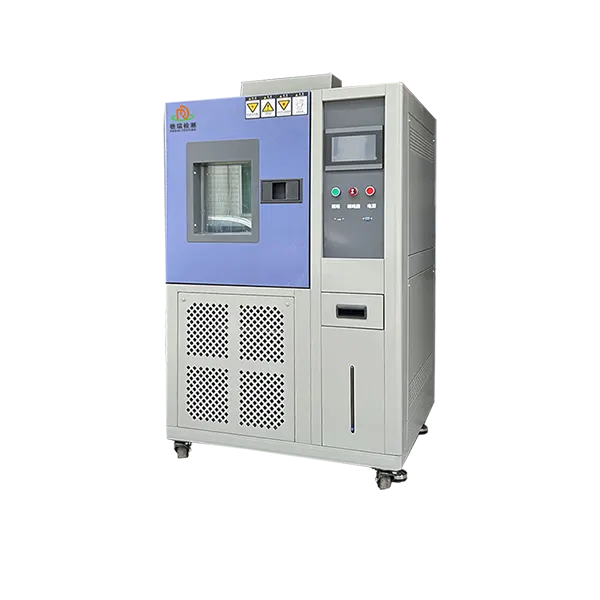
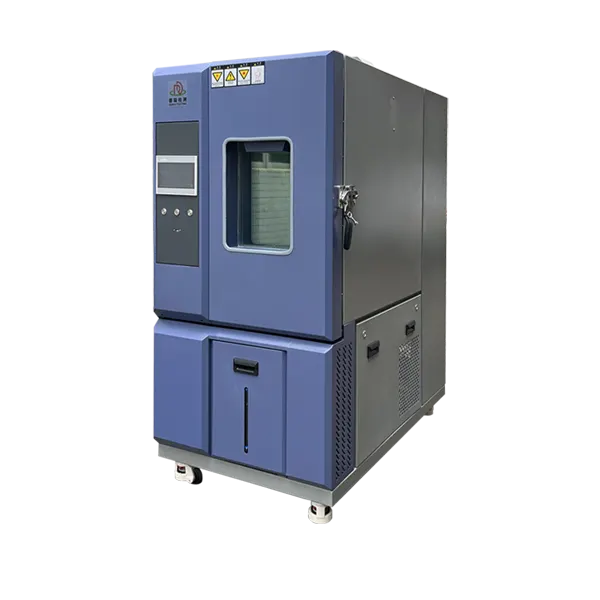
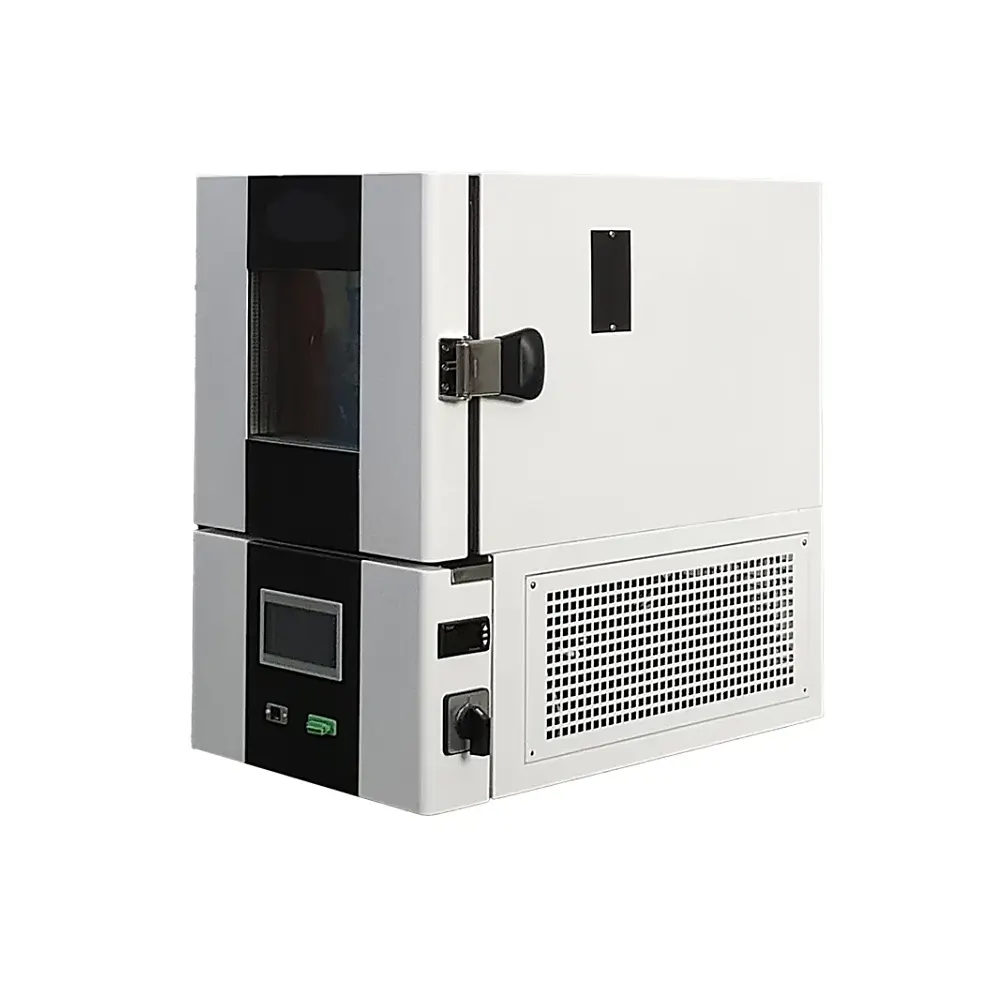
1 m³ High Altitude Simulation Test Chamber
Simulate low-air-pressure environments while controlling temperature for aerospace, automotive and electronic assemblies.
Verified Technical Parameters
| Internal dimensions | 1000 × 1000 × 1000 mm (W × D × H), 1 m³ |
|---|---|
| Temperature | -70°C to +100°C unloaded; -55°C to +100°C with load |
| Fluctuation / uniformity | ±0.5°C / ±2°C |
| Heating / cooling | Average 1°C/min; stated loaded condition uses 15 kg between -55°C and +85°C |
| Pressure | 101 kPa to 1 kPa; stated pressure accuracy ±5% |
| Control sequence | Adjust temperature first, then evacuate; programmable temperature and pressure cycles |
| Cooling | Water-cooled system |
Selection note: Specify the required pressure profile directly in kPa. Any equivalent-altitude value must be calculated using the atmosphere model required by the applicable test method.
What Must Be Defined
Pressure profile
Set minimum pressure, dwell, evacuation/recovery rate and whether rapid decompression is required.
Thermal load
Declare specimen mass, energized heat dissipation and cable feedthroughs.
Method tolerance
Confirm sensor positions, stabilization definition, pressure accuracy and exact standard procedure.
Standards Context
Potential references include IEC 60068-2-13 for low air pressure and MIL-STD-810 Method 500 for altitude. Aerospace equipment may use RTCA DO-160 Section 4, while packaging programs may cite ASTM D6653. These methods are not interchangeable. Suitability must be checked against the exact edition, procedure and pressure profile.
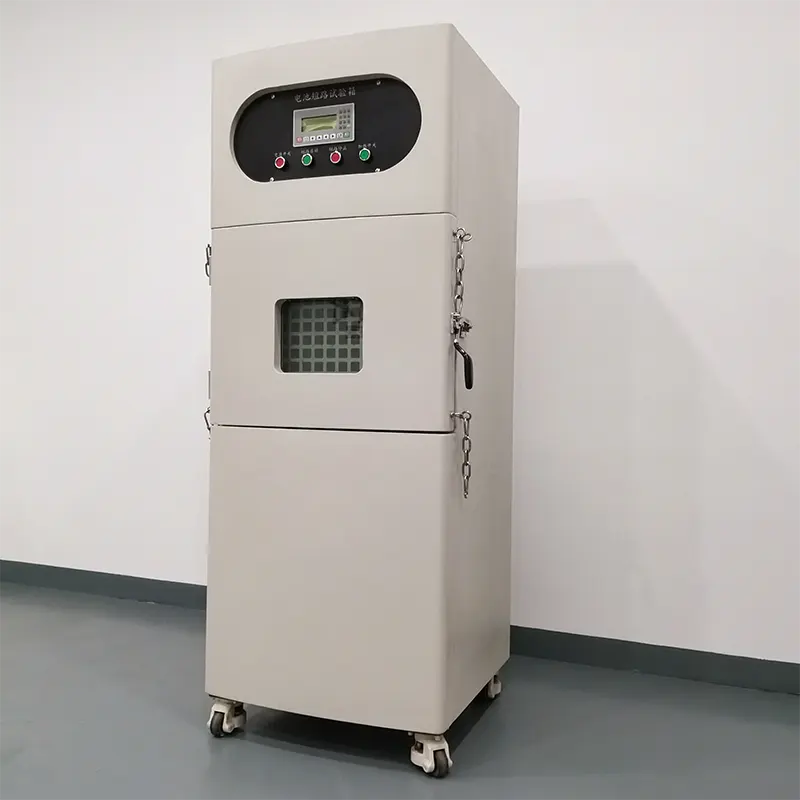
See the altitude chamber category or the dedicated battery altitude simulation chamber.
Frequently Asked Questions
What pressure can this configuration reach?
The verified technical table states 101 kPa to 1 kPa.
Can temperature and pressure be programmed together?
Yes. The stated control method conditions temperature before evacuation and supports cyclic parameters.
How should pressure be converted to an altitude value?
Use the atmosphere model required by the applicable test method rather than treating pressure and altitude as interchangeable specifications.
Can energized devices be tested?
Yes, if heat load, feedthroughs and safety risks are defined before sizing.
Is rapid decompression included?
It should not be assumed. Required transition time and pumping capacity must be specified.
Which standard does it comply with?
Compliance is method-specific; provide the exact standard edition and procedure for review.
What utilities are required?
Confirm electrical service, cooling-water quality/flow, exhaust, floor loading and service clearance.
What is needed for selection?
Provide specimen, profile, pressure rate, temperature range, load, ports and acceptance tolerances.
Validate Your Pressure–Temperature Profile
Send the exact method and specimen information for a pump-down and thermal-capacity review.