

Three Environmental Test Chambers in Service at a Testing Laboratory
Date: 10/16/2026 Categories: Company News Views: 3046
Excerpt:
Rapid temperature change, three-zone thermal shock and walk-in temperature and humidity chambers are now in service at a testing laboratory.
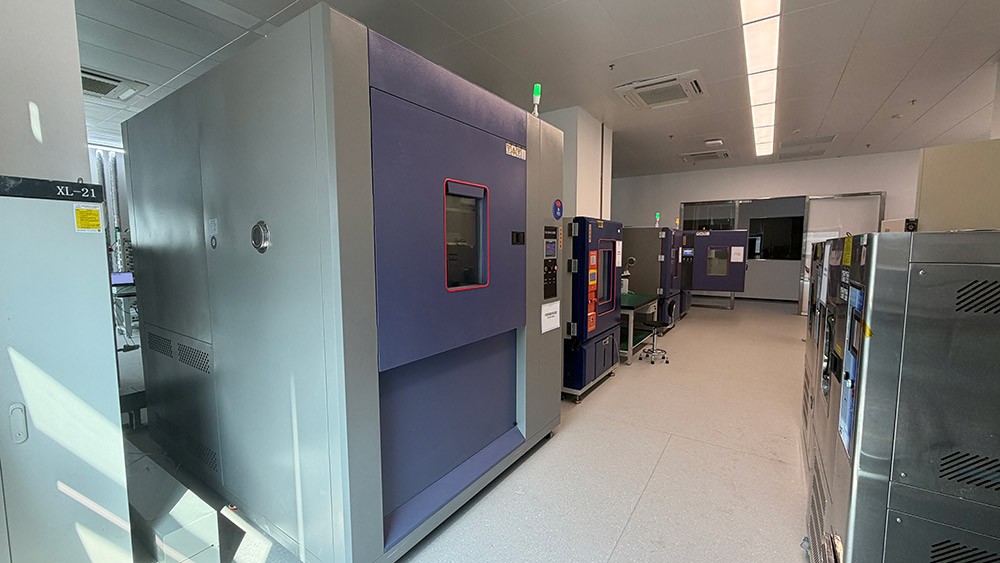
Guangdong Derui Testing Equipment Co., Ltd. has completed the installation and start-up of three chamber types at a testing laboratory, where the units are now in routine service. The laboratory runs a rapid temperature change chamber, a three-zone thermal shock chamber and a walk-in temperature and humidity chamber side by side, so its climate test programme no longer depends on a single cabinet.
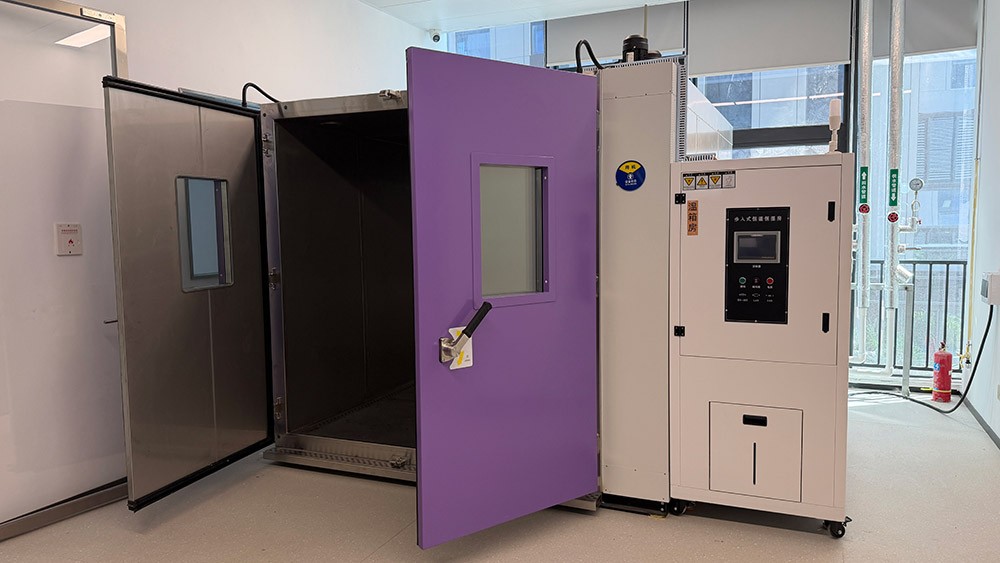
What Is Now Running in the Laboratory
Figures above are taken from the specification of the corresponding model. The final configuration is confirmed project by project against the required test standard, the sample size and the site conditions.
Why a Laboratory Runs Three Types and Not One
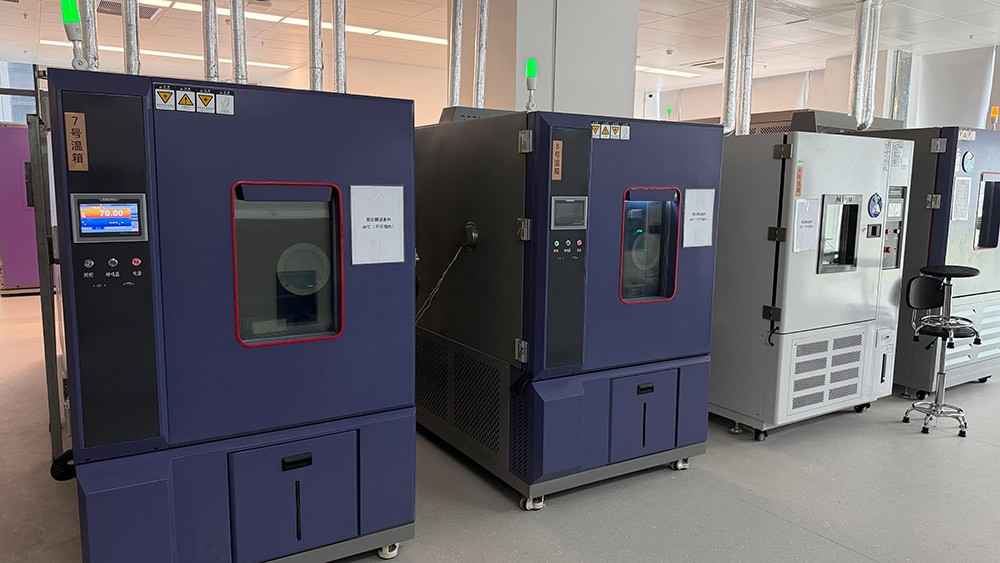
Five Inputs That Decide the Configuration
If the chamber selection itself is still open, our environmental test chamber buying guide walks through the same decisions in more detail.
Frequently Asked Questions
1 | Which standard covers thermal shock testing? Change of temperature testing is usually written to IEC 60068-2-14, Test N. The procedures in that part separate a gradual change of temperature from a rapid one, which is why a laboratory usually holds a chamber for each. |
2 | What does 1-minute switching and 5-minute stabilisation mean? On the three-zone series, the sample stays in the middle chamber while the high-temperature and low-temperature chambers on either side are switched in. Switching takes about one minute and the chamber recovers to the set point in about five minutes, so the sample experiences the change rather than waiting for the housing to catch up. |
3 | How does a three-zone chamber differ from a two-zone chamber? A two-zone chamber moves the sample between a hot chamber and a cold chamber. A three-zone chamber keeps the sample stationary in a separate middle chamber and moves the air instead, which reduces the mechanical handling of the load. |
4 | What working volume should a testing laboratory specify? It follows the typical load rather than one oversized item. The rapid temperature change cabinet offers a 408 L working capacity with a 800 × 600 × 850 mm interior, while the DR-H202 walk-in room offers 1500 × 1200 × 1500 mm for full-size assemblies and bulk batches. |
5 | What power supply do these chambers need? Cabinet models are rated three-phase 380 V / 50 Hz in their standard configuration, and the DR-H202 walk-in room AC 380 V ± 10 %, 50/60 Hz. Supply conditions are confirmed with the customer before production so the chamber matches what the laboratory can actually provide. |
6 | Can the chamber be specified to a particular test standard? Yes. Range, rate, working volume, porting and the control programme are confirmed per project against the standard and the sample, rather than taken from a fixed catalogue configuration. |
Send us the test standard, the sample size and the temperature and humidity range you need. We will come back with a configuration and a quotation.
Request a Quote








