When your testing requirements exceed the limits of standard benchtop chambers, a walk-in chamber provides the ultimate solution. These large-scale environmental test enclosures are engineered to simulate precise conditions—including temperature, humidity, and thermal shock—for full-sized products, bulk materials, and large component assemblies.Our custom-designed walk-in chambers are built for reliability and repeatability in the most demanding industries. Whether you're in aerospace, automotive, defense, electronics, or pharmaceutical manufacturing, our chambers deliver the rigorous performance needed for qualification testing, quality assurance, research, and production processes.
More than just a chamber—it’s a customizable platform for your most demanding tests. Backed by our comprehensive support from design to validation, it’s the versatile foundation for any large-scale environmental simulation need.
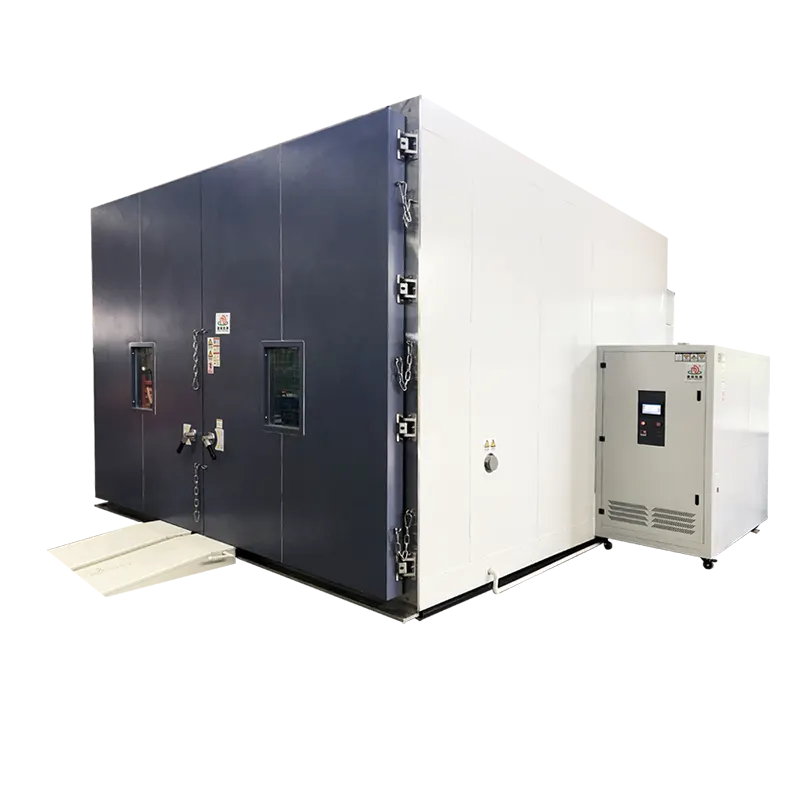
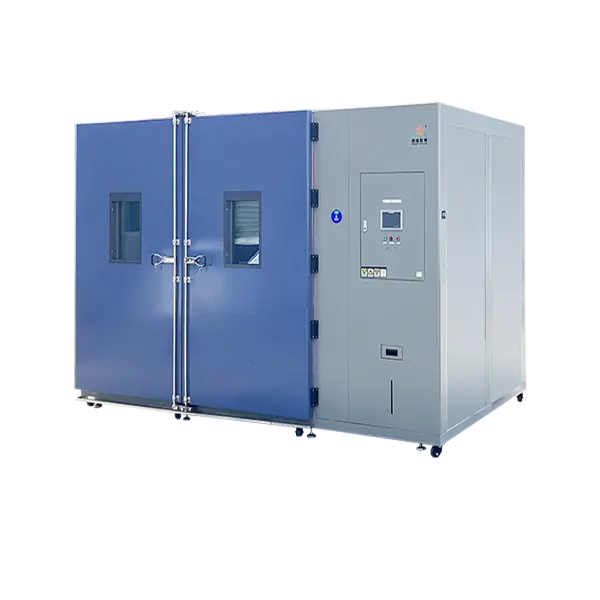
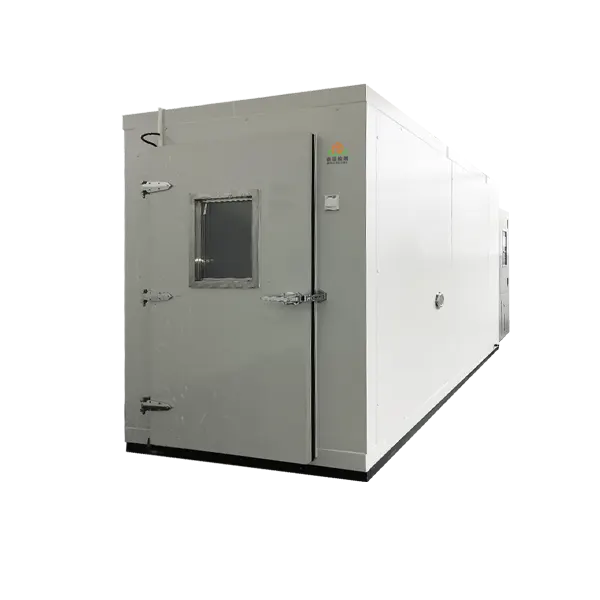
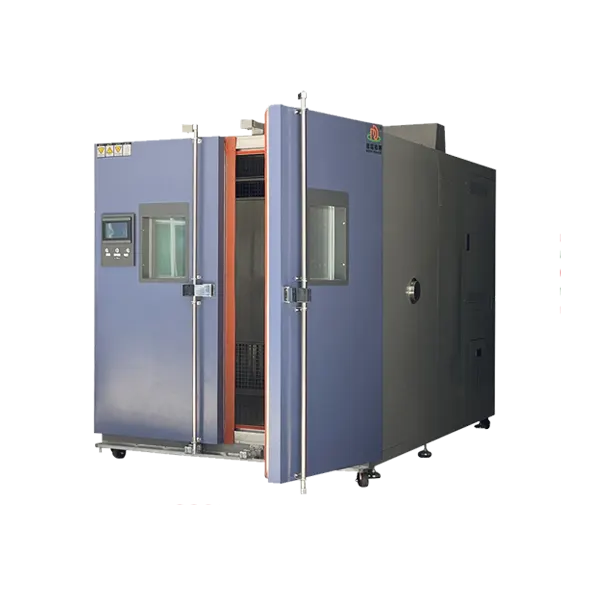
Model:
DR-H202-48m³
Model:
DR-H202-10m³
Model:
DR-H202-8m³
Model:
DR-H202-3m³
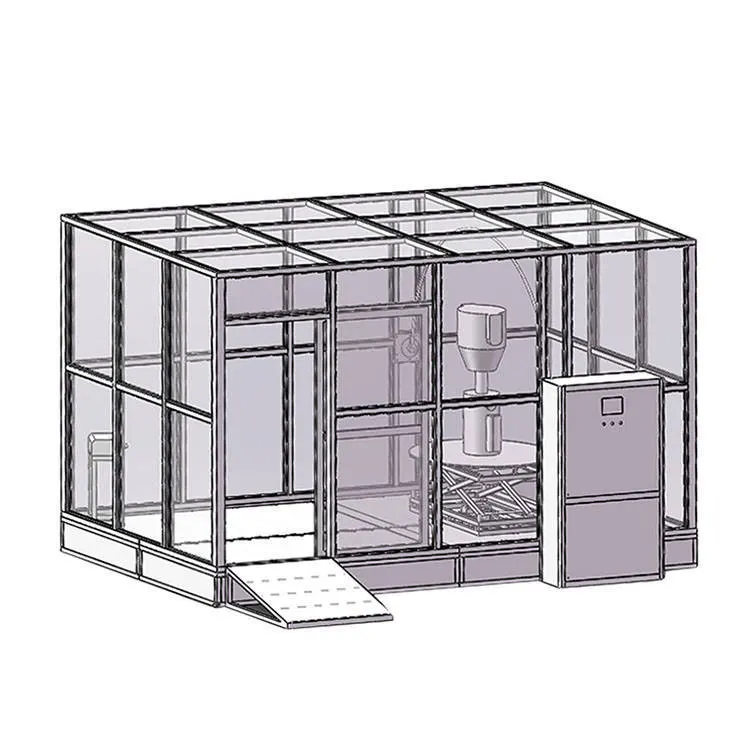
Walk-in chambers are indispensable in industries where product reliability under extreme or variable conditions is non-negotiable. Sectors such as aerospace, automotive, electronics, and defense rely on these large-scale environmental simulators to rigorously test full-scale products and systems. By replicating harsh conditions—from desert heat to arctic cold, high altitude to tropical humidity—these chambers validate durability, safety, and performance before a product ever reaches the market. This proactive testing mitigates field failures, ensures compliance with international standards, and ultimately protects both brand reputation and end-user safety in mission-critical applications.
Electronics & Packaged Materials
Electronics & Telecom: Stress screening server racks, network equipment, and consumer electronics for durability and failure analysis.
Packaged Goods & Materials: Performing shelf-life testing on palletized consumer products or conditioning composite materials.
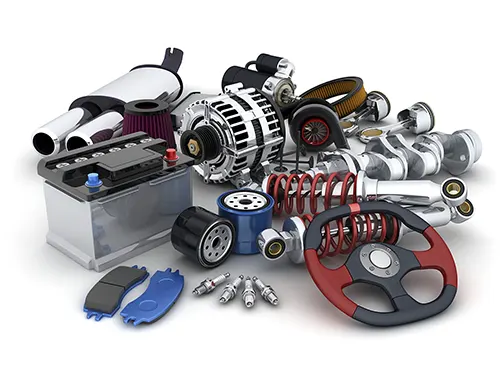
Automotive Aerospace
Automotive: Evaluating electric vehicle batteries, interior assemblies, and entire vehicles for thermal performance, corrosion, and longevity.
Aerospace & Defense: Testing avionics, satellites, and full-scale components under altitude, temperature, and humidity extremes per MIL-STD standards.
A walk-in chamber is a large-scale, room-sized environmental testing enclosure designed to subject full-sized products, large components, or bulk materials to precise and controlled atmospheric conditions. As the name implies, these units are big enough for personnel to physically walk—or even drive—inside to load and configure test items.
Think of it as a sophisticated, industrial-grade "climate room." Unlike smaller benchtop or reach-in chambers, walk-in chambers provide the spatial capacity and power needed to test objects as large as vehicles, aerospace assemblies, pallets of consumer goods, or entire server racks under rigorous, repeatable conditions.
At its core, a walk-in chamber replicates the engineering principles of smaller chambers but at a massive scale. Key components include:
-
Insulated Enclosure: Constructed with heavy-duty, thermally insulated panels (often clad in stainless steel or coated steel) to form a sealed test room.
-
High-Capacity Conditioning System: Powerful refrigeration units, heaters, and humidifiers generate and maintain the target environment (e.g., -40°C to +85°C, 10% to 98% RH).
-
Air Circulation System: Large fans and strategically placed ducts ensure uniform temperature and humidity throughout the entire workspace, eliminating "hot spots" or gradients.
-
Advanced Control System: A user-friendly digital controller allows engineers to program complex test profiles, monitor conditions in real-time, and log data for compliance reporting.
-
Access & Safety Features: Includes a large, gasketed door, safety interlocks, interior emergency releases, viewing windows, and often pass-through ports for cables or sensors.
-
Fully Customizable Size & Configuration: We design and build chambers tailored to your specific spatial and performance requirements, from modest rooms to large, drive-in facilities.
-
Precise Environmental Control: Achieve and maintain tight tolerances on temperature ranges (from extreme cold to high heat) and humidity levels with our advanced control systems.
-
Robust Construction & Safety: Built with industrial-grade materials and featuring comprehensive safety protocols to ensure operator protection and long-term durability.
-
Seamless Integration: Our chambers support ISTA, MIL-STD, and other industry-specific testing protocols, often integrating with data acquisition systems for complete test monitoring and reporting.
-
Expert Support from Design to Maintenance: We partner with you through every phase: planning, installation, validation (IQ/OQ), and ongoing technical support.
Looking for a walk-in environmental simulation solution? Contact our engineering team today for a free consultation to discuss your specific testing requirements and receive a tailored proposal.
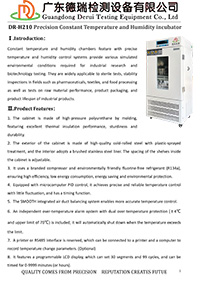
DR-H210 Precision Constant Temperature and Humidity incubator
The Precision Constant Temperature and Humidity Incubator provides a stable and controlled environment for applications requiring exact climatic conditions. It delivers exceptional accuracy in temperature and relative humidity control, ensuring reliable results for cell culture, stability testing, and material research.
Determine not just the footprint, but the internal volume needed. Consider ceiling height, door size, and potential for future expansion.

walk-in chamber
When your testing requirements exceed the limits of standard benchtop chambers, a **walk-in chamber** provides the ultimate solution. These large-scale environmental test enclosures are engineered to
What is a walk-in chamber used for?
A walk-in chamber is a large-scale environmental test room used to simulate precise temperature, humidity, and other conditions. Its primary uses include product reliability testing, quality validation, and research for industries like aerospace, automotive, and electronics, where full-sized products or bulk materials need testing under extreme climates.
How much does a walk-in test chamber cost?
The cost of a walk-in test chamber varies significantly based on size, performance range (e.g., extreme temperatures), and customization. Standard models can start from tens of thousands of USD, while large, highly customized units for defense or aerospace can cost several hundred thousand dollars. The most accurate method is to request a custom quote based on your specific specifications.
What is the difference between a walk-in chamber and a benchtop chamber?
The key difference is scale and capacity. A benchtop chamber is a small cabinet for testing components or samples. A walk-in chamber is a room-sized enclosure that allows personnel to walk inside, designed for testing full-sized products (like vehicles or server racks), large batches, or performing shelf-life testing on palletized goods.
What industries use walk-in environmental chambers?
A: Industries that require rigorous product validation under extreme conditions rely on walk-in environmental chambers. Key sectors include:
Aerospace & Defense (for MIL-STD testing)
Automotive (EV battery, component testing)
Electronics & Telecom (server, hardware stress testing)
Pharmaceuticals (stability testing)
Packaged Goods & Materials (shelf-life testing)
How do I choose a walk-in chamber?
A: Choosing a walk-in chamber requires evaluating several factors:
Size & Layout: Required internal volume and door access.
Performance Range: Needed temperature and humidity ranges.
Uniformity & Stability: Tolerance levels across the workspace.
Compliance & Data: Support for standards (ISTA, MIL-STD) and data logging.
Safety & Construction: Build quality and safety features.
Partnering with a manufacturer that offers expert consultation is crucial.
What are the standard sizes for walk-in chambers?
Walk-in chambers are highly customizable, but common volume offerings range from small units (e.g., 3-10 cubic meters) for specific applications to large rooms exceeding 48+ cubic meters. Standard panelized construction allows for tailoring dimensions (width, depth, height) to fit your specific facility and testing needs.
Can a walk-in chamber simulate both heat and cold?
Yes, most modern walk-in chambers are designed as thermal shock chambers or temperature-humidity chambers capable of simulating a wide spectrum of conditions. High-performance models can achieve ranges from as low as -70°C (-94°F) to as high as +180°C (356°F), replicating everything from arctic cold to desert heat.
What maintenance does a walk-in environmental chamber require?
A: Regular maintenance is essential for reliability and accuracy. Key tasks include:
Cleaning the interior and seals.
Checking and calibrating sensors.
Inspecting and servicing refrigeration condensers and humidification systems.
Verifying control system software.
A qualified supplier should provide detailed maintenance protocols and support.
What is a walk-in stability chamber?
A walk-in stability chamber is a specialized type of environmental chamber used primarily in pharmaceutical, biotechnology, and food industries. It maintains precise, constant temperature and humidity (e.g., 25°C/60% RH) for extended periods to conduct ICH guideline stability studies on long-term storage conditions of products and materials.