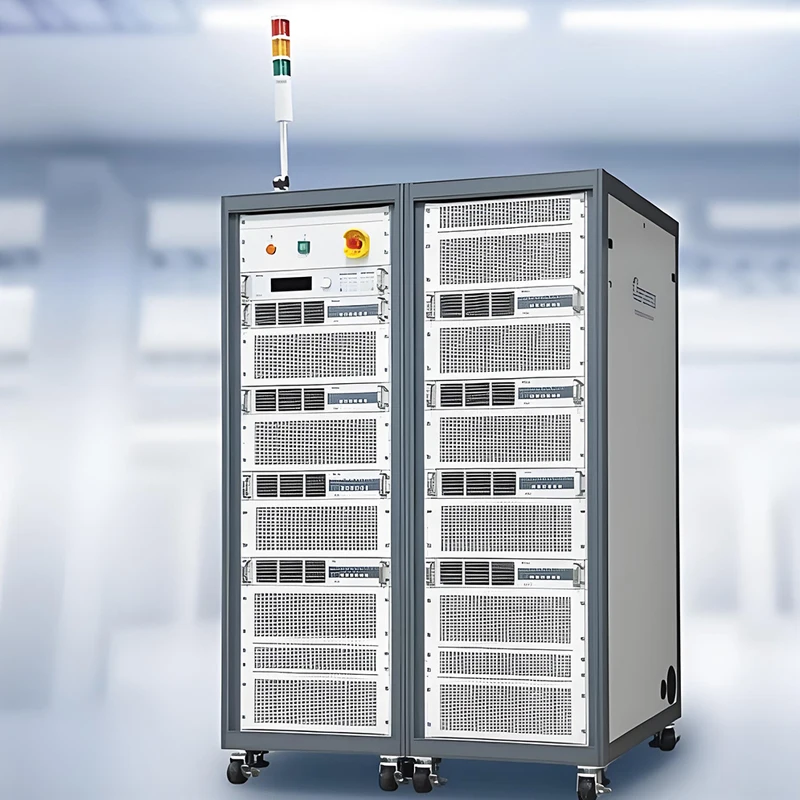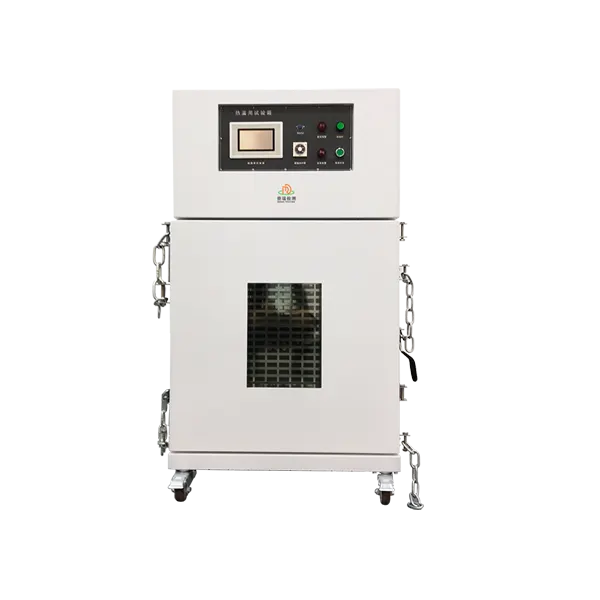
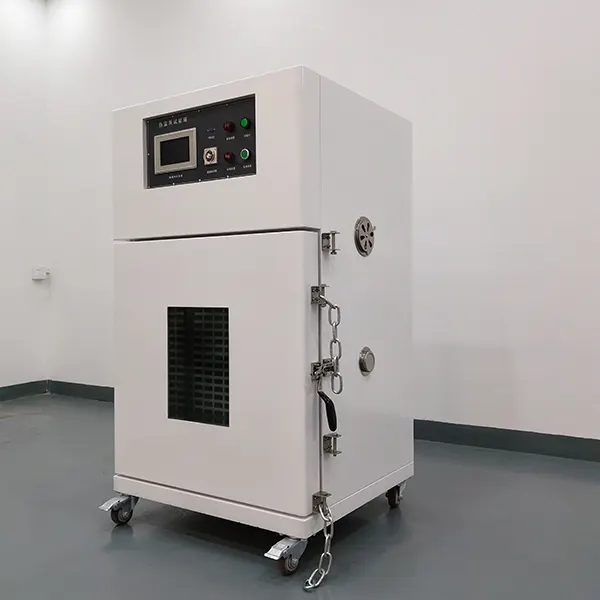
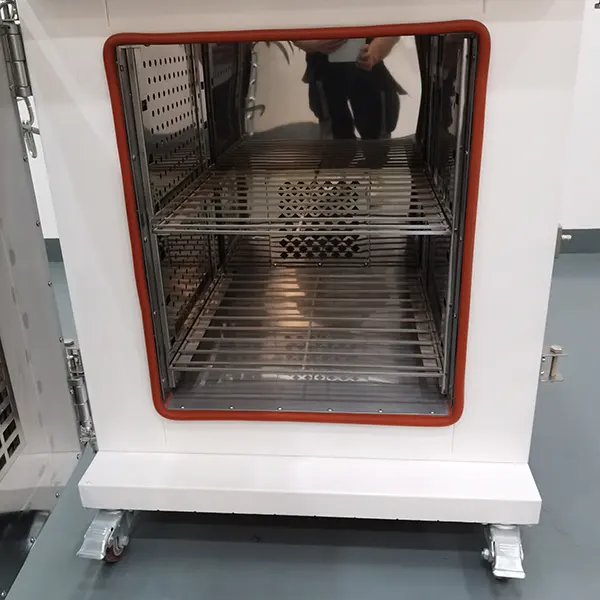








216 L Battery Thermal Abuse Test Chamber
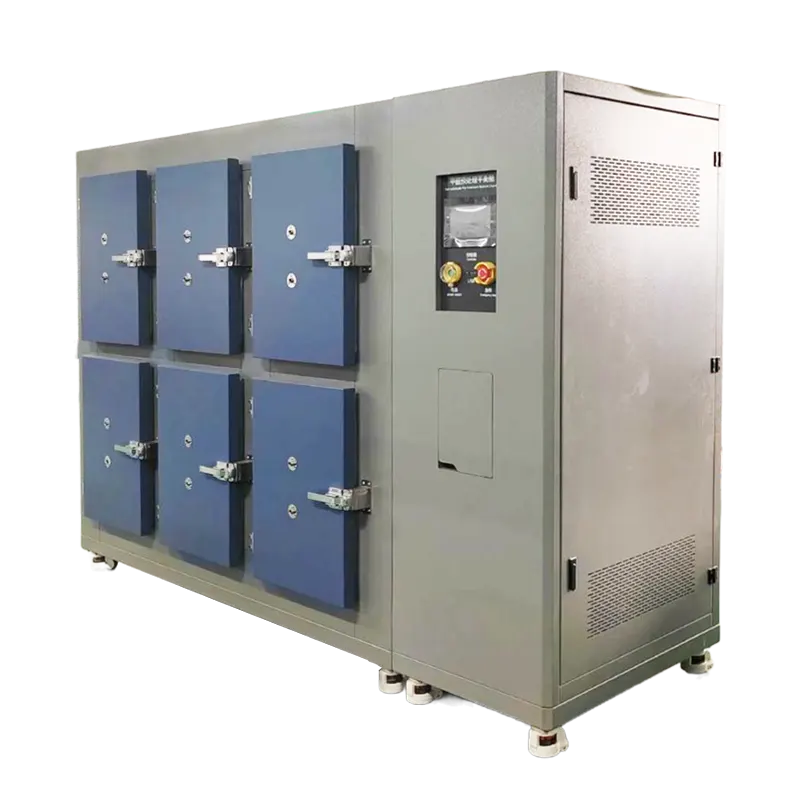
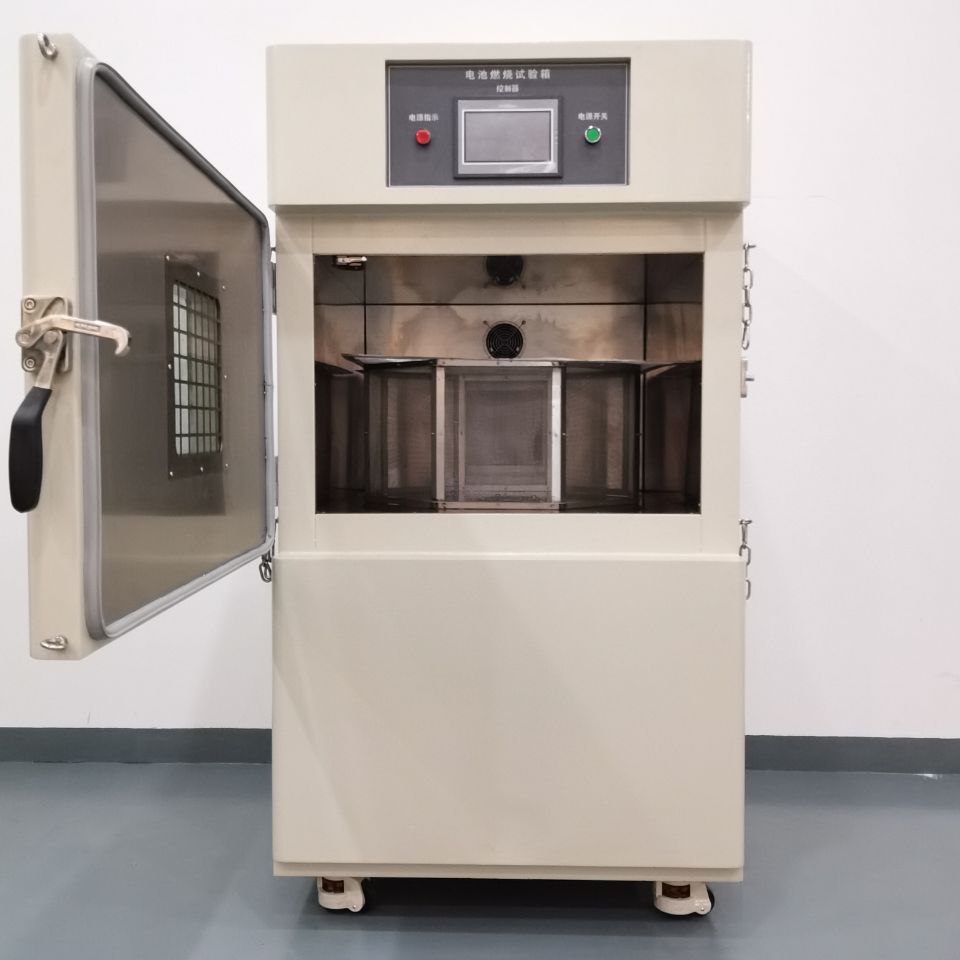
Apply a defined high-temperature exposure to battery cells or other approved specimens in a nominal 216 L workspace. The published platform offers programmed heating up to 200°C, a SUS304 interior and pressure-relief and door-retention features. Specify the specimen, heat load, failure consequence and test method before committing to a configuration.
First Check: Is This the Right Test Equipment?
| Your test objective | Equipment route | Por qué importa |
|---|---|---|
| Expose an approved specimen to a programmed high-temperature condition | This thermal-abuse chamber may fit after loaded-performance and safety review. | Heating, workspace, monitoring and protection must match the actual specimen. |
| Measure life or performance through hot/cold cycling | Review a dedicated battery temperature test chamber. | Refrigeration, repeated cycles and external cycler interfaces are different requirements. |
| Apply force, impact or internal short | Choose a dedicated crush, impact or forced-short machine. | Those tests require a mechanical mechanism, fixture and stop logic, not just an enclosure. |
| Expose the specimen to an external flame | Review the DR-D211 fire tester and its dedicated fire-test room. | Gas burner, fuel handling and open-fire safety are separate design decisions. |
Published Base Configuration and Open Engineering Questions
The current DERUI page supports the values below. Final loaded performance and protective scope must be written into the project-specific technical agreement.
| Artículo | Published value | Confirm before ordering |
|---|---|---|
| cURL Too many subrequests by single Worker invocation. To configure this limit, refer to https://developers.cloudflare.com/workers/wrangler/configuration/#limits | 600 × 600 × 600 mm; approx. 216 L | Usable clearance after fixtures, sensors, cable routing and specimen spacing. |
| Rango de temperatura | RT+20°C to 200°C | Ambient reference, loaded setpoints, stabilization and specimen-versus-air temperature. |
| Temperature performance | Fluctuation ±0.1°C and uniformity ±0.5°C at +100°C stated | Empty/loaded condition, sensor grid, test method and calibration evidence. |
| Control | Programmed and fixed-value modes; temperature resolution 0.1°C, time resolution 1 s | Program steps, alarm logic, data channels and export format. |
| Construcción | 1.2 mm SUS304 inner liner; coated steel exterior; window and lighting | Insulation, fixture load, access and replaceable liners if damaging events are expected. |
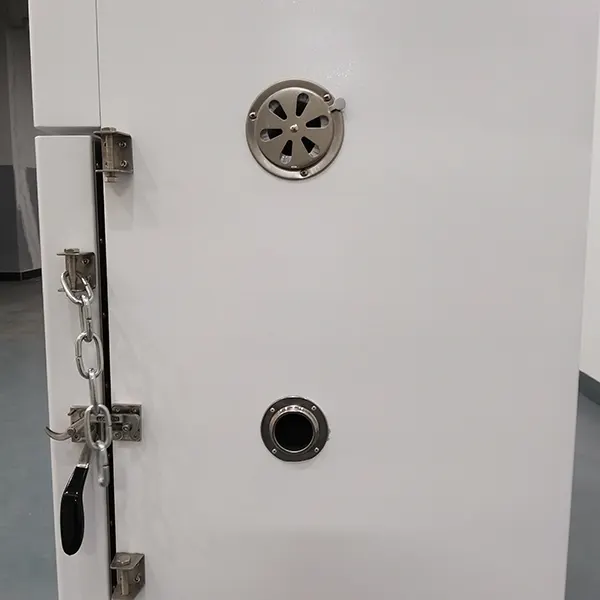
| Published protective features | Top pressure-relief port, mechanical door retention, over-temperature, overload, short-circuit and emergency-stop protection | Design basis, relief direction, interlocks, independent shutdown and tested limits. |
| Electrical configuration | 220 V single-phase or 380 V three-phase, 50/60 Hz stated | Selected version, power/current, breaker and destination-market service. |
| External dimensions | Approx. 850 × 760 × 1260 mm | Approved drawing, door swing, service space and extraction connection. |
Design the Test Around the Battery, Not Just the Setpoint
Specimen energy and state
Cell chemistry, capacity, state of charge, quantity and stored energy define the credible venting, flame and pressure hazard.
Heat load and fixture
Mass, support layout, airflow obstruction and any powered heat generation determine the loaded temperature response and usable chamber volume.
Observation and evidence
Define air and cell sensors, voltage/current channels if needed, sampling interval, camera position, event timestamps and report format.
For meaningful comparison, the technical agreement should state the specimen arrangement, ambient conditions, sensor positions, stabilization criterion, dwell time and pass/fail rule. Catalogue empty-chamber figures alone do not prove the specimen follows the required profile.
What Is Standard, and What Must Be Quoted Separately?
| Scope | Current evidence | Purchase-document action |
|---|---|---|
| Heating, controller and chamber construction | Described in the current product specification. | Verify the selected model and loaded performance in the approved datasheet. |
| Pressure relief, door retention and emergency stop | Described as protective features. | Define rated scenario, interlock logic, inspection and FAT demonstration. |
| Voltage/current monitoring and feedthroughs | Discussed as application-specific interfaces; standard channel count not established. | Specify connectors, isolation, channels, sampling rate and export. |
| Gas/smoke detection, fire suppression and exhaust treatment | Not established as universal standard equipment. | Select through facility risk assessment; list each ordered component. |
| Remote operation and alarm integration | Possible configuration, not a verified standard package. | Specify network/control boundary, hardwired shutdown and acceptance test. |
Build the Test and RFQ in Six Decisions
Method
Send the exact standard or OEM procedure, edition, clause, profile and acceptance criteria.
Specimen
Provide drawings, dimensions, mass, quantity, chemistry, capacity and state of charge.
Operation
State whether the battery is stored, monitored, powered or connected to an external cycler.
Thermal profile
Define start condition, setpoints, ramps, dwell, stabilization and number of repetitions.
Risk controls
Document credible venting/fire scenarios, detection, relief, exhaust and emergency response.
cURL Too many subrequests by single Worker invocation. To configure this limit, refer to https://developers.cloudflare.com/workers/wrangler/configuration/#limits
Agree on FAT, calibration, sensor map, event record, final drawing and supplied manuals.
Standards and Compliance: Apply the Exact Clause
Battery transport, portable-cell, industrial-cell and EV safety documents cover different specimens and abuse mechanisms. The chamber provides a controlled thermal environment; it is not itself a certification. For each requested claim, DERUI and the laboratory should identify the edition, specimen level, temperature profile, instrumentation, safety requirements and acceptance rule.
Examples buyers may reference include UN Manual of Tests and Criteria 38.3, IEC 62133-2, IEC 62619, UL 1642 or an OEM method. Some clauses require mechanical, electrical or flame apparatus that this thermal chamber does not supply. Do not list every standard as “met” by default.
Recommended Factory Acceptance and Delivery Evidence
| Acceptance point | Evidence to include in the technical agreement |
|---|---|
| Temperature mapping | Sensor positions, test load, setpoints, stabilization time, fluctuation and uniformity results. |
| Program and records | Witnessed recipe, alarm sequence, timestamps, export sample and power-interruption behavior. |
| cURL Too many subrequests by single Worker invocation. To configure this limit, refer to https://developers.cloudflare.com/workers/wrangler/configuration/#limits | Over-temperature cutoff, door restraint/interlock, emergency stop and relief-path inspection. |
| Facility interfaces | Power nameplate, exhaust/duct connection, cable feedthrough drawing and clearance plan. |
| Documents | Approved drawing, manual, wiring diagram, component list, calibration and FAT report. |
Preguntas Frecuentes
What is this chamber mainly for?
Controlled high-temperature exposure of an approved battery specimen within the published 216 L workspace and up to 200°C range, with protection selected for the actual risk.
Does it perform overcharge, external short circuit or crush tests?
No, not as a bare chamber. Those methods require separate power, switching or mechanical mechanisms and matching safety interfaces.
Can it handle a module or pack?
Not automatically. The specimen must fit the usable space, floor/fixture load, heat-removal requirement and project hazard limit. Send the drawing and energy information for review.
Is the published ±0.5°C uniformity a loaded-battery guarantee?
No loaded guarantee is established by the published figure. Define the load, sensor layout and measurement method in the acceptance agreement.
Is fire suppression standard?
The public specification does not establish universal inclusion. Select suppression, gas detection and room response through a documented risk assessment.
Does the chamber meet every battery safety standard listed online?
No. Compliance belongs to the complete specimen-specific procedure and qualified evaluation, not the chamber name or temperature range alone.
What would make the quotation more accurate?
Provide the standard clause, battery drawing, chemistry, SOC, energy, full thermal profile, powered load, monitoring, safety plan and required FAT evidence.
Get a Configuration That Can Be Verified
Send the test profile and battery data. Ask DERUI for a project-specific layout, included-versus-optional safety list and measurable FAT plan—so engineering and procurement can review the same proposal.
Attach to your inquiry
- Standard edition and test profile
- Specimen drawing, energy and SOC
- Powered load and monitoring channels
- Site utilities and hazard assessment