

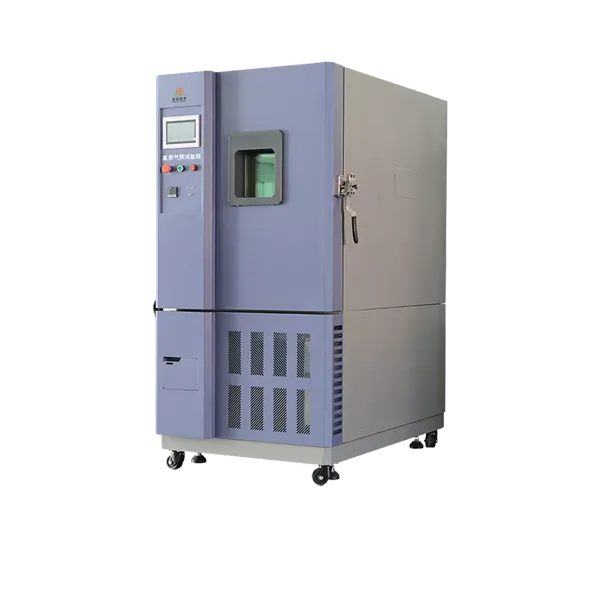
DR-D210 Battery Forced Internal Short Circuit Tester
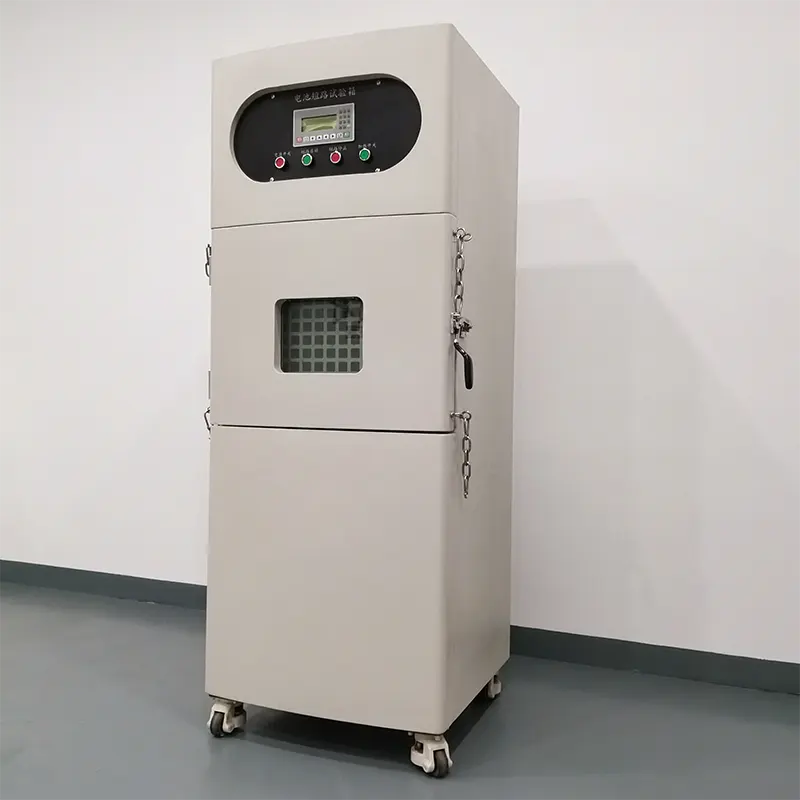
Apply controlled mechanical force to a prepared lithium-ion cell inside a temperature-controlled test enclosure while recording the cell response. DR-D210 is a specialized cell test system: the cell format, contact method, conditioning, force stop criterion and monitoring channels must be matched to the adopted procedure.
What the Test System Does
Controlled force application
The published servo system applies force while reporting the measured force and travel. Confirm the force ramp, actuator resolution and stop logic for the specified method.
Temperature conditioning
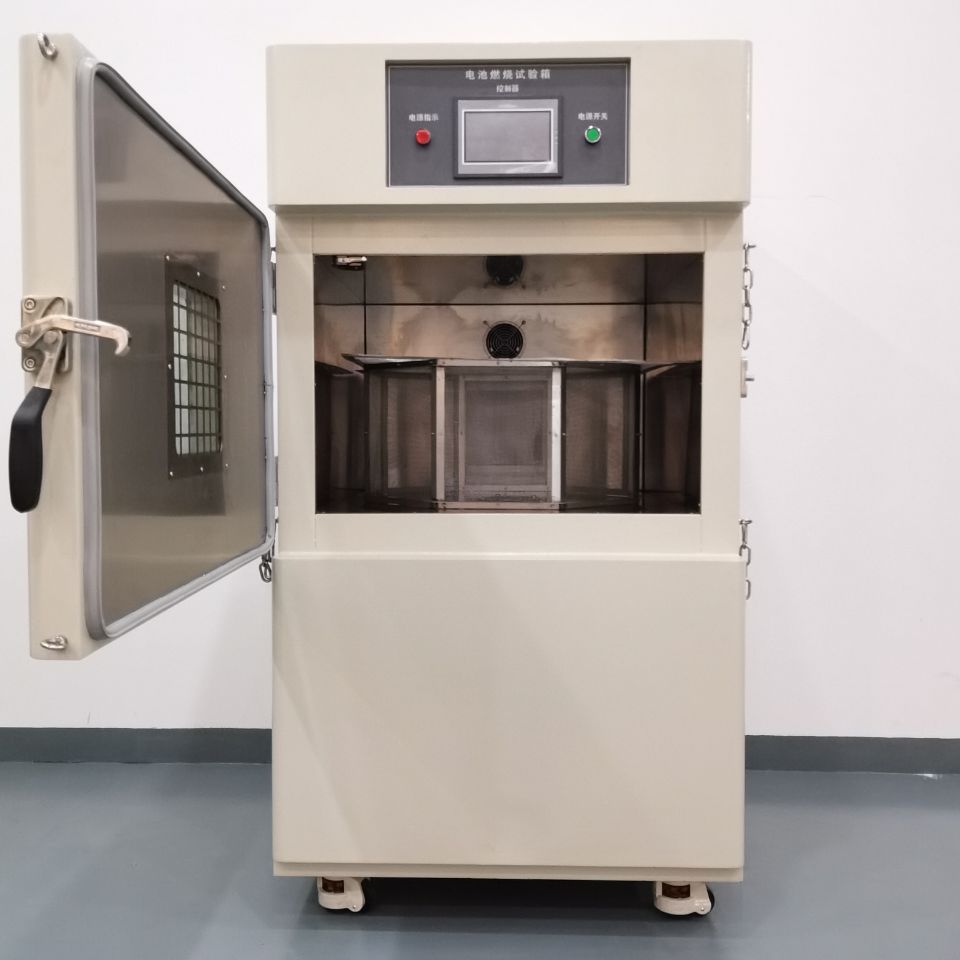
The integrated chamber provides a published 0–100°C range. Specify the required cell temperature, tolerance, soak time and measurement location.
Response monitoring
Cell voltage, surface temperature and actuator force can be captured during the event. Define channel count, sample rate per channel, trigger and exported record.
Published DR-D210 Values and Quotation Checks
| عنصر | Published statement | Confirm before ordering |
|---|---|---|
| Force range | 0–2,000 N | Calibrated measurement range, force resolution, ramp and permitted overload. |
| دقة القوة | ±0.5% full scale | Whether this is force measurement or control accuracy; calibration evidence. |
| نطاق درجة الحرارة | 0°C to +100°C | Stability, loaded performance, cell temperature sensor and conditioning duration. |
| Data acquisition | حتى 100 عينة في الثانية | Rate for each recorded channel, timestamps, trigger, storage and export format. |
| Control | PLC and touchscreen | Programme capacity, event stop conditions and user access controls. |
| Cell formats | Cylindrical and prismatic cells described; other formats discussed as options | Exact cell dimensions, contact position, fixture drawing and sample-preparation method. |
| Test enclosure | Stainless-steel interior, observation window and exhaust described | Final safety package, exhaust connection, emergency stop and facility interface. |
Define the Test Method Before Selecting the Fixture
Adopt the exact document
Record the applicable standard, edition, clause, cell scope and laboratory procedure.
Prepare the cell
Define the permitted cell construction, charge state, conditioning and any controlled preparation required by the method.
Set the contact geometry
Approve the fixture, indenter/contact location, alignment and restraint for the selected cell format.
Set force and stop criteria
Specify force ramp, displacement, voltage event, maximum limits and safe-state response.
Record the response
Capture synchronized force, travel, voltage, temperature, event time and observations as required.
Apply the actual acceptance rule
Use the criteria in the adopted procedure and report deviations, venting or other abnormal events.
Fixture and Cell Scope
| شكل الخلية | cURL Too many subrequests by single Worker invocation. To configure this limit, refer to https://developers.cloudflare.com/workers/wrangler/configuration/#limits | Procurement evidence |
|---|---|---|
| Cylindrical | Cell diameter/length, orientation, restraint and contact location | Approved fixture drawing and representative-cell trial. |
| Prismatic | Cell face, thickness, clamping and contact geometry | Approved alignment drawing and travel clearance. |
| كيس | Method applicability, support surface, swelling clearance and damage risk | Written method review before quoting a fixture; do not assume universal compatibility. |
| Multiple sizes | Changeover time, fixture set and sensor repositioning | Itemized fixture list and FAT with representative sizes. |
Safety and Facility Interfaces
| Function | Required project definition |
|---|---|
| Enclosure and viewing | Event energy, door/window construction, observation method and access interlock. |
| Exhaust | Expected gas/smoke, connection size, flow, discharge route and facility approval. |
| Emergency stop | Actuator stop, specimen power isolation, chamber response and restart permission. |
| Detection and alarms | Which sensors are supplied, thresholds, calibration and cause-and-effect logic. |
| Post-event handling | Remote observation, cooldown, ventilation, disposal and laboratory procedure. |
Use Standards for Their Actual Test Scope
| Reference | cURL Too many subrequests by single Worker invocation. To configure this limit, refer to https://developers.cloudflare.com/workers/wrangler/configuration/#limits | Decision for DR-D210 |
|---|---|---|
| IEC 62133-2 | Safety of portable sealed lithium cells and batteries | Check the adopted edition and whether its forced-internal-short procedure applies to the intended cell; approve fixture and method before claiming support. |
| JIS C 8714 | Japanese lithium-ion cell and battery safety requirements | Confirm current applicable edition, specimen preparation and precise procedure. |
| IEC 62619 / IEC 62660-3 | Industrial and automotive cell safety programmes | Map the requested clause separately; these references do not make every DR-D210 function universally compliant. |
| UN 38.3 | Lithium transport test programme | T.5 is an external short-circuit test. This mechanical FISC tester is not a substitute for the UN 38.3 T.5 apparatus. |
For transport-related low-pressure testing, review the separate DR-D203 battery altitude simulation chamber. It serves a different procedure and equipment purpose.
Records and Factory Acceptance
Force calibration
Check force-indication accuracy at agreed points and verify actuator travel, ramp and stop behaviour with a safe dummy specimen.
Temperature and channels
Map agreed temperature points and confirm voltage, temperature, force and displacement channels, timestamps and export.
Safety cause and effect
Demonstrate door interlock, emergency stop, overload, alarms, exhaust command and safe recovery without using a live cell for basic functional checks.
What to Send for an Accurate Proposal
| Topic | cURL Too many subrequests by single Worker invocation. To configure this limit, refer to https://developers.cloudflare.com/workers/wrangler/configuration/#limits |
|---|---|
| Method | Standard, edition, clause, laboratory procedure and acceptance criteria. |
| Cells | Chemistry, format, dimensions, capacity, energy, construction and quantities. |
| Preparation | Permitted cell preparation, charge state, conditioning and handling. |
| Mechanical profile | Fixture geometry, force range, ramp, travel and stop trigger. |
| Environment and records | Temperature point, channels, sample rate, data format and report. |
| Facility safety | Ventilation, exhaust, fire response, power and operator access controls. |
الأسئلة المتكررة
Is FISC the same as an external short-circuit test?
No. FISC uses a specified prepared cell and mechanical procedure to induce an internal event; an external short-circuit test connects the cell or battery terminals through an external circuit.
Can DR-D210 perform UN 38.3 T.5?
No such capability is established. T.5 is an external short-circuit test and requires a different test setup.
Does a 2,000 N maximum mean every cell uses 2,000 N?
No. The test programme sets the relevant force ramp and termination conditions for the selected cell and method. The published number is an equipment range limit.
Are all cell formats covered?
The current page describes cylindrical and prismatic cells and mentions other fixtures. Confirm method applicability and an approved fixture for each exact cell format.
Does the tester guarantee a pass under IEC 62133-2?
No. The applicable edition, specimen, preparation, test procedure and acceptance rule determine the result. Equipment capability and cell compliance are separate matters.
What should be witnessed at FAT?
Verify force and temperature measurements, channel timing/export, fixture fit, control sequence, interlocks, exhaust command and documentation using safe representative checks.
Specify the Cell and Procedure Before the Tester
Send the cell format, adopted method, preparation, force profile and safety requirements. DERUI can confirm the fixture, control range, monitoring channels and FAT scope for the quoted DR-D210 configuration.