Calle Shugang 1, No. 3, Town de Hongmei, Ciudad de Dongguan, Provincia de Guangdong, China

Fabricante de cámaras de prueba ambiental con 20 años de experienciaMás de 3000 entregas a clientes en todo el mundo           Correo electrónico: shirley@deruitest.com
WhatsApp Consultation:+86 135 2795 8363

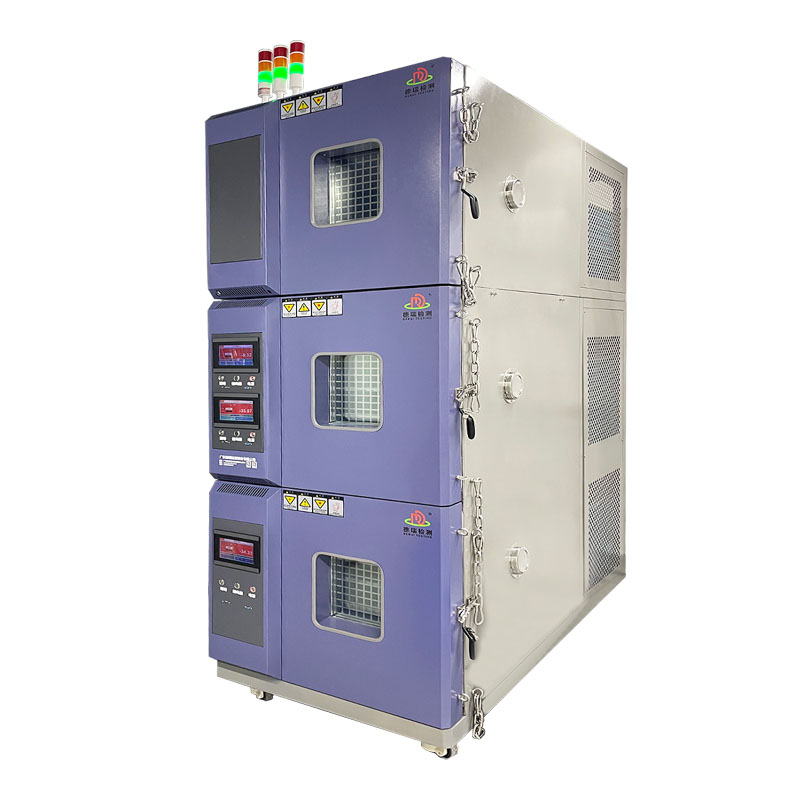
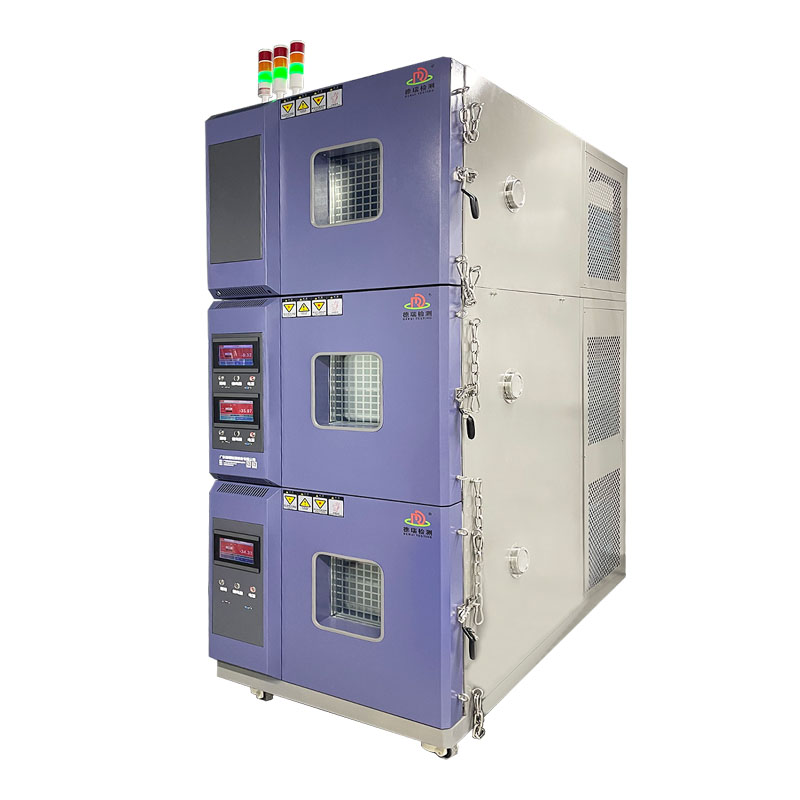
Cámara de prueba a prueba de explosiones de alta y baja temperatura de tres capas

La DERUI DR-H201-3 three-layer battery safety climate chamber combines three independently controlled compartments for parallel temperature or temperature-humidity testing. The safety package is engineered around battery chemistry, state of charge, powered interfaces and credible failure scenarios.

Architecture Three independently controlled compartments
Capacity per Layer 80 / 100 / 150 / 225 / 408 L
Temperature Options 0 / -20 / -40 / -70°C to +150°C
Humidity Option 20% to 98% RH; operating envelope to confirm
cURL Too many subrequests by single Worker invocation. To configure this limit, refer to https://developers.cloudflare.com/workers/wrangler/configuration/#limits Relief, detection, exhaust, suppression and interlocks are project-specific
Before Quotation Provide chemistry, SOC, profiles, interfaces, hazards and FAT criteria
Segura y confiable
bien hecha
Garantía de calidad
personalización
MensajeWhatsApp
Número de línea directa 15580327593
  • Detalles del producto
  • Parámetros técnicos
  • Preguntas frecuentes
  • Contáctanos
Three Independent Battery Test Compartments

DR-H201-3 Three-Layer Battery Safety Climate Chamber

Run three independent temperature or temperature-humidity programmes in one vertical system for battery cells, modules and compact assemblies. Each compartment can be started, stopped and programmed separately to increase laboratory throughput.

Safety boundary: “explosion-proof” is not one universal performance rating. Pressure relief, gas detection, exhaust, fire suppression, reinforced construction and certification scope must be selected from the specimen hazard analysis and verified in the approved design.
ArchitectureThree independently controlled compartments
Capacity per layer80 / 100 / 150 / 225 / 408 L
Published temperature options0 / -20 / -40 / -70°C to +150°C
Humidity option20% a 98% HR

Where the Three-Layer Design Fits

Parallel battery conditioning

Run three batches, setpoints or programmes without dedicating floor space to three separate cabinets.

Development and QC separation

Keep engineering trials, incoming inspection and routine reliability work operationally independent.

Monitored powered testing

Support test leads and specimen monitoring only after powered heat, failure modes and safety controls are engineered.

Published DR-H201 Three-Layer Model Matrix

Modelo Volumen Internal size per compartment
DR-H201-80-3 80 L × 3 500 × 400 × 400 mm
DR-H201-100-3 100 L × 3 400 × 500 × 500 mm
DR-H201-150-3 150 L × 3 500 × 600 × 500 mm
DR-H201-225-3 225 L × 3 500 × 750 × 600 mm
DR-H201-408-3 408 L × 3 600 × 850 × 800 mm
Published-table basis: use this formal model matrix rather than conflicting promotional values. Confirm dimension order and usable clearance on the approved drawing.

Published Environmental Performance

Artículo Published value cURL Too many subrequests by single Worker invocation. To configure this limit, refer to https://developers.cloudflare.com/workers/wrangler/configuration/#limits
Temperature options 0 / -20 / -40 / -70°C to +150°C Select the required configuration per compartment.
Uniformidad de temperatura ≤2°C, no-load Confirm sensor map, setpoint and simultaneous operation.
Fluctuación de temperatura ±0.5°C, no-load Confirm stabilization and measurement interval.
Humidity option 20% a 98% HR Request the combined temperature-RH operating chart.
Humidity uniformity / fluctuation +2/-3% RH / ±2% RH Confirm setpoint, load and method.
Heating / cooling 1–3°C/min / 0.7–1°C/min Confirm average definition, span and loaded condition.
Time setting 1–60,000 min Confirm independent programme and record capacity.

Engineer the Safety Package from the Hazard

Define the specimen

State chemistry, format, capacity, quantity, state of charge, mass, electrical energy and intended abuse or non-abuse condition.

Define credible failures

Identify gas, smoke, flame, pressure, electrolyte, fragments and heat that the chamber and facility must address.

Define detection and response

Specify sensors, thresholds, exhaust, power isolation, suppression, alarms, remote monitoring and emergency procedures.

Safety Functions to Confirm in the Quotation

Function Required confirmation
cURL Too many subrequests by single Worker invocation. To configure this limit, refer to https://developers.cloudflare.com/workers/wrangler/configuration/#limits Relief area, opening pressure, discharge direction and facility clearance.
Gas/smoke detection Target gases, sensor range, alarm thresholds, calibration and interlock matrix.
Forced exhaust Airflow, duct material, discharge point, make-up air and post-event purge.
Fire suppression Agent, concentration/design basis, activation logic and local code approval.
Observation/video Window rating, camera protection, recording and remote-viewing scope.
cURL Too many subrequests by single Worker invocation. To configure this limit, refer to https://developers.cloudflare.com/workers/wrangler/configuration/#limits Specimen supply cut-off, chamber shutdown, emergency stop and fail-safe state.
Certificación Exact product, configuration, certificate number, scope and issuing body.
Importante: a reinforced shell, pressure vent or door chain alone does not prove containment of battery thermal runaway. Acceptance must be tied to a defined hazard scenario and documented test evidence.

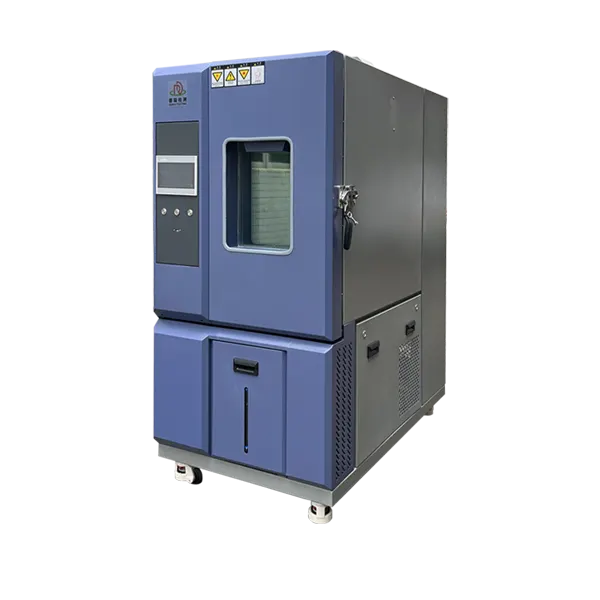
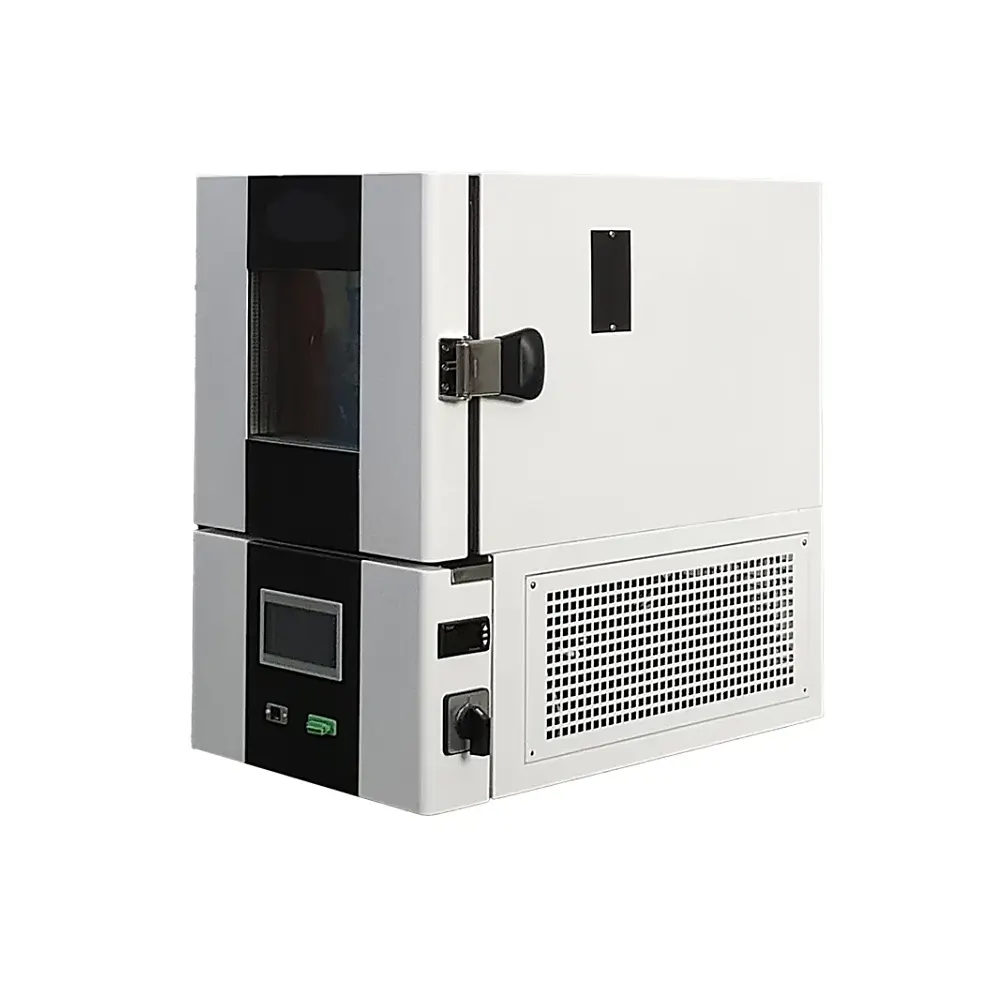
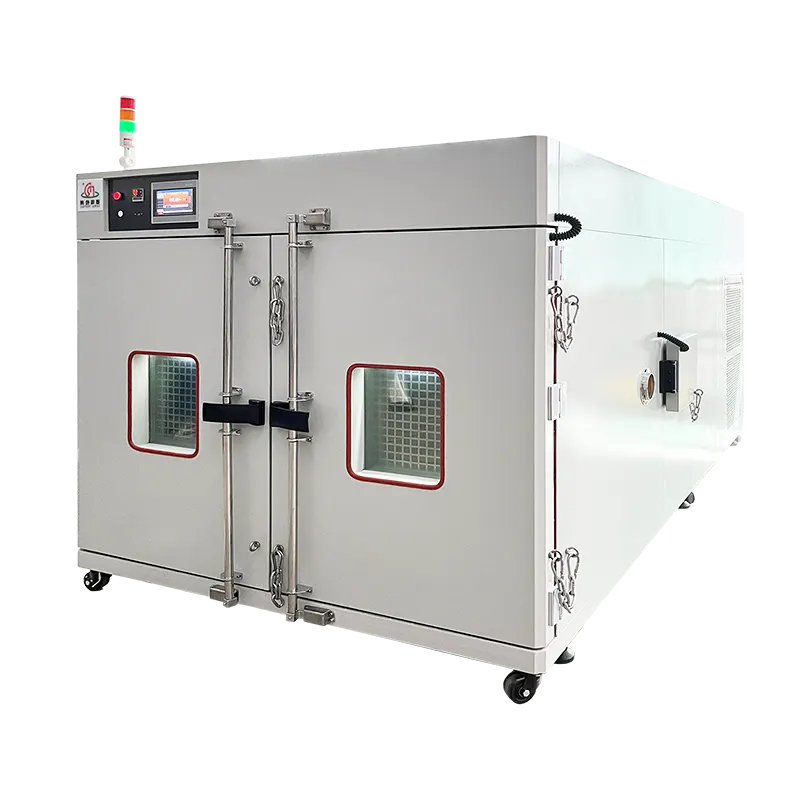
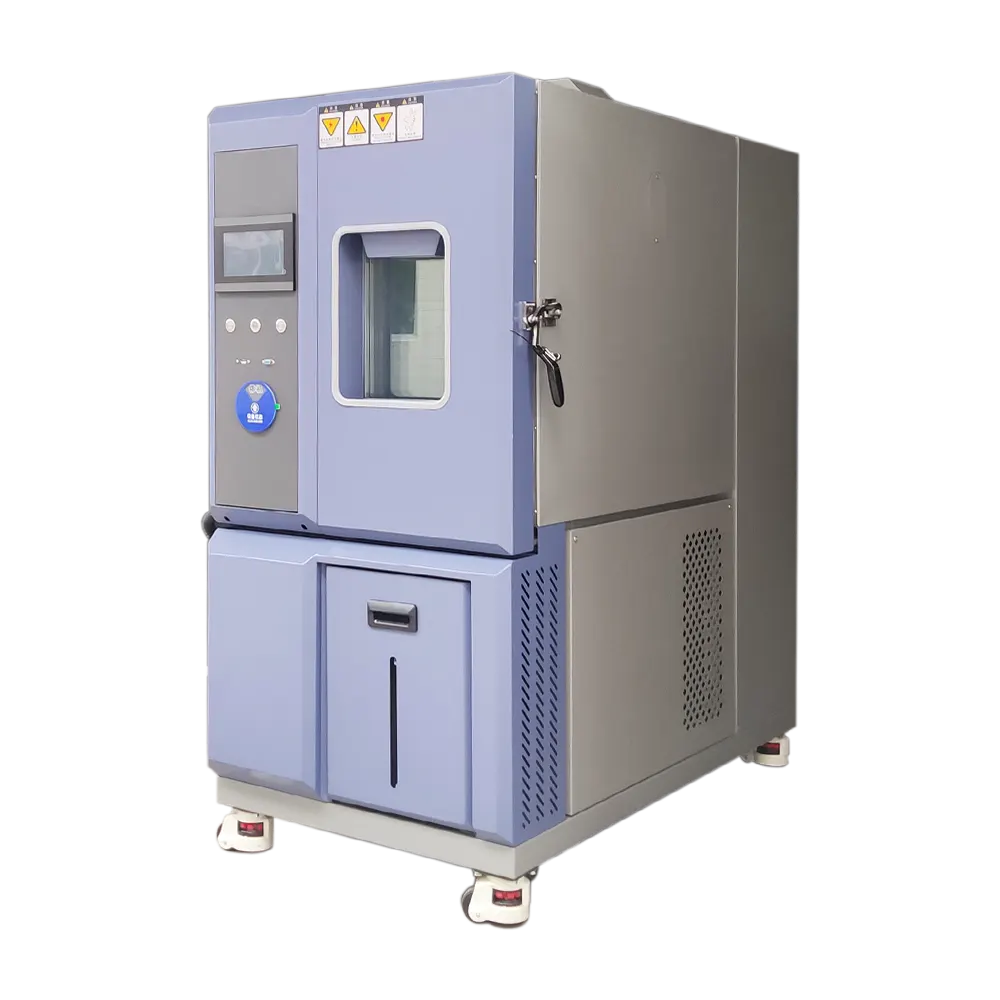
Three-Layer Chamber Reference Image

DERUI DR-H201-3 three-layer battery explosion-proof temperature test chamber

DERUI three-layer battery climate chamber reference image. Final compartment sizes, interfaces and safety package follow the approved risk assessment and technical agreement.

Standards Must Be Mapped to the Exact Procedure

Reference cURL Too many subrequests by single Worker invocation. To configure this limit, refer to https://developers.cloudflare.com/workers/wrangler/configuration/#limits Boundary
UN 38.3 Lithium battery transport tests Not every T.1–T.8 procedure is performed in this climate chamber.
IEC 62619 Industrial secondary lithium cell/battery safety Confirm applicable clause, specimen and required equipment.
UL 1642 Lithium cell safety evaluation Method-specific fixtures and abuse equipment may be separate.
GB/T 31485 or successor/customer requirement Battery safety test reference Confirm current applicable document, procedure and acceptance criteria.

RFQ and Safety FAT Checklist

Topic Information to provide or verify
cURL Too many subrequests by single Worker invocation. To configure this limit, refer to https://developers.cloudflare.com/workers/wrangler/configuration/#limits Chemistry, format, capacity, SOC, quantity, mass and energy.
Three profiles Temperature/RH, ramp, dwell, cycle and powered heat per layer.
Interfaces Charge/discharge, measurement, gas, video, ports and data.
Hazards Gas, smoke, flame, pressure, electrolyte and fragment scenarios.
Facility Power, exhaust, drainage, fire system, clearance and emergency response.
FAT Climate mapping, simultaneous operation, alarms, interlocks and safe-state tests.

Preguntas Frecuentes

Are all three compartments independently controlled?

The page states independent operation. Confirm separate sensors, programmes, records, thermal systems and safety interlocks in the final configuration.

What is the published standard temperature range?

The formal parameter table lists options from 0/-20/-40/-70°C to +150°C. Any extension requires a separately approved configuration.

Does “explosion-proof” mean thermal-runaway containment is guaranteed?

No. The term must be supported by a defined hazard scenario, engineered protections, acceptance tests and any applicable certification.

Are gas detection and fire suppression standard?

The page describes them as available safety functions/options, but the exact standard bill of materials is not established. Confirm each item explicitly.

Can it perform all UN 38.3 tests?

No. UN 38.3 includes different procedures requiring different equipment. Map the applicable procedure to the correct chamber or tester.

cURL Too many subrequests by single Worker invocation. To configure this limit, refer to https://developers.cloudflare.com/workers/wrangler/configuration/#limits

Send battery chemistry, format, capacity, SOC, quantity, three profiles, electrical interfaces, hazards, facility controls and FAT criteria.

Configure the Three Compartments and Safety Matrix Together

Send the specimen data, three environmental profiles, powered interfaces and hazard analysis. DERUI can confirm capacities, climate performance, detection, exhaust, suppression, interlocks and FAT scope.
Request a Battery Safety Chamber Review

FacebookLinkedInXRedditWhatsApp
Modelo DR-H201 -80- 3 DR-H201 -100 - 3 DR-H201 -150 - 3 DR-H201 -225 - 3 DR-H201 -408 - 3
Volumen de capa superior (inferior) 80L*3 100L*3 150L*3 225L*3 408L*3
Dimensiones de la capa superior (inferior) 500 * 400 * 400 400 * 500 * 500 500 * 600 * 500 500 * 750 * 600 600 * 850 * 800
índice Rango de temperatura 0℃~150℃ -20℃~150℃ -40℃~150℃ -70℃~150℃ 
Uniformidad de temperatura ≤2℃ (Tiempo sin carga)
Fluctuación de temperatura ±0.5℃ (Tiempo sin carga)
Rango de humedad 20%~98% HR
Uniformidad de humedad +2% -3% HR
Fluctuación de humedad ±2%
Velocidad de calefacción 1.0~3.0℃/min
Velocidad de enfriamiento 0.7~1.0℃/min
Rango de configuración de tiempo 1~60000M
Pozo de prueba Se instala en el lado izquierdo de la máquina para el cable de alimentación de prueba externa o cable de señal
Ventana de observación 210×275mmO 395×395mm (Horizonte efectivo)

1. P: ¿Qué es una Cámara de Prueba de Explosión a Alta y Baja Temperatura de Tres Capas?
R: Es una cámara de prueba ambiental especializada con tres compartimentos controlados de forma independiente, diseñada para someter de manera segura baterías o materiales peligrosos a ciclos extremos de temperatura mientras previene explosiones internas mediante sistemas integrados de alivio de presión, arrestadores de llama y detección de gases.

2. P: ¿Cómo mejora la eficiencia de las pruebas una cámara de prueba a prueba de explosiones de tres capas?
R: Sus tres compartimentos independientes permiten realizar perfiles de prueba diferentes de manera simultánea, como ciclos de temperatura variables o estándares de baterías, sin interferencias cruzadas, reduciendo significativamente el tiempo de laboratorio y aumentando la capacidad de producción.

3. P: ¿Qué características de seguridad son críticas en una cámara de prueba de baterías a prueba de explosiones?
R: Las características clave incluyen ventilaciones automáticas de alivio de presión, arrestadores de llama, detección en tiempo real de gases combustibles, paredes reforzadas de la cámara y sistemas opcionales de supresión de incendios (por ejemplo, CO2 o Novec 1230) para garantizar la contención segura de eventos de fuga térmica.

4. P: ¿Qué estándares de prueba de baterías se pueden cumplir con una cámara de explosión de triple zona?
R: Cumple con los principales estándares internacionales, incluyendo UN38.3, IEC 62619, GB/T 31485, UL 1642 y SAND 2005-3123, cubriendo pruebas de seguridad para celdas, módulos y paquetes de iones de litio.

5. P: ¿Puedo personalizar el rango de temperatura en una cámara de prueba a prueba de explosiones de tres capas?
R: Sí. Aunque los rangos estándar suelen abarcar de -70°C a +180°C, fabricantes como Derui suelen ofrecer rangos personalizables para cumplir con requisitos específicos de prueba de materiales o químicas de baterías.

6. P: ¿Cuál es la diferencia entre una cámara de una sola zona y una de tres capas a prueba de explosiones?
R: Una cámara de una sola zona tiene un espacio de prueba unificado con condiciones uniformes, mientras que una de tres capas ofrece tres compartimentos separados y controlados de forma independiente, permitiendo pruebas paralelas de diferentes muestras o condiciones en una sola unidad.

7. P: ¿Cómo se mantiene la uniformidad de temperatura en cada capa de la cámara?
R: Cada compartimento utiliza sensores calibrados individualmente, sistemas de flujo de aire dedicados y controladores PID de alta precisión para garantizar una uniformidad de temperatura dentro de ±2°C y fluctuaciones dentro de ±0.5°C en toda la zona de prueba.

8. P: ¿Qué industrias utilizan comúnmente cámaras de ciclo térmico a prueba de explosiones de tres capas?
R: Son esenciales en la fabricación de baterías para vehículos eléctricos (VE), pruebas de sistemas de almacenamiento de energía (ESS), aeroespacial, electrónica de consumo y cualquier campo que requiera una validación térmica rigurosa de materiales peligrosos.

9. P: ¿Qué características opcionales están disponibles para pruebas avanzadas de baterías?
R: Las opciones incluyen control de humedad (20–98% HR), refrigeración por agua, monitoreo interno por video, interfaces para fijaciones de baterías para pruebas de sobrecarga/descarga, y diseños listos para automatización con integración de brazos robóticos.

10. P: ¿Cómo elijo un fabricante confiable para una cámara de prueba a prueba de explosiones?
A: Busque experiencia comprobada en diseños a prueba de explosiones, cumplimiento con certificaciones internacionales (CE, ATEX/IECEx opcional), soporte técnico transparente y una red de servicio global. Proveedores establecidos como Derui suelen ofrecer informes completos de calibración y soporte de ingeniería personalizado.

WhatsAppWhatsApp
WhatsAppWhatsApp
WhatsApp
MensajeMensaje

Solicitar una Cotización