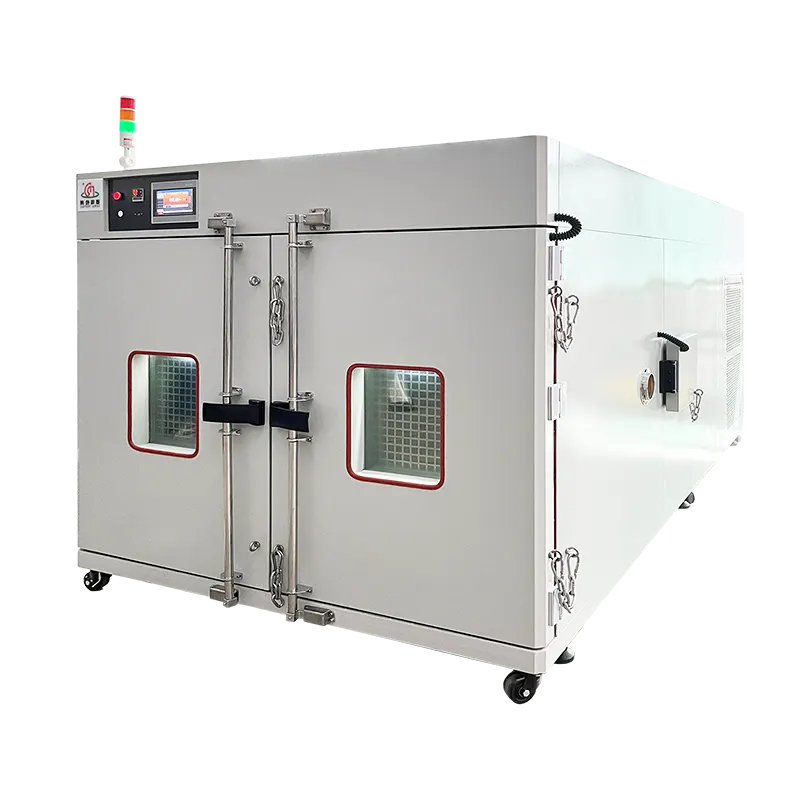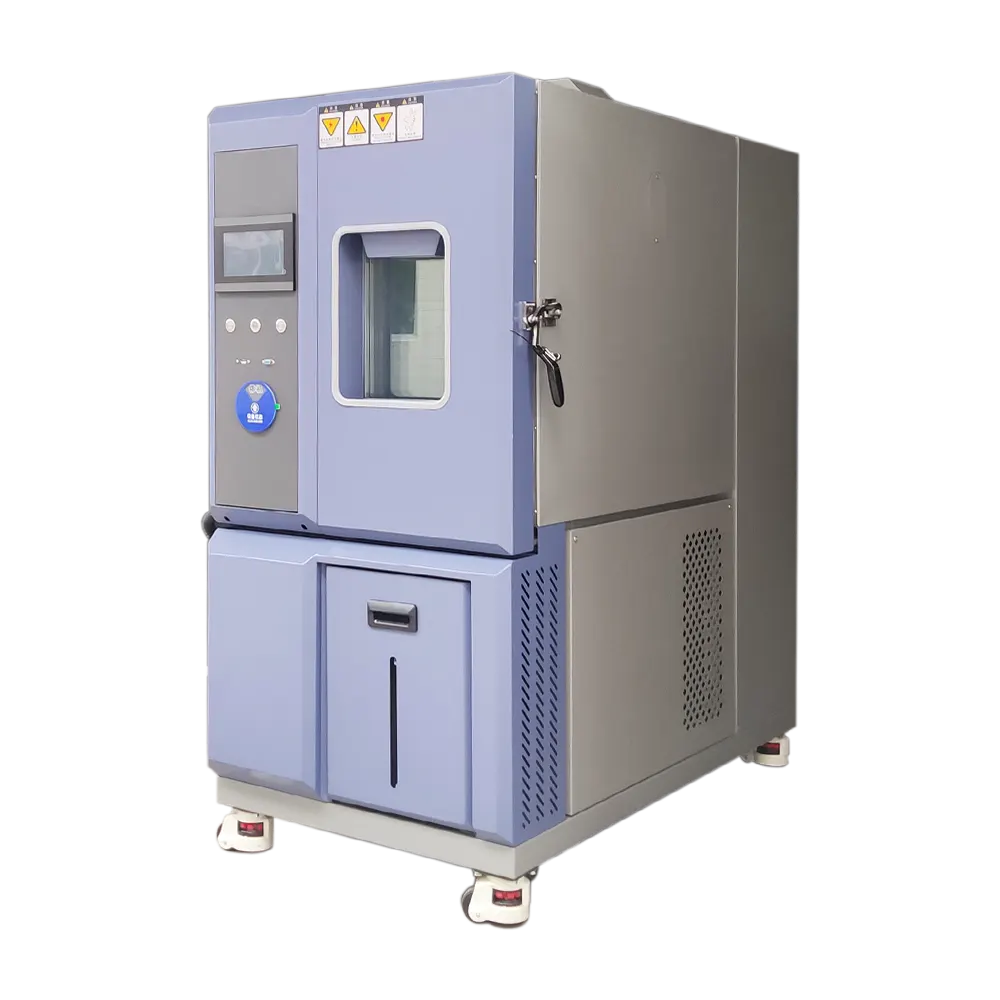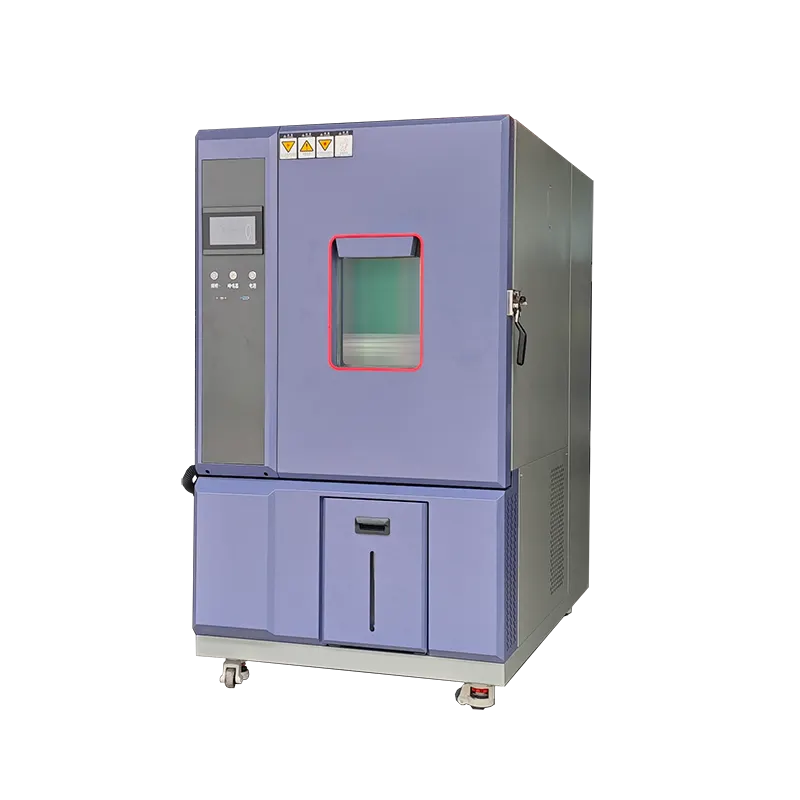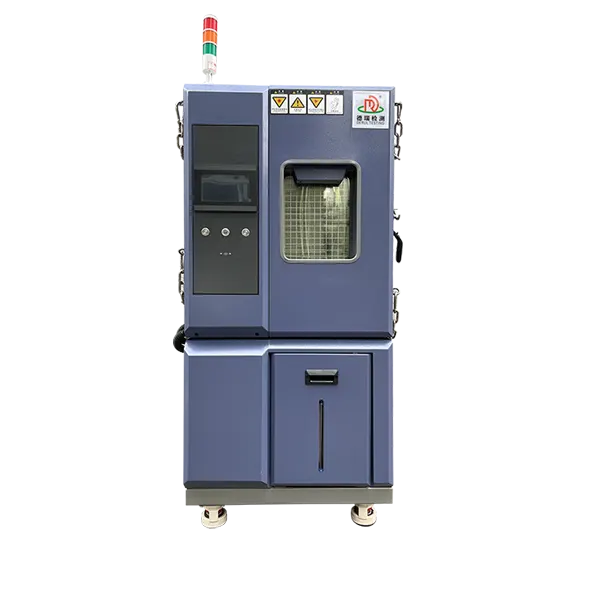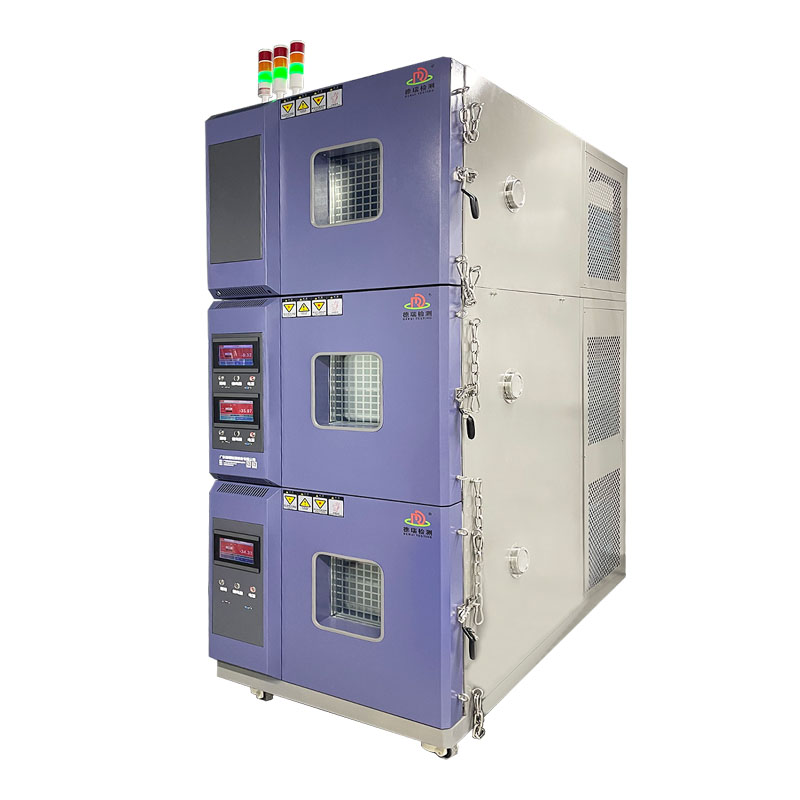


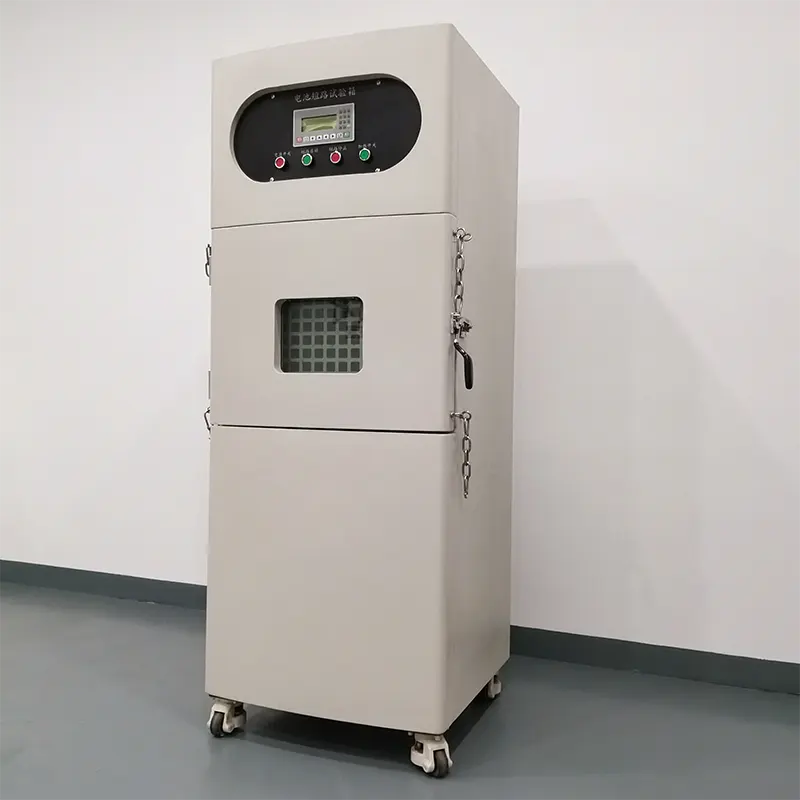
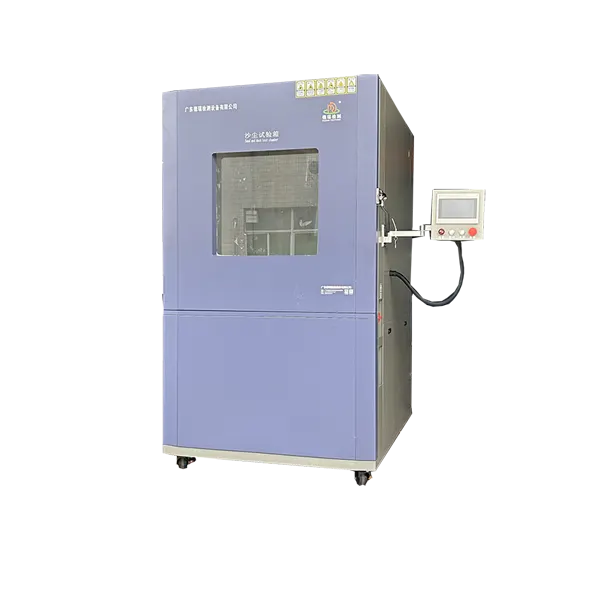

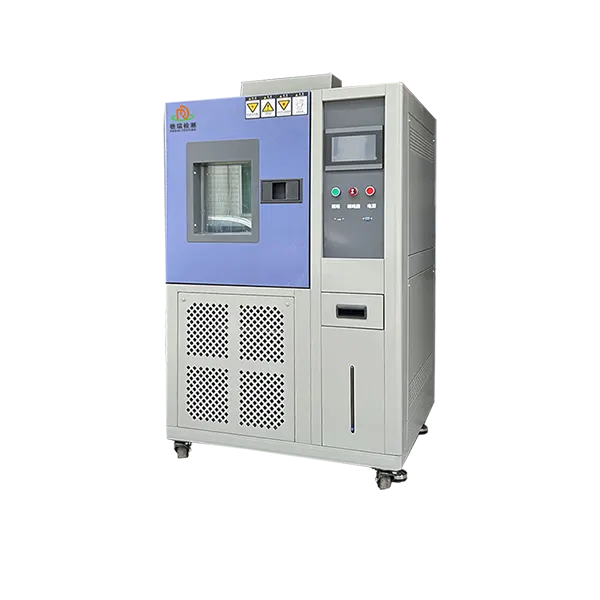
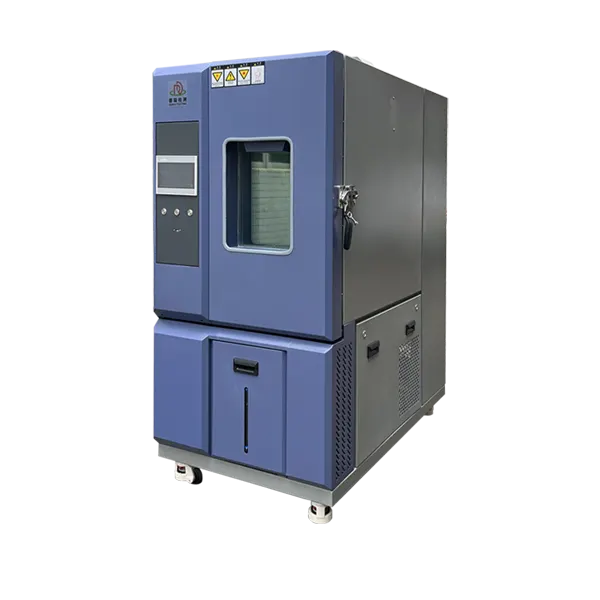
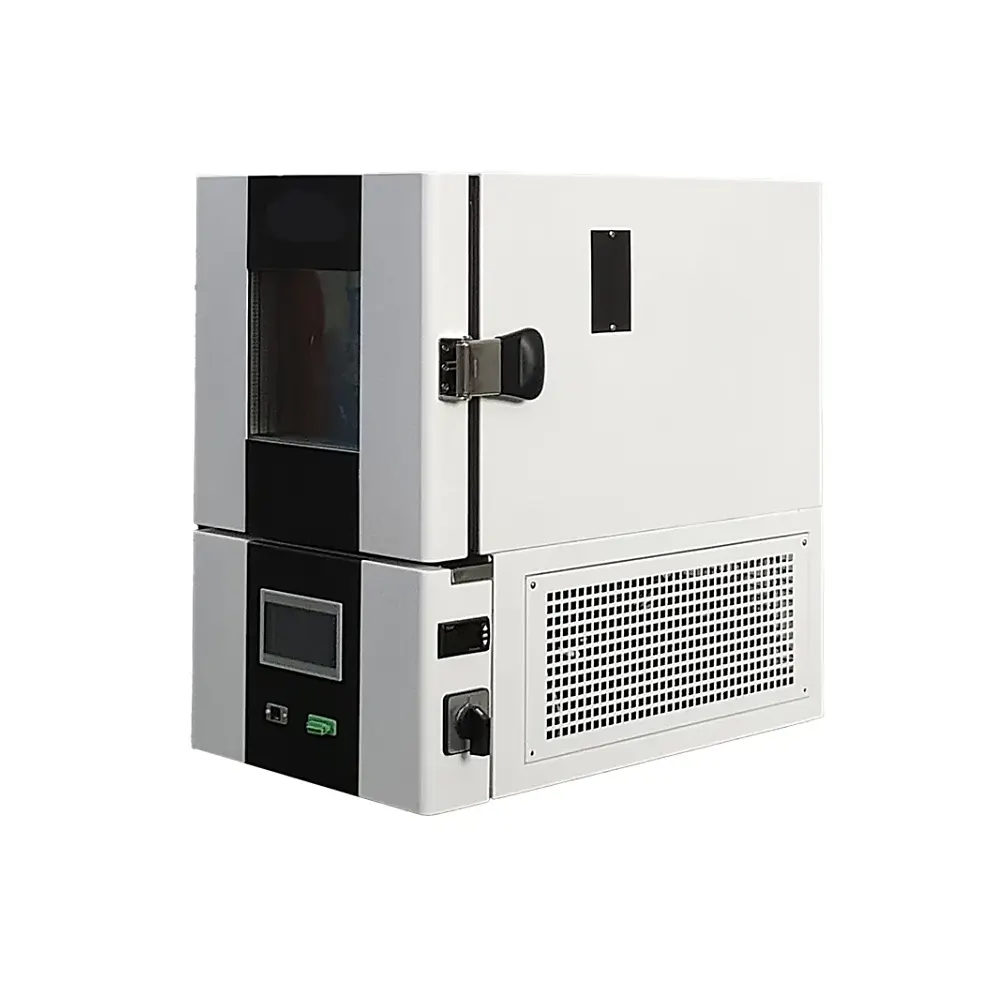
DR-H201-3 Three-Layer Battery Safety Climate Chamber
Run three independent temperature or temperature-humidity programmes in one vertical system for battery cells, modules and compact assemblies. Each compartment can be started, stopped and programmed separately to increase laboratory throughput.
Where the Three-Layer Design Fits
Parallel battery conditioning
Run three batches, setpoints or programmes without dedicating floor space to three separate cabinets.
Development and QC separation
Keep engineering trials, incoming inspection and routine reliability work operationally independent.
Monitored powered testing
Support test leads and specimen monitoring only after powered heat, failure modes and safety controls are engineered.
Published DR-H201 Three-Layer Model Matrix
| Modell | Volumen | Internal size per compartment |
|---|---|---|
| DR-H201-80-3 | 80 L × 3 | 500 × 400 × 400 mm |
| DR-H201-100-3 | 100 L × 3 | 400 × 500 × 500 mm |
| DR-H201-150-3 | 150 L × 3 | 500 × 600 × 500 mm |
| DR-H201-225-3 | 225 L × 3 | 500 × 750 × 600 mm |
| DR-H201-408-3 | 408 L × 3 | 600 × 850 × 800 mm |
Published Environmental Performance
| Artikel | Published value | cURL Too many subrequests by single Worker invocation. To configure this limit, refer to https://developers.cloudflare.com/workers/wrangler/configuration/#limits |
|---|---|---|
| Temperature options | 0 / -20 / -40 / -70°C to +150°C | Select the required configuration per compartment. |
| Temperaturschönheit | ≤2°C, no-load | Confirm sensor map, setpoint and simultaneous operation. |
| Temperaturfluktuation | ±0.5°C, no-load | Confirm stabilization and measurement interval. |
| Humidity option | 20% bis 98% RH | Request the combined temperature-RH operating chart. |
| Humidity uniformity / fluctuation | +2/-3% RH / ±2% RH | Confirm setpoint, load and method. |
| Heating / cooling | 1–3°C/min / 0.7–1°C/min | Confirm average definition, span and loaded condition. |
| Time setting | 1–60,000 min | Confirm independent programme and record capacity. |
Engineer the Safety Package from the Hazard
Define the specimen
State chemistry, format, capacity, quantity, state of charge, mass, electrical energy and intended abuse or non-abuse condition.
Define credible failures
Identify gas, smoke, flame, pressure, electrolyte, fragments and heat that the chamber and facility must address.
Define detection and response
Specify sensors, thresholds, exhaust, power isolation, suppression, alarms, remote monitoring and emergency procedures.
Safety Functions to Confirm in the Quotation
| Function | Required confirmation |
|---|---|
| cURL Too many subrequests by single Worker invocation. To configure this limit, refer to https://developers.cloudflare.com/workers/wrangler/configuration/#limits | Relief area, opening pressure, discharge direction and facility clearance. |
| Gas/smoke detection | Target gases, sensor range, alarm thresholds, calibration and interlock matrix. |
| Forced exhaust | Airflow, duct material, discharge point, make-up air and post-event purge. |
| Fire suppression | Agent, concentration/design basis, activation logic and local code approval. |
| Observation/video | Window rating, camera protection, recording and remote-viewing scope. |
| cURL Too many subrequests by single Worker invocation. To configure this limit, refer to https://developers.cloudflare.com/workers/wrangler/configuration/#limits | Specimen supply cut-off, chamber shutdown, emergency stop and fail-safe state. |
| Zertifizierung | Exact product, configuration, certificate number, scope and issuing body. |
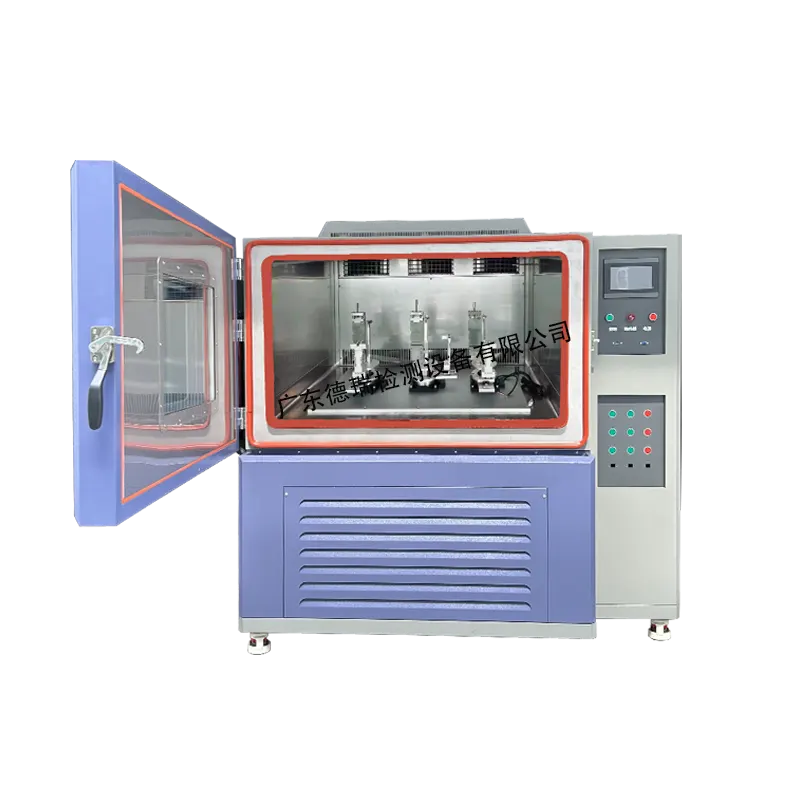
Three-Layer Chamber Reference Image
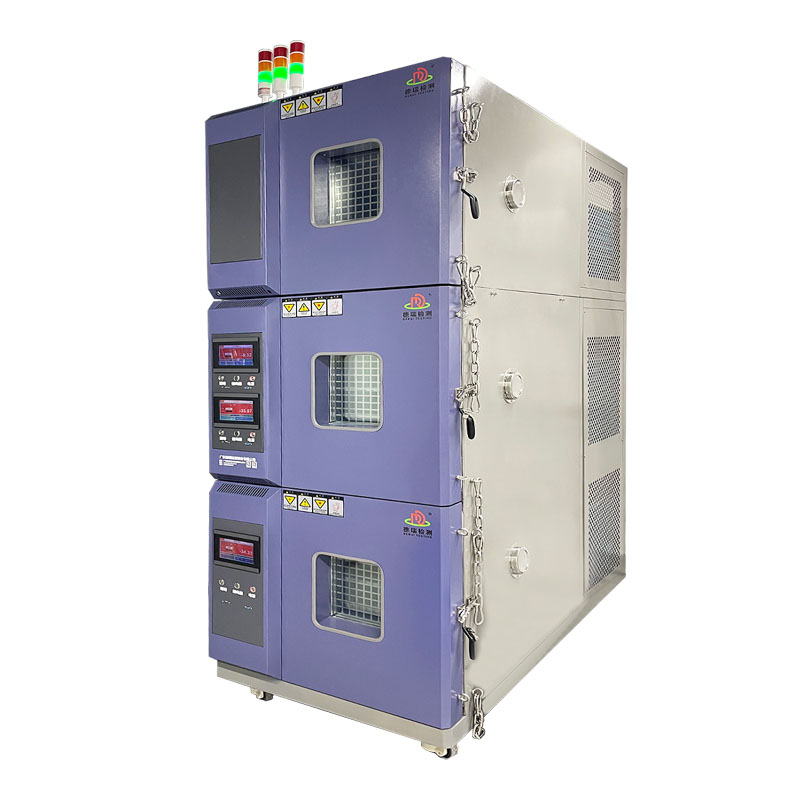
DERUI three-layer battery climate chamber reference image. Final compartment sizes, interfaces and safety package follow the approved risk assessment and technical agreement.
Standards Must Be Mapped to the Exact Procedure
| Reference | cURL Too many subrequests by single Worker invocation. To configure this limit, refer to https://developers.cloudflare.com/workers/wrangler/configuration/#limits | Boundary |
|---|---|---|
| UN 38.3 | Lithium battery transport tests | Not every T.1–T.8 procedure is performed in this climate chamber. |
| IEC 62619 | Industrial secondary lithium cell/battery safety | Confirm applicable clause, specimen and required equipment. |
| UL 1642 | Lithium cell safety evaluation | Method-specific fixtures and abuse equipment may be separate. |
| GB/T 31485 or successor/customer requirement | Battery safety test reference | Confirm current applicable document, procedure and acceptance criteria. |
RFQ and Safety FAT Checklist
| Topic | Information to provide or verify |
|---|---|
| cURL Too many subrequests by single Worker invocation. To configure this limit, refer to https://developers.cloudflare.com/workers/wrangler/configuration/#limits | Chemistry, format, capacity, SOC, quantity, mass and energy. |
| Three profiles | Temperature/RH, ramp, dwell, cycle and powered heat per layer. |
| Interfaces | Charge/discharge, measurement, gas, video, ports and data. |
| Hazards | Gas, smoke, flame, pressure, electrolyte and fragment scenarios. |
| Facility | Power, exhaust, drainage, fire system, clearance and emergency response. |
| FAT | Climate mapping, simultaneous operation, alarms, interlocks and safe-state tests. |
Häufig gestellte Fragen
Are all three compartments independently controlled?
The page states independent operation. Confirm separate sensors, programmes, records, thermal systems and safety interlocks in the final configuration.
What is the published standard temperature range?
The formal parameter table lists options from 0/-20/-40/-70°C to +150°C. Any extension requires a separately approved configuration.
Does “explosion-proof” mean thermal-runaway containment is guaranteed?
No. The term must be supported by a defined hazard scenario, engineered protections, acceptance tests and any applicable certification.
Are gas detection and fire suppression standard?
The page describes them as available safety functions/options, but the exact standard bill of materials is not established. Confirm each item explicitly.
Can it perform all UN 38.3 tests?
No. UN 38.3 includes different procedures requiring different equipment. Map the applicable procedure to the correct chamber or tester.
cURL Too many subrequests by single Worker invocation. To configure this limit, refer to https://developers.cloudflare.com/workers/wrangler/configuration/#limits
Send battery chemistry, format, capacity, SOC, quantity, three profiles, electrical interfaces, hazards, facility controls and FAT criteria.
Configure the Three Compartments and Safety Matrix Together
Send the specimen data, three environmental profiles, powered interfaces and hazard analysis. DERUI can confirm capacities, climate performance, detection, exhaust, suppression, interlocks and FAT scope.