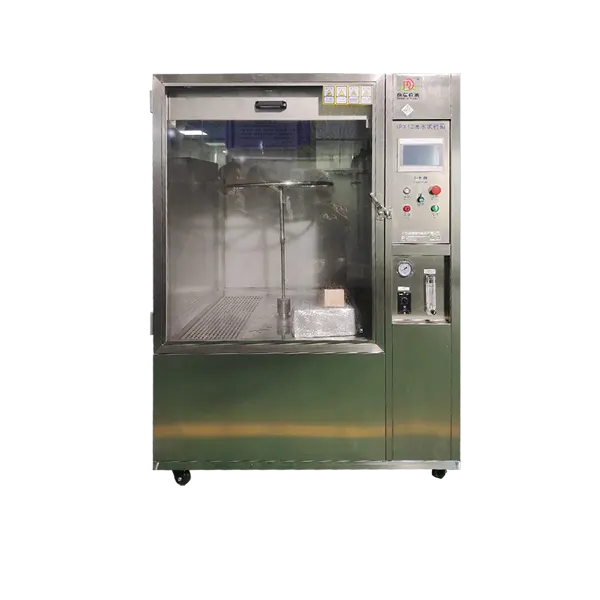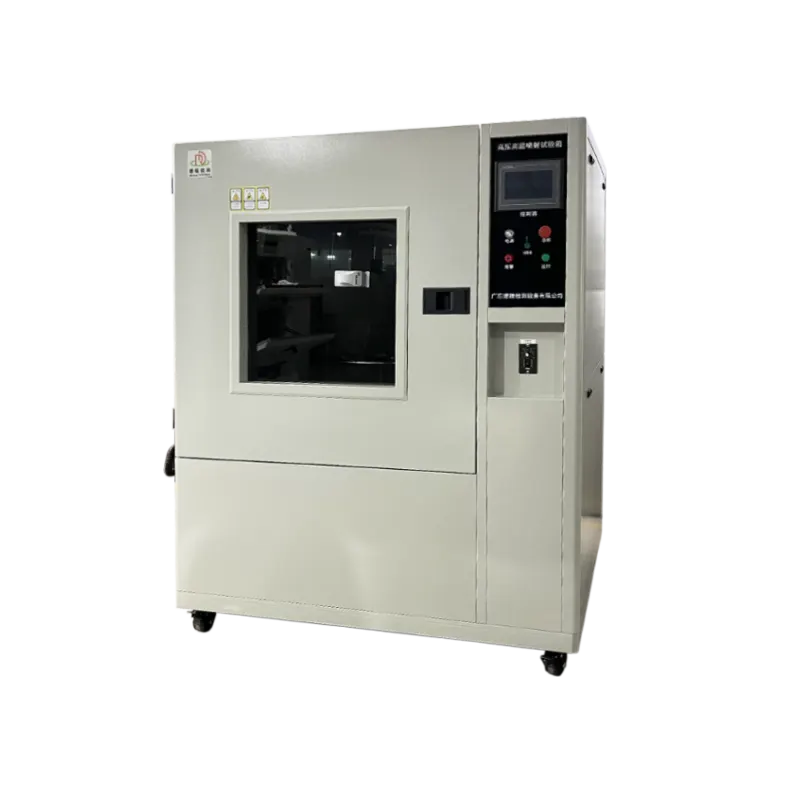








IPX7 & IPX8 Water Immersion Testing for Sealed Enclosures
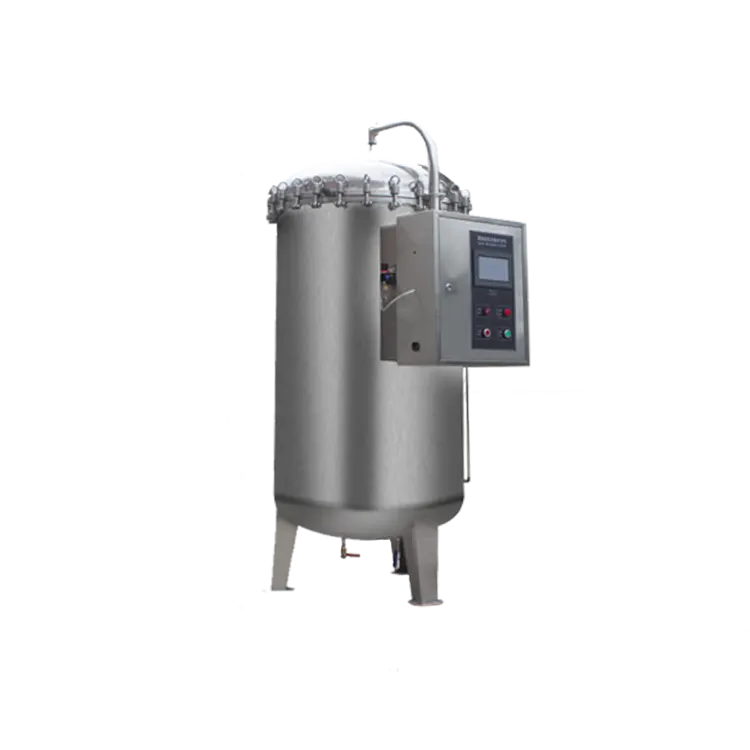
Evaluate enclosure seals, cable entries and connectors under a defined water-immersion exposure. DERUI DR-H504 uses a closed stainless-steel vessel and compressed-air pressure application for laboratory immersion testing, with a published pressure range up to 0.5 MPa.
A Pressure-Immersion System—not a Rain Spray Chamber
Find water-ingress weaknesses at the enclosure level
Use a defined immersion exposure to investigate sealing interfaces in electrical housings, outdoor sensors, connectors, lighting enclosures and other parts intended to operate in wet conditions. Focus on the complete assembly: gasket compression, cable glands, plugs, joints and mounting orientation can all affect the result.
DR-H504 applies pressure to water in a closed vessel rather than directing jets at the specimen. A removable stainless-steel basket supports loading, while a graduated water-level tube helps establish the fill condition. Pressure release and drainage support the unloading sequence.
Choose this arrangement when the accepted immersion procedure, specimen size and pressure requirement fit the vessel. For an open-tank depth requirement, confirm that the proposed setup meets the prescribed geometry before choosing pressure simulation.
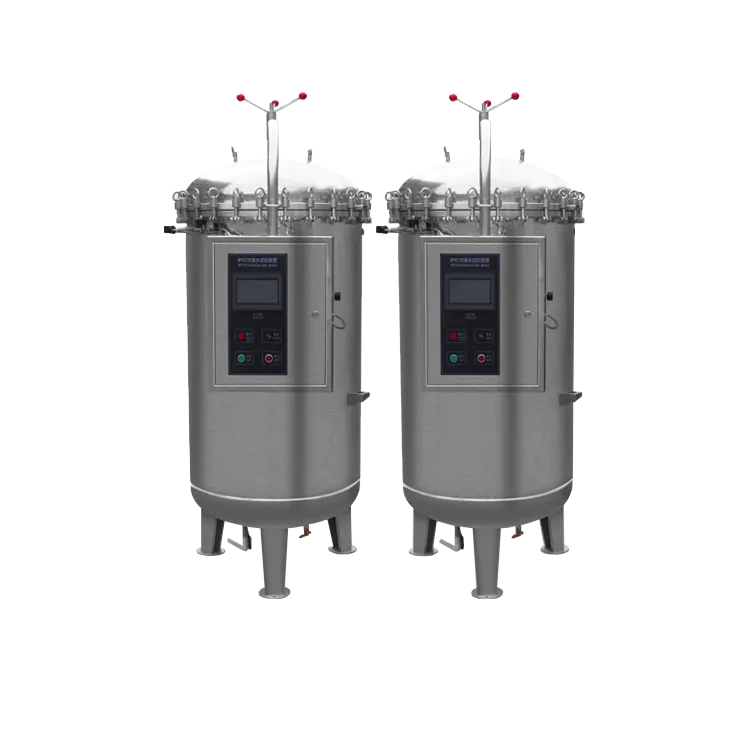
Specify the Immersion Method Before the Pressure Setting
| cURL Too many subrequests by single Worker invocation. To configure this limit, refer to https://developers.cloudflare.com/workers/wrangler/configuration/#limits | IPX7 temporary immersion | IPX8 immersion |
|---|---|---|
| Exposure basis | Prescribed temporary-immersion setup; IEC 60529 uses a 30-minute exposure | Product-specific conditions agreed by the relevant parties, more severe than IPX7 |
| Water coverage and depth | Use the reference point and specimen-size rules of the adopted method; “1 m” alone is an incomplete setup instruction | Define pressure or depth reference, orientation, water coverage and duration for the enclosure |
| Equipment fit | Check vessel height, specimen mounting and whether the proposed test arrangement is accepted | Check required pressure, duration, loading, water conditions and measurement tolerance |
| Result evaluation | Inspect and evaluate harmful ingress according to the applicable requirements | Apply the agreed ingress, functional and electrical acceptance criteria |
IEC 60529 defines the enclosure IP-code framework. For road-vehicle electrical equipment, identify the required ISO 20653 procedure and any OEM requirements separately.
DR-H504 Technical Configuration
| Parámetro | cURL Too many subrequests by single Worker invocation. To configure this limit, refer to https://developers.cloudflare.com/workers/wrangler/configuration/#limits |
|---|---|
| Modelo | DR-H504 |
| Test arrangement | Closed-vessel water immersion with compressed-air pressure application |
| Internal vessel dimensions | 1000 mm diameter × 1000 mm height; specimen capacity depends on basket, opening, water level and fixtures |
| Vessel material | puerta de acero inoxidable SUS304 |
| Published applied-pressure range | Ambient to 0.5 MPa; specify gauge/absolute reference and sensor location in the technical agreement |
| Published depth-equivalent capability | Approximately 50 m of water head through pressure application; not a 50 m tall tank or a universal IPX8 test condition |
| Exposure timing | Adjustable test timer; required duration and timing format defined in the configuration proposal |
| Sample handling | Removable stainless-steel basket |
| cURL Too many subrequests by single Worker invocation. To configure this limit, refer to https://developers.cloudflare.com/workers/wrangler/configuration/#limits | Graduated water-level tube |
| Water and pressure handling | Drainage and pressure-release functions |
| Published protection functions | Pressure protection, overload protection, short-circuit protection, grounding and alarm indication |
For formal testing, include pressure-measurement accuracy, calibration, required hold stability and the actual timing range in the acceptance specification. Operating range alone does not define vessel design pressure, proof-test pressure or regulatory approval.
Translate Depth into Pressure—and Check the Sample Fit
Pressure-equivalent depth is a calculation, not the physical tank height
For static water, pressure increases with depth according to p = ρgh. Using freshwater density of approximately 1000 kg/m³ and g = 9.81 m/s², a 10 m water head is approximately 98 kPa (0.098 MPa); a 50 m head is approximately 491 kPa (0.491 MPa). These are illustrative pressure differences above the free surface, not universal test setpoints.
Loading envelope
Check the access opening, basket and fixture dimensions—not only the cylinder diameter. Leave room for the prescribed orientation and complete water coverage without contacting seals against the vessel.
Displacement and buoyancy
A submerged assembly displaces water and may float or rotate. Define restraints that hold it safely without compressing a gasket, blocking an ingress path or changing the required exposure.
Temperature and operation
Record specimen and water conditions when required by the procedure. If energized testing is needed, specify an engineered feedthrough and electrical safety arrangement rather than routing cables through the lid seal.
Provide the complete assembly drawing, not only the housing dimensions. Include protruding connectors, cable bend space, mounting brackets, the fixture, sample mass and the number of parts to test at once.
Build a Repeatable Test and a Clear Acceptance Plan
1 · Prepare and mount
Record specimen identity, sealing configuration, conditioning, orientation and operating state. Set the specified water level and verify that the fixture does not shield or distort critical interfaces.
2 · Apply and record
Follow the approved pressure and timing procedure. Record the actual pressure reference, exposure duration, water conditions and any interruptions. Specify manual recording or an agreed acquisition system.
3 · Release and evaluate
Use the documented depressurization and drainage sequence. Follow the prescribed external drying, opening and inspection procedure so handling water is not confused with test ingress.
Agree factory acceptance around your operating point
| Acceptance item | Evidence to include in the purchase specification |
|---|---|
| Vessel and protection | Applicable destination requirements, design documentation, pressure-test evidence, relief/protection settings and closure checks |
| Pressure exposure | Calibrated measurement reference, agreed operating point, hold stability, duration and recording method |
| Sample loading | Basket and fixture fit, mass capacity, submerged orientation, water level and safe loading/unloading |
| Utilities and operation | Compressed-air requirements, water supply/drain, electrical supply, operator instructions and maintenance access |
| Result workflow | Sample identification, exposure record and separate ingress/functional/electrical checks required by the method |
Need a different water exposure? Review the IPX5/IPX6 water-jet chamber for nozzle testing, the IPX9K hot-water jet chamber for severe wash-down procedures, or the rain and water-ingress equipment category for broader selection.
IPX7 / IPX8 Water Immersion Chamber FAQ
What is the difference between IPX7 and IPX8 immersion testing?
IPX7 addresses temporary immersion under the prescribed setup. IPX8 addresses immersion under conditions specified for the product and agreed by the relevant parties, more severe than IPX7. Do not use one default pressure and duration for every IPX8 enclosure.
Can DR-H504 be used for both IPX7 and IPX8?
It is offered for IPX7/IPX8 immersion applications. The required specimen positioning, water coverage, exposure conditions and accepted test arrangement must fit the selected method. A pressure vessel does not automatically replace a required open-tank procedure. Send the complete test plan for a configuration review.
Does the chamber need a 50 m deep tank?
No. The approximately 50 m figure describes pressure-equivalent water head produced by pressure application. The listed vessel is 1000 mm in diameter and 1000 mm high. Confirm pressure at the specimen reference point, including water head, rather than relying only on a depth label.
How large a specimen can be tested?
The vessel dimensions are not a maximum specimen rating. Basket clearance, access opening, submerged orientation, displacement, buoyancy and fixture space determine fit. Send a specimen drawing, mass and quantity so the loading arrangement can be reviewed.
Are heated water, powered specimens and automatic data export included?
These functions are not part of the configuration listed here. Include any water-temperature control, electrical feedthrough, monitoring or record-export requirement in your request so the proposal identifies the supplied functions explicitly.
Does passing immersion testing also prove resistance to water jets?
No. Immersion, spraying and high-pressure hot-water jets are different exposures. If the product needs IPX5/IPX6 or IPX9/IPX9K as well, include those methods separately. Product approval also depends on the required inspection and acceptance criteria, not the chamber label alone.
Request a DR-H504 Immersion Test Proposal
Send the Enclosure Drawing and Required Exposure
Turn your waterproofing requirement into a defined vessel, loading and acceptance specification. Request a DR-H504 proposal around the pressure and specimen arrangement your laboratory actually needs.
Include: standard edition and clause; IPX7 or IPX8 conditions; target pressure/depth reference and duration; specimen dimensions, mass and quantity; submerged orientation and fixtures; water-temperature requirements; powered state; pressure recording; site utilities and destination.