

DR-H508-1
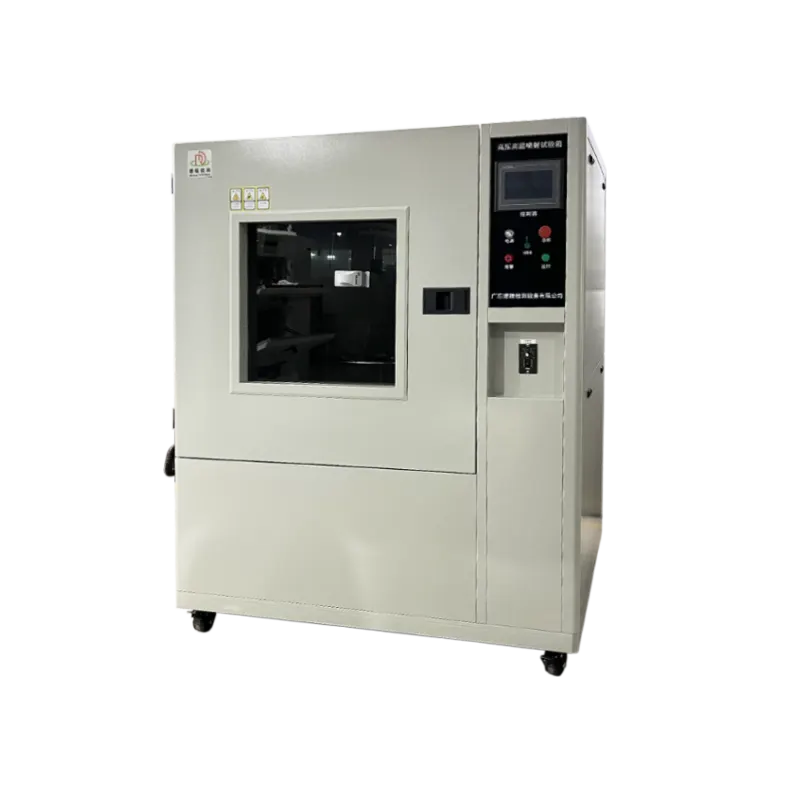
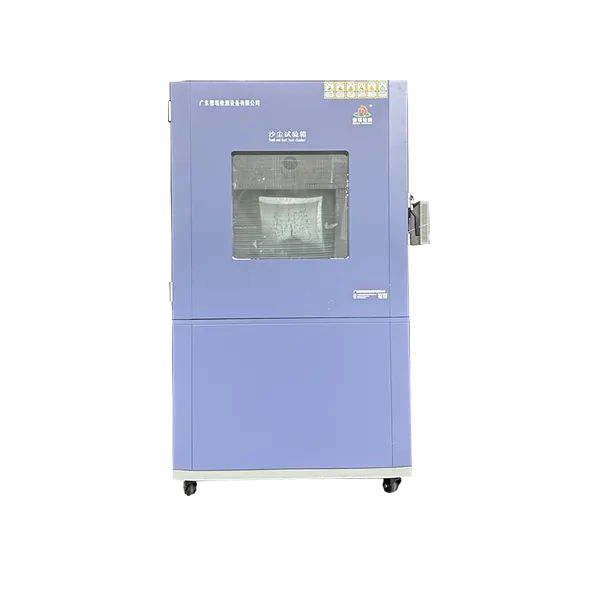
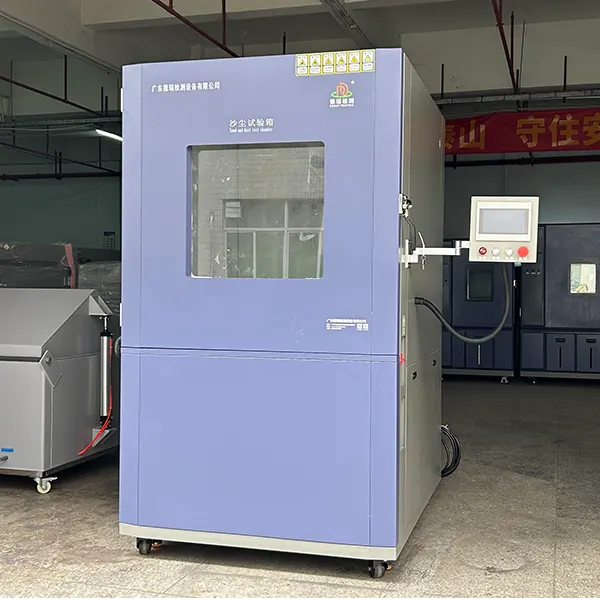
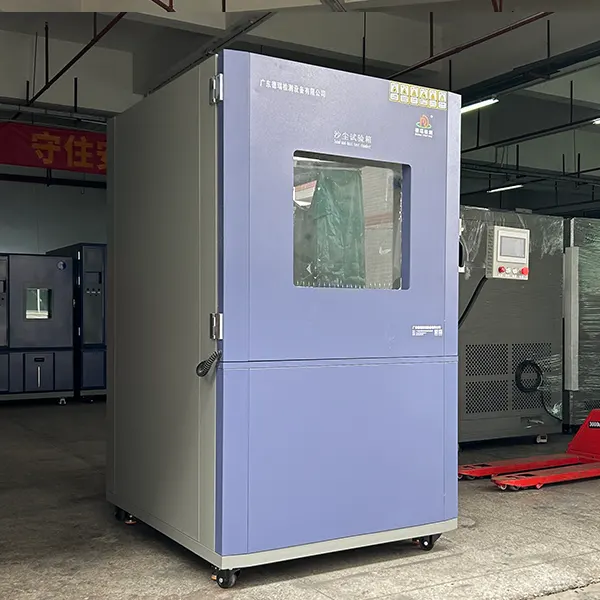
512L Sand Dust Test Chamber DR-H508-1
The DERUI DR-H508-1 is a compact dust-test cabinet for automotive components, electrical enclosures and small assemblies. Select it when the specimen, mounting fixture and required dust circulation fit the standard workspace. Powered connections and method-specific pressure reduction should be reviewed with the actual test arrangement; custom changes are separate options.
DR-H508-1
A 512L cabinet for fully mounted specimens
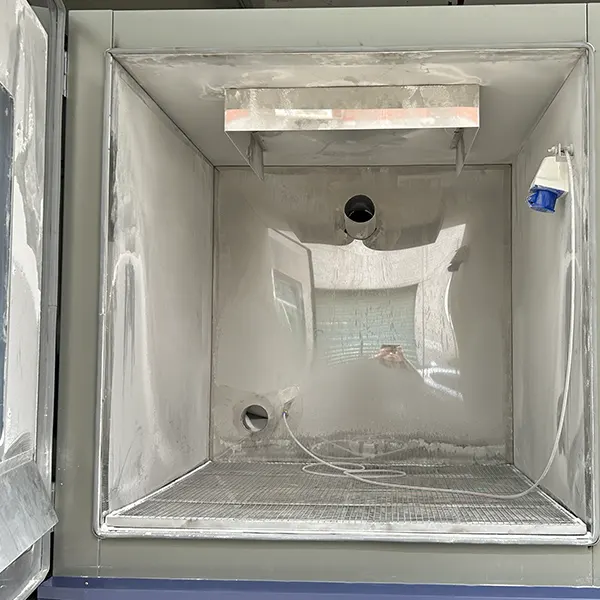
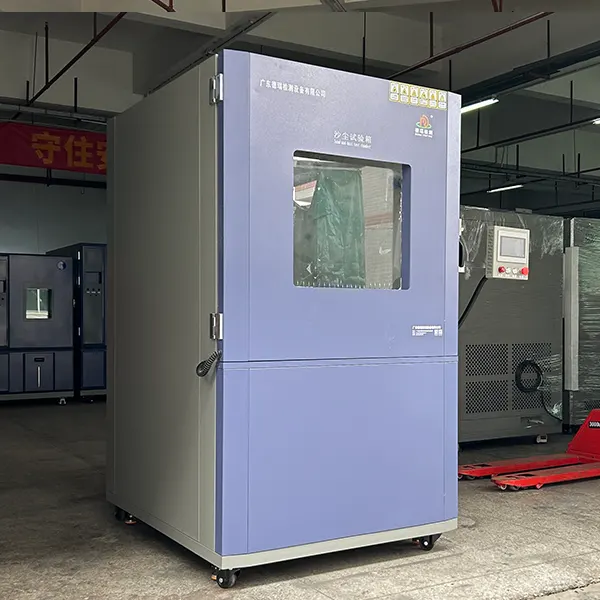
The DR-H508-1 standard cabinet has an 800 × 800 × 800 mm internal workspace. The geometric volume is 512 litres; this is not a 1000L configuration and does not mean all of the workspace is available for solid specimen loading. Assess the mounting fixture, cable exits and the clearance needed for the selected dust circulation pattern before choosing a batch size.
The cabinet can be reviewed for vehicle lighting, instruments, electrical covers, control boxes, locks, seals and similar assemblies whose enclosure test matches the supplied equipment. The part must be prepared with the intended covers, connectors and sealing features. Application names are selection examples, not a guarantee that every automotive procedure is supported.
DR-H508-1
DR-H508-1 dimensions, timing and electrical supply
| รายการ | สเปค |
|---|---|
| Model / geometric workspace | DR-H508-1 / 512 L |
| Internal dimensions (D × W × H) | 800 × 800 × 800 mm |
| External dimensions (D × W × H) | 1280 × 1060 × 1800 mm |
| Main / specimen supply | AC380 V ±10%, 50 Hz, three-phase five-wire / AC220 V, 16 A specimen socket |
| Vacuum-pump boundary | Pump supplied separately; specify when ordering |
The independent technical record gives vibration time up to 99 minutes 59 seconds and test time up to 99 hours 59 minutes. These are controller timing capabilities, not a recommended exposure duration for every IP test. Use the governing procedure to set the actual circulation, vibration, exposure and interruption rules.
The cabinet lists dust loading of 2 kg/m³, a 50 μm mesh-wire diameter and a 75 μm entry labelled nominal pitch between wires. Keep the supplied sieve documentation with the dust specification and resolve opening-versus-pitch terminology against the selected method. The loading value is not proof of continuous airborne concentration measurement.
DR-H508-1
Construction, dust circulation and cleaning access
Cabinet and door
The original construction description lists a SUS304 stainless-steel interior, painted cold-rolled-steel exterior and an observation window. Confirm the door opening, support arrangement and cleaning access on the approved drawing. A cabinet photograph does not establish shelf loading or usable fixture clearance.
Circulation and recovery
The listed fan uses a closed alloy low-noise motor and a multi-blade centrifugal arrangement. Vibration helps return settled powder to the circulation path. Review the specimen position so the fixture does not block collection or create stagnant pockets. The presence of a fan does not establish a controlled blowing-sand air velocity.
Dust heating
The technical table lists a stainless-steel mica-sheet heating sleeve. Its dust-conditioning role should not be presented as a verified temperature/humidity exposure range for the specimen. Ask what the ordered controls regulate and how dust condition is maintained between tests.
Plan for dust handling, opening after exposure and controlled removal of the medium. Select cleaning and personal-protection measures from the approved dust safety data and local procedure. Do not use an unreviewed powder simply because the equipment name contains the word sand.
DR-H508-1
Pressure reduction and the separately specified pump
The standard record lists a pressure gauge, air filter, pressure-regulating tee and connecting pipe. It explicitly states that the vacuum pump is to be provided separately and specified when ordering. A listed gauge or pipe does not establish an included pump, a calibrated flowmeter or a pressure/flow operating range.
Define the applicable method, enclosure category, free internal volume, extraction connection and the required pressure and flow limits. Show how the specimen connection will be made without creating a test artefact. Include pump selection, measurement accuracy, connection hoses and the acceptance check in the quotation where they are required. Do not substitute a convenient generic vacuum setting for the prescribed procedure.
DR-H508-1
Fixtures, powered operation and automotive interfaces
Installed orientation
For a lamp housing or controller, show the mounting points, normal installed orientation, connector position and specimen quantity. The fixture must support that arrangement while leaving circulation clearance and inspection access. A temporary sealing method that differs from the product installation can change the meaning of the result.
Specimen power
The original table lists an AC220V, 16A dustproof specimen socket. Confirm compatibility with the DUT voltage, current, duty cycle, heat dissipation and required protective isolation. This socket rating does not establish arbitrary battery-abuse capability or every DC power arrangement.
Monitoring and custom changes
List communication, continuity, temperature or other signals needed during exposure. Confirm any ordered feedthroughs and instrumentation. Non-standard fixtures, changes to workspace dimensions and added data functions are separately reviewed options, not universal inclusions in the standard DR-H508-1 build.
If the complete loaded assembly obstructs the dust path or cannot be loaded safely, compare the 1000L cabinet or request an engineering review of a custom build. Do not retain the standard model dimensions in the purchase order after changing the cabinet layout without a revised drawing.
DR-H508-1
Select the dust method before specifying the cycle
For IEC 60529 IP5X/IP6X testing, identify the required first-digit designation, enclosure category, specimen state, dust medium, exposure and inspection requirements. The result depends on the prepared enclosure and the actual test; purchasing a chamber does not automatically give the product an IP rating. Water-protection testing is a separate equipment and method decision.
For road-vehicle work, use the exact ISO 20653 designation and edition required by the customer. Do not assume that a similar-looking IEC designation makes the media, procedure and acceptance identical. If the specification instead names IEC 60068-2-68 or MIL-STD-810 Method 510, request a separate capability review for its particle feed, airflow and environmental conditions. The published DR-H508-1 cabinet description alone is not proof of those capabilities.
DR-H508-1
Prepare the laboratory for the actual supplied cabinet
The external dimensions are listed as D1280 × W1060 × H1800 mm. Check the delivery route, opening of doors, installation and service clearances against the final drawing. The AC380V ±10%, 50Hz three-phase five-wire supply is a cabinet requirement distinct from the specimen socket; confirm destination compatibility before production.
The original safety table lists leakage, short-circuit, overtemperature, motor-overheat and overcurrent protection. Verify the ordered protections and their response during commissioning. Confirm controller language, any remote/data functions, operator instructions and service responsibilities in the purchased configuration rather than borrowing these features from another model.
DR-H508-1
Document setup, exposure and acceptance
Record the enclosure condition before testing, dust identity and conditioning, fixture arrangement, controller settings and any pressure connection. Carry out the approved sequence and record interruptions. After exposure, follow the agreed recovery and handling procedure so exterior dust is not accidentally pushed into the specimen during inspection.
The acceptance record should identify the supplied equipment, load arrangement, settings and instruments, together with internal inspection and functional checks required by the product procedure. Demonstrating the fan and timer is an equipment acceptance check, not an accredited IP certificate. Request the operating manual, wiring information, packing list and applicable calibration records with the final supply documentation.
DR-H508-1
Purchasing, application planning and evidence
Purchasing decision
Compare the DR-H508-1 using its 800 × 800 × 800 mm internal dimensions and the full specimen fixture. Ask for the door opening, permitted support load and space needed for dust movement before fixing batch quantity. Include the specimen power connection and separately ordered vacuum pump where the procedure requires them. Custom fixtures or a changed enclosure size should be priced and documented as deviations from the standard configuration.
Real specimen setup
For an automotive lamp, controller or lock assembly, define the installed orientation, attachment points and cable exit before loading. Review maximum operating current and heat against the specimen-power arrangement. A part that fits diagonally without its fixture may still be unsuitable for the test. Move to the 1000L option or request a reviewed custom build when the complete setup obstructs circulation or access.
Evidence before approval
Use the representative fixture to verify loading, door clearance, pressure connections and safe cable routing. Demonstrate the fan, vibration, dust heating and test timer under the agreed sequence. Check which pressure indication and flow control are supplied and which pump is external. Keep the approved dimensional drawing and component list with the FAT record so later changes do not silently alter the accepted test setup.
DR-H508-1
Compare the equipment for your enclosure
Dust Ingress Test Chamber for IP5X and IP6X Testing · 1000L Sand Dust Test Chamber DR-H508-2
Choose the method and specimen arrangement first. The 512L and 1000L cabinet dimensions belong to their own product configurations; the method-led page helps identify which pressure, dust and interface functions the test actually needs.
Request a dust-test configuration review
Send the standard and edition, IP designation, specimen and fixture drawing, mass, operating state, dust specification, pressure requirements and destination utilities. Include the inspection criteria, required data and FAT scope so the equipment and any exclusions can be defined in the quotation.
Discuss My Dust Test Requirements
ตรวจสอบ DERUI company information และ qualification documents. Confirm the documents and configuration supplied for the quoted equipment.