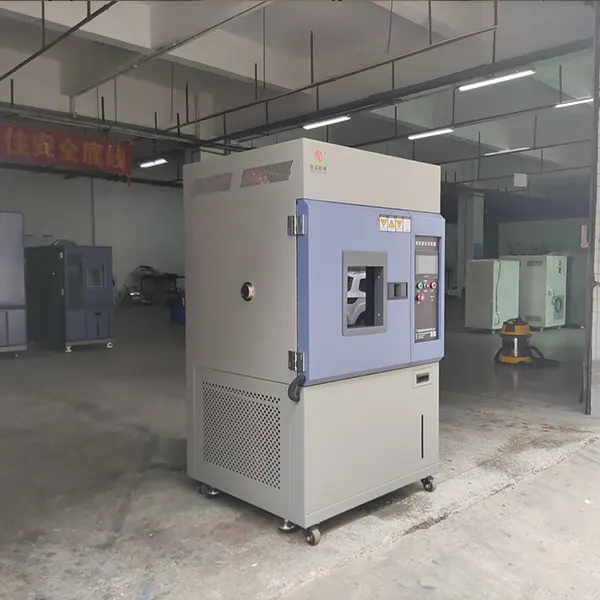
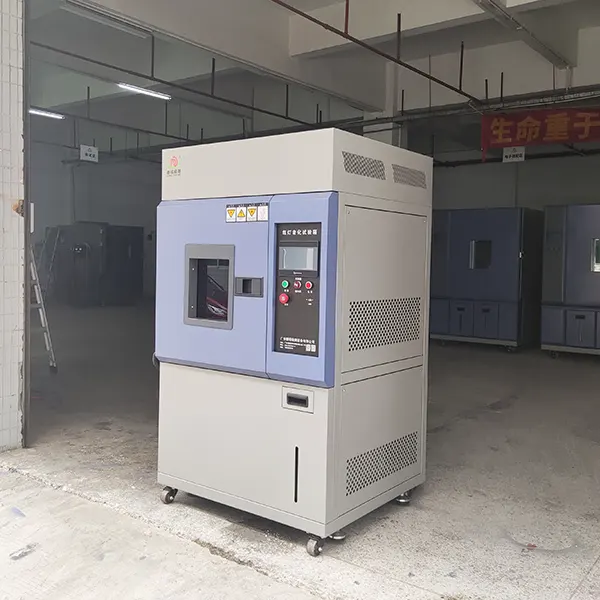








Xenon Arc Weathering for Controlled Light and Moisture Exposure
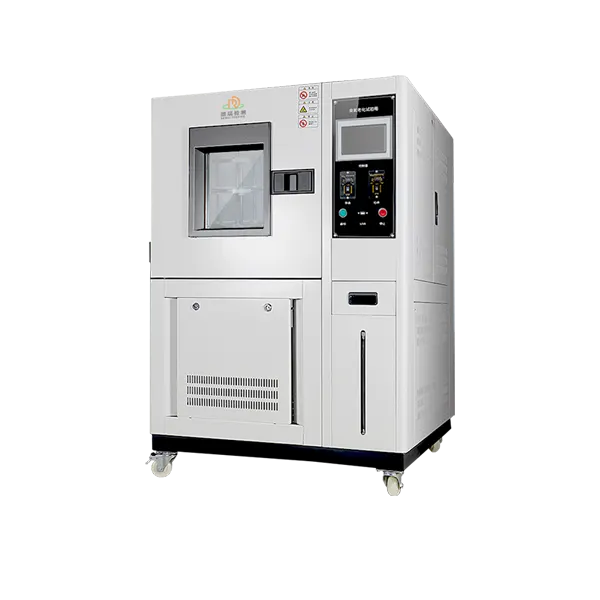
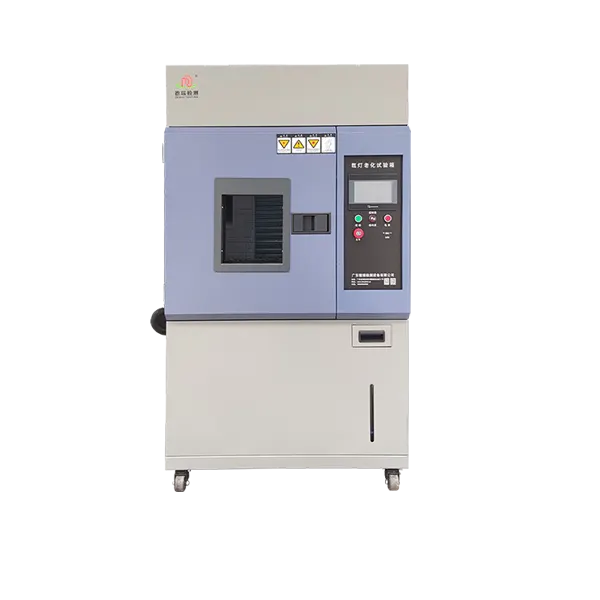
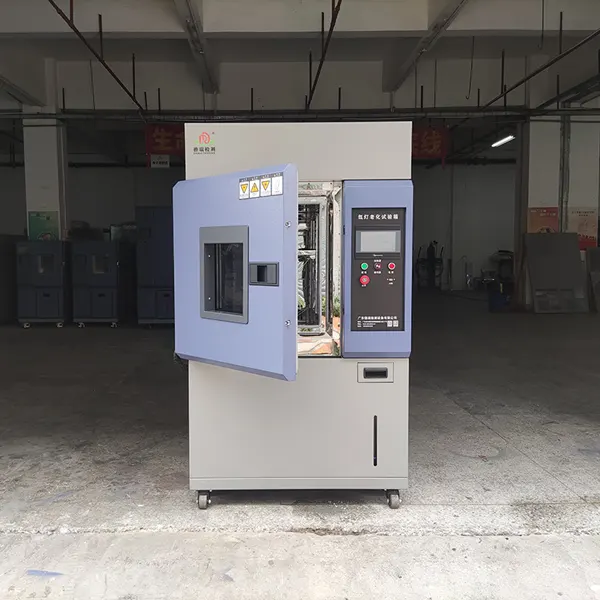
Compare how materials respond to filtered xenon light, heat and moisture in a repeatable laboratory program. The DERUI DR-H301-2 combines a 6.5 kW water-cooled xenon lamp with a rotating specimen rack, chamber climate control and programmable spray.
When the Water-Cooled Rotating-Rack Configuration Fits
Start with your specimen program
This configuration is relevant when your laboratory needs a water-cooled xenon source and a rotating holder arrangement for approved material-weathering cycles. Typical work includes comparative studies on plastics, coated panels, automotive materials, textiles, rubber and sealants.
The purchase decision is not simply about chamber volume. Rack geometry, exposed specimen area, backing, masking and inspection intervals determine how many useful test positions your program needs.
For flat panels, define replicate and control-material positions. For shaped parts or textiles, request a fixture layout that preserves the specified exposure geometry.
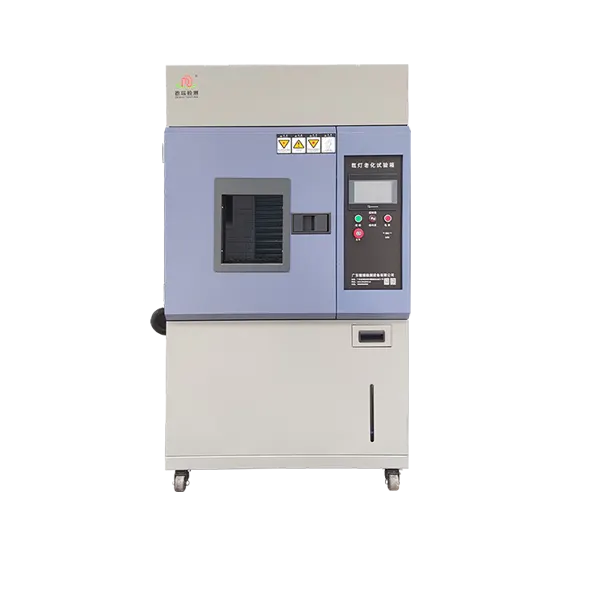
DR-H301-2 Technical Configuration
These specifications describe the DR-H301-2 configuration. Define loaded test conditions and acceptance tolerances for the cycle you intend to run.
| Paramètre | Spécification |
|---|---|
| Modèle | DR-H301-2 |
| Internal dimensions (D × W × H) | cURL Too many subrequests by single Worker invocation. To configure this limit, refer to https://developers.cloudflare.com/workers/wrangler/configuration/#limits |
| External dimensions (D × W × H) | 1460 × 1280 × 1950 mm |
| Chamber-air temperature | 38–80°C |
| Humidité relative | 40–98% RH; achievable temperature/RH combinations depend on the selected cycle |
| Black-panel temperature | 63–100°C; published tolerance ±3°C |
| Temperature fluctuation / uniformity | cURL Too many subrequests by single Worker invocation. To configure this limit, refer to https://developers.cloudflare.com/workers/wrangler/configuration/#limits |
| Fluctuation d'humidité | +2 / −3% RH |
| cURL Too many subrequests by single Worker invocation. To configure this limit, refer to https://developers.cloudflare.com/workers/wrangler/configuration/#limits | One operating 6.5 kW water-cooled xenon lamp; one spare lamp listed |
| cURL Too many subrequests by single Worker invocation. To configure this limit, refer to https://developers.cloudflare.com/workers/wrangler/configuration/#limits | 280–800 nm; exposure spectrum depends on the installed optical filters |
| Optical filters | One filter set; filter type specified for the selected procedure |
| cURL Too many subrequests by single Worker invocation. To configure this limit, refer to https://developers.cloudflare.com/workers/wrangler/configuration/#limits | Ø800 mm rotating rack; 1–4 rpm |
| Rack distance from lamp | 300–375 mm |
| cURL Too many subrequests by single Worker invocation. To configure this limit, refer to https://developers.cloudflare.com/workers/wrangler/configuration/#limits | 75 × 150 mm; specimen count depends on the holder layout |
| Spray duration setting | 0–9,999 minutes |
| Spray interval setting | 0–240 minutes; programmable on/off sequence |
| Spray supply pressure / nozzle | 0.12–0.15 MPa / Ø0.8 mm |
| Heating / humidification power | 2 kW / 1.5 kW; not total machine power |
| Electrical supply | cURL Too many subrequests by single Worker invocation. To configure this limit, refer to https://developers.cloudflare.com/workers/wrangler/configuration/#limits |
The spectral range and lamp power do not specify an irradiance setpoint. Filter type, control wavelength, irradiance range, recording functions and specimen capacity belong in the configuration proposal.
Configure the Exposure Around the Method
| Decision | Information to specify | Practical consequence |
|---|---|---|
| Optical filter | Daylight, window-glass-filtered or another method-defined spectral condition | Changes the radiation reaching the specimen; use the filter required for the exposure. |
| Éclairement | Control wavelength or broadband band, setpoint and calibration | Defines optical exposure; lamp power and illuminance in lux are not substitutes. |
| Température | Chamber-air and black-panel settings; required BPT or BST sensor | A specimen surface can be hotter than the surrounding air. BPT and BST must not be treated as interchangeable. |
| Moisture cycle | RH, specimen spray, light/dark sequence and dwell times | The maximum temperature and RH values are not a guaranteed simultaneous operating point. |
| Rack arrangement | Holder type, count, rotation speed and lamp distance | Determines the specimen plane and loaded exposure geometry. |
The published spray examples—18 minutes spray / 102 minutes no spray, or 12 minutes spray / 48 minutes no spray—are not universal settings. Use the sequence prescribed by your adopted procedure.
ASTM G155 addresses operation of xenon-arc exposure apparatus; ISO 4892-2 addresses plastics exposure with xenon-arc lamps. State the adopted edition and exact cycle rather than relying on a general standards list. A reference is not a blanket certification of every configuration.
Rotating-Rack Loading and a Repeatable Test Workflow
1. Prepare and identify
Record material batch, specimen dimensions, backing and initial measurements. Define masking and exposed faces. Include reference materials when the test plan requires comparison.
2. Fix the rack layout
Assign specimen positions and holder orientation. Keep the agreed lamp distance and avoid shading from fixtures or neighboring specimens. Record rotation speed and any required repositioning.
3. Run and inspect
Execute the approved light, climate and spray sequence. Document interruptions, removal intervals and restart conditions so repeated runs remain comparable.
Select evaluation endpoints before exposure: color difference or gloss retention for appearance; cracking, chalking or delamination for surfaces; and retained mechanical properties where required. Use consistent conditioning and measurement procedures before and after exposure.
Water Supply, Installation and Acceptance Planning
Plan two water functions
Lamp cooling and specimen spray serve different purposes. Define cooling-water flow, temperature, pressure and treatment separately from spray-water purity, supply and drainage. The published 0.12–0.15 MPa value is a spray-system specification, not a complete cooling-water requirement.
Agree cooling-loop components, site connections, leak checks and any supplied flow protection before installation.
Confirm the site before delivery
The published supply is 380 V, 50 Hz, three-phase five-wire. Confirm destination compatibility, total connected load, breaker and cable requirements, ventilation, service clearance and delivery access against the final drawings.
Lamp, heater and humidifier ratings alone do not establish total machine power.
Define what acceptance must demonstrate
| Vérifier | Evidence to agree |
|---|---|
| Optical exposure | Sensor channel and calibration, response at the required setpoint, usable specimen-plane uniformity and filter identification. |
| Climate control | Air and black-panel temperature, RH, sensor locations, loaded conditions and tolerances. |
| Mechanical and spray operation | Rack speed, mounting layout, spray timing, nozzle operation and water-system checks. |
| Safety and records | Installed door interlock, overtemperature and cooling-related alarms; emergency shutdown checks; recording/export format if included. |
Maintain lamps, filters, nozzles and cooling components according to the supplied instructions and measured performance. Never bypass optical-exposure protections. Agree calibration documents, manuals, wiring drawings, maintenance instructions and spare parts with the order.
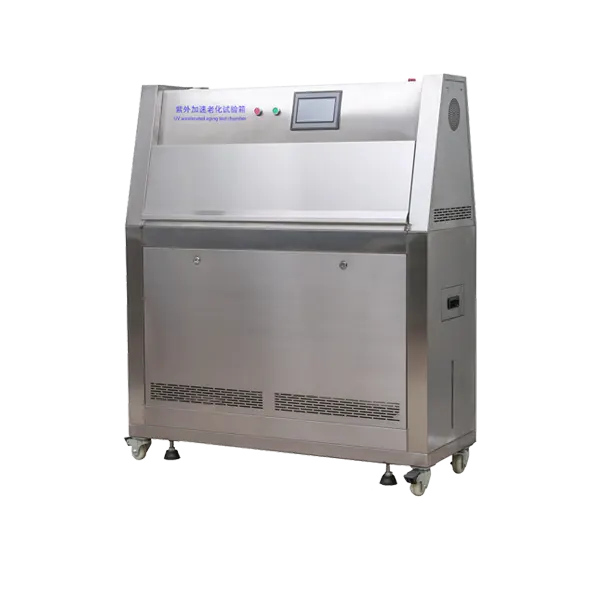
Compare alternative architectures in the cURL Too many subrequests by single Worker invocation. To configure this limit, refer to https://developers.cloudflare.com/workers/wrangler/configuration/#limits. The air-cooled aging chamber offers a different exposure arrangement; the desktop xenon chamber is intended for compact specimen workloads. For material-specific evaluation planning, see paint and plastic xenon testing.
Water-Cooled Xenon Chamber FAQ
How is DR-H301-2 different from an air-cooled xenon chamber?
DR-H301-2 uses a 6.5 kW water-cooled lamp and a Ø800 mm rotating specimen rack. Air-cooled products have a different lamp-cooling architecture and specimen arrangement. Choose by the required exposure cycle, filter, irradiance control and usable specimen capacity—not cooling type alone.
How many specimens can the rotating rack hold?
The published standard specimen size is 75 × 150 mm, but a specimen count is not specified. Holders, spacing, backing and specimen geometry determine usable capacity. Send the drawing and required replicate count for a rack-layout proposal.
Does a 6.5 kW lamp guarantee the required irradiance?
No. Lamp power is an electrical rating. Irradiance at the specimen plane also depends on filters, geometry, lamp condition and control settings. Specify the required wavelength or band, setpoint, calibration and uniformity acceptance criteria.
Is lamp cooling water the same as specimen spray water?
They serve different functions. The cooling circuit removes heat from the lamp system; specimen spray creates the wetting exposure. Confirm the required quality, flow, temperature, filtration and drainage for each circuit in the installation specification.
Can test hours be converted into outdoor years?
There is no universal conversion across materials and climates. Use control materials and material-specific field correlation where available. Report the actual exposure conditions and the measured failure or performance endpoint.
What should be included in the purchase specification?
Include the adopted method and cycle, optical filter, irradiance channel and setpoint, air and black-panel temperatures, RH and spray sequence, rack layout, utilities, data requirements and acceptance checks. A standard name alone does not define a complete configuration.
Request a DR-H301-2 Configuration Proposal
Send the Cycle, Specimen Layout and Site Requirements
Request a water-cooled xenon configuration proposal with a rack layout, optical settings, climate/spray program and acceptance plan matched to your laboratory.
Include: material and application; standard edition and cycle; filter and irradiance requirements; specimen drawings, quantity and fixtures; temperature/RH and spray sequence; destination utilities; data and documentation needs.