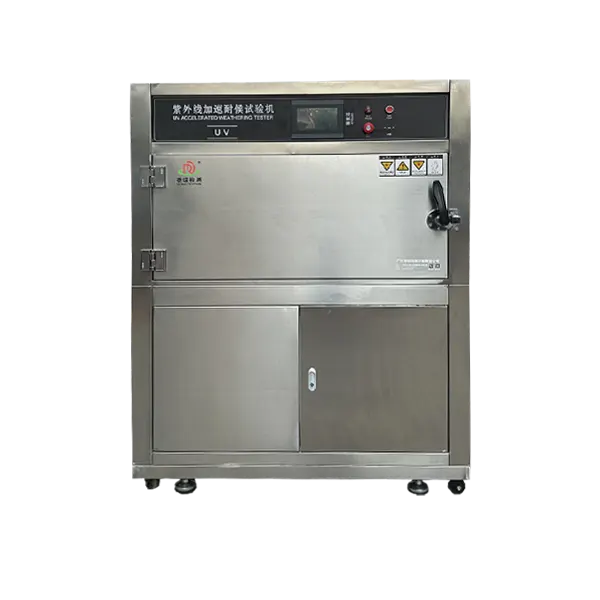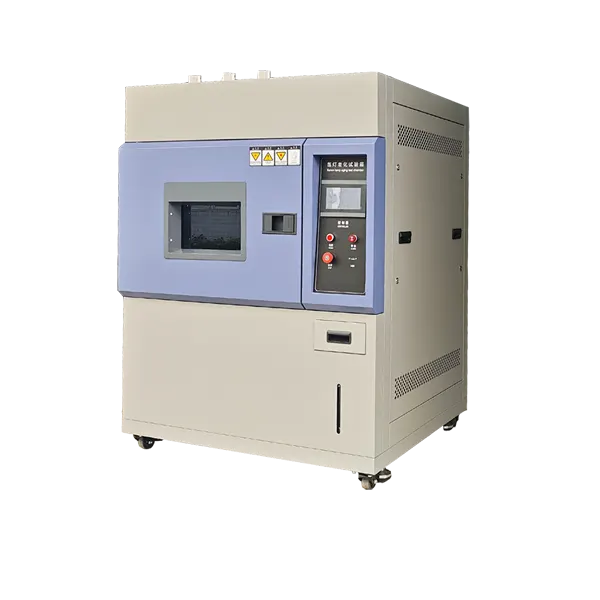








Xenon Weathering Test Chamber for Paints and Plastics
Compare how coated panels and plastic specimens retain color, gloss and material performance under filtered xenon light, heat and method-defined moisture exposure. DERUI helps configure the optical system, specimen holders and exposure cycle around your material—not just a chamber size.
Compare Formulations Against the Property That Matters
Use the exposure to support material development, supplier comparison and product qualification. Set the acceptance endpoint before the test starts so a visibly changed specimen can be evaluated against an agreed requirement.
Paints and protective coatings
Compare resin, pigment and additive systems for color shift, gloss loss, chalking, cracking or adhesion change. Keep substrate preparation, coating thickness and cure history consistent.
Pigmented and stabilized plastics
Compare colorants, stabilizers and polymer formulations using molded plaques or representative specimens. Track yellowing, fading, surface cracking and any required mechanical-property retention.
Finished surfaces and parts
Review the exposed face, geometry and fixture before testing automotive or building-material surfaces. Complex shapes can shadow themselves; holder fit alone does not prove exposure uniformity.
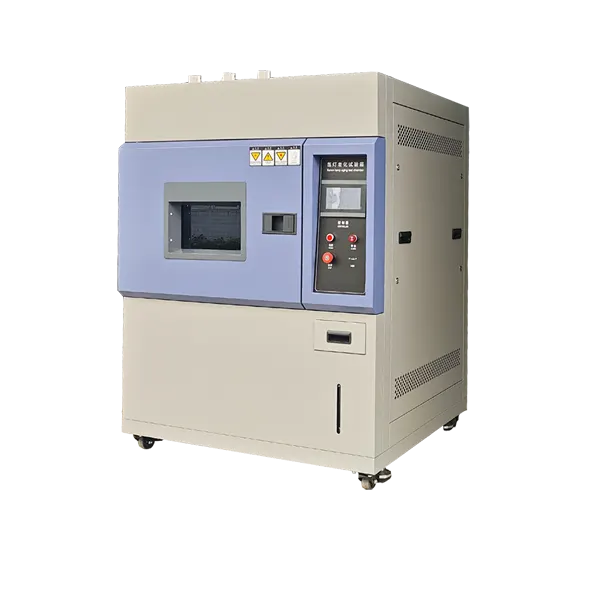
Specify the Exposure Before Selecting Capacity
A correct quotation connects each test requirement to an equipment function. Larger chamber volume does not automatically provide more usable specimen area, and higher lamp power does not automatically deliver the required spectrum or irradiance at the sample surface.
| cURL Too many subrequests by single Worker invocation. To configure this limit, refer to https://developers.cloudflare.com/workers/wrangler/configuration/#limits | Selection requirement | What to include in the enquiry |
|---|---|---|
| Optical system | Filtered xenon-arc exposure | Select daylight or window-glass filters from the material’s actual end use and test method. |
| ความเข้มแสง | Method-defined control wavelength and setpoint | State the wavelength, sensor bandwidth, unit and tolerance. Do not substitute lux or lamp watts for irradiance. |
| อุณหภูมิ | Black-panel or black-standard temperature; chamber air where required | Identify the sensor type. BPT, BST and chamber-air readings are different quantities. |
| Moisture | Humidity and specimen-spray sequence specified in the test plan | Agree the operating temperature/RH envelope and wet/dry timing for the selected configuration. |
| Specimen holders | Coated panels, molded plaques or an agreed part fixture | Size the usable exposed area from specimens, replicates, controls and masking—not nominal chamber volume alone. |
| cURL Too many subrequests by single Worker invocation. To configure this limit, refer to https://developers.cloudflare.com/workers/wrangler/configuration/#limits | Cycle settings and required exposure records | Agree logged channels, sample interval, export format and power-interruption handling. |
| cURL Too many subrequests by single Worker invocation. To configure this limit, refer to https://developers.cloudflare.com/workers/wrangler/configuration/#limits | Destination power, water, drainage and ventilation | Use the final electrical drawing and water-quality specification to prepare the laboratory. |
Use Coating and Plastic Methods for Their Intended Materials
The following references guide method selection; they are not blanket certification claims for every configuration. Use the edition and procedure adopted by your laboratory or customer.
| Material / purpose | Reference | Configuration implication |
|---|---|---|
| Paints and varnishes | cURL Too many subrequests by single Worker invocation. To configure this limit, refer to https://developers.cloudflare.com/workers/wrangler/configuration/#limits | Match the filtered xenon exposure, temperature and moisture conditions for the coating procedure. |
| Paint and related coatings | ASTM D6695 | Define specimen preparation, exposure cycle and coating evaluation. Do not assume an ISO cycle is identical. |
| Plastic specimens | ISO 4892-2 | Select the required filter, irradiance and temperature/moisture cycle for the plastic material. |
| Apparatus operation | ASTM G155 | Use alongside the applicable material specification and explicit acceptance criteria. |
For a broader equipment comparison, use the DERUI xenon chamber range. This page focuses on paint and plastic evaluation rather than a general solar-radiation test of equipment.
Keep Preparation, Exposure and Measurement Consistent
1 · Establish the baseline
Record formulation or batch, substrate, film thickness or plaque thickness, conditioning and initial measurements. Define measurement positions and test replicates; include a suitable reference material.
2 · Control the exposure
Mount specimens with repeatable orientation and spacing. Log the installed filter, irradiance, temperature, moisture sequence, exposure duration and interruptions. Follow method-specific repositioning rules.
3 · Evaluate at agreed intervals
Measure color and gloss at consistent positions and conditions. Record surface defects photographically; use dedicated destructive specimens where mechanical or adhesion testing is required.
Turn visible change into a purchasing or formulation decision
| Observed change | Evaluation to plan | Control against misleading results |
|---|---|---|
| Fading or yellowing | Color difference and appearance | Keep instrument geometry, illuminant, conditioning and measurement sites consistent. |
| Gloss loss or chalking | Gloss retention and defined chalking assessment | Use the agreed measurement angle and surface-handling procedure. |
| Cracking, blistering or peeling | Defect rating and coating adhesion where applicable | Control substrate preparation and coating thickness; distinguish exposure damage from preparation defects. |
| Plastic embrittlement | Tensile, elongation or impact retention as specified | Use suitable replicates and post-exposure conditioning; appearance alone cannot establish retained strength. |
Agree Acceptance and Maintenance Before Delivery
For laboratories comparing batches over many months, stable optics and traceable records matter as much as the first successful cycle. Define the acceptance checks for your actual holder layout and exposure program.
Optical and thermal verification
Request irradiance calibration evidence, exposure-area mapping and verification of the specified BPT or BST sensor. Set acceptance conditions, sensor positions and tolerances in the technical agreement.
Water and maintenance
Specify water quality, supply and drainage for the selected spray or humidity system. Maintain filters, lamp cooling paths and sensors using the equipment instructions; replace components according to condition and the approved maintenance schedule.
Cycle evidence and records
Agree a representative cycle demonstration, wet/dry timing, recording/export format and interruption response. Identify which records the chamber supplies and which results come from external evaluation instruments.
Choose holders from the test specimens first. For small flat-sample screening, compare the desktop xenon tester. For a method requiring a specific water-cooled configuration, review the water-cooled xenon weathering chamber and its own technical specification.
Paint and Plastic Xenon Testing FAQs
Can the same chamber test coatings and plastics?
Yes, when its installed optics, temperature, moisture functions and holders meet both procedures. Run separate exposure programs when the methods differ; a common chamber does not make the results interchangeable.
Does the chamber measure color difference and gloss?
The chamber produces the exposure. Use a suitable colorimeter or spectrophotometer, gloss meter and other evaluation instruments for baseline and post-exposure measurements. Include these instruments separately if they are required in the procurement scope.
How many test hours represent one outdoor year?
There is no universal conversion. Material, site climate, spectrum, temperature, moisture and the measured property all affect correlation. Use comparative performance or establish a material-specific relationship with outdoor exposure.
Should I choose daylight or window-glass filters?
Start with end use: direct outdoor exposure and sunlight behind glazing require different spectral conditions. Use the filter classification in the adopted procedure and verify the installed filter system.
Are ISO 16474-2 and ISO 4892-2 the same test?
No. ISO 16474-2 addresses paints and varnishes; ISO 4892-2 addresses plastics. Select the relevant material procedure, cycle and evaluation criteria. ASTM D6695 is also coating-specific and is not automatically interchangeable with an ISO cycle.
cURL Too many subrequests by single Worker invocation. To configure this limit, refer to https://developers.cloudflare.com/workers/wrangler/configuration/#limits
Send the material and end use, procedure and edition, filter, irradiance, temperature and wet/dry sequence, specimen dimensions and quantity, evaluation endpoints, destination utilities and required acceptance records.
Send Your Coating or Plastic Exposure Plan
Tell DERUI what you need to compare: the material, end use, test procedure, specimen layout and pass/fail endpoint. Request a proposal that matches the filter, irradiance, temperature, moisture program, usable exposure area and acceptance records.
Include: coated-panel or plastic-plaque dimensions; specimen and replicate count; required cycle; destination power and water; recording format; evaluation instruments needed.